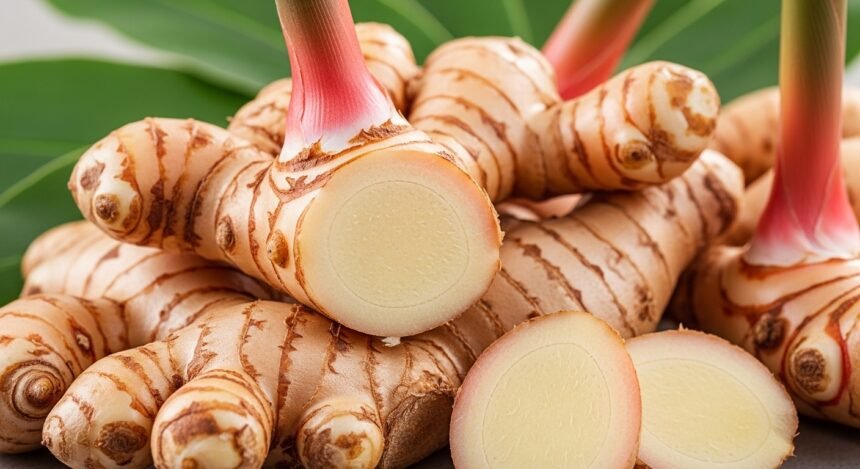
You might have seen a knobbly root in an Asian supermarket that looks like ginger but smells darker and piney. This is blue ginger, often known as galangal. For centuries, healers in Traditional Chinese Medicine and Ayurveda have used this powerful spice to treat everything from tummy aches to swelling.
Unlike the common ginger you put in biscuits, blue ginger has a sharper, citrusy taste. It is also much harder to cut. Recent studies suggest it may have impressive health benefits, especially for men. It could help with joint pain, protect your cells, and even boost fertility.
In this article, we uncover the truth about blue ginger, how it differs from regular ginger, and how you can use it in your daily life.
What Exactly Is Blue Ginger?
Blue ginger (Alpinia galanga) is a plant in the Zingiberaceae family. This makes it a close cousin to turmeric and regular ginger. While it is widely called “galangal” or “Thai ginger”, the name “blue ginger” often refers to its faint bluish or pinkish ring inside the root when it is fresh.
It grows mainly in Southeast Asia, including Thailand, Indonesia, and Malaysia. The root (rhizome) is the part you eat. It has a tough, woody skin that looks like pale bark. Inside, the flesh is harder and more fibrous than regular ginger.
People do not just use it for food. It has been a staple in traditional medicine for years. Today, scientists are starting to back up some of these ancient claims with modern evidence.
It Is Packed With Powerful Antioxidants
One of the main reasons blue ginger is so good for you is its antioxidant content. Antioxidants are substances that help protect your body from “free radicals”. These are unstable molecules that can damage your cells and lead to disease.
Blue ginger is rich in a group of antioxidants called polyphenols. A study highlighted by Healthline notes that polyphenols are linked to improved memory and lower cholesterol levels. By eating foods rich in these compounds, you may lower your risk of heart disease and type 2 diabetes.
May Help Reduce Inflammation and Joint Pain
If you suffer from stiff knees or aching joints, blue ginger for joint pain might be worth considering. Inflammation is a natural response by your body, but chronic inflammation causes pain and illness.
Research indicates that blue ginger contains a compound called HMP. This compound seems to block signals in the body that cause swelling. According to Versus Arthritis, managing diet is a key part of controlling joint pain, and adding anti-inflammatory spices can help.
One study showed that people with osteoarthritis in their knees felt less pain after taking a ginger and galangal extract for six weeks. While more research is needed, adding this root to your diet is a natural way to support your joints.
Potential Benefits for Male Fertility
This is one of the most exciting areas of research. Blue ginger benefits for men are becoming a hot topic in science. Infertility affects many couples, and sperm quality is often a factor.
Some animal studies suggest that alpinia galanga fertility properties are significant. The root may help increase sperm count and motility (how well sperm move). Scientists believe this is due to its antioxidant protection, which stops sperm from being damaged.
A study published by the National Institutes of Health (NIH) found that taking a daily supplement containing galangal and pomegranate extract increased sperm motility in men by 62%. While you should always see a doctor for fertility issues, including blue ginger fertility research in your reading is a good idea.
Can Support Healthy Digestion
Just like its cousin ginger, blue ginger is famous for calming stomachs. It is a traditional remedy for gas, bloating, and nausea. In Ayurveda, it is used to “warm” the digestive system.
If you often feel heavy after a meal, blue ginger digestive aid properties might help. It works by relaxing the muscles in your gut and helping food move through smoothly. It may also reduce sea sickness and morning sickness, though regular ginger is more commonly used for this.
For general advice on keeping your gut healthy, the NHS recommends plenty of fibre and fluids, which soups containing galangal can provide.

May Fight Bacterial and Fungal Infections
Blue ginger is not just tasty; it is tough on germs. Test-tube studies show that the essential oils in the root can fight a range of bacteria. This includes E. coli and Salmonella, which are common causes of food poisoning.
It may also help against fungus. Alpinia galanga health benefits extend to fighting yeast infections. While you should not use it to replace antibiotics prescribed by a doctor, eating it regularly might give your immune system an extra layer of support.
Blue Ginger vs. Regular Ginger: The Key Differences
Many people get confused between galangal root vs ginger. They look similar, but you cannot swap them in recipes. Here is why:
* Taste: Ginger is spicy, sweet, and peppery. Thai ginger vs regular ginger is very different; Thai ginger (blue ginger) is piney, sharp, and citrusy.
* Texture: Ginger is juicy and easy to grate. Blue ginger is rock hard and woody. You usually slice it extensively thin or bruise it to release flavour.
* Skin: Ginger has thin, papery skin. Blue ginger has thick, pale skin with pinkish or blueish rings.
Trying to use regular ginger in a Thai Tom Yum soup will change the flavour completely. For authentic taste, you must use galangal.
How to Prepare and Cook With Blue Ginger
Learning how to use blue ginger in cooking is easy once you know the basics. Because it is so hard, you do not usually grate it like regular ginger.
Simple Ways to Use It:
1. Soups: Slice it into thick coins and toss them into broth. It infuses a fresh, citrusy scent. Remember to fish them out before eating, as they are too tough to chew!
2. Curry Pastes: This is the most common use. You chop it roughly and pound it in a mortar and pestle with lemongrass, chillies, and garlic. This breaks down the tough fibres.
3. Tea: Blue ginger tea benefits include soothing a sore throat. Slice fresh root, boil it in water for 15 minutes, and add honey.
If you are wondering where to buy blue ginger UK, try your local Asian grocery store or the world food aisle in larger supermarkets. It is often sold fresh or frozen. You can also find dried slices or powder online.
For inspiration, check out recipes on BBC Good Food to see how professional cooks use this ingredient.
Safety, Side Effects and Who Should Avoid It
Is it safe for everyone? Generally, yes, when eaten in normal food amounts. Blue ginger side effects are rare but can happen if you eat too much.
Things to Watch Out For:
* Stomach Upset: Eating huge amounts (like in supplements) might cause heartburn or belly pain.
* Pregnancy: Many women ask, “is blue ginger safe for pregnancy?” While used traditionally for nausea, it is best to stick to culinary amounts. Always consult your GP or midwife before taking concentrated supplements.
* Medications: If you take medication for blood pressure or to thin your blood, talk to a doctor. Greater galangal root uses can interact with how your body processes these drugs.
For detailed information on herbal interactions, Drugs.com offers a comprehensive overview of the plant’s profile.
The Bottom Line
Blue ginger, or galangal, is much more than just a “harder version” of ginger. It is a unique spice with a distinct flavour and a host of potential health perks. From acting as a blue ginger digestive aid to potentially boosting male fertility and soothing painful joints, it is a powerhouse ingredient.
While antioxidant properties of blue ginger are impressive, remember it is best used as part of a balanced diet. Next time you are at an Asian market, pick up a root. Whether you make a warming tea or a spicy curry, your body (and your taste buds) will thank you.
For more on how diet affects your health, reliable sources like Cancer Research UK provide excellent general guidance on the importance of plant-based foods.