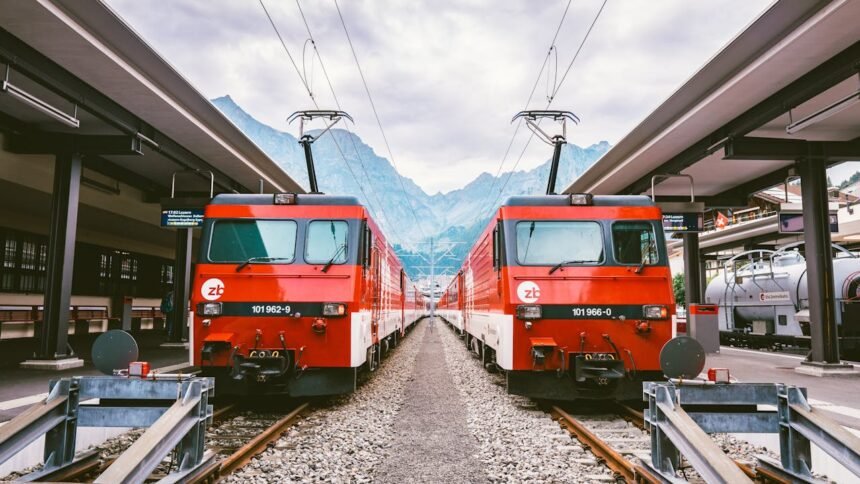
In our fast-paced world, the journey is often viewed merely as an obstacle between departure and arrival. We rush through crowded airports, navigate gridlocked motorways, and battle the anxiety of delays. However, a growing movement towards slower, more intentional exploration is changing how we view transit. This brings us to mindful travel Switzerland—a concept perfectly embodied by the Swiss Federal Railways (SBB). Unlike the frantic pace often experienced on UK commuter lines, the Swiss rail network offers a sanctuary of calm, precision, and breathtaking beauty.
For British travellers accustomed to the unpredictability of daily commuting, the Swiss system feels like a revelation. It is not just about moving from point A to point B; it is about reclaiming the time spent in transit for mental clarity and relaxation. By choosing the train, visitors can actively practise mindfulness, grounding themselves in the present moment while traversing one of Europe’s most spectacular landscapes. This article explores why the Swiss railway system is the ultimate vehicle for restoration and peace.
The Psychology of Punctuality
There is a profound link between certainty and stress reduction. According to the NHS, uncertainty is a significant driver of anxiety. When a traveller does not know if their connection will arrive or if a cancellation awaits, cortisol levels rise, preventing any chance of relaxation. Switzerland eliminates this variable with celebrated clockwork precision.
Swiss trains run with a reliability that borders on the miraculous. If the timetable states a departure at 12:03, the wheels begin turning at 12:03 exactly. For the mindful traveller, this reliability is a gift. It removes the need for hyper-vigilance. You can trust the system completely, allowing your nervous system to downregulate. Instead of staring anxiously at departure boards, you can settle into your seat, safe in the knowledge that your journey will proceed exactly as planned. This foundation of trust is essential for mindful travel Switzerland, as it frees the mind to focus on the experience rather than the logistics.
Visual Meditation: Scenery as Therapy
Mindfulness encourages us to engage our senses fully, and few places on Earth offer a visual feast comparable to the Swiss Alps. The Guardian Travel section frequently highlights Switzerland as a top destination for scenic touring, and for good reason. The train windows frame the landscape like living canvases, shifting from emerald valleys to snow-capped peaks.
Psychologists refer to the effect of nature on the brain as “soft fascination”. Unlike the hard focus required for emails or driving, nature captures attention effortlessly, allowing the brain’s executive functions to rest and recover. Routes like the Glacier Express or the Bernina Express are not just transport links; they are moving meditation halls. Watching the pristine lakes and alpine meadows glide by allows for a form of passive engagement that is deeply restorative. It encourages a state of flow, where the passenger is entirely present, absorbing the grandeur of the natural world without the distraction of digital notifications.
The Sanctuary of Silence
Noise pollution is a hidden stressor in modern travel. The constant drone of announcements, mobile phone conversations, and traffic can be overwhelming. Recognizing the need for peace, Swiss trains often feature designated Quiet Zones. These carriages are strictly monitored to ensure silence, prohibiting phone calls and loud conversations.
For those seeking mental clarity, these zones are invaluable. They offer a rare opportunity to read, write, or simply sit in contemplation without auditory intrusion. Organizations like Mind emphasize the importance of quiet environments for mental wellbeing. In these silent carriages, the rhythmic clatter of the tracks becomes a soothing white noise, aiding in deep relaxation. It allows travellers to disconnect from the external chaos and reconnect with their internal thoughts, making the physical journey a spiritual one as well.
Sustainable Serenity
Eco-anxiety is a very real concern for many modern travellers. It is difficult to fully relax on a holiday if one is worried about the carbon footprint left behind. Switzerland addresses this by operating a railway system that is largely powered by hydroelectricity. The BBC Future series has often praised Switzerland’s commitment to green energy and sustainable infrastructure.
Knowing that your journey is environmentally responsible adds an extra layer of peace to the experience. You are not contributing to motorway congestion or high-emission air travel. This alignment of values—enjoying luxury while respecting the planet—enhances the feeling of mindful travel Switzerland. It allows for a guilt-free exploration, where the traveller can appreciate the pristine environment knowing that their mode of transport helps to preserve it for future generations.

Seamless Integration for the Unhurried Traveller
The Swiss Travel System is designed to be seamless. The Swiss Travel Pass allows for unlimited travel on trains, buses, and boats with a single ticket. This eliminates the friction of buying multiple tickets or fumbling for change at every interchange. You can simply hop on a boat across Lake Lucerne or a PostBus up a winding mountain road.
The Telegraph often recommends this integrated approach for a stress-free holiday. The ease of transition between different modes of transport encourages a slower pace. You are not rushing to beat a barrier; you are flowing through the network. This fluidity is the essence of calm commuting. It transforms the travel logistics from a series of hurdles into a continuous, effortless journey, perfectly suited for those looking to practise mindfulness on the move.
Key Features of Swiss Rail for Mindfulness
| Feature | Benefit for the Mindful Traveller |
|---|---|
| Clockwork Punctuality | Eliminates anxiety regarding delays and missed connections. |
| Quiet Zones | Provides a dedicated space for silence, reading, and meditation. |
| Panoramic Windows | Facilitates “soft fascination” and connection with nature. |
| Integrated Ticketing | Removes friction and administrative stress during the trip. |
| Hydroelectric Power | Alleviates eco-anxiety through sustainable travel practices. |
| Cleanliness | A tidy environment promotes a tidy, uncluttered mind. |
Frequently Asked Questions
Is the Swiss Travel Pass worth it for mindful travel?
Yes, absolutely. It allows for spontaneous travel without the stress of purchasing individual tickets. You can change your plans based on your mood or the weather, which is central to a relaxed, mindful approach. Check MoneySavingExpert for general tips on travel budgeting, though Swiss value is undisputed for the quality provided.
Are the trains crowded?
While commuter routes near Zurich or Geneva can be busy during rush hour, long-distance scenic trains generally offer ample space. Booking a seat reservation on premium panoramic trains ensures you have your own personal space to relax. Lonely Planet offers excellent guides on the best times to travel to avoid crowds.
Do I need to speak German or French?
No. Most SBB staff speak excellent English, and announcements are often made in English on major routes. This removes the language barrier anxiety, allowing you to navigate the system with confidence. For specific entry requirements, always check Gov.uk.
Can I bring luggage easily?
Yes. Swiss stations are equipped with ramps and lifts, and trains have ample luggage storage. SBB even offers a luggage transfer service, allowing you to travel hands-free for the ultimate unburdened experience.
Conclusion
Embracing mindful travel Switzerland is about more than just seeing the sights; it is about changing the rhythm of your life for a few days. The Swiss railway system provides the perfect infrastructure for this shift. Through its reliability, silence, and integration with nature, it turns the act of travel into a restorative practice. For UK travellers used to the hustle of daily life, sitting back in a Swiss carriage offers a rare and precious opportunity to simply be. By choosing the train, you are choosing a journey that honours your mental wellbeing as much as your desire for adventure. It is, quite simply, the most civilised way to explore the world.