Green beans are a staple vegetable in households across the United Kingdom and arguably one of the most versatile ingredients in a healthy kitchen. Whether you call them string beans, snap beans, or French beans, these vibrant green pods are often touted as a nutritional powerhouse.
However, when embarking on a weight management journey, understanding the caloric density of your food is paramount. Many people find themselves asking about green bean calories and whether this specific vegetable can genuinely accelerate fat loss or improve metabolic health.
The short answer is yes. Green beans are exceptionally low in calories and high in fibre, making them an excellent tool for weight management. But their benefits extend far beyond a simple calorie count.
This article provides an exhaustive look at the nutritional profile of green beans, their specific role in weight loss, and how to prepare them to maximise their health benefits while minimising calorie intake.
Nutritional Overview: What is Inside a Green Bean?
Before discussing weight loss mechanisms, it is essential to understand exactly what you are consuming. Green beans are classified as legumes, though they are harvested much earlier than beans meant for drying (like kidney or black beans). This early harvest means the pods are tender and edible.
The most defining characteristic of green beans regarding nutrition is their high water content and low energy density. They allow you to consume a substantial volume of food without ingesting a large number of calories.
Nutritional Breakdown
According to the USDA FoodData Central, a standard serving of raw green beans (approximately 100 grams) contains the following:
| Nutrient | Amount |
|---|---|
| Calories | 31 kcal |
| Protein | 1.8 g |
| Fat | 0.2 g |
| Carbohydrates | 7 g |
| Fibre | 2.7 g |
| Sugar | 3.3 g |
| Vitamin C | 12.2 mg |
| Vitamin A | 690 IU |
| Vitamin K | 43 µg |
As the table illustrates, the count of green bean calories is remarkably low—just 31 calories per 100 grams. This classifies them as a “low-energy-density” food. You could theoretically eat an entire kilogram of green beans and only consume around 310 calories, which is roughly equivalent to a single small cheeseburger.
Furthermore, green beans are a rich source of micronutrients. They provide a significant amount of Vitamin K, which is vital for bone health, and Vitamin C, a powerful antioxidant that supports immune function.
Factors: Why Green Beans Support Weight Loss
It is not just the lack of calories that makes green beans effective for slimming down; it is the composition of the vegetable itself. Several physiological factors explain why incorporating green beans into your diet can assist with weight management.
1. High Fibre Content and Satiety
Fibre is a carbohydrate that the body cannot digest. Instead of being broken down into sugar molecules, it passes through the body relatively intact.
Green beans contain both soluble and insoluble fibre. Soluble fibre absorbs water and forms a gel-like substance during digestion, which slows down the emptying of the stomach. This process helps you feel fuller for longer, reducing the likelihood of overeating at your next meal.
Evidence suggests that increasing dietary fibre is strongly linked to lower body weight. A study published by the National Institutes of Health (NCBI) highlights that simply adding more fibre to one’s diet can be a potent predictor of weight loss success, independent of other dietary changes.
2. Low Glycaemic Index (GI)
The Glycaemic Index (GI) measures how quickly food raises blood sugar levels. Foods with a high GI cause spikes in blood glucose, followed by crashes that can trigger hunger and cravings.
Green beans have a very low GI score (estimated around 20). This makes them an ideal food for maintaining stable blood sugar levels. For individuals managing Type 2 diabetes or insulin resistance—conditions often linked with excess weight—green beans are a safe and smart choice, as supported by guidance from Diabetes UK.
3. Metabolic Support via B-Vitamins
Green beans are a good source of folate (Vitamin B9) and other B-vitamins. These nutrients are crucial for metabolism, helping the body convert food into usable energy rather than storing it as fat. Folate is also essential for reducing levels of homocysteine, an amino acid that, at high levels, is a risk factor for heart disease.
4. Hydration
Comprising roughly 90% water, green beans contribute to your daily hydration needs. Research indicates that foods with high water content can aid weight loss by increasing the volume of the meal without adding calories, a concept known as “volumetrics”.
Health Benefits Beyond the Scales
While green bean calories are the primary focus for dieters, the holistic health benefits of this vegetable ensure that your body functions optimally while in a calorie deficit.
Heart Health
Green beans contain no cholesterol and very little fat. However, they are rich in heart-healthy nutrients like potassium and magnesium. The fibre in green beans also actively works to lower LDL (bad) cholesterol levels. The British Heart Foundation recommends including a variety of green vegetables to support cardiovascular health.
Bone Strength
One cup of green beans provides roughly 20% of the recommended daily intake of Vitamin K. Vitamin K is essential for the production of osteocalcin, a protein that helps anchor calcium inside bone tissue. Low intake of Vitamin K is associated with a higher risk of bone fractures. For more on the importance of Vitamin K, you can refer to resources from Harvard Health.
Gut Health and FODMAPs
For most people, the fibre in green beans acts as a prebiotic, feeding the healthy bacteria in the gut. However, those with Irritable Bowel Syndrome (IBS) should be mindful. Green beans contain sorbitol, a type of sugar alcohol that can cause bloating in sensitive individuals.
However, according to the Cleveland Clinic, green beans are generally considered low-FODMAP in serving sizes of roughly 75 grams (15 beans), making them tolerable for many with digestive sensitivities if portioned correctly.
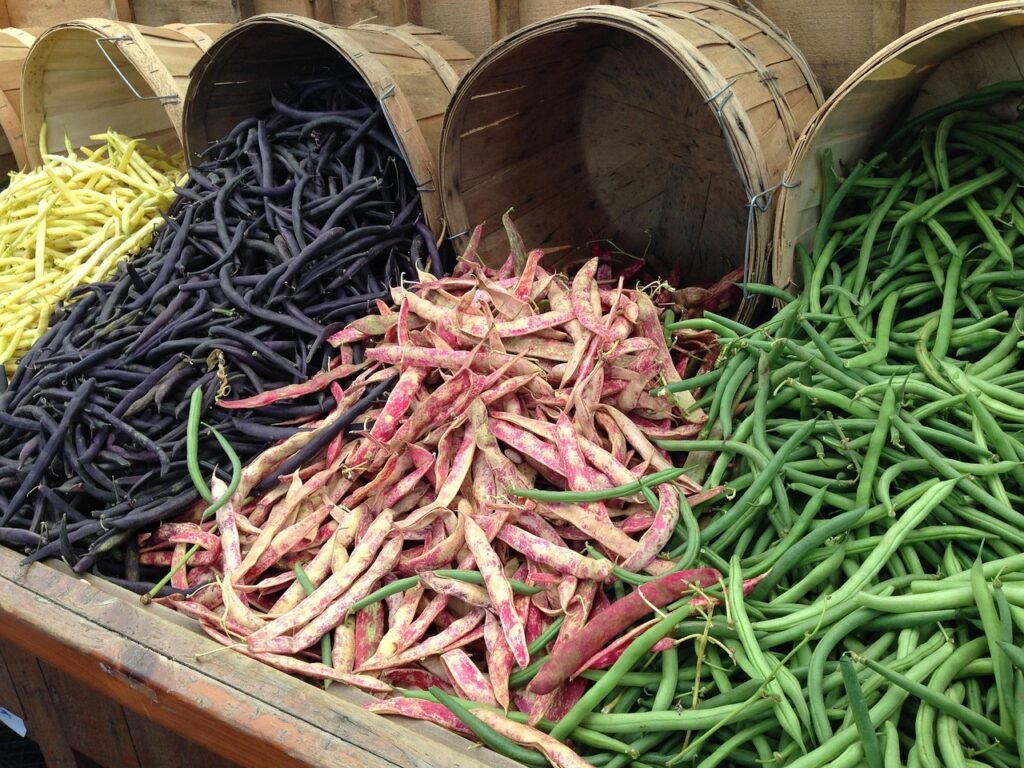
Treatment and Management: Preparation Matters
The method of cooking can drastically alter the calorie profile of green beans. While the raw bean is low-calorie, covering it in butter, oil, or cream sauces can negate the weight loss benefits.
Here is a comparison of how preparation affects the calorie count per 100g serving:
- Steamed/Boiled (Plain): ~35 calories
- Sautéed in 1 tbsp Olive Oil: ~150 calories
- Green Bean Casserole (Cream/Fried Onions): ~200+ calories
The Best Cooking Methods for Weight Loss
- Steaming: This is the gold standard. It preserves the vibrant green colour and the crunch while retaining the water-soluble vitamins (like Vitamin C and B vitamins) that are often lost during boiling.
- Blanching: Briefly boiling the beans for 2 minutes and then plunging them into ice water stops the cooking process. This is excellent for meal prep or salads.
- Roasting (with caution): Roasting brings out a natural sweetness. Use a light spray of oil rather than pouring from the bottle to keep the calorie count low.
Avoid frying green beans or drowning them in cheese sauce if your primary goal is weight loss. Instead, flavour them with lemon juice, garlic, chilli flakes, or balsamic vinegar, which add negligible calories.
Fresh vs. Frozen vs. Tinned
- Fresh: Best for texture and flavour. Ideally consumed within a few days of purchase.
- Frozen: Nutritionally comparable to fresh. They are often flash-frozen at peak ripeness, locking in nutrients. This is a budget-friendly option.
- Tinned (Canned): While convenient, tinned beans often have a softer texture and lower Vitamin C levels due to the heat processing. Crucially, they can be high in sodium. Always choose varieties labelled “no added salt” or rinse them thoroughly before eating. The NHS confirms that frozen and tinned vegetables count towards your 5-A-Day.
Practical Tips for Incorporation
Incorporating green beans into your daily routine is simple. Here are practical ways to boost your intake without feeling like you are on a restrictive diet.
- The 50/50 Plate Rule: When serving pasta or rice dishes, reduce the carbohydrate portion by half and replace that volume with steamed green beans. You get the same volume of food for a fraction of the calories.
- Snacking: Raw green beans offer a satisfying crunch similar to crisps (chips) or crackers. Dip them in a low-calorie salsa or hummus.
- Stir-frys: Green beans hold their shape well in high heat. Add them towards the end of a stir-fry to maintain their crunch.
- Smoothies: It may sound unusual, but frozen green beans have a very mild flavour. Adding a handful to a fruit smoothie adds fibre and bulk without altering the taste significantly.
A Note on Anti-Nutrients
Green beans contain lectins, a type of protein that binds to carbohydrates. In large amounts, raw lectins can cause digestive upset. However, cooking green beans neutralises these lectins effectively. While eating a few raw beans is generally safe, it is recommended to cook them to improve digestibility and nutrient absorption. For more on the benefits of vegetables and antioxidants, WebMD offers a comprehensive overview.
Also, be aware of phytates, which can slightly reduce the absorption of minerals like iron. However, for those eating a balanced diet, this is rarely a clinical concern. The Mayo Clinic suggests that the benefits of high-fibre foods far outweigh the minor impact of phytates.
The Bottom Line
Are green beans effective for weight loss? Absolutely.
With a negligible calorie count, high fibre content, and a low glycaemic index, they are essentially the perfect weight-loss food. The green bean calories count is low enough that you can eat them in large volumes to satisfy hunger without derailing your daily energy targets.
Beyond weight loss, they support heart health, bone density, and immune function. Whether you choose fresh, frozen, or tinned, the key is to prepare them simply—avoiding excessive fats and salts.
For more information on building a balanced diet for weight loss, you can visit Healthline’s nutrition section.
By making green beans a regular fixture on your plate, you are making a low-risk, high-reward investment in your long-term health.