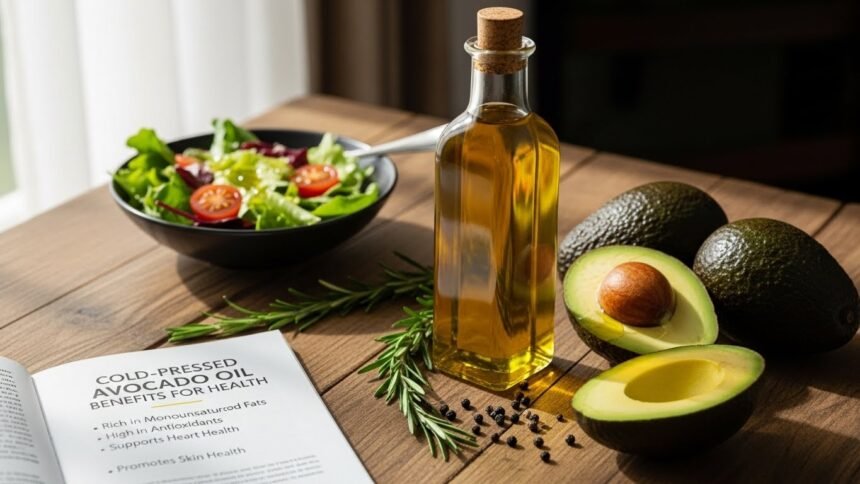
In the realm of functional foods and longevity, few substances have garnered as much recent attention as avocado oil. While the fruit itself is a staple of the modern diet, the oil extracted from its pulp offers a concentrated dose of nutrients that support long-term health.
Specifically, the cold pressed avocado oil benefits are superior to those of refined varieties. By avoiding heat and chemical solvents during extraction, this oil retains its potent bioactive compounds, vivid emerald colour, and distinct nutritional profile.
Whether you are looking to manage cholesterol, improve skin elasticity, or simply adopt a heart-healthy diet, understanding the science behind this lipid is essential.
Overview
Avocado oil is pressed from the fleshy pulp surrounding the avocado pit, unlike most seed oils which are extracted from the seed itself.
“Cold pressed” refers to a mechanical extraction process where the temperature is strictly controlled, typically kept below 49°C (120°F). This preserves the integrity of the fatty acids and heat-sensitive vitamins.
Refined oils, conversely, are often bleached and deodorised, stripping away the very nutrients that contribute to longevity.
Cold pressed avocado oil is exceptionally high in oleic acid, a monounsaturated fat (MUFA) that is also the primary component of olive oil. It is celebrated for its stability and resistance to oxidation.
Beyond basic macronutrients, this oil is a rich source of carotenoids like lutein and zeaxanthin, as well as Vitamin E, which function as powerful antioxidants within the body.
With a remarkably high smoke point of roughly 250°C (482°F) even in its unrefined state, it is uniquely versatile for both raw consumption and high-heat cooking.
Symptoms & Causes: The Impact of Inflammation and Oxidative Stress
To understand the true value of cold pressed avocado oil, one must first understand the biological mechanisms of ageing and disease that it helps to mitigate. The primary enemies of longevity are chronic inflammation and oxidative stress.
The Silent Symptoms of Cellular Ageing
While ageing is a natural process, premature ageing and chronic disease are often driven by dietary factors. Symptoms of a diet lacking in protective antioxidants and healthy fats include:
- Chronic Inflammation: Often invisible, this manifests as joint pain, fatigue, and is a precursor to metabolic syndrome.
- Elevated LDL Cholesterol: A diet high in saturated or trans fats contributes to arterial plaque accumulation.
- Skin Deterioration: Loss of elasticity and slow wound healing can signal a deficiency in essential fatty acids and Vitamin E.
- Visual Decline: A lack of dietary carotenoids contributes to age-related macular degeneration.
Causes of Metabolic Dysfunction
The modern Western diet is frequently high in pro-inflammatory Omega-6 fatty acids (found in processed seed oils) and low in anti-inflammatory Omega-3s and neutral monounsaturated fats.
When we consume unstable fats that oxidise easily, our body undergoes oxidative stress. Free radicals damage cells, proteins, and DNA, accelerating the ageing process.
Furthermore, the “Cause” of many heart-related issues is not just the presence of fat, but the type of fat.
Saturated fats and processed vegetable oils can disrupt lipid profiles. The absence of adequate monounsaturated fats—like those found in avocado oil—leaves the cardiovascular system vulnerable.
Treatment & Management: Integrating Cold Pressed Avocado Oil
Incorporating cold pressed avocado oil into your daily regimen is a dietary “treatment” that manages and mitigates the risks associated with the conditions listed above. Here is how the specific cold pressed avocado oil benefits function as a management tool for health.
1. Management of Cholesterol and Heart Health
The most significant benefit of this oil lies in its fatty acid composition. Roughly 70% of avocado oil is oleic acid.
Research indicates that replacing saturated fats with monounsaturated fats can significantly lower low-density lipoprotein (LDL) cholesterol while maintaining or increasing high-density lipoprotein (HDL).
This assists in the management of blood pressure and reduces the risk of atherosclerosis. A study highlighted by the British Heart Foundation suggests that monounsaturated fats are a cornerstone of heart health.
2. Treatment for Arthritis and Joint Pain
Avocado oil contains a unique component known as ASU (avocado-soybean unsaponifiables). These are natural vegetable extracts made from one-third avocado oil and two-thirds soybean oil.
ASUs have been clinically shown to block pro-inflammatory chemicals, preventing the deterioration of cells lining the joints.
For those managing osteoarthritis, regular consumption of cold pressed avocado oil may help reduce stiffness and pain, potentially reducing the need for pharmaceutical anti-inflammatories.
3. Management of Eye Health
Unlike most oils, cold pressed avocado oil contains lutein, a carotenoid that functions as an antioxidant for the eyes.
Our bodies do not produce lutein; it must be obtained through diet. It filters harmful blue light and protects the retina from oxidative damage.
Regular intake is a proactive management strategy against age-related macular degeneration and cataracts, conditions that typically develop after years of oxidative stress.
4. Improving Nutrient Absorption
One of the lesser-known benefits is the oil’s ability to boost the efficacy of other foods. Many nutrients, specifically Vitamins A, D, E, and K, are fat-soluble.
If you eat a salad full of nutrient-dense vegetables but use a fat-free dressing, your body cannot absorb these vitamins effectively.
Adding cold pressed avocado oil allows your body to metabolise and utilise these nutrients. Research suggests that adding avocado oil to salads can increase carotenoid absorption by up to 15-fold.
5. Skin Health and Wound Healing
Topical and dietary application of avocado oil is a common treatment for skin issues. The oil is rich in fatty acids and vitamins that accelerate wound healing and collagen synthesis.
A study on PubMed has shown that the essential fatty acids and oleic acid in avocado oil can promote collagen synthesis, which is the process of creating new connective tissue.
This makes it an excellent management tool for psoriasis and eczema, reducing redness and flaking.
Tips for Selection and Usage
To maximise the cold pressed avocado oil benefits, you must ensure the product you buy is genuine and stored correctly. The oil industry is prone to adulteration, so vigilance is key.
Buying Guide
- Check the Label: Ensure it explicitly says “Cold Pressed” and “Unrefined” or “Extra Virgin.”
- Observe the Colour: Genuine cold pressed avocado oil should be emerald green. If it is yellow or clear, it has likely been refined or oxidised.
- Origin: Look for single-origin oils (e.g., from Mexico, New Zealand, or Kenya) to ensure traceability.
Storage Tips
- Dark Bottles: Light accelerates oxidation. Buy oil sold in dark glass or opaque tins.
- Cool Environment: Store in a cool, dark cupboard. While it is stable, heat will eventually degrade the antioxidants.
- Shelf Life: Once opened, aim to use the oil within 6 months.
Culinary Applications
Because of its high smoke point (271°C/520°F for high quality), it is safer to cook with than extra virgin olive oil.
- Searing: Excellent for searing steaks or fish.
- Roasting: Coat vegetables before roasting to prevent burning.
- Drizzling: Its grassy, buttery flavour makes it a perfect finishing oil for soups and salads.
The Bottom Line
Cold pressed avocado oil is more than just a culinary trend; it is a functional food with a robust scientific backing for longevity.
By addressing the root causes of ageing—inflammation and oxidative stress—it serves as a preventative tool for heart disease, joint degeneration, and metabolic health.
Its unique combination of heat stability and nutrient density makes it superior to many other vegetable oils.
Switching to this oil is a small dietary change that yields significant dividends for your long-term well-being. Whether used for high-heat cooking or as a supplement for skin health, the benefits are comprehensive.
For more information on healthy fats, you can visit Healthline.