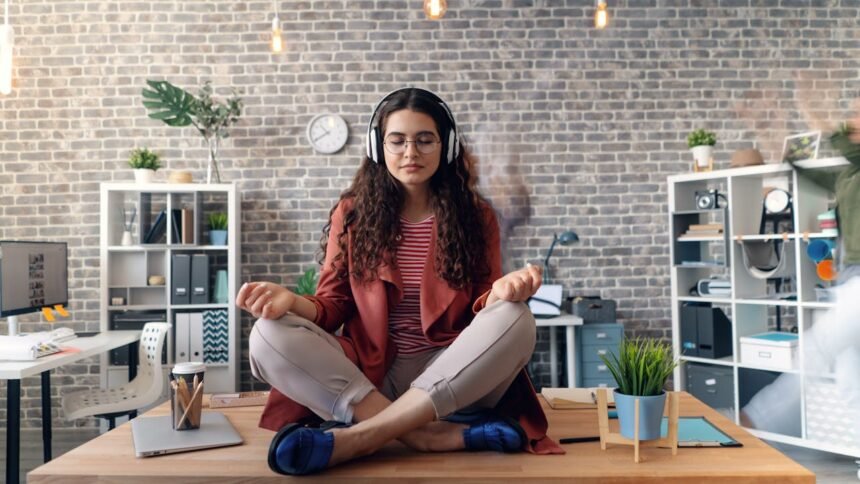
In the modern professional landscape, the chair has become both a sanctuary of productivity and a vessel for physical decline. It is an uncomfortable truth that for many, the workday involves remaining static for eight to ten hours. This sedentary lifestyle has led health experts to coin the phrase “sitting is the new smoking,” highlighting the severe impact of prolonged inactivity on cardiovascular health and musculoskeletal integrity. However, for those tethered to a workstation, there is a practical, accessible solution: desk yoga for stiffness.
This article explores the physiological impact of desk work and provides a comprehensive, actionable guide to integrating yoga into your office routine to enhance mobility, reduce pain, and boost cognitive function.
The Physiology of the Sedentary Workday
Before diving into the solution, it is vital to understand the problem. When you sit for extended periods, your body undergoes specific physiological changes that contribute to chronic pain and fatigue. The Mayo Clinic highlights the risks of too much sitting, noting correlations with high blood pressure and abnormal cholesterol levels.
The Mechanics of Stiffness
- Hip Flexor Shortening: When seated, your hips are in a constant state of flexion. Over time, the iliopsoas muscles shorten and tighten, leading to lower back pain when you finally stand up.
- The “Tech Neck”: Leaning toward a monitor creates immense strain on the cervical spine. According to spine-health resources, the head weighs approximately 10-12 pounds in a neutral position, but tilting it forward can increase the gravitational force on the neck to nearly 60 pounds.
- Reduced Circulation: Lack of movement allows blood to pool in the legs, increasing the risk of varicose veins and, in severe cases, deep vein thrombosis.
Why Desk Yoga is the Antidote
Desk yoga is not about lighting incense or chanting in the middle of an open-plan office. It is about applying the biomechanical principles of yoga—extension, flexion, and breath control—to a seated environment. Incorporating desk yoga for stiffness into your daily schedule disrupts the cycle of immobility.
Research from the National Institutes of Health (NIH) suggests that yoga can effectively relieve chronic low-back pain and improve overall function. By stretching tight muscles and strengthening postural stabilizers, you can mitigate the damage caused by ergonomic failures.
Essential Desk Yoga Moves for Stiffness Relief
The following sequence is designed to be discrete yet effective. These movements target the primary areas of tension: the neck, shoulders, spine, and hips.
1. Seated Cat-Cow (Marjaryasana-Bitilasana)
Best for: Spinal flexibility and relieving back tension.
- Setup: Sit on the edge of your chair with feet flat on the floor.
- The Cow (Inhale): Arch your back, drop your belly forward, and lift your chest and chin toward the ceiling. Roll your shoulders back.
- The Cat (Exhale): Round your spine toward the chair back, tuck your chin to your chest, and pull your navel inward.
- Repetition: Repeat for 5-10 breath cycles.
2. The Seated Crescent Moon
Best for: Side body stretching and oblique release.
- Execution: Lift both arms overhead. Clasp your hands together, releasing the index fingers. Lean to the right on an exhale, keeping the left sit-bone grounded in the chair. Inhale to center, then exhale to the left.
- Benefit: This combats the compression of the rib cage that occurs when slouching.
3. Eagle Arms (Garudasana Arms)
Best for: Opening the upper back and shoulders.
As noted by Yoga Journal, this pose is exceptional for widening the scapulae.
- Execution: Extend arms forward. Cross the right arm under the left. Bend the elbows and try to bring the palms together. Lift elbows to shoulder height and press hands away from your face.
- Hold: 5 deep breaths, then switch arms.
4. Seated Pigeon (Figure Four)
Best for: Hip flexibility and sciatica relief.
- Execution: Sit tall. Place your right ankle over your left knee (creating a figure-four shape). Flex the right foot to protect the knee. Keep your back straight and hinge forward at the hips until you feel a stretch in the right glute.
- Hold: 30 seconds per side.
5. Desk-Supported Downward Dog
Best for: Hamstrings, shoulders, and spinal traction.
- Execution: Stand up and face your desk. Place your hands on the edge of the desk, shoulder-width apart. Walk your feet back until your body forms an L-shape. Drop your chest between your arms while keeping a flat back.

Comparative Analysis: Desk Yoga vs. Standard Breaks
Many employees assume that simply walking to the water cooler is enough to combat stiffness. While walking is beneficial for circulation, it does not address muscle shortening or joint stiffness in the same way targeted stretching does. The table below illustrates the differences.
| Feature | Standard Walking Break | Desk Yoga for Stiffness | Static Sitting |
|---|---|---|---|
| Primary Benefit | Cardiovascular circulation | Musculoskeletal flexibility & joint health | None (Negative impact) |
| Muscle Lengthening | Low | High (Targeted stretching) | None (Shortening occurs) |
| Space Required | High (Hallways/Outside) | Zero (Can be done in chair) | N/A |
| Stress Reduction | Moderate | High (Combines movement with breath) | Low |
| Spinal Decompression | Low | High | None (Compression occurs) |
Integrating Yoga into Your Workflow
Consistency is more important than intensity. You do not need a 60-minute session to feel the benefits. The Occupational Safety and Health Administration (OSHA) recommends frequent micro-breaks to prevent musculoskeletal disorders.
The “Pomodoro Stretch” Method
- Work: 25 minutes of focused work.
- Break: 5 minutes of desk yoga.
- Repeat: After four cycles, take a longer break (walking).
Mindful Breathing (Pranayama)
Stress often manifests physically as raised shoulders and a clenched jaw. Integrating mindful breathing is a core component of yoga. The American Psychological Association (APA) confirms that muscle tension is a reflex reaction to stress.
- Technique: Try “Box Breathing.” Inhale for 4 counts, hold for 4, exhale for 4, and hold empty for 4. This activates the parasympathetic nervous system, calming the mind and relaxing the muscles.
Ergonomics: The Partner to Yoga
Even the best desk yoga for stiffness cannot fully counteract a poorly set up workstation. To maximize your results, ensure your environment supports your body.
- Monitor Height: The top of the screen should be at or slightly below eye level.
- Keyboard Position: Your elbows should be bent at 90 degrees, wrists straight. This helps prevent Repetitive Strain Injury (RSI) and Carpal Tunnel Syndrome, conditions detailed by the National Institute of Neurological Disorders and Stroke (NINDS).
- Chair Support: Ensure your lower back is supported. If your chair lacks lumbar support, use a small pillow.
Addressing Common Objections
“I don’t have time.” The stretches outlined above take less than 3 minutes collectively. The time lost to stiffness-induced fatigue is far greater than the time invested in stretching.
“I’ll look silly.” Workplace wellness is becoming mainstream. Major corporations are embracing these practices. As reported by Harvard Health Publishing, the benefits of yoga extend far beyond the mat, improving focus and productivity. Your colleagues are likely suffering from the same stiffness and may follow your lead.
Conclusion
The modern office environment presents a unique biological challenge, but we are not helpless against it. By understanding the mechanics of our bodies and implementing desk yoga for stiffness, we can transform our work experience from one of physical endurance to one of vitality.
Remember, the goal is longevity. Small, consistent investments in your physical health today prevent chronic issues tomorrow. Start with a simple Seated Cat-Cow during your next email check. Your spine will thank you.
Ready to transform your workday? Bookmark this guide and set a reminder for your first stretch break in 25 minutes.