
Your vision is arguably your most precious sense, yet it is often taken for granted until problems arise. As we age, many of us naturally worry about the decline of our eyesight, searching for natural ways to maintain sharp vision for as long as possible. While carrots have long held the title for the most popular eye-boosting vegetable, the humble strawberry is emerging as a potent contender in the realm of ocular nutrition. These vibrant red berries are a staple of the British summer, often associated with Wimbledon and fresh cream rather than serious medical benefits.
However, beneath their sweet and juicy exterior lies a complex nutritional profile that may offer significant protection against common eye conditions. Strawberries are packed with specific antioxidants and vitamins that the eyes desperately need to function correctly. In this article, we explore the science behind strawberries and eye health. We will examine the specific nutrients involved, analyse the research regarding cataracts and macular degeneration, and determine whether adding a punnet to your weekly shop can genuinely make a difference to your long-term visual acuity. The answers might surprise you.
The Nutritional Powerhouse: What is Inside a Strawberry?
To understand why strawberries might benefit your eyes, we must first look at their chemical composition. They are not merely sugar and water; they are dense with bioactive compounds. The primary nutrient of interest for vision is Vitamin C (ascorbic acid). Surprisingly to many, strawberries often contain more Vitamin C gram-for-gram than citrus fruits like oranges.
This is crucial because the eyes have a particularly high metabolic rate and require robust antioxidant protection. Vitamin C is a water-soluble vitamin and a powerful antioxidant. It helps form and maintain collagen, a protein found in the cornea of the eye. Furthermore, studies highlighted by Healthline indicate that the high antioxidant content in strawberries helps combat oxidative stress throughout the body.
In addition to Vitamin C, strawberries are rich in flavonoids, specifically anthocyanins, which give the fruit its characteristic red colour. These compounds have been shown to possess anti-inflammatory properties. The NHS confirms that Vitamin C is essential for protecting cells and keeping them healthy. When you consume strawberries, you are also ingesting folate, potassium, and manganese, all of which play minor but supportive roles in systemic health, which indirectly supports the delicate vascular system of the retina.
It is also worth noting the fibre content. A diet high in fibre helps regulate blood sugar levels. Since high blood sugar and diabetes are leading causes of blindness (diabetic retinopathy), the low glycaemic index of strawberries makes them a smart choice for maintaining stable glucose levels, thereby protecting the eyes from sugar-related damage over time.
Actionable Benefits: How Strawberries Support Vision
The theoretical presence of vitamins is one thing, but how does this translate to actual eye health? Research suggests several direct pathways where strawberry consumption can support visual function.
1. Combatting Cataracts
Cataracts occur when the lens of the eye becomes cloudy, leading to blurred vision. This is often a result of protein oxidation within the lens. Because Vitamin C is highly concentrated in the aqueous humour (the fluid filling the eye), increasing dietary intake can increase the concentration of this vitamin in the eye fluid, providing a shield against oxidation.
According to the RNIB, cataracts are a common part of ageing, but lifestyle factors play a huge role in their development. Several large population studies have observed that people with higher intakes of Vitamin C have a lower risk of developing cataracts. By regularly eating strawberries, you provide your body with the raw materials needed to prevent the lens proteins from clumping together.
2. Reducing Risk of Macular Degeneration
Age-related macular degeneration (AMD) is the leading cause of sight loss in the UK. It affects the macula, the part of the eye responsible for central vision. The Macular Society emphasises that while genetics play a role, diet is a modifiable risk factor. AMD is essentially driven by oxidative stress and inflammation in the retina.
The antioxidants in strawberries, particularly ellagic acid and anthocyanins, help neutralise free radicals that cause this damage. While no single food can cure AMD, a diet rich in these specific antioxidants can slow its progression. Evidence published in The BMJ has frequently discussed the role of nutrition in chronic disease prevention, supporting the idea that antioxidant-rich foods are vital for long-term health maintenance.
3. Strengthening Blood Vessels
Your eyes are fed by a network of tiny, delicate blood vessels (capillaries). If these vessels become damaged or blocked, vision is compromised. The potassium found in strawberries helps regulate blood pressure. High blood pressure is a significant risk factor for hypertensive retinopathy.
By helping to maintain healthy blood pressure levels, strawberries indirectly protect the structural integrity of the eye’s vascular system. Advice from the Association of Optometrists suggests that what is good for your heart and blood vessels is generally good for your eyes. Keeping your vascular system healthy ensures that the retina receives a steady supply of oxygen and nutrients.
4. Reducing Eye Dryness and Inflammation
Dry eye syndrome is increasingly common in our digital age. Inflammation of the tear glands or the eye surface can exacerbate this issue. The anti-inflammatory properties of the phytochemicals in strawberries can help reduce systemic inflammation. While not a substitute for lubricating eye drops, a diet high in anti-inflammatory fruits can help manage the underlying biological drivers of dryness and irritation, as noted in general advice from Moorfields Eye Hospital.
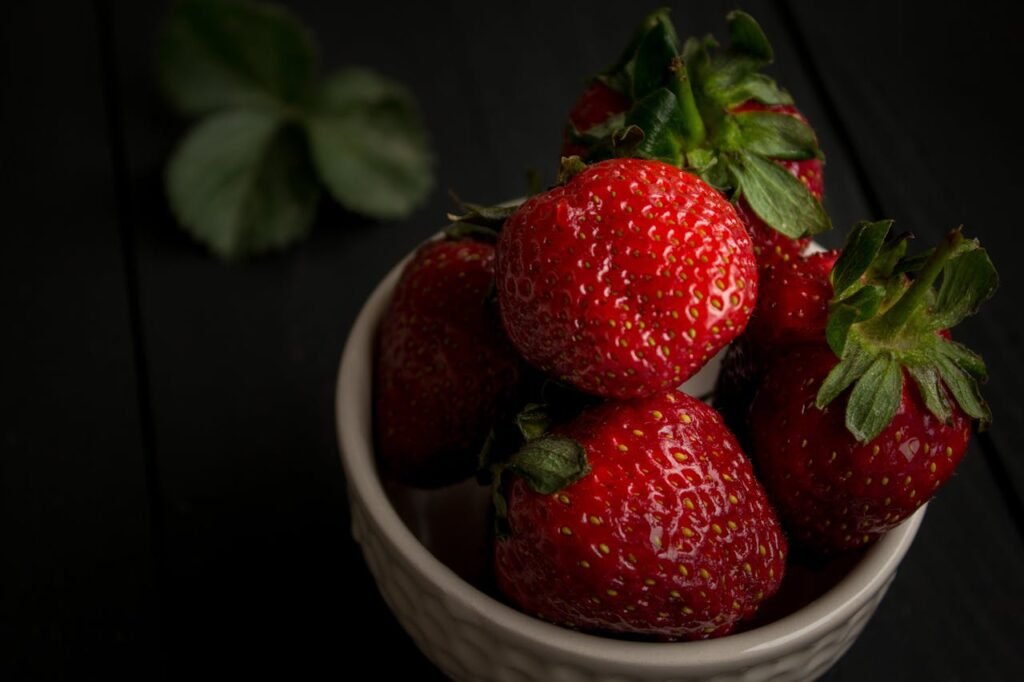
Nutrient Comparison: Strawberries vs. Other Fruits
To help you visualise the benefits, here is a comparison of Vitamin C content, a key nutrient for eye defence, across common fruits. Note how strawberries perform against the traditional “Vitamin C” fruit, the orange.
| Food Item (100g) | Vitamin C (mg) | Vitamin A (IU) | Sugar (g) | Key Eye Benefit |
|---|---|---|---|---|
| Strawberries | 58.8 mg | 12 IU | 4.9 g | Antioxidant Protection |
| Oranges | 53.2 mg | 225 IU | 9.3 g | Collagen Synthesis |
| Carrots (Boiled) | 3.6 mg | 16,706 IU | 3.5 g | Night Vision (Retinol) |
| Blueberries | 9.7 mg | 54 IU | 9.9 g | Blood Vessel Health |
Data sourced from standard nutritional databases.
As the table demonstrates, strawberries offer a superior Vitamin C punch with significantly less sugar than oranges or blueberries. This makes them an excellent option for those monitoring their caloric intake while seeking maximum antioxidant capacity.
Frequently Asked Questions
Here are some common questions regarding the consumption of strawberries for eye health.
Are frozen strawberries as good as fresh ones?
Yes, absolutely. In many cases, frozen strawberries are flash-frozen immediately after picking, which preserves their nutrient content effectively. Vitamin C can degrade over time when fresh fruit sits in transport or on a supermarket shelf. Therefore, frozen berries can sometimes retain more vitamins than fresh ones that have been stored for days. BBC Good Food notes that frozen fruit counts towards your 5-a-day just as much as fresh fruit does.
How many strawberries should I eat a day?
A standard portion size is roughly 80g, which equates to about seven fresh strawberries. This counts as one of your 5-a-day portions. Eating more is generally safe for most people, but variety is key to a balanced diet. The government’s GOV.UK guide recommends mixing different coloured fruits and vegetables to ensure a broad spectrum of nutrients.
Can eating strawberries cure blindness?
No. It is vital to manage expectations. Strawberries are a preventative dietary measure, not a cure. They cannot reverse existing damage from advanced cataracts or late-stage macular degeneration. However, they can support the remaining healthy tissue and slow the progression of diseases. For specific concerns about sight loss, always consult an optometrist, such as those at the College of Optometrists.
The Bottom Line
Strawberries are far more than just a delicious summer treat; they are a legitimate functional food for your eyes. Their exceptionally high Vitamin C content, combined with potent anti-inflammatory antioxidants like anthocyanins, makes them a powerful ally in the fight against cataracts and age-related macular degeneration.
Incorporating a serving of roughly seven strawberries into your daily routine—whether fresh in a salad or frozen in a smoothie—provides the critical nutrients your eyes need to combat oxidative stress. While they cannot cure blindness or replace professional medical care, they are a simple, accessible, and scientifically supported way to prioritise your vision. Next time you are at the shops, remember that buying strawberries is an investment in your long-term eye health.