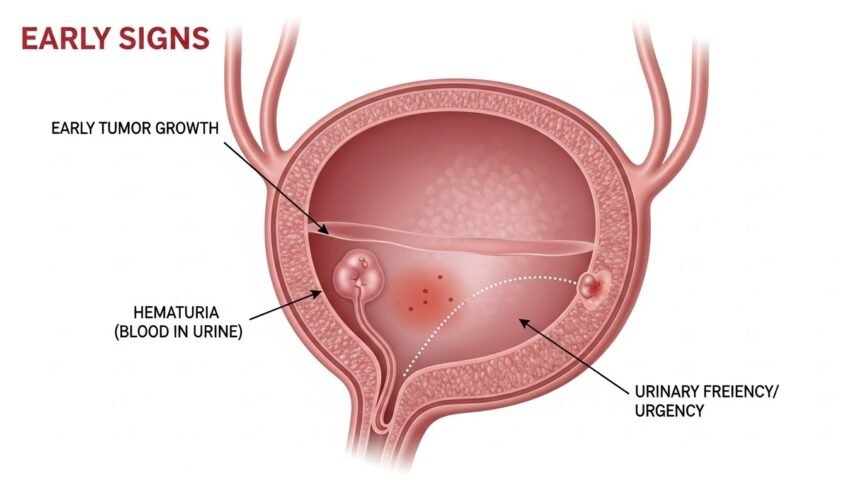
When it comes to our health, the human tendency to rationalize symptoms is a powerful force. A slight change in bathroom habits is attributed to aging; a tint of color in the urine is blamed on something we ate. However, in the realm of oncology, vigilance is the greatest ally. Bladder cancer, the sixth most common cancer in the United States, often presents itself with subtle whispers before it shouts. Understanding the early signs of bladder cancer is not merely about medical knowledge—it is a critical strategy for early intervention and survival.
According to the American Cancer Society, more than 83,000 new cases of bladder cancer are diagnosed in the U.S. annually. While these numbers are significant, the survival rates for early-stage detection are exceedingly high. This article delves into the warning signs, risk factors, and diagnostic realities of bladder cancer, empowering you to distinguish between minor irritations and signals that require immediate medical attention.
What is Bladder Cancer?
Before identifying the symptoms, it is essential to understand the origin of the disease. Bladder cancer typically begins in the cells (urothelial cells) that line the inside of the bladder—the hollow, muscular organ in your lower abdomen that stores urine. While it is most common in the bladder, this type of cancer can occur in other parts of the urinary tract drainage system.
Most bladder cancers are diagnosed at an early stage when the cancer is highly treatable. However, even early-stage bladder cancer can come back after successful treatment. For this reason, people with bladder cancer typically need follow-up tests for years after treatment to look for bladder cancer recurrence. For a deeper understanding of the cellular changes involved, the National Cancer Institute offers extensive resources on urothelial carcinoma.
The Primary Red Flag: Hematuria
The most common and often the very first of the early signs of bladder cancer is blood in the urine, medically known as hematuria. This symptom is deceptively intermittent; it may appear one day and vanish the next, leading patients to believe the issue has resolved itself.
Hematuria generally presents in two forms:
- Gross Hematuria: The urine appears pink, bright red, or cola-colored. It takes very little blood to change the color of urine, and usually, this occurs without pain.
- Microscopic Hematuria: The urine looks normal to the naked eye, but blood cells are detected during a urinalysis test.
It is crucial to note that blood in the urine does not automatically mean cancer. Infections, kidney stones, and benign prostate issues are common causes. However, as noted by the Mayo Clinic, hematuria is the cardinal sign that should never be ignored, regardless of whether it is accompanied by pain.
Beyond the Visible: Other Early Warning Signs
While hematuria is the headline symptom, changes in urination habits are also significant indicators. These symptoms are often confused with a urinary tract infection (UTI) or overactive bladder. If you are treated for a UTI and symptoms do not improve, it is vital to consult a specialist.
Watch for these irritative voiding symptoms:
- Frequency: Urinating much more often than usual.
- Urgency: Having an intense, sudden urge to pass urine that is difficult to hold.
- Dysuria: Pain or a burning sensation during urination.
- Nocturia: Waking up multiple times during the night to urinate.
- Weak Stream: A noticeable decrease in the force of the urine stream.
The Urology Care Foundation emphasizes that while these symptoms are often associated with less severe conditions, their persistence is what characterizes a potential malignancy. If antibiotics do not resolve these issues, further investigation is mandatory.
Risk Factors You Shouldn’t Ignore
Understanding who is at risk helps in contextualizing the symptoms. Bladder cancer is not entirely random; specific lifestyle choices and environmental exposures play a massive role.
1. Tobacco Use
Smokers are at least three times as likely to get bladder cancer as non-smokers. The kidneys filter the harmful chemicals from smoke and dump them into the bladder, where they damage the lining cells. The Centers for Disease Control and Prevention (CDC) lists smoking as the single most significant risk factor.
2. Occupational Exposure
The bladder is the body’s reservoir for toxins before excretion. People working in industries that handle aromatic amines—such as dye, rubber, leather, textiles, and paint products—face higher risks. The World Health Organization (WHO) and safety organizations monitor these carcinogens closely.
3. Age, Gender, and Race
- Age: The risk increases as you get older; most people diagnosed are over 55.
- Gender: Men are far more likely to develop bladder cancer than women, though women often present with more advanced stages due to delayed diagnosis (mistaking symptoms for gynecological issues).
- Race: Whites are diagnosed with bladder cancer about twice as often as African Americans or Hispanics.

The Data: Staging and Survival
To understand the gravity of detecting early signs of bladder cancer, one must look at the survival rates relative to the stage at diagnosis. The earlier it is caught, the better the prognosis.
| Stage | Description | 5-Year Relative Survival Rate |
|---|---|---|
| Stage 0 (In Situ) | Cancer is found only on the inner lining of the bladder. It has not grown into the muscle. | ~96% |
| Stage I | Cancer has grown into the tissue under the lining but not into the muscle. | ~70% |
| Stage II | Cancer has spread to the muscle wall of the bladder but not to lymph nodes. | ~35-63% |
| Stage III | Cancer has spread through the bladder muscle into surrounding tissue (prostate, uterus, etc.). | ~35-46% |
| Stage IV | Cancer has spread to the abdominal wall, lymph nodes, or distant organs (metastasis). | ~5-15% |
Source: Derived from SEER Cancer Statistics Review. Note: Statistics are averages and individual outcomes vary based on health and treatment.
Diagnostic Procedures: Confirming the Diagnosis
If you present symptoms, a primary care physician will likely refer you to a urologist. The diagnostic path usually follows a specific protocol to rule out other conditions before confirming cancer.
- Urinalysis and Urine Cytology: The doctor examines the urine for blood and checks for abnormal cells under a microscope.
- Cystoscopy: This is the gold standard for diagnosis. A doctor inserts a narrow tube with a camera (cystoscope) through the urethra to visually inspect the bladder lining. According to Johns Hopkins Medicine, this procedure allows for immediate biopsy of suspicious areas.
- Imaging Tests: CT scans (CT urogram) or Retrograde pyelograms are used to image the upper urinary tract to ensure cancer hasn’t spread or originated in the kidneys.
Treatment Options and the Path Forward
Treatment plans vary heavily based on the grade and stage of the cancer. For early-stage non-muscle-invasive bladder cancer, a procedure called Transurethral Resection of Bladder Tumor (TURBT) is common, often followed by intravesical therapy (like BCG immunotherapy). The American Society of Clinical Oncology (Cancer.Net) provides a comprehensive guide on how immunotherapy is revolutionizing bladder cancer care.
For more advanced stages, radical cystectomy (removal of the bladder), chemotherapy, or radiation may be required. This highlights why recognizing those early signs is paramount—it can mean the difference between a minimally invasive outpatient procedure and life-altering surgery.
Prevention and Lifestyle Changes
While not all cancers are preventable, you can significantly lower your risk profile.
- Hydration: Drinking plenty of fluids, particularly water, may lower the risk of bladder cancer. Fluids dilute the concentration of carcinogens in the urine and help flush them out of the bladder faster. Studies cited by Healthline suggest a correlation between high fluid intake and reduced risk.
- Diet: A diet rich in fruits and vegetables provides antioxidants that may help repair damaged cells.
- Stop Smoking: It cannot be overstated—quitting smoking is the single best thing you can do for your bladder health. Resources like Smokefree.gov offer free support plans.
Conclusion: Listen to Your Body
The most dangerous aspect of bladder cancer is its ability to mimic benign conditions. A little blood that disappears, a frequent urge to go that feels like a standard infection—these are easy to dismiss in the busyness of daily life. However, these are the early signs of bladder cancer that offer you the best chance at a cure.
If you notice blood in your urine, even once, or experience persistent urinary changes, do not wait. Schedule an appointment with a healthcare provider immediately. In the fight against cancer, time is not just a factor; it is the most valuable resource you possess. Prioritize your health, advocate for testing, and ensure that silence does not become a symptom.