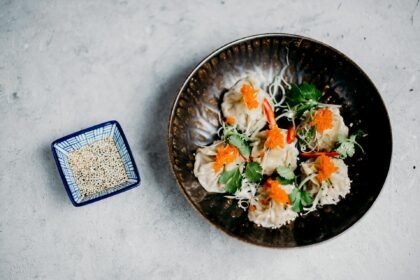
Enoki Mushrooms: Unique Health Benefits and Culinary Tips
Enoki mushrooms (Flammulina velutipes), also known as golden needle mushrooms or lily mushrooms, are a staple in East Asian cuisine and are gaining popularity globally. Recognised for their delicate flavour, crisp texture, and thread-like appearance, these fungi offer more than just culinary versatility.
From a nutritional standpoint, Enoki mushroom health benefits are impressive, ranging from immune system support to potential anticancer properties. While they are often found in soups, hot pots, and stir-fries, understanding their proper preparation is crucial due to safety concerns regarding raw consumption.
This article provides an exhaustive look at the nutritional profile, benefits, safety considerations, and culinary uses of enoki mushrooms.
Overview of Enoki Mushrooms
Wild enoki mushrooms grow in clusters on tree stumps, particularly the Chinese hackberry tree (known as enoki in Japanese). Wild varieties are often darker in colour with shorter stems and larger caps compared to their cultivated counterparts.
The commercially available enoki mushrooms found in supermarkets are cultivated in dark, carbon dioxide-rich environments. This specific growing technique encourages the development of their signature long, slender white stems and small, snow-white caps.
Historically, they have been used in traditional medicine across China, Japan, and Korea for centuries. Today, modern science is catching up, seeking to validatethe bioactive compounds responsible for the claimed Enoki mushroom health benefits.
Nutritional Profile
Enoki mushrooms are nutrient-dense while remaining low in calories, making them an excellent addition to a balanced diet. They are particularly rich in B vitamins, which are essential for metabolic function.
A 65-gram (approximately 1 cup) serving of raw enoki mushrooms provides:
| Nutrient | Amount | % Daily Value (DV) |
|---|---|---|
| Calories | 24 | – |
| Carbohydrates | 5 g | 2% |
| Protein | 1.7 g | 3% |
| Fat | 0.2 g | 0% |
| Fibre | 1.8 g | 7% |
| Niacin (Vitamin B3) | 4.6 mg | 29% |
| Pantothenic Acid (B5) | 0.88 mg | 18% |
| Thiamine (Vitamin B1) | 0.15 mg | 12% |
| Riboflavin (Vitamin B2) | 0.13 mg | 10% |
| Copper | 0.07 mg | 8% |
| Folate | 31 mcg | 8% |
Source: USDA FoodData Central
Beyond basic macronutrients, enoki mushrooms are packed with powerful antioxidants, including gallic acid, quercetin, and ferulic acid, which help combat oxidative stress in the body.
Factors Contributing to Health Benefits
The Enoki mushroom health profile is largely defined by its high concentration of bioactive compounds. Researchers have identified several key mechanisms through which these mushrooms support human health.
1. Rich in Antioxidants
Antioxidants are vital for protecting cells from damage caused by free radicals. Chronic oxidative stress is linked to heart disease, cancer, and type 2 diabetes. Enoki mushrooms contain a variety of antioxidants, including ergothioneine, an amino acid found in fungi that is not destroyed by cooking.
One study comparing different edible mushrooms found that enoki extracts demonstrated significant radical-scavenging activity, suggesting they may help mitigate inflammation and cellular damage. For more on the role of antioxidants in disease prevention, you can review information from Cancer Research UK.
2. Immune System Support
Enoki mushrooms contain a specific type of soluble fibre known as beta-glucans. These polysaccharides are renowned for their ability to modulate the immune system. They work by stimulating the activity of macrophages and natural killer cells, which are the body's first line of defence against pathogens.
Furthermore, enoki mushrooms produce a protein called FIP-fve. Research indicates that this protein may help reduce allergic reactions and bolster immunity. For a deeper dive into how mushrooms support immunity, see this overview on Healthline.
3. Potential Anticancer Properties
While more human research is needed, laboratory studies have shown promising results regarding enoki mushrooms and cancer cells. The bioactive compounds in enoki, particularly proflamin and flammulin, have been observed to inhibit the growth of cancer cells in test-tube studies.
A landmark epidemiological study conducted in Nagano Prefecture, Japan, found that farmers who produced and consumed enoki mushrooms had significantly lower cancer death rates compared to the general population. While this does not prove causation, it highlights a compelling association warranting further investigation by bodies like the National Institutes of Health (NIH).
4. Heart Health and Cholesterol Management
Cardiovascular disease remains a leading cause of death globally. The high fibre content in enoki mushrooms can assist in managing cholesterol levels. Soluble fibre binds to bile acids in the gut, promoting their excretion and forcing the liver to use cholesterol to produce more bile, effectively lowering blood cholesterol levels.
Additionally, animal studies have suggested that extracts from enoki mushrooms may prevent the progression of atherosclerosis (hardening of the arteries). Maintaining healthy cholesterol is a key factor in heart health, as outlined by the British Heart Foundation.
5. Blood Sugar Regulation
The fibre and protein content in enoki mushrooms helps slow down digestion, which can prevent rapid spikes in blood sugar. This makes them a suitable food choice for individuals managing type 2 diabetes or those looking to stabilise their energy levels.
Important Safety Management
While the Enoki mushroom health benefits are substantial, there is a critical safety factor that consumers must manage: the risk of Listeria monocytogenes.
The Listeria Risk
Enoki mushrooms have been linked to several high-profile recalls and outbreaks of listeriosis in the US, UK, and Canada. Because enoki mushrooms are grown in cool, damp environments, they provide ideal conditions for Listeria bacteria to thrive.
Unlike many other bacteria, Listeria can survive in refrigerator temperatures. Symptoms of infection include fever, muscle aches, nausea, and diarrhoea. For pregnant women, the elderly, and those with compromised immune systems, the infection can be severe or fatal. The CDC frequently updates guidelines on foodborne outbreaks related to mushrooms.
Proper Preparation is Key
Do not eat enoki mushrooms raw.
To manage this risk effectively, you must cook enoki mushrooms thoroughly. Cooking kills Listeria bacteria. The FDA advises keeping the mushrooms refrigerated and ensuring they are heated to an internal temperature of at least 73°C (165°F) before consumption.
Culinary Tips and Practical Usage
Enoki mushrooms have a mild, fruity flavour and a crunchy texture (