
Most of us know the feeling of sluggish digestion or that mid-afternoon energy crash. You might be searching for natural ways to feel lighter and more energised without resorting to harsh supplements or restrictive diets.
While we often turn to bran flakes or fibrous vegetables to boost our digestive health, there is a sweeter, more vibrant solution sitting in the fruit aisle: the strawberry. Beyond their bright red colour and refreshing taste, strawberries are a nutritional powerhouse, specifically regarding their fibre content.
Increasing your strawberry fibre content intake is one of the most delicious ways to support your gut microbiome and regulate blood sugar levels.
Research consistently shows that a diet high in fruits and vegetables is crucial for long-term health. However, understanding exactly why strawberries are so beneficial requires a closer look at their nutritional profile.
This article explores the science behind fibre in strawberries, how it aids digestion, and practical ways to include them in your daily routine.
What Is the Fibre Content in Strawberries?
Strawberries are often celebrated for their vitamin C levels, but their fibre profile is equally impressive. To understand why this matters, we must first look at what fibre actually does in the body.
Fibre is a type of carbohydrate that the body cannot digest. Instead of being broken down into sugar molecules like other carbs, it passes through the body relatively intact.
According to the NHS guidelines recommend, adults should aim for 30g of fibre a day, yet many of us fall short of this target.
The Nutritional Breakdown
A standard serving of fresh strawberries (approximately 150g or one cup) contains roughly 3 grams of fibre. While this might seem modest compared to a bowl of oats, it is significant given the low calorie count of the fruit.
Strawberries primarily contain two types of fibre:
- Insoluble Fibre (Cellulose): This adds bulk to your stool and helps food pass more quickly through the stomach and intestines. It is essential for preventing constipation.
- Soluble Fibre (Pectin): This type dissolves in water to form a gel-like substance. It helps lower blood cholesterol and glucose levels.
Because strawberries contain roughly 26% soluble fibre and 74% insoluble fibre, they offer a balanced approach to digestive maintenance.
Furthermore, strawberries are roughly 91% water. This high water content works synergistically with fibre to maintain hydration in the colon, ensuring regular bowel movements.
Health Benefits of Strawberry Fibre
The benefits of the strawberry fibre content extend far beyond simple digestion. The complex interactions between fibre, antioxidants, and your body’s metabolic processes contribute to overall wellness.
Here are the key evidence-based benefits:
1. Improved Digestive Motility
The primary function of the insoluble fibre found in strawberries is to assist with digestive motility. By adding bulk to the stool, it encourages the muscles of the digestive tract to work more efficiently.
For those suffering from irregularity, incorporating a cup of strawberries into breakfast can make a noticeable difference. The British Nutrition Foundation highlights that increasing plant-based diversity is key to a healthy gut.
2. Regulation of Blood Sugar
One of the most valuable aspects of strawberries is their low glycaemic index (GI).
Despite tasting sweet, strawberries do not cause rapid spikes in blood sugar. The soluble fibre slows down the digestion of sugar, leading to a more gradual release of energy.
This makes them an excellent choice for individuals managing diabetes or insulin resistance.
Organisations like Diabetes UK frequently recommend berries as a safe fruit option because the fibre effectively mitigates the impact of the natural fructose.
3. Heart Health and Cholesterol
Soluble fibre binds to cholesterol particles in the digestive system and moves them out of the body before they can be absorbed.
Regular consumption of strawberries has been linked to improved heart health markers.
The British Heart Foundation notes that a high-fibre diet is associated with a lower risk of heart disease and stroke. Additionally, the anthocyanins (pigments that give strawberries their red hue) work alongside fibre to reduce oxidative stress in blood vessels.
4. Weight Management and Satiety
Fibre is incredibly satiating. Because it takes longer to chew and digest, it signals to your brain that you are full sooner and stays in the stomach longer.
Including strawberries in a meal can help reduce overall calorie intake without leaving you feeling deprived. This is often referred to as ‘volumetrics’—eating foods that are physically large but lower in calories.
For a deeper dive into the properties of berries, you can read this comprehensive Healthline article on berries which details their antioxidant capacity.
5. Prebiotic Potential
Emerging research suggests that certain fibres in strawberries act as prebiotics.
Prebiotics serve as food for the beneficial bacteria (probiotics) living in your gut. By nourishing these good bacteria, you support your immune system and mental health via the gut-brain axis.
Comparison: Strawberries vs. Other Common Fruits
It helps to see how strawberries stack up against other popular fruits to understand their value in a balanced diet.
| Fruit (100g serving) | Fibre Content (g) | Sugar Content (g) | Glycaemic Index (GI) | Calories (kcal) |
|---|---|---|---|---|
| Strawberries | 2.0 | 4.9 | 40 (Low) | 32 |
| Raspberries | 6.5 | 4.4 | 26 (Low) | 53 |
| Blueberries | 2.4 | 9.9 | 53 (Low) | 57 |
| Bananas | 2.6 | 12.0 | 51 (Low) | 89 |
| Apples (with skin) | 2.4 | 10.0 | 36 (Low) | 52 |
| Grapes | 0.9 | 16.0 | 59 (Medium) | 67 |
As the table demonstrates, while raspberries technically have higher fibre, strawberries offer a superior balance of low calories and low sugar, making them ideal for high-volume consumption.
Tips for Maximising Strawberry Intake
To get the most out of the strawberry fibre content, how you prepare and eat them matters.
Processing fruit (such as juicing) often breaks down the insoluble fibre, stripping away many of the benefits.
Select the Best Produce
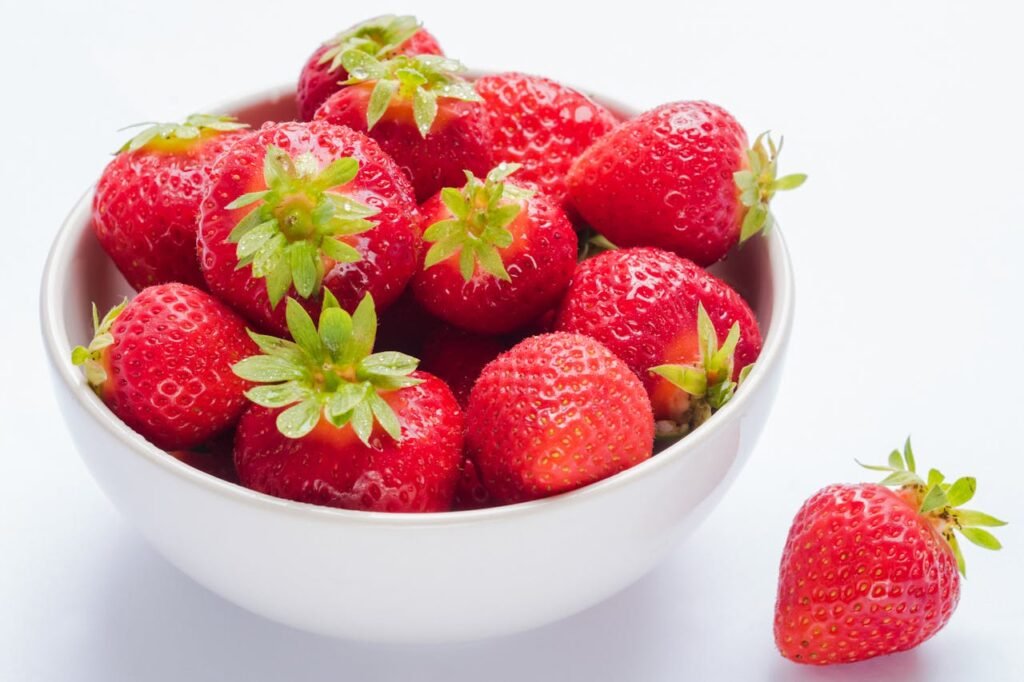
Look for firm, plump berries with a vibrant red colour and fresh green caps. Avoid shrivelled or mushy berries, as their nutrient content may have degraded.
For guidance on seasonality and reducing waste, the GOV.UK Eatwell Guide offers excellent resources on consuming fresh produce.
Preparation Methods
- Eat the Whole Fruit: Avoid juicing strawberries if your goal is fibre intake. Smoothies are acceptable if you blend the whole fruit, as the pulp remains in the drink.
- Pair with Protein: Combine strawberries with Greek yoghurt or nuts. The protein and fats further slow digestion, enhancing the blood sugar stabilising effects.
- Leave the Skins On: Unlike apples, you cannot peel a strawberry, which is excellent because the tiny seeds and outer flesh are rich in insoluble fibre.
- Frozen is Fine: Don’t fear the freezer aisle. Frozen strawberries are picked at peak ripeness and retain almost all their fibre and vitamin content.
Creative Serving Ideas
- Porridge Topper: Slice fresh berries over oats to double down on soluble fibre (beta-glucan from oats + pectin from berries).
- Salads: Toss sliced strawberries into a spinach and walnut salad with a balsamic glaze.
- Salsas: create a spicy-sweet salsa with diced strawberries, jalapeños, coriander, and lime juice to serve with fish.
For more culinary inspiration, BBC Good Food provides extensive recipe ideas that preserve the integrity of the fruit.
Frequently Asked Questions
Here are answers to common queries regarding strawberries and digestive health.
Are strawberries low-FODMAP?
This is a common concern for those with Irritable Bowel Syndrome (IBS).
According to Monash University, the leaders in FODMAP research, strawberries are generally considered low-FODMAP in standard serving sizes (around 65g). However, larger servings may contain moderate amounts of fructose. If you have IBS, monitor your portion sizes.
Can I eat strawberries on a keto diet?
Yes. Strawberries are one of the few fruits permitted on a ketogenic diet due to their low net carb count.
The high water and fibre content means the digestible carbohydrate load is significantly lower than that of tropical fruits like mangoes or bananas.
Do strawberries help prevent cancer?
While no single food prevents cancer, a diet high in fibre and antioxidants is a major preventative factor.
Cancer Research UK states that high-fibre diets can reduce the risk of bowel cancer. The ellagic acid found in strawberries also shows promise in laboratory studies for its anti-cancer properties.
Is organic necessary for fibre content?
Organic and non-organic strawberries contain virtually the same amount of fibre.
The choice to buy organic is usually environmental or related to pesticide residues. If you are concerned about cost, conventional strawberries are still a highly nutritious choice. Just ensure you wash them thoroughly.
For a broader scientific perspective on carbohydrates and fibre sources, the Harvard T.H. Chan School of Public Health offers detailed literature reviews.
The Bottom Line
Strawberries are far more than a summer treat; they are a functional food that can play a vital role in your digestive wellness.
With a balanced mix of soluble and insoluble fibre, they support bowel regularity, aid in blood sugar management, and contribute to heart health.
The strawberry fibre content—roughly 3 grams per cup—combined with high levels of vitamin C and antioxidants, makes them one of the most nutrient-dense fruits available.
If you are looking to improve your digestive health naturally, incorporate a serving of strawberries into your daily routine. whether fresh, frozen, or blended, your gut will thank you for the extra support.
Remember to increase your fibre intake gradually and drink plenty of water to allow your digestive system to adjust comfortably.