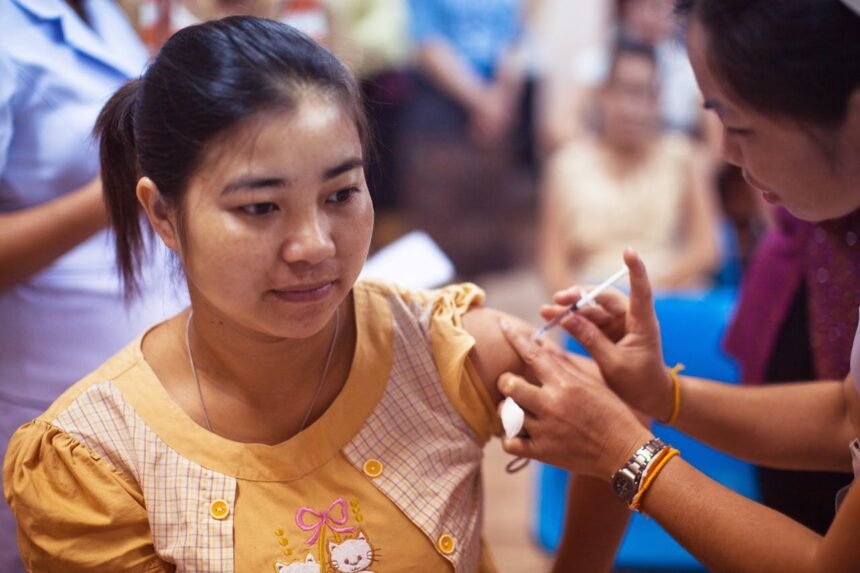
In the realm of public health, few concepts are as critical—and occasionally misunderstood—as herd immunity. Often referred to as “community immunity,” this biological principle acts as a sociological shield, protecting those who cannot protect themselves. While the decision to vaccinate is often viewed through the lens of personal health, the collective impact of these individual choices creates a powerful web of safety. Understanding how herd immunity benefits community health is essential for appreciating the broader role of vaccination programs.
When a high percentage of a population is immune to an infectious disease, effectively stopping the germ’s ability to spread, we achieve herd immunity. This article delves into the mechanics of this phenomenon, the mathematics behind the thresholds, and why your vaccination status matters to your neighbor.
The Mechanics of Community Protection
At its core, herd immunity is about cutting off the pathways for a virus or bacteria to travel. Infectious diseases rely on a chain of transmission: one infected person passes the pathogen to a susceptible person, who passes it to another, and so on.
Vaccination breaks this chain. When a virus attempts to jump from an infected host to a new one, but encounters a vaccinated (immune) individual, the line of transmission stops. The virus hits a dead end. According to the World Health Organization (WHO), herd immunity is achieved when a sufficient proportion of a population is immune to an infectious disease, whether through vaccination or prior illness, making the spread from person to person unlikely.
Direct vs. Indirect Protection
It is important to distinguish between the two types of protection generated by vaccines:
- Direct Protection: This is the immunity gained by the individual receiving the vaccine. Their immune system learns to recognize and fight the pathogen.
- Indirect Protection: This is the essence of herd immunity. It is the safety provided to unimmunized individuals because the prevalence of the disease has been significantly reduced by the immunized majority.
Why Herd Immunity Benefits Community Health
Not everyone can get vaccinated. Some individuals are medically exempt due to severe allergies, while others have compromised immune systems that prevent them from mounting an effective response to vaccines. This group includes:
- Newborn infants who are too young for certain immunizations.
- Elderly individuals with waning immune systems.
- People undergoing chemotherapy.
- Individuals with HIV/AIDS.
- Organ transplant recipients taking immunosuppressants.
For these groups, the herd immunity benefits community safety by acting as a cocoon. The National Institute of Allergy and Infectious Diseases (NIAID) highlights that for immunocompromised individuals, the immunity of those around them is literally a matter of life and death. When you get vaccinated, you are not just shielding yourself; you are serving as a barrier for the most vulnerable members of society.
The Mathematics of Immunity: R0 and Thresholds
To determine how many people need to be vaccinated to achieve herd immunity, epidemiologists look at a value known as the Basic Reproduction Number, or R0 (pronounced “R-naught”).
The R0 represents the average number of people one infected person will pass the virus to in a completely susceptible population.
- If R0 is less than 1, the disease will eventually die out.
- If R0 is equal to 1, the disease remains stable.
- If R0 is greater than 1, the disease will spread exponentially.
The higher the R0, the higher the percentage of the population that needs to be immune to stop the spread. This required percentage is called the Herd Immunity Threshold (HIT).
Comparison of Disease Transmissibility and Vaccination Thresholds
The following table illustrates the varying levels of vaccination coverage required to protect the community based on the transmissibility of the disease.
| Disease | Transmission (R0) | Herd Immunity Threshold | Method of Transmission |
|---|---|---|---|
| Measles | 12 – 18 | 93% – 95% | Airborne aerosol |
| Pertussis (Whooping Cough) | 12 – 17 | 92% – 94% | Airborne droplets |
| Diphtheria | 6 – 7 | 85% | Saliva / Kissing |
| Rubella | 6 – 7 | 83% – 85% | Airborne droplets |
| Smallpox | 5 – 7 | 80% – 85% | Airborne droplets |
| Polio | 2 – 5 | 80% | Fecal-oral route |
| Mumps | 4 – 7 | 75% – 86% | Airborne droplets |
| Influenza | 1.5 – 1.8 | 33% – 44% | Airborne droplets |
Data interpreted from The Lancet and historical epidemiological records.
As seen in the data, highly contagious diseases like measles require an incredibly high vaccination rate (up to 95%). This is why even small pockets of vaccine hesitancy can lead to sudden, explosive outbreaks in otherwise healthy communities.
Challenges to Achieving Herd Immunity
While the concept is mathematically sound, achieving it in the real world presents significant challenges. The Centers for Disease Control and Prevention (CDC) monitors several factors that can disrupt the stability of community immunity.
1. Vaccine Hesitancy
Misinformation and skepticism regarding vaccine safety have led to lower immunization rates in various regions. When coverage drops below the threshold, the “shield” develops holes. The Mayo Clinic notes that vaccine hesitancy is one of the primary barriers to eliminating diseases that were once considered controlled.
2. Waning Immunity
Some vaccines provide lifelong protection, while others require boosters. For example, protection against pertussis (whooping cough) fades over time. If adults fail to get booster shots, they become potential vectors for the disease, endangering infants who have not yet completed their vaccination series.
3. Pathogen Evolution (Mutation)
Viruses are not static; they evolve. If a virus mutates significantly, it may evade the immune response generated by previous vaccines or infections. This was seen prominently with SARS-CoV-2 variants. Research published in Nature discusses how rapid viral evolution can necessitate updated vaccines to maintain community protection.
4. Global Disparity
In our interconnected world, herd immunity is a global challenge. If a disease is rampant in one part of the world due to lack of vaccine access, international travel can reintroduce it to areas where it was previously eliminated. Organizations like UNICEF work tirelessly to ensure equitable access to vaccines to prevent these reservoirs of infection.
Historical Success Stories
The proof that herd immunity benefits community health lies in history.
The Eradication of Smallpox
Smallpox was once a devastating scourge, killing millions annually. Through a massive global vaccination effort led by the WHO, the threshold for herd immunity was breached worldwide. In 1980, smallpox was declared eradicated—the first and only human disease to be driven to extinction by vaccination. Detailed accounts from The History of Vaccines (an initiative by The College of Physicians of Philadelphia) chronicle this monumental achievement.
The Fight Against Polio
Polio, which causes paralysis and death, has been eliminated from most of the world. While not yet fully eradicated, the Global Polio Eradication Initiative reports that cases have dropped by over 99% since 1988 due to high community vaccination rates. However, recent detections of polio in wastewater in developed nations serve as a stark reminder that if we stop vaccinating, these diseases will return.
The Role of Individual Responsibility
Understanding herd immunity shifts the narrative of vaccination from a personal choice to a civic duty. When you choose to vaccinate, you are contributing to a public good. You are essentially carrying an umbrella large enough to cover yourself and the person standing next to you.
Epidemiologists at Johns Hopkins University emphasize that relying on “natural infection” to reach herd immunity is a dangerous strategy that results in unnecessary mortality and overwhelmed healthcare systems. Vaccination remains the safest, most ethical route to community protection.
Conclusion: Strengthening the Shield
The evidence is clear: herd immunity benefits community well-being by protecting the vulnerable, preventing healthcare systems from collapsing, and keeping highly contagious diseases at bay. It is a fragile state that requires constant maintenance through high vaccination coverage.
We must remain vigilant against misinformation and ensure that we, and our families, are up to date on recommended immunizations. By doing so, we sustain the invisible shield that keeps our society safe.
Take action today: Check your vaccination records, consult with your healthcare provider, and ensure you are contributing to the safety of your community. Your immunity is their protection.