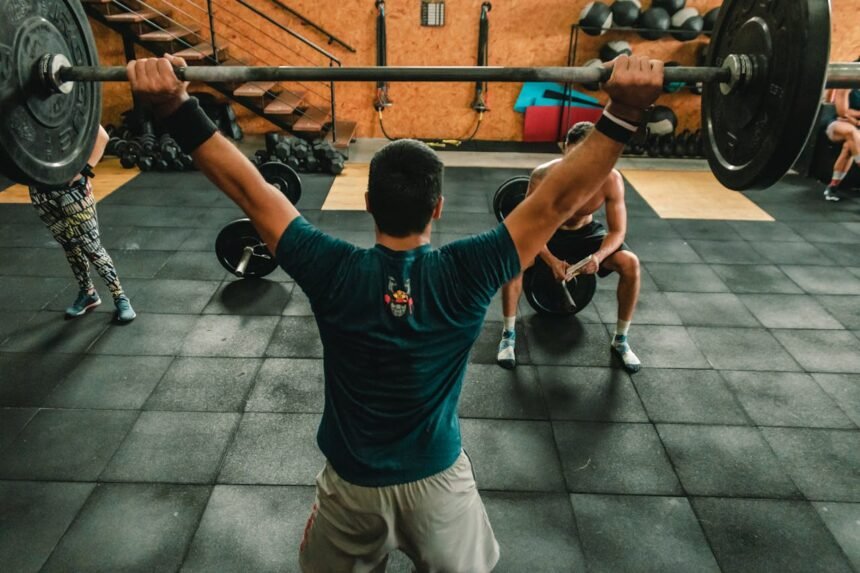
If you have ever felt that deep, burning ache in your legs two days after a heavy squat session, you have likely experienced the after-effects of eccentric loading. In the world of fitness and rehabilitation, we often obsess over how much weight we can lift up. However, emerging science suggests that how we lower that weight—the negative portion of lift—might be even more critical for muscle growth, strength, and tissue repair.
Eccentric loading is not just a technique for bodybuilders; it is a fundamental mechanism of human movement that, when harnessed correctly, can prevent injuries and break through stubborn training plateaus. Whether you are recovering from a tendon injury or looking to maximise hypertrophy, understanding the mechanics of the eccentric phase is essential.
What Is Eccentric Loading?
To understand eccentric loading, we must first look at how muscles contract. Every dynamic exercise involves two primary phases:
- Concentric phase: The muscle shortens as it contracts (e.g., lifting the weight in a bicep curl).
- Eccentric phase: The muscle lengthens while under tension (e.g., lowering the weight back down).
Eccentric loading refers specifically to controlling the resistance during that lengthening phase. Think of it as putting on the brakes. Your muscle fibres are physically stretching apart, yet they are fighting to hold the weight. This creates a significant amount of mechanical tension, which is a primary driver for adaptation.
While many gym-goers drop the weight quickly to prepare for the next rep, they are missing out on the unique benefits of the lengthening muscle contraction. Research indicates that muscles can handle significantly more weight—up to 20-30% more—during the eccentric phase compared to the concentric phase. This allows for eccentric overload training, a method where you handle heavier loads during the lowering phase to stimulate greater strength gains.
The Science of Muscle Growth
Why does lowering a weight slowly build more muscle? The answer lies in the cellular response to stress. When you emphasise the eccentric phase, you create microscopic tears in the muscle fibres. While this sounds alarming, this muscle damage and repair process is exactly what signals your body to build back stronger and larger.
Mechanical Tension and Hypertrophy
Hypertrophy (muscle growth) is driven largely by mechanical tension. Eccentric movements generate high levels of tension with a lower metabolic cost than concentric movements. This means you can subject your muscles to a potent growth stimulus without necessarily draining your energy reserves as quickly.
This specific type of tension is crucial for sarcoplasmic hypertrophy: what it is and how to achieve it. By increasing the volume of fluid and non-contractile proteins within the muscle cell, you enhance the overall size of the muscle. Furthermore, the trauma induced by heavy eccentrics triggers satellite cell activation. These are precursor cells that donate their nuclei to existing muscle fibres, aiding in repair and facilitating long-term growth.
For a deeper dive into the nuances of growth, reading about Sarcoplasmic Hypertrophy: What It Is and How to Achieve It is highly recommended.
Targeting Fast-Twitch Fibres
Eccentric training is particularly effective at recruiting Type II muscle fibres. These are your ‘fast-twitch’ fibres, responsible for explosive power and size. Unlike Type I fibres, which are endurance-focused, Type II fibres have the greatest potential for growth but are often harder to fatigue with standard training. By utilising heavy negatives or slow tempos, you force these stubborn fibres to adapt.
This is closely related to understanding tempo lifting for maximised muscle hypertrophy. By manipulating the speed of your lift, specifically slowing down the descent, you increase the time under tension hypertrophy stimulus. To master this, check out our guide on Understanding Tempo Lifting for Maximised Muscle Hypertrophy.
Tendon Health and Injury Rehabilitation
One of the most compelling reasons to prioritise eccentric loading isn’t just big muscles—it is bulletproof joints. Eccentric exercise is the gold standard in treating tendinopathies (tendon pain and degeneration).
Strengthening Connective Tissue
Tendons have a poor blood supply compared to muscles, making them slow to heal. However, they respond exceptionally well to the mechanical force of eccentric loading. This process encourages connective tissue adaptation, realigning collagen fibres and increasing the stiffness and tensile strength of the tendon.
This is vital for injury prevention techniques. Stronger tendons act as better shock absorbers, protecting your muscles from strains during dynamic movements. For example, runners often suffer from Achilles issues, while lifters struggle with patellar tendonitis. Implementing tendon strengthening exercises, such as slow eccentric calf raises or squats, can be curative.
Active Recovery
If you are currently managing joint issues, low-impact eccentric work can be a form of active recovery. Tools like Indian Clubs are excellent for this, providing traction and gentle eccentric loading for the shoulder girdle. Learn more in our article on Exploring the History and Benefits of Indian Clubs for Active Recovery.

Practical Application: How to Use Eccentric Loading
Incorporating eccentric training doesn’t mean you need to change your entire routine. Small adjustments can yield massive results. Here is how to implement eccentric vs concentric training effectively.
1. Tempo Training
The simplest method is to change your lifting tempo. A common prescription is a 4-0-1-0 tempo: lower the weight for 4 seconds, no pause, lift for 1 second, no pause. This forces you to control the weight rather than letting gravity do the work.
This approach works exceptionally well with compound lifts. For instance, eccentric squats benefits include improved hip stability and deeper squat depth over time. If you struggle with the bottom position of a squat, pausing or controlling the descent can help. Read more about Why You Should Include Pause Squats in Your Leg Day Routine.
2. The 2-Up, 1-Down Method
This technique involves lifting a weight concentrically with two limbs and lowering it eccentrically with one. For example, on a leg extension machine, push the weight up with both legs, then lower it slowly with just your right leg. This allows you to overload the eccentric phase beyond what you could lift concentrically with a single limb.
3. Heavy Negatives
This is an advanced technique requiring a spotter. You load the bar with 105-110% of your one-rep max. Your spotter helps you lift the weight (concentric), and you lower it slowly (eccentric) under your own control. This is highly taxing on the nervous system and should be used sparingly.
Safety is paramount here. Exercises like the Floor Press can be excellent for heavy partial eccentrics because the floor limits the range of motion, protecting the shoulders. See our guide: Floor Press: Benefits, Proper Form, and Muscle Groups Targeted.
Managing the Aftermath: DOMS
There is a catch to all this growth and strength. Eccentric loading is the primary cause of Delayed Onset Muscle Soreness (DOMS). Because you are causing significant micro-trauma to the muscle architecture, you will likely feel sore 24 to 72 hours post-workout.
While DOMS can be uncomfortable, it is generally a sign that the muscle has been stimulated. To manage this, focus on hydration, protein intake, and gentle movement. Interestingly, repeated bout effect means that subsequent sessions of eccentric training will result in less soreness as your body adapts. For those seeking delayed onset muscle soreness relief, active recovery and isometric holds can help flush blood into the tissue without causing further damage. Read about The Science of Isometric Holds for Building Functional Strength.
Eccentric Loading for Different Goals
For Absolute Strength
If your goal is moving maximum weight, eccentrics help by conditioning your nervous system to handle heavier loads. This improves your absolute strength. Understanding the difference between absolute and relative strength is vital for programming. Check out Absolute Strength vs Relative Strength: Understanding the Difference.
For Functional Athletics
Athletes need to absorb force rapidly (deceleration) to change direction safely. Eccentric strength is the ability to hit the brakes. Without it, joints take the impact. Exercises like the Steel Club swing teach the body to absorb force rotationally. See A Complete Guide to Steel Club Training for Grip and Joint Health.
Also, consider functional carries. While largely isometric, the initial pick-up and stabilisation involve complex loading patterns. Learn Why Relative Strength Matters for Athletes and Daily Function.
Breaking Plateaus
Stuck on a lift? It might be a sticking point in your concentric phase. However, improving your eccentric control often translates to better concentric power. Using Pin Squats allows you to overload specific ranges of motion safely. Learn more about Using Pin Squats to Overcome Training Plateaus and Build Power.
Tips for Safe Eccentric Training
- Start Slowly: Do not jump straight into heavy negatives. Start by slowing down your reps to 3-4 seconds on the way down.
- Use Safety Pins: When training alone, always set safety pins, especially for squats and bench presses.
- Frequency: Eccentric training is taxing. Limit heavy eccentric sessions to once a week per muscle group to allow for adequate repair.
- Listen to Your Body: If you feel sharp pain in the tendons (not muscle soreness), reduce the load immediately.
The Bottom Line
Eccentric loading is a potent tool in your fitness arsenal. By focusing on the negative portion of lift and increasing mechanical tension benefits, you can accelerate muscle growth, repair stubborn tendon injuries, and build a more resilient body.
While the resulting soreness can be intense, the rewards in terms of hypertrophy and injury resilience are unmatched. Whether you are a bodybuilder seeking size or a runner trying to heal a knee issue, slowing down might just be the fastest way to progress.
Always consult with a physiotherapist or qualified trainer before starting a new heavy eccentric programme, especially if you have a history of injury.