
There is something undeniably comforting about a tray of roasted vegetables. Whether it is the sweet, caramelised edges of a parsnip or the tender, golden flesh of a roasted potato, this cooking method brings out a depth of flavour that boiling simply cannot match.
However, if you are monitoring your blood sugar levels or managing a condition like diabetes, you might find yourself pausing before tucking in. You may have heard rumours that roasting vegetables changes their nutritional profile, specifically regarding how quickly they spike your blood glucose.
It is a valid concern. We know that cooking changes the chemical structure of food, and for many, understanding the nuances of the glycaemic index (GI) is crucial for long-term health.
Does the crispiness of a roast potato come at a metabolic cost? Does roasting turn a healthy carrot into a sugar spike? The answer is nuanced, depending heavily on the type of vegetable and how you prepare it.
This article explores how roasting affects the glycaemic index of your favourite vegetables and offers evidence-based tips to keep your meals balanced.
What Is the Glycaemic Index?
To understand why roasting matters, we first need to clarify what the GI actually measures.
The Glycaemic Index is a ranking system for carbohydrates based on how they affect your blood glucose levels. Foods are ranked on a scale from 0 to 100:
- Low GI (55 or less): Digested and absorbed slowly, causing a slower and smaller rise in blood sugar levels.
- Medium GI (56 to 69): Moderate impact on blood sugar.
- High GI (70 or more): Digested and absorbed rapidly, leading to sharper spikes in blood sugar.
For those understanding the glycaemic index, it is important to note that the GI is not the only factor. The glycaemic load (GL), which accounts for the portion size, is often a more practical measure.
However, the preparation method plays a massive role. A raw potato has a different impact on your body than a mashed or roasted one. This is because heat and water alter the physical structure of the carbohydrates found within the plant cells.
How Roasting Affects Vegetable Structure
When you roast vegetables, you are subjecting them to dry heat, usually at high temperatures. This process triggers several chemical changes that can influence the GI.
1. Starch Gelatinisation
Vegetables, particularly root varieties, contain starch granules. In their raw state, these granules are tightly packed and difficult for your body to break down quickly.
When you cook these vegetables—whether by roasting, baking, or boiling—the starch granules absorb moisture and swell. This process is known as starch gelatinisation.
Gelatinised starch is much easier for your digestive enzymes to access and convert into glucose. Consequently, the more thoroughly a starchy vegetable is cooked, the faster it can release sugar into your bloodstream, potentially raising its GI score.
2. The Maillard Reaction
That golden-brown crust we love on roasties? That is the result of the Maillard reaction. This chemical reaction occurs between amino acids and reducing sugars when heat is applied.
While this creates incredible flavour, it indicates that sugars are being broken down and altered. While this does not always drastically skyrocket the GI on its own, it often coincides with the softening of fibre, which makes digestion faster.
3. Cellular Breakdown
Heat breaks down the rigid cell walls of plants. In raw vegetables, these cell walls act as a physical barrier that slows down digestion. Roasting softens these walls, making the nutrients—and the sugars—more available to your body.
Starchy vs Non-Starchy Vegetables: A Crucial Distinction
Not all vegetables are created equal. The impact of roasting on GI largely depends on the vegetable’s initial starch content.
The Starchy Culprits
Vegetables high in starch are most susceptible to GI changes when roasted. These include:
- Potatoes: White potatoes can see a significant GI increase. A baked or roasted potato generally has a higher GI than a boiled potato, especially if the boiled potato is consumed cold.
- Parsnips and Carrots: While often cited as having a higher GI when cooked, the actual glycaemic load of carrots remains relatively low because they contain little carbohydrate per serving. However, roasted parsnips do contain more concentrated sugars.
- Sweet Potatoes: These are complex. Roasting sweet potatoes can increase their GI compared to boiling, as dry heat converts some starch to maltose (a sugar).
If you are managing diabetes, portion control with roasted root vegetables is key.
The Non-Starchy Heroes
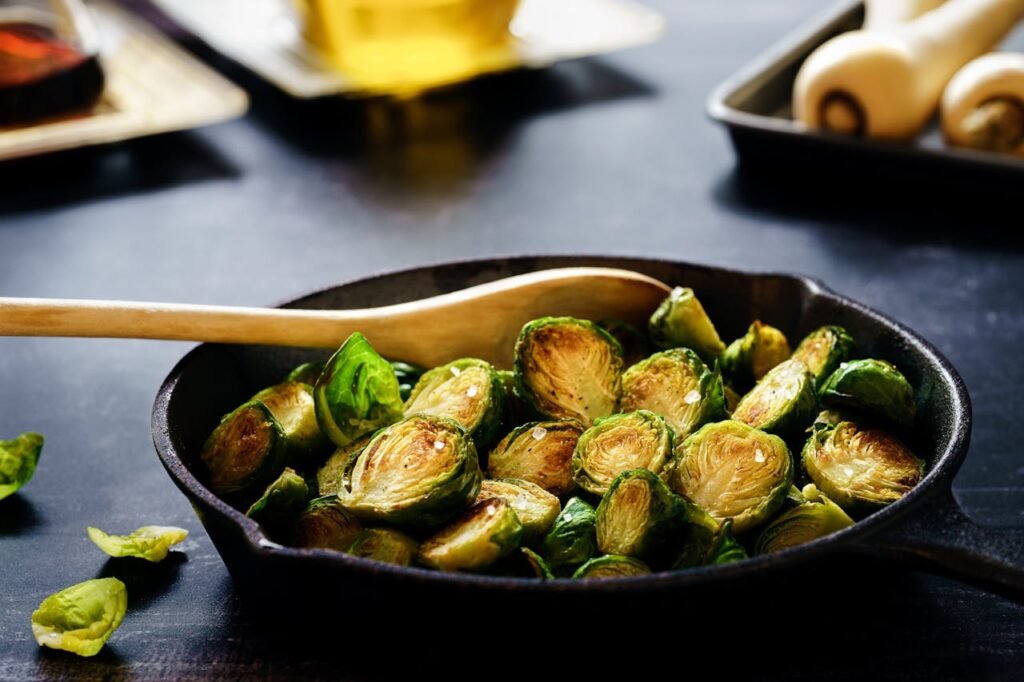
Cruciferous and leafy vegetables contain very little starch. Therefore, roasting them has a negligible effect on blood sugar spikes. These include:
- Broccoli
- Cauliflower
- Courgettes (Zucchini)
- Peppers
- Asparagus
For these foods, the benefits of the fibre and nutrients vastly outweigh any minor changes in sugar availability. Healthline categorises many of these as essential starchy versus non-starchy vegetables for a balanced diet.
Actionable Tips for Roasting
You do not need to banish roasted vegetables from your diet. By using a few strategic preparation methods, you can mitigate the impact on your blood sugar.
1. Use Healthy Fats
Fat slows down gastric emptying. When food leaves your stomach slower, sugar enters your bloodstream at a more gradual pace.
Tossing your vegetables in healthy unsaturated fats like extra virgin olive oil or rapeseed oil before roasting can effectively lower the overall glycaemic response of the meal. Avoid dry roasting if you are concerned about GI.
2. Don’t Overcook
Al Dente is best. The softer and mushier the vegetable, the easier it is to digest, and the higher the likely glucose spike.
Roast your vegetables until they are just tender and cooked through, rather than letting them collapse into a puree inside their skins. Retaining some “bite” usually means the starch structure is slightly more intact.
3. Keep the Skin On
Dietary fibre is your best friend for blood sugar management. Most of the fibre in root vegetables is found in or just below the skin.
Scrub your potatoes, carrots, and sweet potatoes rather than peeling them. This additional dietary fibre creates a mesh that slows down the absorption of sugars in the intestine.
4. Consider Acid
Adding an acidic component, such as vinegar or lemon juice, can lower the GI of a meal. Try dressing your roasted vegetables with a vinaigrette or drizzling balsamic vinegar over them before serving. The acidity interferes with the enzymes that break down starch.
Data Comparison: Cooking Methods
The following table provides an estimated comparison of how different cooking methods influence the availability of sugars in common vegetables. Note that specific GI numbers can vary based on variety and exact cooking time.
| Vegetable | Raw Texture | Boiled Impact | Roasted Impact | Estimated GI Trend (Roasting) |
|---|---|---|---|---|
| Potato (White) | Indigestible | Starch gelatinises; moderate GI. | High gelatinisation; crisp skin; High GI. | Significant Increase |
| Carrot | Crunchy, slow digestion. | Softens; slightly higher GI. | Sugars concentrate; higher GI but low Load. | Moderate Increase |
| Sweet Potato | Hard, starchy. | Lower GI (preserves structure). | Starch converts to maltose; High GI. | Significant Increase |
| Broccoli | Fibrous. | Softens; minimal sugar change. | Caramelises; minimal sugar change. | Negligible Change |
| Parsnip | Hard. | Softens. | Sugars concentrate heavily. | Moderate Increase |
Frequently Asked Questions
Does burning vegetables make them toxic?
Overcooking starchy foods (like potatoes and bread) at high temperatures can produce a chemical called acrylamide. While studies in animals show risks, the impact on humans is still being researched. To be safe, aim for a golden-yellow colour rather than dark brown or black.
Is roasted pumpkin high in sugar?
Pumpkin is a starchy vegetable, and roasting concentrates its natural sweetness. However, it has a low calorie density. Unless eaten in massive quantities, it is generally considered safe for blood sugar management.
Can cooling roasted potatoes help?
Yes. Cooling cooked potatoes allows some of the gelatinised starch to convert back into a crystalline form called retrograde starch (or resistant starch). This acts like fibre and lowers the GI. Reheating them maintains some of this benefit.
Should I avoid roasted carrots if I have diabetes?
Generally, no. You would need to eat a vast amount of carrots to spike your blood sugar significantly. The nutritional benefits (Vitamin A, fibre) outweigh the slight increase in GI. Stick to balanced diet guidelines rather than eliminating whole vegetables.
The Bottom Line
Roasting vegetables does increase their glycaemic index compared to eating them raw or lightly steamed, particularly for starchy tubers like potatoes and sweet potatoes. The heat breaks down cell walls and gelatinises starch, making glucose more readily available to your body.
However, this does not mean you should avoid roasted vegetables. They remain a vital source of vitamins, minerals, and joy in a healthy diet.
To minimise the impact on your blood sugar, focus on nutritional profile of food by keeping skins on, using healthy fats like olive oil, avoiding overcooking, and pairing starchy roasted veg with lean proteins and plenty of non-starchy greens.
Balance is key. A few roast potatoes as part of a fibre-rich, protein-packed meal will affect you very differently than a bowl of roast potatoes eaten alone. Listen to your body, enjoy the potential health risks awareness regarding charring, and savour your food mindfully.