Contact lenses offer a sense of freedom that glasses simply cannot match. Whether you are playing sports or simply prefer the aesthetic of a lens-free look, they are a fantastic tool for vision correction. However, this convenience comes with a significant responsibility: hygiene.
Failing to properly clean contact lenses is a primary cause of eye infections, ranging from minor irritations to severe, sight-threatening conditions. Your eyes are incredibly delicate, and placing a foreign object onto the cornea requires strict adherence to safety protocols.
According to the NHS, contact lens wearers are at a higher risk of developing infections like microbial keratitis. This condition occurs when bacteria, fungi, or amoebae invade the cornea. The risk is compounded if lenses are not cleaned, stored, or handled correctly.
Many wearers eventually become complacent. You might skip a rinse, top off old solution, or rinse your case with tap water. These seemingly minor lapses can lead to major complications.
This guide outlines exactly how to clean contact lenses, supported by medical evidence and expert recommendations, ensuring your vision remains crisp and your eyes healthy.
Why Lens Hygiene Is Non-Negotiable
Before diving into the method, it is vital to understand the biological risks. When you wear lenses, proteins, lipids (fats), and calcium from your tear film accumulate on the lens surface. Over time, these deposits create a biofilm—a microscopic layer that serves as a breeding ground for bacteria.
If you do not remove this biofilm daily, the eye’s natural defences can be overwhelmed. A particularly dangerous pathogen is Acanthamoeba, a microscopic organism found in tap water, swimming pools, and showers. It causes Acanthamoeba keratitis, a painful and difficult-to-treat infection that can lead to permanent vision loss.
Information provided by Moorfields Eye Hospital highlights that whilst rare, this infection is most common amongst contact lens wearers who expose their lenses to water. This is why the cleaning process is not just about comfort; it is about preservation of sight.
Furthermore, dirty lenses reduce oxygen permeability. Your cornea needs oxygen from the air to stay healthy. A lens coated in debris blocks this oxygen flow, leading to neovascularisation, where blood vessels grow into the cornea in an attempt to supply oxygen. This can result in lens intolerance, meaning you might eventually be unable to wear contacts at all.
Step-by-Step Guide to Cleaning Contact Lenses
Developing a robust routine is the best defence against infection. Follow these steps every time you remove your lenses. Note that these instructions apply primarily to monthly or two-weekly soft lenses. Daily disposables should be discarded after a single use and never cleaned or reused.
1. Preparation and Hand Washing
Hygiene begins before you even touch your eyes. You must wash your hands thoroughly with soap and warm water. It is crucial to use plain soap rather than those containing heavy perfumes, oils, or lotions.
Oily residues from moisturising soaps can transfer to the lens, causing blurred vision or irritation. After washing, dry your hands with a lint-free towel. Cloth fibres can easily stick to wet fingers and transfer to the lens, causing significant discomfort.
2. Remove and Inspect
Remove one lens at a time to avoid mixing them up (your left and right eyes may have different prescriptions). Place the lens in the palm of your clean, dry hand. Take a moment to inspect it for any tears or chips. If the lens is damaged, discard it immediately; a torn lens can scratch the corneal surface, opening a pathway for infection.
3. The ‘Rub and Rinse’ Method
This is arguably the most critical step. Even if your solution is labelled “No Rub,” most optometrists and the British Contact Lens Association (BCLA) strongly advise rubbing your lenses. The friction helps physically dislodge protein deposits and microbes.
- Apply Solution: Place a few drops of fresh multi-purpose contact lens solution on the lens in your palm.
- Rub: Gently rub the lens back and forth (not in a circle) with your index finger for about 20 seconds. Be careful not to use your fingernails.
- Rinse: Apply more solution to rinse the loosened debris off the lens thoroughly.
Never use tap water or saliva for this step. Saliva is teeming with oral bacteria, and tap water contains chlorine and microorganisms that are safe to drink but dangerous for the eye.
4. Soaking and Storage
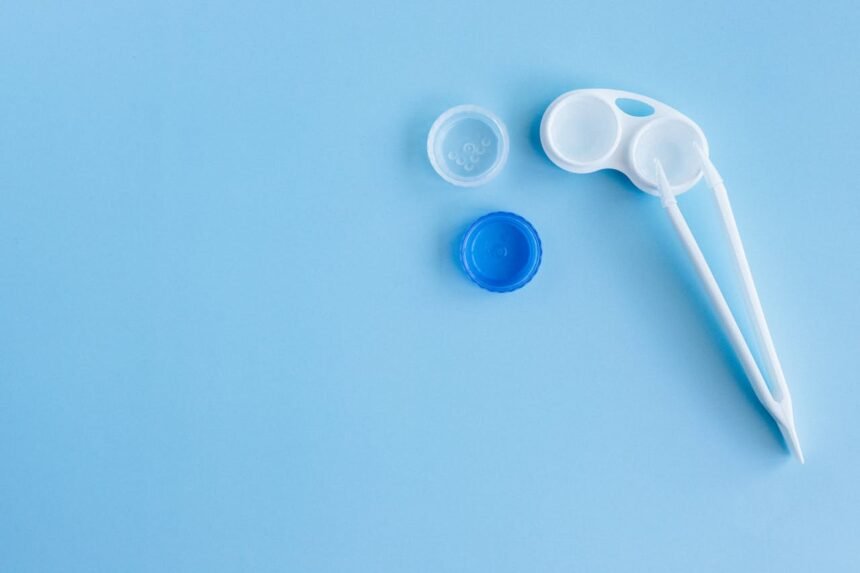
Place the clean lens into your contact lens case. Fill the well with fresh multi-purpose solution.
Do not ‘top off’ the solution. Topping off involves adding fresh solution to the old liquid already in the case. This dilutes the disinfectant power of the new solution and allows bacteria to survive. You must empty the case, rinse it with solution, and fill it with entirely fresh liquid every time.
Ensure the lens is fully submerged and not stuck to the side of the case before tightening the lid. Repeat the entire process for the other eye.
5. Caring for Your Case
The storage case is often the dirtiest part of a contact lens regimen. A study highlighted by the Association of Optometrists indicates that many users fail to clean their cases, leading to significant bacterial contamination.
- Daily: After putting your lenses in your eyes, empty the old solution from the case.
- Rinse: Rinse the case with fresh contact lens solution (never tap water).
- Dry: Leave the case open and upside down on a clean tissue to air dry. Bacteria thrive in moisture, so a dry case is a safer case.
- Replace: Replace your lens case at least every three months, or sooner if it looks dirty. Most solution packs come with a new case; use it.
6. Using Hydrogen Peroxide Systems
Some individuals with sensitive eyes or heavy protein buildup use hydrogen peroxide-based systems. These require a specific case with a neutralising disc.
If you use this method, you must let the lenses soak for the full time usually (6 hours or overnight). Putting hydrogen peroxide directly into your eye without neutralisation will cause a severe chemical burn. Always follow the specific instructions on the packaging for these systems.
Comparison of Cleaning Solutions
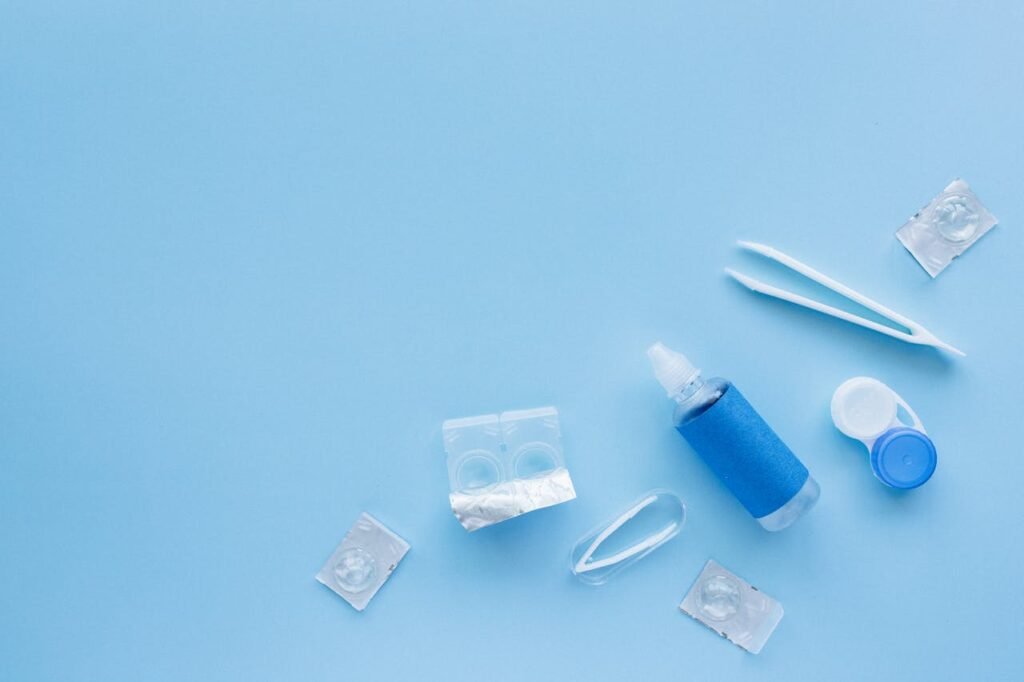
Understanding the tools at your disposal is essential. Not all liquids are created equal. The table below outlines the differences between common solution types.
| Solution Type | Best Use Case | Key Benefit | Critical Warning |
|---|---|---|---|
| Multi-Purpose Solution | Daily cleaning, rinsing, and storage for soft lenses. | Convenient “all-in-one” product. | Check expiration dates; never top off old solution. |
| Hydrogen Peroxide Based | Deep cleaning for those with allergies or heavy deposits. | Preservative-free; excellent disinfection. | Must use the provided case to neutralise. Direct eye contact causes burns. |
| Saline Solution | Rinsing lenses only. | Gentle pH-balanced rinse. | No disinfection properties. Never use for storage. |
| Rigid Gas Permeable (RGP) Solutions | Specifically for hard lenses. | Formulated for rigid lens materials. | Not compatible with soft lenses; follows a different cleaning regimen. |
Using the wrong solution can be disastrous. For example, storing lenses in saline allows bacteria to multiply rapidly because saline contains no disinfectants. Always consult your optician before switching brands.
Frequently Asked Questions
Q: Can I use tap water to rinse my lenses if I run out of solution?
A: No. Never use tap water. Tap water contains Acanthamoeba, which can cause blindness. If you are stuck without solution, you must either wear your glasses or discard the lenses. The Centers for Disease Control and Prevention (CDC) explicitly warns against water exposure for contact lenses.
Q: How long can I keep lenses in the case without wearing them?
A: If you store lenses for an extended period, the disinfectant properties of the solution may fade. Check the solution manufacturer’s guidelines. Typically, if lenses sit for more than a few days, you should clean and disinfect them again with fresh solution before wearing them.
Q: Is it safe to sleep in my contact lenses?
A: Generally, no. Unless you have been prescribed specific “extended wear” lenses by your optometrist, sleeping in contacts significantly increases the risk of infection by depriving the cornea of oxygen. Healthline offers detailed resources on the risks associated with sleeping in contacts.
Q: My eyes are red after cleaning and inserting lenses. What should I do?
A: Remove the lenses immediately. Inspect them for damage. If the redness persists after removing the lenses, consult an eye care professional. It could be a sign of infection, an allergic reaction to the solution, or a corneal abrasion.
Q: Can I use saliva to clean my lenses in an emergency?
A: Absolutely not. The human mouth is full of bacteria that belong in the digestive tract, not on the surface of your eye. Putting saliva on a lens is essentially introducing an infection directly to your cornea.
The Bottom Line
Cleaning contact lenses is a precise medical routine, not just a chore. By adhering to the “rub and rinse” method, using fresh solution daily, and keeping your case dry and clean, you can enjoy the benefits of contact lenses without compromising your eye health.
Remember to prioritise hand washing and never expose your lenses to tap water. Regular check-ups with your optician are also vital to ensure your eyes remain healthy and your prescription is up to date. Treating your lenses with care ensures they will treat your eyes with the same respect.
Always follow the specific advice given to you by your eye care practitioner.