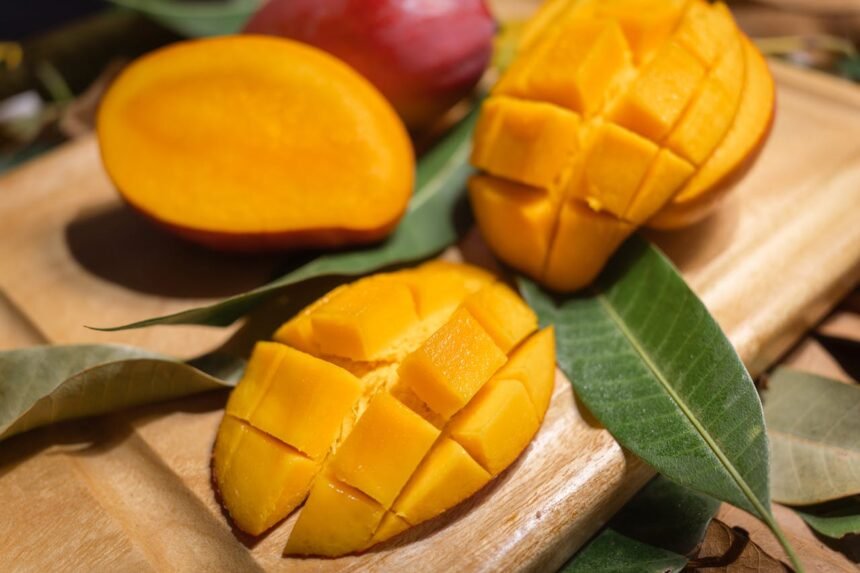
Cutting a mango can feel like a culinary puzzle. You stand there with a luscious, colourful fruit in your hand, imagining the sweet, golden flesh inside, but you are also acutely aware of the challenge that lies beneath the skin.
The large, flat stone in the centre often baffles even experienced home cooks. We have all been there—trying to navigate a knife around the pit, only to end up with a slippery mess, wasted fruit, and juice running down our elbows. It can be discouraging, leading many to purchase pre-cut versions that are often more expensive and less fresh.
However, mastering the art of cutting a mango is a valuable skill that unlocks a world of flavour and nutrition. Once you understand the anatomy of the fruit and the correct techniques, the process becomes simple, safe, and surprisingly satisfying.
This guide will walk you through the most effective methods to cut a mango, ensuring you get the most out of this tropical treat without the stress. Whether you are preparing a smoothie, a salad, or a simple snack, these steps will help you slice with confidence.
Understanding the Mango: More Than Just Sweetness
Before you pick up a knife, it helps to understand exactly what you are handling. The mango is a stone fruit, specifically known as a drupe. This means it has a large seed in the middle surrounded by fleshy fruit and skin.
Mangoes are not just delicious; they are a nutritional powerhouse. According to [Healthline], mangoes are packed with polyphenols—plant compounds that function as antioxidants. They are also incredibly rich in Vitamin C, which is essential for a robust immune system and iron absorption.
Why the Stone is Tricky
The seed inside a mango is oblong and flat, running through the centre of the fruit. Unlike an avocado, where the stone is round and easily removable, the mango pit clings tightly to the flesh.
The orientation of the pit dictates how you must cut. If you slice incorrectly, you will hit the hard wall of the seed, potentially dulling your knife or causing it to slip. Understanding this anatomy is the first step to success. Furthermore, incorporating this fruit into your diet contributes to the [NHS] recommendation of eating at least 5 portions of fruit and vegetables a day.
Preparation: Selecting and Cleaning
Choosing the Right Mango
Success starts at the supermarket. A rock-hard mango will be difficult to cut and lack flavour, while an overripe one will turn to mush under the knife.
- The Squeeze Test: Gently squeeze the mango. It should give slightly, similar to a ripe peach or avocado.
- The Smell Test: A ripe mango will often have a sweet, fruity aroma near the stem.
- Visuals: Do not rely solely on colour. Red patches do not necessarily indicate ripeness.
Safety and Hygiene
Before cutting, it is vital to wash the fruit. Even though you do not eat the skin, the knife can transfer bacteria from the outside to the flesh as you slice. The [Food Standards Agency] recommends washing fruit and vegetables under cold running water to remove surface dirt and bacteria.
How to Cut a Mango: Step-by-Step
There are several ways to tackle this fruit, but we will focus on the two most reliable methods: the “Hedgehog” method and the “Side Slice” method.
Tools You Will Need
- A sharp chef’s knife or paring knife.
- A sturdy, non-slip chopping board.
- A large spoon (for the Hedgehog method).
- A glass (optional, for the scraping hack).
Method 1: The Hedgehog (Classic Cubes)
This is the most popular method for creating perfect cubes for fruit salads or salsas. It minimises waste and keeps your hands relatively clean.
- Stand it Up: Place the mango on your cutting board. Hold it upright so the stem is facing the ceiling. You need to visualise the flat seed running vertically through the fruit.
- The First Cheeks: Position your knife about 1/4 inch away from the centre line (the stem). Slice straight down, avoiding the pit. If you hit resistance, move the knife slightly further out. Repeat on the other side. You now have two “cheeks” of flesh.
- Score the Flesh: Take one cheek and hold it in your palm, skin side down (be careful not to cut through the skin). Use the tip of your knife to make lengthwise cuts into the flesh. Then, rotate the fruit and make crosswise cuts to create a grid pattern.
- Invert: Push the skin side of the cheek upwards so the mango turns inside out. The cubes will pop up like a hedgehog.
- Slice or Scoop: Slice the cubes off the skin with your knife or simply bite them off if eating casually.
This method is excellent for presentation and is frequently featured in [BBC Good Food] recipes for desserts and breakfast bowls.
Method 2: The Side Slice (Strips and Smoothies)
If you prefer long strips or need to process the fruit for a blender, this method is faster.
- Slice the Cheeks: Follow the same first step as above to remove the two large cheeks from the pit.
- The Scoop: Instead of scoring the flesh, take a large spoon. Insert the spoon between the skin and the flesh at the edge of the cheek.
- Follow the Curve: Gently push the spoon along the curve of the skin, scooping the entire piece of flesh out in one go.
- Slice: Place the scooped flesh flat on the chopping board and slice into strips or chunks as desired.
This method reduces the risk of cutting your hand while scoring and is often preferred when prepping bulk amounts for smoothies or freezing.
Don’t Forget the Edges
Once the two main cheeks are removed, you are left with the middle section containing the pit. There is still edible flesh on the narrow sides.
- Place the middle section flat on the board.
- carefully trim the skin off the curved edges.
- Slice the remaining flesh away from the pit. These pieces are often smaller but perfect for snacking as you cook.
Comparison of Cutting Methods
Different situations call for different approaches. Here is a quick breakdown to help you decide which technique to prioritise.
| Feature | The Hedgehog Method | The Side Slice Method | The Peeler Method |
|---|---|---|---|
| Best For | Salads, Salsa, Presentation | Smoothies, Baking, Cooking | Purees, Messy Eaters |
| Skill Level | Beginner | Intermediate | Beginner |
| Waste Level | Low | Low | Medium |
| Mess Factor | Low (contained in skin) | Moderate (juice on board) | High (very slippery) |
| Safety | High (knife hits skin, not hand) | High (if using a spoon) | Low (slippery fruit) |
| Speed | Moderate | Fast | Slow |
Nutritional Bonus: Why Eat Mangoes?
Beyond their delicious taste, mangoes offer impressive health benefits that make the effort of cutting them worthwhile.
Digestive Health
Mangoes contain a group of digestive enzymes called amylases. These break down complex carbs into sugars like glucose and maltose. Additionally, they are a good source of dietary material. The [British Heart Foundation] emphasises that increasing fibre intake can lower your risk of heart disease and stroke.
Skin and Hair
The high levels of Vitamin C in mangoes are crucial for making collagen, a protein that gives structure to your skin and hair. A review in [Medical News Today] suggests that Vitamin C-rich foods can help protect the skin from oxidative stress and sun damage.
Blood Sugar Management
While mangoes are sweet, they have a relatively low glycemic index (GI). This means they release sugar into the bloodstream slowly. [Diabetes UK] notes that people with diabetes can still enjoy fruit as part of a balanced diet, provided they are mindful of portion sizes.
Scientific Backing
Research continues to uncover benefits. For example, a study indexed on [PubMed] highlights the potential of mango polyphenols in modulating inflammation, though more research is needed to fully understand the mechanisms.
Frequently Asked Questions
Can you eat mango skin?
Technically, yes, but it is generally not recommended. The skin contains urushiol, the same compound found in poison ivy, which can cause allergic reactions in some people. [WebMD] explains that this can trigger a reaction known as “mango mouth” in those with latex or specific fruit allergies. Furthermore, the skin is tough and bitter compared to the sweet flesh.
What is the best way to store a cut mango?
Once cut, mango deteriorates quickly. Store the cubes or slices in an airtight container in the fridge for up to 5 days. If you cannot finish it in time, freezing is an excellent option. Frozen mango is perfect for smoothies as it acts like ice cubes, thickening the drink without watering it down.
How do I know if a mango is bad?
Trust your senses. If the mango is extremely soft or mushy to the touch, has large dark bruises, or smells fermented (sour or alcoholic), it is past its prime. Mould near the stem is also a clear sign to discard it.
Are mangoes good for weight loss?
Mangoes are nutrient-dense but also contain natural sugars. However, because they are lower in energy density than processed snacks, they are a great alternative. General [nutrition advice] suggests that swapping high-calorie desserts for whole fruits like mangoes can support weight management strategies.
The Bottom Line
Learning how to cut a mango is a fundamental kitchen skill that saves you money and encourages healthier eating habits.
While the large central stone can be intimidating at first, using the Hedgehog method or the Side Slice technique makes the process manageable and safe. Remember to always wash your fruit before slicing and choose a mango that gives slightly to the squeeze for the best flavour experience.
By adding fresh mango to your diet, you are not just treating your taste buds; you are providing your body with essential vitamins, antioxidants, and fibre. So, grab a sharp knife and a chopping board, and enjoy the tropical sweetness of a perfectly cut mango.