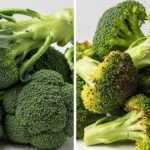
You are standing in the supermarket aisle, a fresh head of broccoli in one hand and a bag of frozen florets in the other. It is a common dilemma for health-conscious shoppers across the UK. On one side, you have the vibrant, crisp appeal of fresh produce. On the other, the undeniable convenience and longevity of the frozen variety. But does choosing the freezer aisle mean you are compromising on nutrition?
Many of us have been led to believe that fresh is always best. We assume that processing vegetables inevitably strips them of their vital vitamins and minerals. However, the scientific reality is far more nuanced. Understanding the journey from farm to fork—or farm to freezer—is essential for making informed dietary choices that suit your lifestyle and health goals.
Whether you are looking to boost your immune system, increase your fibre intake, or simply put a healthy dinner on the table for your family, the quality of your ingredients matters. This article dives deep into the nutritional differences, cost implications, and culinary uses of fresh versus frozen broccoli.
The Journey from Soil to Supermarket
To understand the nutritional value of your broccoli, you must first appreciate the timeline of its life. Fresh broccoli is typically harvested before it is fully ripe. This allows it to survive the often lengthy transportation process without spoiling. Once harvested, it is packed onto lorries and shipped to distribution centres, then onto supermarkets.
During this time—which can span anywhere from three days to several weeks—the vegetable is exposed to light, heat, and air. These elements are the natural enemies of delicate nutrients. In fact, nutrient degradation begins the moment a vegetable is severed from the plant.
Conversely, broccoli destined for the freezer is generally allowed to ripen fully in the ground. This means it is harvested at its peak nutritional density. Within hours of being picked, the vegetable is washed, blanched, and flash-frozen. This rapid process helps to lock in many of the vitamins and minerals that fresh produce might lose during transit.
According to Healthline’s extensive research on nutrient retention, freezing can preserve the nutrient profile effectively, though the initial processing step does have some impact.
The Science of Blanching
Before freezing, broccoli undergoes blanching—a process where it is briefly plunged into boiling water or steam. This is crucial for killing bacteria and stopping the enzyme activity that causes decay. Without blanching, frozen broccoli would lose its colour and flavour rapidly.
However, blanching is a double-edged sword. It can cause a loss of water-soluble vitamins, specifically Vitamin C and the B vitamins. Research indicates that while some Vitamin C is lost during this heating phase, the remaining content is then sealed in by the freezing process. In contrast, fresh broccoli sitting in your fridge for a week may eventually contain less Vitamin C than its frozen counterpart due to natural oxidation.
Fresh vs Frozen: A Detailed Breakdown
When deciding between the two, it is helpful to look at specific categories of comparison. Here is how they stack up against each other in real-world scenarios.
1. Nutritional Stability
Fresh vegetables are living organisms that continue to respire after harvest. This respiration breaks down organic materials, such as sugars and organic acids, and leads to moisture loss. High-quality guidance from the NHS regarding your 5-a-day confirms that frozen fruit and vegetables count just as much towards your daily intake as fresh ones.
The key takeaway is that while fresh broccoli might have a slight edge immediately after harvest, frozen broccoli often wins the race if the fresh produce has been stored for several days. For minerals like calcium, magnesium, and iron, the levels remain virtually identical regardless of whether the vegetable is fresh or frozen.
2. Texture and Flavour Profile
This is where fresh broccoli is the undisputed champion. The cellular structure of the vegetable remains intact, providing that satisfying ‘crunch’ when raw or lightly steamed. If you are making a salad, a stir-fry that requires bite, or a crudité platter, fresh is the only viable option.
Freezing causes the water inside the plant’s cells to expand and form ice crystals. These crystals can rupture the cell walls. Upon defrosting, the structure is softer and can become mushy if overcooked. Frozen florets are therefore best suited for soups, stews, casseroles, or smoothies where texture is secondary to flavour and nutrition.
3. Food Waste and Economics
In the UK, food waste is a significant environmental and economic issue. We throw away tonnes of edible produce simply because it spoils before we get around to eating it. Fresh broccoli can yellow and become limp within a week.
Frozen broccoli, however, can last for months. You can use exactly the portion you need and return the rest to the freezer. Organisations like WRAP (Waste and Resources Action Programme) highlight that utilising frozen food is a primary strategy for reducing household food waste. Economically, frozen is often cheaper per kilogram, especially when fresh broccoli is out of season.
4. Pesticide Residue
Commercial freezing operations involve rigorous washing systems before the blanching process. This can significantly reduce surface pesticide residues and soil. While you should always wash fresh produce at home, the industrial washing process for frozen goods is often more thorough than a quick rinse under the kitchen tap. For more on safety standards, the Food Standards Agency provides excellent guidance on produce safety.
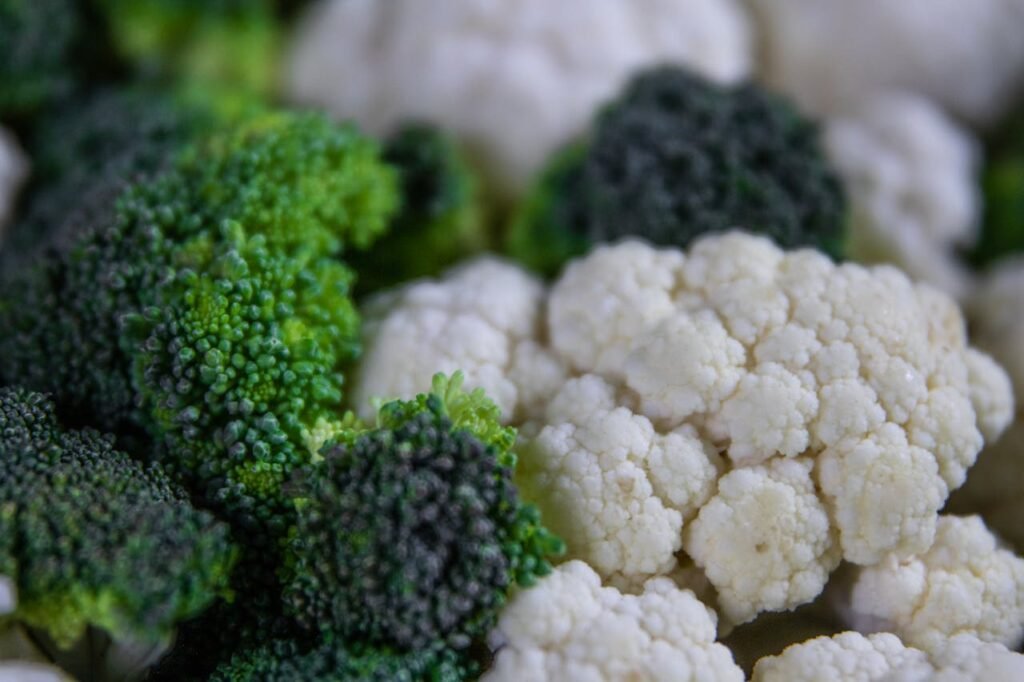
Comparative Data: At a Glance
The following table illustrates the key differences to help you visualise the trade-offs.
| Feature | Fresh Broccoli | Frozen Broccoli |
|---|---|---|
| Harvest Time | Picked before full ripeness for transport | Picked at peak ripeness |
| Vitamin C | High initially, degrades daily | Moderate loss initially, then stable |
| Texture | Crisp, firm, crunchy | Softer, less structural integrity |
| Shelf Life | 1 to 2 weeks (refrigerated) | 8 to 12 months (frozen) |
| Preparation | Requires washing and chopping | Pre-washed and pre-chopped |
| Best Use | Salads, stir-frys, roasting | Soups, smoothies, boiling, steaming |
| Cost | Variable (seasonal) | Stable (generally lower) |
Actionable Tips for Maximising Nutrition
Regardless of which type you choose, the way you cook your broccoli has the biggest impact on its final nutritional value. Overcooking can destroy heat-sensitive vitamins and leach minerals into the cooking water.
Steam, Don’t Boil
Boiling broccoli in a large pot of water is perhaps the most common mistake. Water-soluble vitamins like Vitamin C and Folate leach out into the water, which is then drained away. Instead, opt for steaming. Steaming cooks the vegetable gently and minimises contact with water.
Evidence cited by Harvard Health Publishing suggests that steaming is one of the best methods for preserving nutrients in broccoli.
The Microwave Advantage
Surprisingly to some, microwaving is an excellent cooking method for broccoli. Because it uses very little water and cooks the vegetable quickly, it preserves antioxidant levels better than boiling. Place your frozen or fresh florets in a bowl with a tablespoon of water, cover, and zap for 2-3 minutes.
Don’t Fear the Roast
Roasting fresh broccoli creates a delicious flavour profile through caramelisation. While the high heat can degrade some vitamins, the fat (olive oil) used in roasting helps your body absorb fat-soluble vitamins like Vitamin A and Vitamin K. The British Heart Foundation recommends diverse cooking methods to keep your diet interesting and sustainable.
Frequently Asked Questions
1. Does freezing kill bacteria on broccoli?
Freezing does not kill bacteria; it merely makes them dormant. Once the food thaws, bacteria can become active again. This is why the blanching process before freezing is so important—it kills surface bacteria before the cold sets in. Always follow safe defrosting guidelines.
2. Is the stem as nutritious as the florets?
Yes, the broccoli stem is packed with fibre and nutrients. It is often discarded due to its tough texture, but peeling the outer layer reveals a tender, sweet centre. Including the stem is a great way to increase fibre intake, which is vital for gut health as noted by the British Nutrition Foundation.
3. Can I roast frozen broccoli directly?
You can, but the texture will differ from fresh. To get the best results, toss the frozen florets in oil and roast at a high temperature. This helps evaporate the moisture quickly. It won’t be as crispy as fresh, but it is a convenient alternative.
4. Why does my frozen broccoli sometimes smell strong?
Broccoli belongs to the cruciferous vegetable family, which contains sulfur compounds. These compounds are released when the plant cells are damaged (such as during freezing). The smell is natural and does not indicate spoilage.
5. Which is better for weight loss?
Both are excellent. Broccoli is low in calories and high in fibre and water, promoting fullness. The choice between fresh or frozen should depend on which one you are more likely to eat regularly. Sustainable weight management relies on consistency, supported by data from GOV.UK’s obesity and healthy eating policies.
The Bottom Line
When it comes to the battle of frozen versus fresh broccoli, there is no single winner. Both forms are highly nutritious and contribute significantly to your overall health.
Fresh broccoli is superior for texture, salads, and situations where you want a crisp bite. However, it loses nutrients over time, so it should be eaten quickly after purchase.
Frozen broccoli is a nutritional powerhouse that offers convenience, affordability, and reduced food waste. It retains its vitamin content remarkably well and is perfect for cooked dishes.
Ultimately, the healthiest broccoli is the one you actually eat. By keeping a bag in the freezer and buying fresh when you can, you ensure that this cruciferous superfood is always available to nourish your body. For more healthy recipe ideas, you can explore resources like BBC Good Food to keep your meals inspiring.
Prioritise variety, minimise overcooking, and enjoy the benefits of this green giant in whatever form suits your life best.