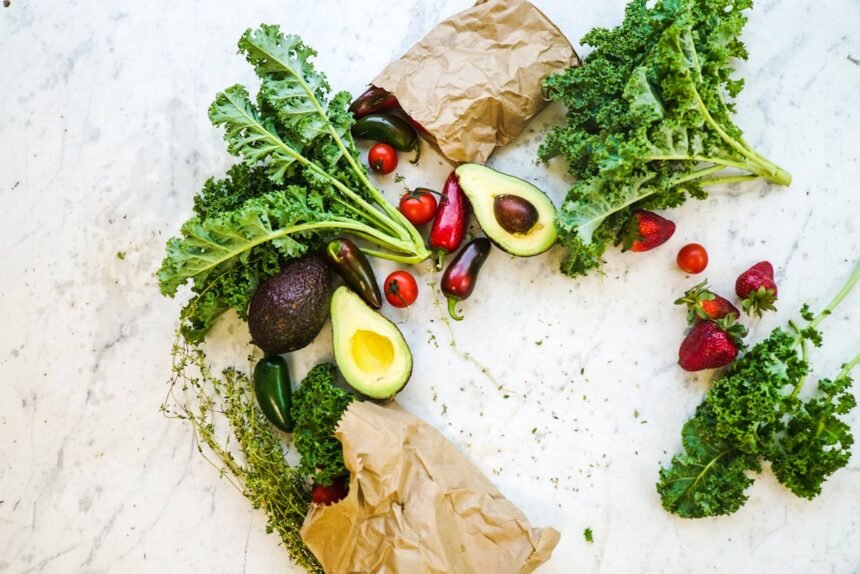
Let’s be real for a second: We have all been there. It is 2:00 PM, your energy is crashing, and the vending machine is calling your name. You swore this week would be different. You bought the kale, you bookmarked the recipes, and you promised yourself you were turning a new leaf. Yet, here we are, battling the urge to grab a candy bar.
Why is it so hard to just eat better? The problem usually isn’t a lack of knowledge. Most of us know that an apple is better for us than a donut. The real struggle lies in making healthy eating a habit rather than a temporary punishment.
When we treat nutrition like a strict regime based on willpower, we eventually run out of steam. But when we treat it like a skill or a customized system, everything changes. In this post, we are going to ditch the restrictive diet mentality and look at the psychology and practical hacks behind sustainable nutrition. Let’s learn how to rewire your routine so healthy choices become automatic.
The Science of Habit Formation
Before we dive into the food, we need to talk about the brain. Many people believe the myth that it takes exactly 21 days to form a new habit. However, research suggests it is a bit more complex. According to a study published by the National Institutes of Health (NIH), it can take anywhere from 18 to 254 days for a new behavior to become automatic, with an average of about 66 days.
This means consistency matters more than intensity. A healthy diet isn’t established by one week of perfect eating; it is built by months of “good enough” eating. To succeed, we need to leverage the “Habit Loop”:
- Cue: The trigger (e.g., walking into the kitchen).
- Routine: The action (e.g., grabbing a cookie).
- Reward: The benefit (e.g., a sugar rush).
To change the routine, you have to hack the cue or the reward. Let’s look at how to apply this to your plate.
Hack 1: Design Your Environment (The Path of Least Resistance)
Human beings are naturally lazy. We tend to follow the path of least resistance. If the cookies are on the counter and the carrots are buried in the crisper drawer, the cookies win every time. This is often referred to as choice architecture.
To make healthy eating a habit, you must make the good choice the easy choice:
- The Fruit Bowl Effect: Keep a bowl of washed, ready-to-eat fruit on your kitchen counter or desk. If you see it, you are more likely to eat it.
- Pre-Portion Snacks: Don’t eat straight from the family-size bag. Portion nuts or popcorn into small containers so stopping is automatic.
- Hide the Junk: Move processed snacks to a high shelf or an opaque container. According to researchers at Cornell University, visibility plays a massive role in consumption volume.
Hack 2: The “Add, Don’t Subtract” Method
Traditional dieting focuses on restriction: “Don’t eat this,” “Cut out that.” This creates a scarcity mindset, making you crave the forbidden food even more. Instead, focus on crowding out less nutritious foods by adding nutrient-dense options first.
Start every meal by asking: “What can I add to this?”
- Having pizza? Add a side salad.
- Having eggs? Throw in some spinach.
- Having pasta? Mix in roasted zucchini.
By filling up on fiber and protein first, you naturally eat less of the calorie-dense items without feeling deprived. The Harvard T.H. Chan School of Public Health recommends that half your plate should be vegetables and fruits. By aiming for that visual goal, you handle portion control without counting a single calorie.
Comparison: Dieting Mindset vs. Habit Mindset
Here is a breakdown of why shifting your perspective is essential for long-term success.
| Feature | The “Dieter’s” Mindset | The “Habit Hacker’s” Mindset |
|---|---|---|
| Primary Driver | Willpower and restriction | Environment design and routine |
| Timeline | Short-term (until the weight is lost) | Forever (lifestyle change) |
| Response to Slipping Up | Guilt, shame, and quitting | Curiosity and adjustment (getting back on track) |
| Food Perception | “Good” vs. “Bad” foods | Nutrient density and fuel |
| Metric of Success | The number on the scale | Energy levels and consistency |

Hack 3: Master the Art of “Lazy” Meal Prep
You do not need to spend your entire Sunday cooking gourmet meals in Tupperware to succeed at meal prep. You just need to reduce decision fatigue. When we are tired, our brain wants quick energy (sugar/carbs).
Try “Ingredient Prep” instead of “Meal Prep”:
- Wash and chop veggies immediately after grocery shopping.
- Batch cook a protein (chicken, tofu, hard-boiled eggs) that can be used in three different ways (tacos, salads, stir-fry).
- Cook a big batch of grains (quinoa, brown rice) to last the week.
The Mayo Clinic emphasizes that having a plan reduces the likelihood of impulse ordering takeout. If the components are ready, assembling a healthy bowl takes 5 minutes—faster than waiting for delivery.
Hack 4: Use Habit Stacking
Habit stacking is a concept popularized by author James Clear. It involves linking a new habit to an existing one. The formula is: “After [Current Habit], I will [New Habit].”
Examples for nutrition:
- “After I pour my morning coffee, I will drink a full glass of water.”
- “After I put my dinner plate in the dishwasher, I will brush my teeth.” (This signals the kitchen is “closed” and stops late-night snacking).
- “After I sit down at a restaurant, I will order a side salad immediately.”
This technique works because you aren’t relying on motivation; you are relying on a trigger that already happens every day.
Hack 5: Prioritize Sleep to Manage Cravings
Sometimes, your struggle with making healthy eating a habit has nothing to do with food and everything to do with sleep. When you are sleep-deprived, your body produces more ghrelin (the hunger hormone) and less leptin (the hormone that signals fullness).
The Sleep Foundation notes that sleep deprivation makes the brain crave high-calorie, high-carb foods. If you are constantly fighting cravings, look at your sleep hygiene before you look at your pantry. Aim for 7-9 hours of quality rest to give your willpower a fighting chance.
Hack 6: Beware of Liquid Calories
One of the easiest ways to derail a healthy diet is through beverages. Sodas, fancy coffees, and energy drinks are often loaded with added sugars that spike insulin but don’t provide satiety.
The American Heart Association recommends limiting added sugars, yet many of us drink our daily limit before noon. Swap soda for sparkling water with lemon, or try herbal teas. Staying hydrated is also crucial, as the brain often confuses thirst for hunger. The Cleveland Clinic suggests that staying properly hydrated helps metabolism and appetite regulation.
Hack 7: The 80/20 Rule (Grace Over Guilt)
Perfection is the enemy of progress. If you aim for 100% compliance, the moment you eat a slice of cake, you might feel like you’ve “ruined” the day and spiral into a binge. This is the “what-the-hell effect.”
Adopt the 80/20 rule: Eat nutrient-dense, whole foods 80% of the time, and enjoy your favorite treats 20% of the time. This flexible approach is supported by nutritionists because it prevents burnout. The World Health Organization (WHO) promotes a balanced diet rich in fruit, vegetables, legumes, and nuts, but they also acknowledge the cultural and social role of food.
Conclusion: Start Small, Start Today
Making healthy eating a habit isn’t about an overnight transformation. It is about small, strategic tweaks to your environment and routine that add up over time. By designing your kitchen for success, prepping ingredients, and prioritizing sleep, you stop fighting against yourself and start flowing with a healthier lifestyle.
Remember, you don’t have to implement all these hacks at once. Pick one. Maybe today you just put a fruit bowl on the counter. Maybe tomorrow you try habit stacking your water intake.
Your body is the vehicle for your life—fuel it kindly, not perfectly.
Ready to take the next step? Check out the USDA MyPlate tools for personalized plans to get you started on your journey.