For many casual cyclists, the sight of a looming hill on the horizon triggers a sense of dread. The burning lungs, the heavy legs, and the feeling of fighting a losing battle against gravity can turn a leisurely weekend ride into a grueling ordeal. However, hills are also where fitness is forged and views are earned. By mastering a few fundamental uphill cycling techniques casual riders can transform these obstacles into opportunities for accomplishment.
Climbing isn’t solely reserved for the lycra-clad elite of the Tour de France. With the right mental approach, mechanical adjustments, and body positioning, you can conquer elevation with confidence. This guide explores the biomechanics and strategies necessary to improve your climbing ability without requiring a professional training regimen.
The Physics of the Climb: Gravity and Resistance
Before diving into technique, it helps to understand what you are up against. When you ride on flat ground, your primary opponent is aerodynamic drag (wind resistance) and rolling resistance. As soon as the road tilts upward, gravity becomes the dominant force.
According to fundamental physics, every pound of weight (both bike and body) requires more energy to move uphill compared to a flat surface. While professional cyclists obsess over power-to-weight ratios, casual riders should focus on efficiency. Minimizing wasted energy is far more effective than spending thousands on a lighter carbon-fiber frame.
1. The Mental Game: Break It Down
Climbing is as psychological as it is physical. A common mistake is staring at the summit, which can make the climb seem insurmountable. Instead, break the hill into segments. Focus on a landmark—a tree, a signpost, or a driveway—about 20 yards ahead. Once you reach it, pick a new target. This method, often recommended by sports psychologists, keeps your mind occupied on manageable goals rather than the overwhelming total distance.
Body Position and Posture
How you sit on the bike drastically affects your oxygen intake and power transfer. Many beginners instinctively tense up, gripping the handlebars tightly and hunching shoulders. This restricts the diaphragm, making breathing difficult right when you need oxygen the most.
Seated vs. Standing
Should you sit or stand? This is the most common question regarding uphill cycling techniques casual riders ask.
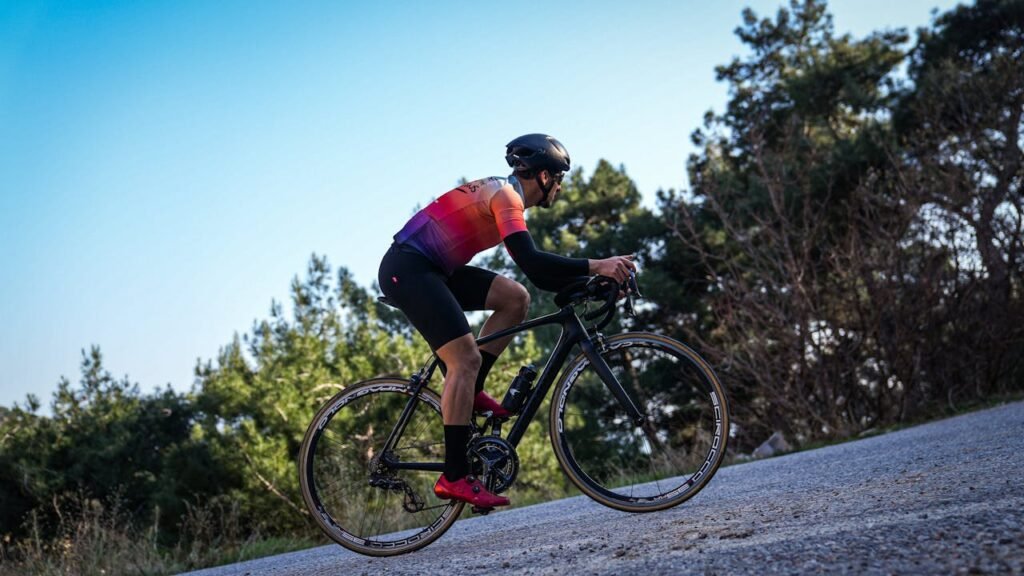
- Stay Seated: For the majority of a long climb, stay in the saddle. It is more aerobically efficient. Slide back slightly on the saddle to engage your glutes and hamstrings, providing more leverage for the pedal stroke.
- Stand Up: Reserve standing for short, steep bursts or to stretch your legs. When you stand, shift your weight forward over the pedals, but keep your hips back enough to maintain traction on the rear wheel.
Leading publications like Bicycling.com emphasize that while standing generates more power, it costs significantly more energy—up to 10-12% more heart rate exertion for the same speed.
Upper Body Relaxation
Keep your upper body relaxed. Your hands should rest lightly on the bars (preferably on the tops or brake hoods) to open up your chest. If your knuckles are white, you are wasting energy. A relaxed torso allows for deeper diaphragmatic breathing, which is critical for delivering oxygen to working muscles.
Gearing and Cadence Strategy
The most transformative skill for climbing is proper gear management. Modern bicycles are equipped with wide gear ranges specifically to make climbing easier, yet many riders wait too long to shift.
Anticipate the Shift
Shift into an easier gear before the hill starts to bite. If you wait until you are grinding the pedals slowly, the pressure on the chain can make shifting clunky or even cause the chain to drop. The goal is to maintain a steady rhythm.
The Importance of Cadence
Cadence refers to the speed at which you turn the pedals, measured in Revolutions Per Minute (RPM). Grinding a hard gear at a low RPM causes muscular fatigue quickly. Spinning an easier gear at a higher RPM shifts the load to your cardiovascular system, which recovers faster than muscle fibers.
- Target RPM: Aim for 70–90 RPM on climbs.
- The “Grind” Trap: If your cadence drops below 60 RPM, you are likely in a gear that is too hard, putting unnecessary strain on your knees.
Expert coaching platforms like TrainingPeaks analyze data from millions of rides, consistently showing that higher cadence results in less neuromuscular fatigue over long durations.
Comparison: Seated vs. Standing Climbing
To help you decide when to employ each technique, here is a breakdown of the physiological and mechanical differences.
| Feature | Seated Climbing | Standing Climbing |
|---|---|---|
| Energy Efficiency | High (Aerobic focus) | Low (Anaerobic cost is higher) |
| Muscle Recruitment | Glutes, Quads, Hamstrings | Quads, Calves, Upper Body, Core |
| Aerodynamics | Better (lower profile) | Poor (body acts as a sail) |
| Best Application | Long, steady gradients (>3 minutes) | Steep pitches, accelerating, stretching |
| Heart Rate Impact | Steady, manageable | Rapid spike in heart rate |
| Traction | High stability | Risk of rear wheel slip on loose gravel |
Nutrition and Hydration
Gravity fights digestion as well. On a steep climb, your body diverts blood flow from the stomach to the legs. Therefore, avoid eating heavy solid foods immediately before or during a challenging ascent.
However, hydration remains vital. According to the American College of Sports Medicine, even mild dehydration can impair physical performance. Sip water regularly on the flat approach to the hill so you are not trying to drink while gasping for air on the incline.
Safety and Awareness
When you are climbing, your speed drops significantly. This speed differential between you and motor vehicle traffic can be dangerous.
- Hold Your Line: It is tempting to weave (paperboy) when the hill gets steep, but this is dangerous on open roads. Try to ride in a straight line on the right shoulder.
- Visibility: Since you are moving slowly, you are a sitting duck. Ensure you have a bright rear light, even during the day. Organizations like the League of American Bicyclists advocate strongly for daytime running lights to increase rider visibility.
- The Descent: Remember that what goes up must come down. Check your brakes before the ride. A long climb is often followed by a high-speed descent, so ensure your equipment is ready.
Equipment Checks for the Casual Rider
You do not need a $10,000 bike to climb well, but your bike must be maintained.
- Tire Pressure: Ensure your tires are inflated properly. Soft tires increase rolling resistance, making the hill feel twice as steep. Check REI’s guide on bike maintenance for standard pressure charts.
- Lubrication: A dry, rusty chain adds friction. A simple application of chain lube can save you precious watts of power.
- Weight: While you shouldn’t obsess over gram-counting, removing unnecessary accessories (like a heavy lock if you aren’t stopping) makes a difference.
Training Drills for Improvement
If you want to specifically target your climbing muscles, incorporate simple drills into your weekly rides.
Hill Repeats
Find a short hill that takes about 2 to 3 minutes to climb. Ride up it at a pace that makes conversation difficult but not impossible. Coast down to recover. Repeat this 3 to 4 times. This builds specific leg strength and cardiovascular endurance without the exhaustion of a long mountain pass.
You can use tools like Strava to find segments near you that match the gradient you want to practice on. Alternatively, if you live in a flat area, indoor training platforms like Zwift allow you to simulate hill resistance virtually.
Health Benefits of Uphill Cycling
Beyond the technique, it is worth remembering why we climb. Hill climbing is a potent form of interval training. It rapidly increases heart rate, strengthening the heart muscle and improving VO2 max (maximum oxygen uptake).
The American Heart Association recommends moderate-to-vigorous aerobic activity for cardiovascular health, and climbing hills fits the “vigorous” category perfectly. It also burns calories at a higher rate than riding on flats, aiding in weight management.
Conclusion: Embrace the Elevation
Mastering hills is a journey, not a destination. By implementing these uphill cycling techniques casual riders can shift their perspective from fear to challenge. Remember to shift gears early, keep your upper body relaxed, and maintain a steady cadence. Whether you are riding for fitness, commuting, or simply enjoying the outdoors, the ability to climb with confidence opens up new routes and adventures that were previously off-limits.
So, the next time you see the road pitch upward, don’t turn back. Shift down, breathe deep, and pedal through. The view from the top is always worth the effort.