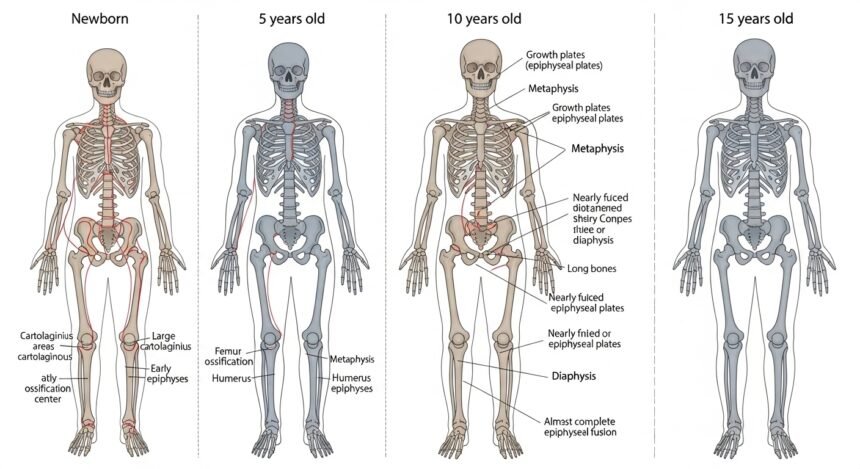
The period from infancy through adolescence represents a critical, unparalleled window for skeletal development, laying the foundation for lifelong bone health. During these formative years, bone accrual occurs at an accelerated pace, culminating in the attainment of Peak Bone Mass (PBM) – the maximum amount of bone tissue an individual has at any point in their life.
Reaching optimal PBM is arguably the single most important factor in long-term osteoporosis prevention, significantly influencing senior bone health and the fracture risk factors encountered in later stages such as menopause bone loss and for postmenopausal bones.
This comprehensive exploration delves into the nutritional imperatives that drive robust kids bone growth, providing a professional and authoritative guide for healthcare practitioners and researchers dedicated to fostering skeletal resilience from an early age.
The Foundation of Skeletal Health: Peak Bone Mass (PBM)
PBM is predominantly established by the late teens to early twenties, with approximately 90% of adult skeletal mass acquired by age 18 in girls and 20 in boys. This finite developmental window underscores the profound impact of childhood and adolescent health practices.
Genetics play a significant role, accounting for 60-80% of PBM variation, but modifiable factors, particularly nutrition and physical activity, are crucial determinants that can optimize genetic potential.
A robust PBM not only provides a larger bone “reserve” but also enhances the mechanical strength and resilience of the skeleton, offering protection against skeletal fragility later in life. Understanding and promoting strategies for achieving optimal PBM are thus fundamental to public health.
The National Institutes of Health provides extensive resources on the importance of achieving peak bone mass for long-term health, emphasizing its role in preventing conditions like osteoporosis.
Essential Macronutrients for Bone Development
While often overshadowed by micronutrients, macronutrients also play a vital, often overlooked, role in pediatric bone development.
Protein: The Scaffolding of Bone
Protein is not merely for muscle growth; it is a fundamental component of the bone matrix, comprising approximately 50% of bone volume and one-third of its mass. Collagen, the primary protein in bone, provides the flexible framework upon which minerals are deposited.
Adequate protein intake is essential for collagen synthesis, growth factor production (e.g., IGF-1), and calcium absorption, all critical for kids bone growth. A deficiency can impair bone formation, while optimal intake supports bone mineral density.
Studies highlighted in the European Journal of Clinical Nutrition demonstrate protein’s positive influence on bone mineral density across various age groups.
Micronutrient Powerhouses: Vitamins and Minerals
The intricate symphony of bone development requires a diverse array of vitamins and minerals working in concert.
Calcium: The Bedrock of Bone Structure
Calcium is, unequivocally, the most abundant mineral in the human body, with 99% stored in the bones and teeth. It is the primary structural component of hydroxyapatite crystals, which give bone its hardness and strength.
Adequate calcium intake during childhood and adolescence is paramount for maximizing bone density tips and achieving optimal PBM. The National Institutes of Health’s Office of Dietary Supplements provides comprehensive recommendations for calcium intake across different age groups, noting the increased needs during growth spurts.
Calcium Rich Foods include:
- Dairy products (milk, yogurt, cheese)
- Fortified plant-based milks (almond, soy, oat)
- Dark leafy greens (kale, collard greens, turnip greens)
- Calcium-set tofu
- Certain fish (sardines, salmon with bones)
- Fortified cereals and juices
For those following specialized diets or with intolerances, identifying dairy free calcium sources is critical to ensure nutritional adequacy.
Vitamin D: The Calcium Conductor
Vitamin D’s primary role in bone health is to regulate calcium and phosphate homeostasis, facilitating their absorption in the gut and reabsorption in the kidneys. Without sufficient vitamin d bones cannot effectively utilize the calcium consumed, regardless of its quantity. A deficiency leads to impaired bone mineralization, resulting in rickets in children and osteomalacia in adults. Sun exposure is a primary source, but dietary intake and supplementation are often necessary, especially in regions with limited sunlight or for individuals with darker skin tones. The NIH Office of Dietary Supplements also offers detailed guidance on vitamin d bones requirements.
Magnesium: The Essential Cofactor
Magnesium is a vital mineral involved in over 300 enzymatic reactions in the body, with about 60% stored in bone. It plays a crucial role in bone mineral density, influencing osteoblast and osteoclast activity, and is essential for converting vitamin D to its active form. Suboptimal magnesium intake has been linked to lower bone mineral density and increased fracture risk. Harvard T.H. Chan School of Public Health underscores magnesium’s importance as an essential mineral for bone health.
Phosphorus: The Unsung Partner
Phosphorus is another abundant mineral in the body, second only to calcium, and is an integral component of hydroxyapatite. It works synergistically with calcium to build and maintain strong bones. While deficiencies are rare in healthy children due to its widespread presence in foods, adequate intake remains important.
Vitamin K: Beyond Coagulation
Vitamin K is gaining recognition for its role in bone health. It is essential for the carboxylation of specific bone proteins, notably osteocalcin, which binds calcium to the bone matrix. Both K1 (phylloquinone) and K2 (menaquinone) forms are important, with K2 potentially having a more direct impact on bone mineralization. The Mayo Clinic provides a helpful overview of Vitamin K and its functions, including its role in bone health.
Other Trace Minerals
Zinc, copper, and manganese, though required in smaller amounts, also contribute to bone metabolism, collagen synthesis, and antioxidant defense within bone tissue. A diverse healthy bone diet typically provides sufficient quantities of these micronutrients.
Beyond Individual Nutrients: The Synergistic Diet
Focusing solely on individual nutrients can overlook the synergistic benefits of a whole-food approach. A balanced diet rich in fruits, vegetables, whole grains, and lean proteins provides a complex matrix of nutrients, antioxidants, and phytochemicals that collectively support bone health.
For instance, fruits and vegetables contribute to an alkaline load, potentially reducing urinary calcium excretion and providing vital vitamins like Vitamin C, crucial for collagen formation. Conversely, excessive intake of processed foods, high-sugar beverages, and sodium can negatively impact bone mineral density by increasing calcium excretion and contributing to systemic inflammation.
Table: Key Nutrients for Pediatric Bone Health and Their Dietary Sources
| Nutrient | Primary Role in Bone Health | Excellent Dietary Sources |
|---|---|---|
| Calcium | Structural component, bone density tips | Dairy products (milk, yogurt, cheese), fortified plant milks, dark leafy greens, calcium-set tofu, sardines, fortified cereals. |
| Vitamin D | Calcium/phosphate absorption, mineralization | Fatty fish (salmon, mackerel), fortified milk/cereals, egg yolks, sun exposure. |
| Magnesium | Bone mineralization, enzyme cofactor | Nuts, seeds, whole grains, dark leafy greens, legumes, dark chocolate. |
| Phosphorus | Component of hydroxyapatite | Dairy products, meat, fish, poultry, nuts, legumes. |
| Protein | Collagen matrix formation, growth factors | Lean meats, poultry, fish, eggs, dairy, legumes, nuts, seeds. |
| Vitamin K | Osteocalcin carboxylation | Green leafy vegetables (kale, spinach), broccoli, fermented foods (K2). |
| Zinc | Bone formation, collagen synthesis | Red meat, poultry, beans, nuts, some seafood (oysters), whole grains. |
Lifestyle Factors Complementing Nutrition
Nutrition alone cannot maximize bone growth. Lifestyle choices significantly influence skeletal development.
Physical Activity: The Mechanical Stimulus
Mechanical loading from physical activity is a potent stimulus for bone modeling and remodeling, essential for increasing bone density tips and bone strength exercises. Weight bearing workouts and impact activities, such as jumping, running, and sports, create stresses that signal bones to become stronger and denser. The National Osteoporosis Foundation highlights various exercises beneficial for bone health. Even runner bone stress can be beneficial when managed correctly, leading to stronger bones in athletes. Sedentary lifestyles, conversely, are detrimental to bone accrual.
Sun Exposure: The Natural Vitamin D Source
Controlled sun exposure allows the skin to synthesize vitamin D endogenously. While precautions against sunburn are essential, short periods of unprotected exposure can be a significant source of vitamin D, particularly during warmer months.
Limiting Detrimental Habits
While less prevalent in pediatric populations, it’s worth noting that habits such as smoking and excessive alcohol consumption later in life can significantly impair bone health, underscoring the importance of establishing healthy patterns early.
Addressing Specific Dietary Needs
Certain dietary patterns or conditions require careful nutritional planning to ensure optimal bone development.
Vegetarian and Vegan Diets
Children and adolescents on vegetarian or vegan bone nutrients diets can achieve optimal bone health, but careful planning is crucial to ensure adequate intake of calcium, vitamin D, vitamin B12, and often magnesium and zinc. Dairy free calcium sources, fortified foods, and potentially supplementation become even more critical. The Academy of Nutrition and Dietetics provides comprehensive guidance on well-planned vegetarian and vegan diets across the life cycle.
Food Allergies and Intolerances
Children with allergies (e.g., to dairy, nuts) or intolerances (e.g., lactose) may face challenges in meeting specific nutrient requirements. Working with a registered dietitian is essential to identify suitable alternative sources and prevent nutritional deficiencies that could compromise kids bone growth.
Bone Broth and Emerging Research
While traditional bone broth benefits are widely discussed for various health aspects, its direct contribution to pediatric bone mineral density is less scientifically established. It offers minerals like calcium and magnesium, and amino acids, but should be viewed as a complementary food rather than a primary source for essential nutrients.
Monitoring and Intervention
Regular health check-ups and monitoring by healthcare professionals are crucial. While routine bone scan results are not typically performed on healthy children, clinical assessment can identify children at higher risk for low bone mineral density, such as those with chronic diseases, malabsorption syndromes, or specific medication use. Early identification allows for targeted nutritional and lifestyle interventions to mitigate fracture risk factors.
Frequently Asked Questions (FAQ)
Q1: How much calcium do children and adolescents need daily for optimal bone growth?
A1: Calcium requirements vary by age. Generally, children aged 4-8 years need about 1,000 mg/day, and adolescents aged 9-18 years require 1,300 mg/day. These recommendations are crucial for achieving optimal kids bone growth and bone density tips.
Q2: Can supplements replace a healthy diet for pediatric bone development?
A2: While supplements can fill nutritional gaps, they should not replace a healthy bone diet. Whole foods provide a complex matrix of nutrients, fiber, and other beneficial compounds that work synergistically. Supplements are best used under professional guidance when dietary intake is insufficient.
Q3: What are the main fracture risk factors in children related to bone health?
A3: Key fracture risk factors include inadequate calcium and vitamin D intake, insufficient weight bearing workouts, certain chronic medical conditions (e.g., celiac disease, inflammatory bowel disease), long-term use of specific medications (e.g., corticosteroids), and very low body weight. Poor bone density tips during childhood contribute to these risks.
Q4: Are weight bearing workouts safe for growing bones, and which ones are most effective?
A4: Yes, weight bearing workouts are safe and highly effective for growing bones. Activities like running, jumping, dancing, basketball, soccer, and gymnastics provide the necessary mechanical stress to stimulate bone formation. These bone strength exercises are crucial for maximizing PBM.
Q5: When is the most critical time for kids bone growth?
A5: The most critical period for kids bone growth and calcium accrual occurs during puberty, typically between ages 9-14 in girls and 10-17 in boys. This is when the most significant gains in bone mass are made, making optimal nutrition and physical activity during these years profoundly impactful for long-term osteoporosis prevention.
Conclusion
Maximizing kids bone growth through judicious nutritional and lifestyle interventions during childhood and adolescence represents a proactive, high-yield strategy for lifelong skeletal health. By prioritizing adequate intake of essential macronutrients like protein and micronutrients such as calcium, vitamin D, and magnesium, alongside promoting weight bearing workouts and a healthy bone diet, healthcare professionals can significantly contribute to the attainment of optimal PBM. This foundational strength not only safeguards against immediate fracture risk factors but also serves as a critical buffer against menopause bone loss, senior bone health challenges, and the development of osteoporosis in later life. Emphasizing these nutritional imperatives is not merely about preventing disease; it is about empowering the next generation with strong, resilient skeletons capable of supporting vibrant, active lives.