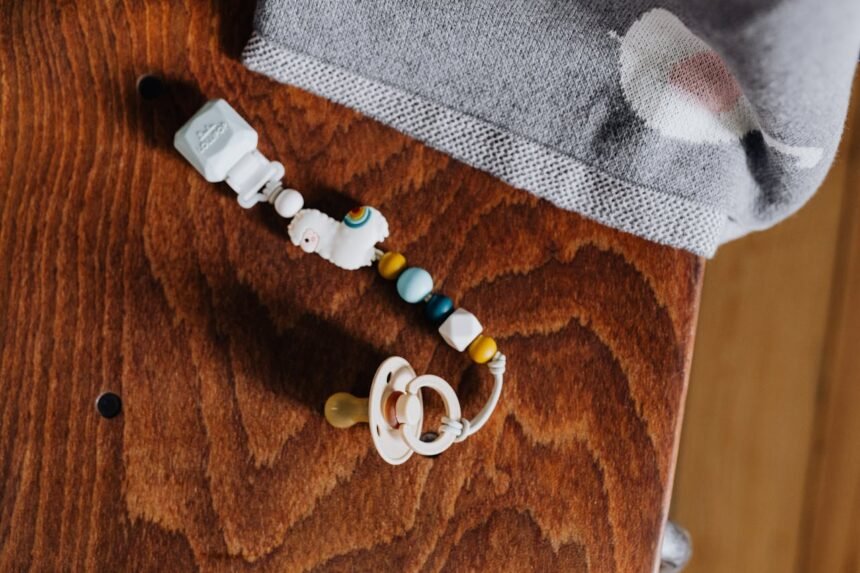
If you have ever spent twenty minutes searching under the sofa for a lost dummy while your baby cries, you know the struggle is real. Enter the humble pacifier clip*—or as we more commonly call it in the UK, the *dummy clip. This simple accessory is a game-changer for parents, ensuring that your baby’s comforter stays clean, accessible, and off the dirty floor.
However, there is more to these handy straps than meets the eye. From navigating strict safety standards to choosing between silicone pacifier clip beads and organic fabrics, getting it right is essential for your little one’s well-being. In this comprehensive guide, we will explore everything you need to know about pacifier clips, ensuring you make a safe and stylish choice.
What is a Pacifier Clip?
A pacifier clip is a safety strap designed to secure a dummy to a baby’s clothing. One end features a loop that attaches to the handle or ring of the dummy, while the other end has a clasp (usually metal, wood, or plastic) that clips firmly onto the child’s bib or outfit.
Their primary purpose is practical: they stop the “dummy drop.” By keeping the soother attached to the child, you avoid the need for constant washing and sterilising. Yet, they have also become a fashion statement. Whether you are looking for a universal pacifier holder* to match a specific outfit or a *soothing teething clip that doubles as a sensory toy, the options are endless.
> Note: While this article uses the term “pacifier clip” to cover the broad topic, British parents will almost always refer to them as dummy clips or soother holders.
Are Pacifier Clips Safe? Understanding the Regulations
Safety is the single most important factor when purchasing any baby accessory. In the UK and Europe, dummy clip safety standards* are rigorously defined by *BS EN 12586:2007+A1:2011. This standard sets out the safety requirements and test methods for “soother holders.”
The 22cm Rule: Safe Pacifier Clip Length
The most critical regulation concerns the length of the strap. To prevent strangulation hazards, the safe pacifier clip length* must never exceed *22cm (measured from the base of the clip to the end of the loop). This length is calculated carefully to ensuring the strap is too short to wrap around a baby’s neck.
According to the British Standards Institution (BSI), manufacturers must strictly adhere to this limit. If you are buying handmade items from marketplaces like Etsy, you must verify that the maker certifies their products against BS EN 12586. Never lengthen a clip yourself or attach it to loose ribbons.
Choking Hazards and Wear and Tear
Clips often feature beads or decorative elements. If these break, they can become small parts that pose a choking risk. This is particularly relevant for a wooden pacifier clip safety check. Paint must be non-toxic, and the wood should be splinter-free. Similarly, ensure that the clasp mechanism is robust and cannot be easily pulled apart by curious little fingers.
The Child Accident Prevention Trust (CAPT) advises parents to regularly inspect all baby products for signs of damage. If the cord looks frayed or a bead feels loose, discard the clip immediately.
Sleeping Guidelines
It is vital to remember: never let your baby sleep with a pacifier clip attached.
The Lullaby Trust, a leading charity on safer sleep, recommends keeping the cot clear of loose items. A dummy clip left attached during a nap or overnight sleep poses a strangulation risk. Always remove the clip before putting your baby down in their cot or Moses basket.
Choosing the Right Dummy Clip for Your Baby
With so many styles available, how do you choose the best dummy clips for newborns? It often comes down to material preference and functionality.
1. Silicone vs Wooden Beads
Silicone pacifier clip beads are incredibly popular because they are soft, durable, and easy to clean. They are often made from food-grade silicone, making them safe for babies who might chew on the strap (though remember, a clip is not a toy).
On the other hand, wooden clips offer a classic, natural aesthetic. If you opt for wood, ensure it is untreated or finished with natural oils. Some parents worry about metal vs plastic pacifier clips; metal clips tend to be more durable and hold tighter, but plastic clips are lighter and less likely to rust if washed frequently.
2. Fabric and Ribbon Holders
For a softer touch, a fabric pacifier holder* is an excellent choice. These are often made from braided cotton, grosgrain ribbon, or linen. An *organic cotton dummy clip is particularly good for babies with sensitive skin, as it avoids synthetic materials rubbing against their cheek. These are also lightweight, which prevents the weight of the clip from pulling the dummy out of a newborn’s mouth.
3. Personalised Options
Personalised pacifier clips have become a favourite gift for baby showers. These usually feature the baby’s name spelled out in beads. While lovely, ensure the customisation does not compromise safety. The addition of extra letter beads must not extend the total length beyond the legal 22cm limit.
How to Attach and Use a Dummy Clip Correctly
Knowing how to attach dummy clip mechanisms properly ensures they function safely and effectively.
- Thread the Loop: Push the loop end of the strap through the handle or ventilation hole of the dummy.
- Secure the Knot: Pull the clip end through the loop and tighten it to create a lark’s head knot. Ensure it is tight.
- Clip to Clothing: Open the clasp and attach it to a piece of clothing, such as a bib or the hem of a t-shirt. It should be positioned away from the chin to prevent rubbing.
- Check the Position: Ensure the strap is not pulled too tight, restricting head movement, but is secure enough to stop the dummy hitting the floor.
For parents using button-style dummies (which lack a ring handle), you may need a universal pacifier holder that uses a silicone ring adapter to grip the button of the soother.
Cleaning and Maintenance
Hygiene is paramount. Washing pacifier clips regularly prevents the build-up of bacteria, drool, and food particles.
Silicone and Plastic:** These can usually be washed with warm, soapy water. Some *silicone pacifier clip beads are top-rack dishwasher safe, but check the manufacturer’s instructions.
* Wood and Metal: Avoid soaking these. Wipe them down with a damp cloth and mild soap. Soaking wood can cause it to swell and crack, while metal may rust. Dry the metal clip immediately after cleaning.
* Fabric: Many fabric clips can be hand-washed or machine-washed in a laundry bag.
The NHS recommends keeping all feeding and soothing equipment clean to protect your baby’s immune system, especially in the first six months.
Safety Checklist for Parents
Before you buy or use a clip, run through this quick checklist inspired by advice from RoSPA (The Royal Society for the Prevention of Accidents):
* [ ] Standard Check: Does the packaging mention BS EN 12586?
* [ ] Length Check: Is the strap shorter than 22cm?
* [ ] Component Check: Are the beads securely fixed? Is the clasp functioning?
* [ ] Sleep Check: Do you always remove it before nap time?
Frequently Asked Questions (FAQ)
What is the safest dummy clip for a newborn?
The best dummy clips for newborns* are lightweight and simple. Heavy beaded clips can pull the dummy out of a small baby’s mouth. Look for a *fabric pacifier holder or a short, light silicone strap that complies with safety standards.
Can I make my own pacifier clip?
While a handmade pacifier clip tutorial* might look easy, we advise caution. Homemade clips often fail to meet the strict tension and impact tests required by BS EN 12586. If you do make one, you must strictly adhere to the *safe pacifier clip length and ensure all knots are double-secured. It is often safer to buy from a certified tester.
Is there a dummy clip age limit?
There is no official dummy clip age limit, but they are most useful from birth until the child becomes more mobile. Once a child is crawling or walking, a long strap hanging from their clothes can catch on furniture. BabyCentre UK suggests weaning off the dummy entirely between 6 and 12 months to support speech development.
How do I attach a clip to a Mam-style dummy?
Mam dummies often have a button front rather than a ring. To use these, you need a universal pacifier holder that includes a silicone adapter ring. You stretch the flexible silicone ring over the button of the dummy to secure it.
Are wooden or silicone clips better for teething?
Many parents prefer a soothing teething clip* made of silicone because the material is soft and chewable, acting like a teether. *Wooden pacifier clip safety is high, but wood is harder on the gums. Always check that the beads are meant to be chewed and are not just decorative.
Where can I find more safety advice?
For more information on product safety, you can visit the Gov.uk Product Safety pages or check consumer advocacy sites like Which?.
By following these guidelines, you can ensure your personalised pacifier clips* or *organic cotton dummy clip remains a helpful tool rather than a hazard. Keep it short, keep it clean, and keep your baby smiling.
*
Disclaimer: This article provides information for educational purposes and does not substitute professional medical or safety advice. Always consult with a paediatrician or safety expert if you are unsure about a product.