Vision is arguably our most dominant sense, guiding us through the intricacies of daily life and connecting us deeply to the world around us. Yet, it is surprisingly common to take our eyesight for granted until we notice a subtle decline or a blur in our field of view. While genetics and age play significant roles in ocular health, the nutrients we consume daily serve as the building blocks for maintaining sharp vision and protecting the delicate structures of the eye.
Most people are familiar with the adage that carrots are good for your eyes, but there is another vibrant contender in the produce aisle that deserves equal attention: the papaya. Often celebrated for its digestive enzymes, this tropical fruit is a powerhouse of vision-protecting antioxidants. Integrating papaya for eye health into your routine could be one of the most delicious ways to safeguard your sight against age-related decline.
In this article, we will explore the science behind why this fruit is so beneficial, provide actionable tips for adding it to your diet, and answer common questions about nutrition and vision.
What Makes Papaya a Superfood for Your Eyes?
To understand why papaya is so effective, we must look at its nutritional profile. Our eyes are constantly exposed to oxidative stress from sunlight and environmental pollutants. To combat this, they require a steady supply of antioxidants.
Papaya is rich in several key nutrients that are scientifically proven to support ocular health. It is not just about general wellness; the specific compounds found in this fruit target the retina and the lens of the eye directly.
1. Zeaxanthin and Lutein
These two carotenoids are concentrated in the macula, the part of the eye responsible for central vision. They act as a natural sunblock, filtering out harmful high-energy blue light waves.
According to research found on PubMed, higher dietary intake of zeaxanthin and lutein is associated with a reduced risk of chronic eye diseases, such as age-related macular degeneration (AMD) and cataracts. Papaya provides a highly bioavailable source of these compounds, meaning your body can absorb and utilise them efficiently.
2. Beta-Carotene
The vibrant orange colour of ripe papaya comes from beta-carotene, a precursor to Vitamin A. Vitamin A is critical for the production of rhodopsin, a pigment in the retina that allows us to see in low-light conditions.
A deficiency in Vitamin A can lead to night blindness and dry eyes. The NHS emphasises that eating a balanced diet rich in fruit and vegetables is essential for obtaining these necessary vitamins naturally, rather than relying solely on supplements.
3. Vitamin C
Papayas are exceptionally high in Vitamin C, often containing more than oranges. The fluid inside the eye contains a high concentration of Vitamin C, which helps protect against oxidative damage.
Studies suggest that high Vitamin C intake may lower the risk of developing cataracts. This is particularly relevant as we age and our natural antioxidant defences weaken.
4. Vitamin E
This fat-soluble antioxidant protects the cells in the eyes from damage caused by free radicals, which are unstable molecules that break down healthy tissue.
Comprehensive guides on nutrition from Healthline often highlight the synergy between Vitamins C and E in boosting overall immune and ocular health.
Protecting Against Age-Related Decline
As we grow older, the risk of conditions like cataracts and macular degeneration increases. These are not inevitable consequences of ageing but are often exacerbated by long-term nutritional gaps.
Macular Degeneration
The Macular Society explains that age-related macular degeneration (AMD) is the biggest cause of sight loss in the UK. The antioxidants in papaya help maintain the density of the macular pigment, which protects the photoreceptor cells.
Regular consumption of papaya helps reduce inflammation in the eye tissue, slowing the progression of cellular damage.
Cataract Prevention
Cataracts occur when the lens of the eye becomes cloudy, leading to misty vision. The Moorfields Eye Hospital notes that while surgery is the only cure, a diet rich in antioxidants can delay the onset of cataracts.
The high Vitamin C content in papaya is particularly effective here, preventing the proteins in the lens from clumping together.

Actionable Steps: Incorporating Papaya Into Your Diet
Knowing the benefits is only half the battle; consistently including papaya in your diet is where the real change happens. Fortunately, papaya is versatile and widely available in UK supermarkets.
Here are practical ways to ensure you are getting your daily dose of eye-protecting nutrients.
Selecting the Perfect Fruit
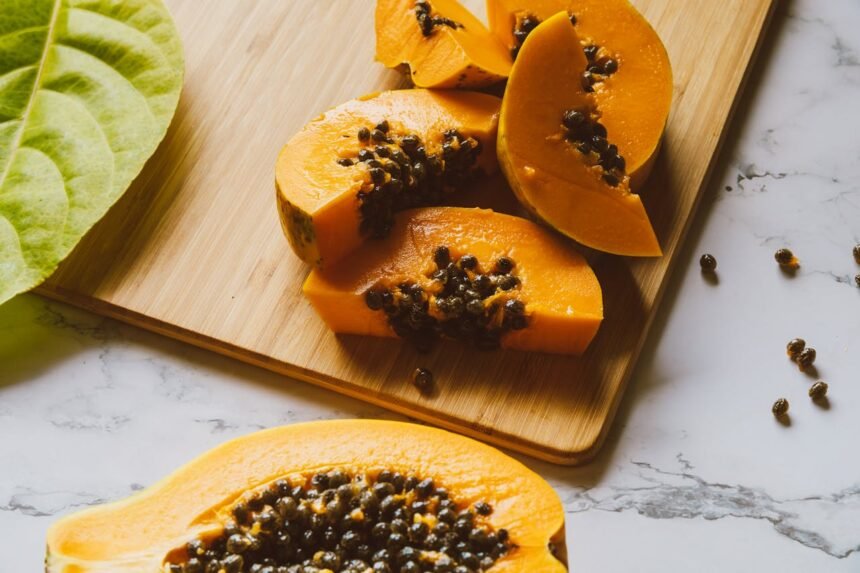
Choose a papaya that has skin turning from green to yellow. It should yield slightly to gentle pressure, similar to a ripe avocado. If it is too hard, let it ripen at room temperature for a few days.
Preparation Tips
- Wash the skin thoroughly to remove any residues.
- Cut lengthwise and scoop out the black seeds (which are edible but peppery).
- Peel the skin or simply scoop the flesh out with a spoon.
Meal Ideas for Optimal Absorption
Carotenoids like beta-carotene are fat-soluble, meaning they are best absorbed when eaten with a source of healthy fat.
- Breakfast Bowl: Cube fresh papaya and serve it with full-fat Greek yoghurt. The fat in the yoghurt will help your body absorb the Vitamin A precursors more effectively. The British Dietetic Association recommends pairing colourful fruits with dairy or nuts for a balanced start to the day.
- Tropical Smoothies: Blend papaya with spinach, a banana, and a splash of almond milk. Spinach adds extra lutein, creating a vision-boosting cocktail.
- Savoury Salads: Papaya works well in savoury dishes. Toss unripe (green) papaya into a salad with lime juice, chillies, and crushed peanuts. This is a staple in Southeast Asian cuisine and a refreshing way to eat more raw nutrients.
- Dessert Alternative: Drizzle a slice of ripe papaya with fresh lime juice. The acidity enhances the flavour and preserves the Vitamin C content.
Comparative Nutrient Breakdown
To visualise how papaya stacks up against other common eye-health foods, consider the following comparison. This table highlights why variety is key.
| Nutrient | Papaya (1 small) | Carrots (1 medium) | Oranges (1 medium) | Role in Eye Health |
|---|---|---|---|---|
| Beta-Carotene | High | Very High | Low | Night vision, corneal health |
| Vitamin C | Very High | Low | High | Prevents cataracts, fights oxidation |
| Lutein/Zeaxanthin | Moderate | Low | Low | Blue light filtering, macula protection |
| Vitamin E | Moderate | Low | Low | Cell membrane protection |
Data sources: General nutritional databases and BBC Good Food profiles.
Frequently Asked Questions
Can eating papaya cure existing eye problems?
No food can cure conditions like myopia (short-sightedness) or reverse advanced cataracts. However, a nutrient-dense diet can slow the progression of diseases like AMD. The RNIB advises that lifestyle changes are preventative rather than curative for existing structural damage.
Are papaya seeds good for your eyes?
Papaya seeds are edible and contain antioxidants, but they have a strong, peppery flavour. While they offer some nutritional value, the flesh of the fruit contains the highest concentration of the specific carotenoids needed for vision.
How much papaya should I eat?
One cup of cubed papaya provides over 100% of your daily Vitamin C requirement and a significant amount of Vitamin A. Eating this serving size 2-3 times a week is an excellent goal. The GOV.UK Eatwell Guide suggests eating at least five portions of a variety of fruit and vegetables every day.
Is it better to eat papaya raw or cooked?
For eye health, raw is generally better. Vitamin C is heat-sensitive and can be destroyed by cooking. However, beta-carotene can sometimes become more bioavailable with gentle heating. A mix of raw ripe papaya and cooked green papaya curries ensures you get the best of both worlds.
Can I take supplements instead?
While supplements are available, whole foods are always superior. The Cochrane Library has reviewed studies suggesting that antioxidant supplements do not always provide the same benefits as a diet rich in fruit and vegetables, likely due to the complex interaction of nutrients in whole foods.
Does papaya help with dry eyes?
Yes. Vitamin A is crucial for the health of the cornea and the production of tears. If you suffer from dry eyes, increasing your intake of Vitamin A-rich foods like papaya can help alleviate symptoms, as noted by general advice from The College of Optometrists.
The Bottom Line
Protecting your vision is a lifelong commitment that involves regular eye exams, wearing sunglasses, and maintaining a healthy lifestyle. While no single food is a magic bullet, papaya for eye health is a scientifically supported strategy to bolster your defences against age-related decline.
Rich in Vitamin C, Vitamin A, and crucial carotenoids like zeaxanthin, papaya offers a sweet and simple way to nourish your eyes from the inside out. By incorporating this tropical fruit into a diet balanced with healthy fats and leafy greens, you are providing your eyes with the specific toolkit they need to combat oxidative stress and maintain clarity.
Start small: add a slice to your breakfast tomorrow or blend it into your post-workout smoothie. Your eyes—and your taste buds—will thank you.