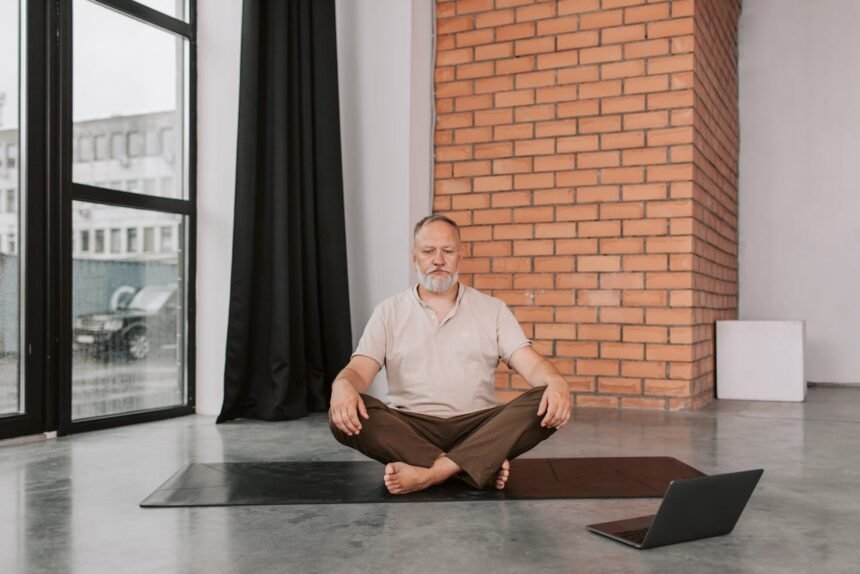
In our modern digital age, the human spine faces an unprecedented adversary: the chair. With the average adult spending significantly more time sedentary than active, we are witnessing a global epidemic of “text neck” and chronic lower back pain. Our bodies, evolved for movement, are stagnating in static, often compromised, positions. Fortunately, the ancient practice of yoga offers a scientifically backed antidote. By integrating yoga for spinal alignment into your weekly routine, you can counteract the compressive forces of gravity and poor ergonomics, restoring your body’s architectural integrity.
The Architecture of Alignment: Understanding Your Spine
Before diving into the physical practice, it is crucial to understand the machinery we are trying to fix. The human vertebral column is not a straight pole; it is a complex, S-shaped curve designed to absorb shock and facilitate movement. According to Wikipedia, the spine consists of 33 vertebrae divided into five regions: cervical, thoracic, lumbar, sacral, and coccygeal.
True alignment does not mean flattening these curves. Instead, it refers to a “neutral spine” position where the head is stacked over the shoulders, shoulders over the hips, and hips over the ankles (when standing). When we deviate from this—such as in kyphosis (hunchback) or excessive lordosis (swayback)—we place uneven pressure on the intervertebral discs.
The Health Costs of Misalignment
Poor posture is more than an aesthetic concern; it is a systemic health issue. The Mayo Clinic highlights that prolonged sitting and slouching can lead to increased risk of cardiovascular disease and metabolic syndrome. furthermore, structural misalignment can cause:
- Respiratory Issues: Slouching compresses the lungs, reducing vital capacity.
- Digestive Problems: Compression of the abdomen can slow peristalsis.
- Nerve Impingement: Misaligned vertebrae can pinch nerves, leading to sciatica or tingling extremities.
- Chronic Fatigue: Muscles have to work harder to hold the body up when the bones aren’t stacked efficiently.
Why Yoga is the Gold Standard for Spinal Health
Unlike standard gym workouts that often isolate muscle groups, yoga treats the body as a kinetic chain. A study published by the National Center for Complementary and Integrative Health (NCCIH) confirms that yoga is effective in alleviating chronic low-back pain and improving function. Yoga for spinal alignment works via three mechanisms:
- Decompression: Creating space between vertebrae.
- Mobilization: Taking the spine through its full range of motion (flexion, extension, rotation, and lateral flexion).
- Stabilization: Strengthening the core muscles (transversus abdominis, obliques, and erector spinae) that support the skeletal structure.
Comparative Analysis: Disc Pressure in Common Positions
The following table illustrates the relative pressure placed on the third lumbar disc (L3) based on body position, emphasizing why active standing and yoga are superior to sitting.
| Body Position | Relative Load on Lumbar Spine (Approx. % of Standing Weight) | Impact on Spinal Alignment | Description |
|---|---|---|---|
| Supine (Lying Down) | 25% | Restorative | The spine is fully offloaded; ideal for recovery (Savasana). |
| Standing (Neutral) | 100% | Neutral | Baseline load; requires engagement of stabilizer muscles. |
| Standing (Hunched) | 150% | Negative | Forward head carriage increases cervical strain significantly. |
| Sitting (Upright) | 140% | Moderate Strain | Without back support, sitting loads the spine more than standing. |
| Sitting (Slouched) | 185% – 250% | Severe Strain | The most common office posture; causes posterior disc protrusion. |
| Yoga: Downward Dog | Varied (Decompression focus) | Positive | Uses gravity to provide gentle traction and lengthen the spine. |
Data interpreted from various biomechanical studies, including Nachemson’s disc pressure measurements.
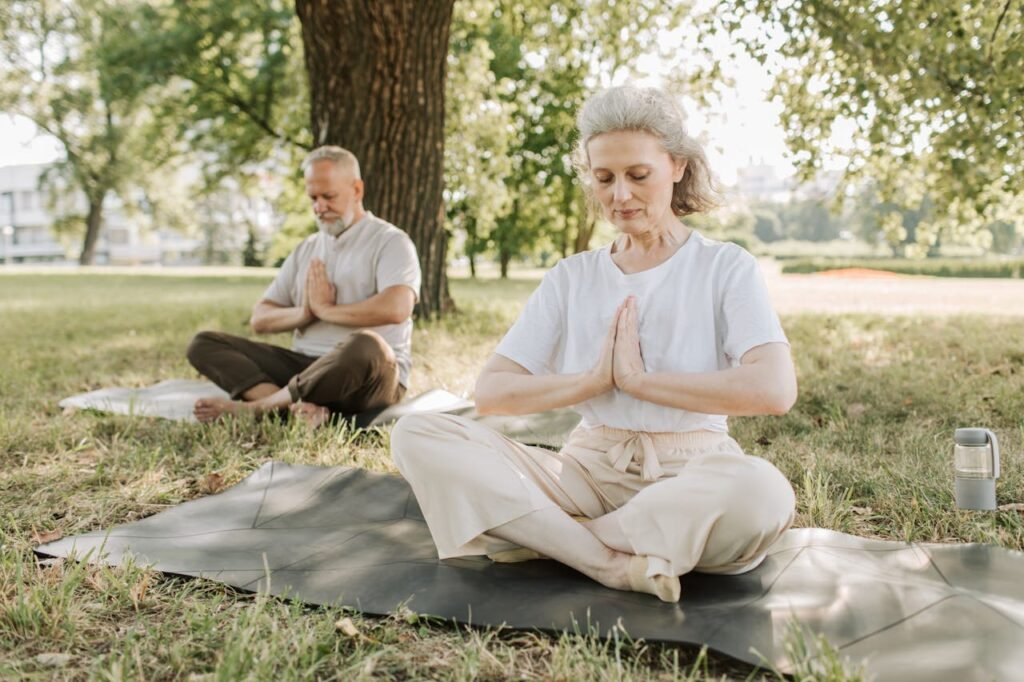
Essential Asanas for Realigning the Spine
To cultivate a “Posture Perfect” life, incorporate these foundational poses. They are specifically chosen to address the primary components of yoga for spinal alignment.
1. Tadasana (Mountain Pose)
While it looks like simple standing, Tadasana is the blueprint for all other postures. It teaches you where “neutral” actually feels.
- How to: Ground down through all four corners of your feet. Engage your quadriceps to lift the kneecaps. Rotate your inner thighs slightly back. Draw your tailbone down (without tucking) and lift the crown of your head toward the sky.
- Benefit: Resets proprioception (body awareness). As noted by Yoga Journal, this pose is essential for correcting the imbalances developed during sedentary work.
2. Adho Mukha Svanasana (Downward-Facing Dog)
This pose acts as a gentle traction device for the spine.
- How to: From hands and knees, lift your hips high and back. Keep a micro-bend in the knees if your hamstrings are tight to ensure the spine remains long. Press the floor away firmly with your hands.
- Benefit: Decompresses the lumbar spine and opens the thoracic spine (upper back), countering the “hunch” of computer work.
3. Bhujangasana (Cobra Pose)
We spend our days in flexion (bending forward); Cobra offers necessary extension.
- How to: Lie prone. Place hands under shoulders. Press the tops of the feet into the mat. Inhale and peel the chest off the floor using back strength, not just arm strength.
- Benefit: Strengthens the erector spinae muscles along the spine. Johns Hopkins Medicine cites poses like this as vital for improving balance and stability.
A Simple 15-Minute Flow for Spinal Health
Perform this sequence in the morning to set your alignment for the day, or in the evening to undo the damage of sitting. Move with your breath.
1. Cat-Cow (Marjaryasana-Bitilasana) – 2 Minutes Start on all fours. Inhale, drop the belly, lift the gaze (Cow). Exhale, round the spine, tuck the chin (Cat). This lubricates the spinal joints with synovial fluid.
2. Thread the Needle – 1 Minute per side From all fours, slide the right arm under the left, bringing the right shoulder to the mat. This provides a gentle rotation for the thoracic spine, an area notorious for stiffness.
3. Downward-Facing Dog to Plank Waves – 3 Minutes Flow from Down Dog forward into a high plank pose, engaging the core, then press back. Repeat 10 times. This builds the core heat necessary to support the vertebrae.
4. Locust Pose (Salabhasana) – 3 Rounds (30 seconds each) Lie on your belly, arms by your sides. Inhale and lift everything—head, chest, arms, and legs—off the floor. Focus on length rather than height.
5. Supine Twist (Supta Matsyendrasana) – 2 Minutes per side Lie on your back, hug the right knee in, and guide it across the body to the left. Extend the right arm. Twists are essential for maintaining the health of the intervertebral discs.
The Mind-Body Connection: Posture and Confidence
Your spine’s alignment affects your mind just as much as your body. Psychologists have long studied the link between posture and mood. A report by Harvard Health suggests that good posture can improve your psychological state. Standing tall in Tadasana signals confidence and alertness to the brain, reducing cortisol levels.
Furthermore, habitual slouching is often a protective mechanism associated with depression or low self-esteem. By physically opening the chest (the “heart center” in yoga philosophy), you are metaphorically and physically making yourself more open to the world.
Ergonomics: Taking Your Yoga Off the Mat
Practicing yoga for spinal alignment for one hour cannot entirely undo 10 hours of poor posture. You must integrate ergonomic principles into your daily life. The Occupational Safety and Health Administration (OSHA) recommends adjusting your workstation so that your monitor is at eye level and your feet are flat on the floor.
Quick Tips for Daily Alignment:
- The 20-20-20 Rule: Every 20 minutes, look at something 20 feet away for 20 seconds, and do a quick shoulder roll.
- Proprioception Check: Set a timer on your phone. When it goes off, check your jaw (is it clenched?) and your shoulders (are they by your ears?).
- Hydration: The discs between your vertebrae are largely water. Keeping hydrated is essential for their shock-absorbing properties.
Conclusion: The Backbone of a Healthy Life
Achieving perfect posture is not about rigid military stillness; it is about dynamic stability and the ability to move freely without pain. By committing to a regular practice of yoga for spinal alignment, you are investing in your long-term mobility and vitality. The spine is the central highway of your nervous system; keeping it clear of traffic jams ensures that your brain and body communicate effectively.
Start with the simple flow outlined above. Listen to your body, respect its current limits, and watch as your posture—and your perspective—begins to stand a little taller.
Ready to deepen your practice? Consult with a certified yoga instructor or a physical therapist to tailor a routine specific to your spinal needs.