Imagine waking up without that immediate rush of panic about your to-do list. Instead of reaching for your phone the second your eyes open, you take a few moments to breathe, centre yourself, and set a positive intention for the day ahead. This is the power of a simple morning meditation for beginners. It is not about silencing your mind completely or sitting on a mountaintop; it is about finding a small pocket of peace before the world rushes in.
In this comprehensive guide, we will explore how you can build a sustainable morning practice, even if you have never meditated before. We will cover the science-backed benefits, practical techniques, and answers to common questions, all whilst using clear, accessible language.
Why Practise Meditation in the Morning?
Morning is arguably the best time to practise meditation. Your mind is generally quieter than it is later in the day, and you haven’t yet been bombarded by emails, news, or demands from others. Establishing a routine now helps you carry a sense of calm throughout the rest of your day.
Setting the Tone for the Day
How you start your morning often dictates how the rest of the day unfolds. If you begin in a rush, you likely stay in a reactive state. A guided morning meditation for beginners can act as a buffer, allowing you to respond to challenges with clarity rather than stress. According to the NHS, paying attention to the present moment can improve your mental wellbeing and help you understand yourself better.
Managing Stress and Cortisol
Biologically, cortisol (the stress hormone) levels are often highest in the morning—a phenomenon known as the Cortisol Awakening Response. While this helps wake us up, it can also lead to feelings of anxiety. Research suggests that mindfulness practices can help regulate these stress hormones. A study highlighted by the National Center for Complementary and Integrative Health (NCCIH) indicates that meditation may be helpful for anxiety and stress reduction.
Preparing for Your Practice
You do not need a dedicated studio to meditate. In fact, you can learn how to meditate in bed UK style—wrapped in a warm duvet if the house is chilly! However, creating a small, intentional space can be helpful.
Finding the Right Spot
Consistency is key. Try to meditate in the same place every morning. This could be a corner of your bedroom, a chair in the living room, or even your garden if the weather permits. The goal is to find meditation space ideas for small rooms that work for you. It should be relatively quiet and free from immediate distractions.
Correct Posture
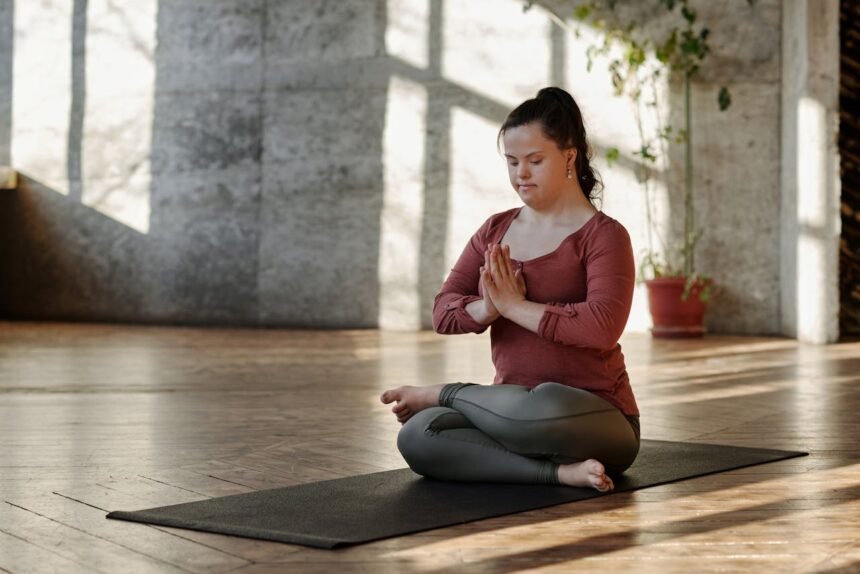
One of the biggest myths is that you must sit in the lotus position. Comfort is far more important. You can sit on a chair with your feet flat on the floor, or on a cushion with your legs crossed. The Mayo Clinic suggests that you can practise meditation whilst walking, riding the bus, or waiting at the doctor’s office, but for a morning routine, a seated posture helps maintain alertness.
> “Meditation is not about stopping thoughts, but recognising that we are more than our thoughts and our feelings.”
A Simple Morning Meditation Routine
Here is a basic, 5 minute morning mindfulness script you can try tomorrow. You can read this through first, or record yourself reading it to play back.
- Settle In: Sit comfortably. Rest your hands on your knees or in your lap. Gently close your eyes or lower your gaze.
- Breathe: Take three deep breaths. Inhale through your nose, filling your lungs, and exhale slowly through your mouth.
- Scan Your Body: Bring your attention to your feet. Notice any sensation. Slowly move your focus up your legs, hips, stomach, chest, shoulders, and face. Release any tension you find.
- Focus: Return your attention to your natural breath. You don’t need to change it. Just observe the rise and fall of your chest.
- Return: When your mind wanders (and it will), gently bring it back to the breath without judgement.
- Finish: After a few minutes, wiggle your fingers and toes. Open your eyes and take a moment before standing up.
If you prefer audio guidance, many people find guided morning meditation for beginners apps very helpful.
Different Types of Meditation for Beginners
While the breath-focused method is popular, there are other styles. Experimenting can help you find the benefits of meditation in the morning that resonate most with you.
Mindfulness Meditation
This involves paying attention to your thoughts as they pass through your mind. You don’t judge them or become involved with them; you simply observe and take note of any patterns. The Mental Health Foundation in the UK advocates for mindfulness as a way to improve mental health.
Body Scan
A body scan is excellent for releasing physical tension. You mentally scan your body from top to toe, noticing aches, pains, or tension. Resources from UCLA Health offer excellent free guided body scans.
Focused Breathwork
This uses deep breathing exercises for stress relief. Techniques like “Box Breathing” (inhale 4, hold 4, exhale 4, hold 4) activate the parasympathetic nervous system, telling your body it is safe to relax. Healthline provides detailed instructions on various breathing techniques.
Gratitude Meditation
Start your day with a morning mantra for positive energy. Silently repeating a phrase like “I am calm, I am prepared, I am enough” can be powerful. Alternatively, simply listing three things you are grateful for can shift your mindset from lack to abundance.
The Science: What Happens to Your Brain?
It is not just a placebo effect; meditation physically changes your brain. Research from Harvard Health suggests that regular practice can increase the density of grey matter in the hippocampus (responsible for memory) and decrease it in the amygdala (responsible for stress).
Furthermore, the American Psychological Association highlights that mindfulness meditation can improve focus, memory, and relationship satisfaction. By engaging in simple mindfulness exercises for adults, you are effectively training your brain to be more resilient.
Overcoming Common Challenges
Every beginner faces hurdles. Here is how to handle them.
“My Mind Won’t Stop Wandering”
This is normal. The goal is not to clear the mind but to notice when it has wandered and bring it back. Each time you return to the breath, it is like a “bicep curl” for your brain. Using a short meditation for focus and clarity can help train this muscle over time.
“I Keep Falling Asleep”
If you are trying to learn how to meditate in bed UK mornings might make this tricky! If you fall asleep, try sitting upright in a chair or meditating after a cold splash of water on your face. The Sleep Foundation notes that while meditation improves sleep quality, the practice itself requires alert relaxation.
“I Don’t Have Time”
You do not need 30 minutes. A 10 minute morning meditation routine—or even just three minutes—is effective if done consistently. Consistency beats duration every time.
Tips for Building a Habit
- Stack Your Habits: Attach meditation to an existing habit, like brushing your teeth or brewing tea. “After I put the kettle on, I will meditate for three minutes.”
- Start Small:* Do not aim for 20 minutes on day one. Start with a *5 minute morning mindfulness session.
- Be Kind to Yourself: Some days will be easier than others. If you miss a day, just start again the next morning.
- Use Resources: Mind offers great resources for understanding how mindfulness fits into daily life.
Advanced Beginner Steps
Once you have mastered the basics, you might explore the differences between transcendental meditation vs mindfulness UK practitioners often ask about. Transcendental meditation usually involves a personal mantra and a specific structure, whereas mindfulness is more open.
You might also look into creating a specific morning meditation script for anxiety if that is a struggle for you. Writing down your fears and then visualizing them floating away can be very therapeutic.
Conclusion
Adopting a simple morning meditation for beginners practice is one of the kindest things you can do for yourself. It requires no equipment, costs nothing, and the benefits—ranging from reduced stress to improved physical health—are profound.
Remember, the goal is not to become a monk or to levitate. It is simply to become a little more present, a little calmer, and a little more ready to face the day. Whether you choose a guided morning meditation for beginners or just sit in silence with your tea, the most important step is the first one.
For further reading on how lifestyle impacts mental health, Psychology Today offers excellent insights into starting your day mindfully.
Frequently Asked Questions
1. How long should a beginner meditate?
Start small. A 5 minute morning mindfulness session is perfect for the first few weeks. You can gradually increase to 10 or 15 minutes as you become more comfortable with the practice. The key is consistency over duration.
2. Should I keep my eyes open or closed?
Most beginners find it easier to close their eyes to reduce distractions. However, if you feel sleepy or anxious with eyes closed, you can keep them slightly open, gazing softly at a spot on the floor a few feet in front of you.
3. Can I meditate lying down?
Yes, you can, especially if you want to learn how to meditate in bed. However, lying down often signals to the brain that it is time to sleep. If you find yourself drifting off, try sitting up in a chair or on a cushion.
4. What is the best time to practise meditation?
While the best time to practise meditation is subjective, the morning is often recommended because the mind is less cluttered. However, if a lunch break or evening session fits your schedule better, that is perfectly fine.
5. Do I need an app to meditate?
No, you do not need an app, but many find guided morning meditation for beginners tracks helpful to stay focused. Apps can provide structure, but simple silence or focusing on your breath is just as effective and completely free.