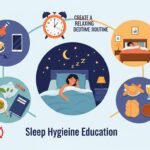
We have all experienced the frustration of staring at the ceiling at 3 am, watching the minutes tick by. Whether it is due to stress, a disrupted schedule, or simply bad habits that have crept in over time, poor sleep affects millions of people across the UK. However, the solution often lies not in medication, but in a series of behavioural and environmental adjustments known as sleep hygiene interventions.
Sleep hygiene does not refer to how clean your pyjamas are. In a clinical context, it refers to the set of habits, rituals, and environmental factors that you can control to optimise your sleep quality and daytime alertness. It is often the first line of defence recommended by general practitioners for treating short-term insomnia.
In this guide, we will explore evidence-based strategies to overhaul your sleep routine. From regulating your body clock to managing light exposure, these interventions are designed to help you drift off faster and stay asleep longer.
Understanding the Foundation: Why Sleep Hygiene Matters
Sleep is a complex biological process regulated by two main systems: sleep drive (the pressure to sleep that builds up whilst you are awake) and the circadian rhythm (your internal body clock). When these systems are out of sync, your sleep suffers. Understanding circadian rhythms is crucial to grasping why consistency is key.
Poor sleep hygiene disrupts these systems. Irregular bedtimes, late-night screen use, and caffeine consumption can trick your brain into thinking it is daytime, suppressing the production of melatonin, the hormone that signals to your body that it is time to rest. By implementing targeted interventions, you can realign these biological processes.
According to the NHS, good sleep hygiene is essential for both physical and mental health, reducing the risk of chronic conditions such as heart disease and depression.
Environmental Interventions: Optimising the Bedroom
Your bedroom should be a sanctuary dedicated solely to rest. If your environment is chaotic, bright, or too warm, your brain will remain in a state of high alert. Here are the primary environmental changes you should prioritise:
1. Temperature Control
Research suggests that a cooler room promotes better sleep. As you drift off, your core body temperature naturally drops. A room that is too hot interferes with this physiological process. The Sleep Charity recommends keeping your bedroom temperature between 16°C and 18°C. Ensure you have appropriate bedding that allows your skin to breathe.
2. Eliminating Light Pollution
Light is the strongest “zeitgeber” (time-giver) for your circadian rhythm. Exposure to light at night inhibits melatonin. To counter this:
- Use heavy, blackout curtains to block streetlamps and early morning sun.
- Cover LED lights on televisions or charging devices.
- Consider using an eye mask if you cannot fully darken the room.
3. Managing Noise
Sudden noises can trigger a “startle response,” pulling you out of deep sleep even if you do not fully wake up. If you live in a noisy urban area, consider using white noise machines or earplugs to mask disruptive sounds. You might also want to explore white noise options to find a sound profile that suits you.
Behavioural Interventions: The Power of Routine
Your behaviour during the day—and specifically in the hours leading up to bedtime—has a profound impact on your sleep quality. These interventions focus on conditioning your brain to associate specific times and actions with sleep.
The “Golden Rule” of Consistency
The most powerful intervention is maintaining a strict sleep schedule. You should aim to go to bed and wake up at the same time every day, even on weekends. This “anchors” your circadian rhythm. Sleeping in on a Sunday morning to “catch up” can actually cause “social jetlag,” making it harder to sleep on Sunday night.
The Wind-Down Routine
You cannot expect your brain to switch from a high-stress work mode to deep sleep instantly. You need a buffer zone. Create a 30 to 60-minute pre-sleep routine that involves relaxing activities. This might include:
- Reading a physical book (not a tablet).
- Gentle stretching or yoga for sleep.
- Listening to calming music or a podcast.
- Practising mindfulness meditation.
Evidence from Mind, the mental health charity, highlights that relaxation techniques can significantly lower cortisol levels, preparing the body for rest.
Dietary Interventions: What You Consume Matters
What you eat and drink plays a massive role in sleep architecture. Many people unknowingly sabotage their rest through dietary choices.
Caffeine and the “Half-Life” Trap
Caffeine is a stimulant that blocks adenosine receptors in the brain (adenosine is a chemical that makes you feel tired). Crucially, caffeine has a half-life of about 5 to 6 hours. This means if you have a coffee at 4 pm, half of that caffeine is still in your system at 10 pm. To optimise sleep hygiene, avoid caffeine after 2 pm.
The Alcohol Myth
Many people use alcohol as a “nightcap” to help them fall asleep. While alcohol is a sedative that may help you lose consciousness faster, it severely degrades the quality of your sleep. It fragments your sleep cycles and suppresses Rapid Eye Movement (REM) sleep, which is vital for emotional regulation and memory. For more on this, read about the effects of alcohol on sleep quality.
The organisation Drinkaware provides detailed guidance on how reducing alcohol intake can improve long-term rest.

Cognitive Interventions: Breaking the Cycle of Worry
For many, the bed itself has become a trigger for anxiety. You lie down, and immediately your brain starts racing. This is known as “conditioned arousal.” To break this association, we use a technique called Stimulus Control.
The 20-Minute Rule
If you have been in bed for about 20 minutes and have not fallen asleep, get up. Go to another room and do something quiet and non-stimulating (like reading with a dim light) until you feel sleepy again. Then, return to bed. The goal is to teach your brain that the bed is for sleeping, not for tossing and turning.
Scheduled Worry Time
If racing thoughts keep you awake, try “scheduling” your worry. Earlier in the evening, set aside 15 minutes to write down everything that is bothering you and potential solutions. When you go to bed and a worry pops up, you can tell yourself, “I have already dealt with that,” or “I will deal with that tomorrow during worry time.” This is a core component of Cognitive Behavioural Therapy for Insomnia (CBT-I).
The Royal College of Psychiatrists supports these cognitive strategies as effective methods for managing sleep anxiety.
Technology and Blue Light
We live in a digital age, but our biology is prehistoric. The blue light emitted by smartphones, tablets, and laptops mimics daylight. When this light hits the retina, it halts melatonin production immediately.
The Digital Sunset
Implement a “digital sunset” at least one hour before bed. This means turning off all electronic devices. If you absolutely must use a device, ensure you have enabled “night mode” or “eye comfort shield” settings that filter out blue light, or consider wearing blue light blocking glasses.
Studies found in PubMed have repeatedly shown that restricting mobile phone use before bedtime improves sleep latency (how long it takes to fall asleep) and sleep duration.
Physical Activity and Sleep
Regular exercise is one of the best ways to deepen sleep. Physical activity tires the body and reduces stress and anxiety. However, timing is important.
Vigorous exercise raises your core body temperature and releases adrenaline. If done too close to bedtime, it can keep you awake. Aim to finish heavy workouts at least 3 hours before sleep. Gentle exercises, such as stretching, are fine before bed. The British Heart Foundation notes that regular moderate-intensity exercise can significantly relieve insomnia symptoms.
When to Seek Professional Help
While sleep hygiene interventions are powerful, they are not a cure-all for every sleep disorder. If you have tried these strategies consistently for a month without success, you may be dealing with a chronic sleep disorder such as sleep apnoea, restless legs syndrome, or chronic insomnia.
You should see your GP if:
- You gasp, snore, or stop breathing during sleep.
- You fall asleep suddenly during the day.
- Your sleeplessness is affecting your ability to function at work or drive.
- You experience physical pain or discomfort in your legs at night.
Guidelines from NICE (National Institute for Health and Care Excellence) suggest that for chronic insomnia, CBT-I should be the first-line treatment offered by healthcare professionals, rather than sleeping pills.
Quick Summary: Your Sleep Hygiene Checklist
To help you organise your new routine, here is a summary of the key interventions:
- Schedule: Wake up at the same time every day.
- Light: Get morning sunlight; avoid screens 1 hour before bed.
- Diet: No caffeine after 2 pm; limit alcohol.
- Environment: Keep the room cool, dark, and quiet.
- Bed Use: Only for sleep and intimacy.
- Wind Down: Create a relaxing pre-sleep ritual.
For more detailed tips on setting up your room, you can read our guide on creating a sleep sanctuary.
The Bottom Line
Improving your sleep hygiene is rarely about making one single change. It is about the accumulation of small, consistent positive habits. It may take a few weeks for your body to adjust to a new routine, so patience is essential. By prioritising these interventions, you are investing in your long-term health, mood, and cognitive performance.
Remember, sleep is not a luxury; it is a biological necessity. If you are struggling to implement these changes, or if you suspect an underlying condition, do not hesitate to consult a medical professional. Organisations like the British Sleep Society offer further resources for those seeking specialised help.
Start tonight. Put the phone away, dim the lights, and give your body the rest it deserves.