We have all experienced the frustration of tossing and turning, staring at the ceiling while the clock ticks mercilessly towards morning. In the United Kingdom, sleep issues are becoming increasingly prevalent, with modern lifestyles often waging war against our natural biological rhythms. While it is easy to blame stress or a busy schedule, the culprit is often something more subtle: poor sleep hygiene.
The term “sleep hygiene” does not refer to how clean your sheets are (though that certainly helps). Instead, it refers to the behavioural and environmental practices that are necessary for quality night-time sleep and full daytime alertness. But how do you know if your hygiene is up to scratch?
This comprehensive guide and self-assessment questionnaire will help you analyse your current habits, identify hidden disruptors, and provide actionable steps to reset your circadian rhythms for a restorative night’s rest.
Understanding the Importance of Sleep Hygiene
Sleep is not merely a passive state of rest; it is an active, restorative process vital for physical health and mental wellbeing. When we sleep, our bodies repair cells, consolidate memories, and clear out toxins from the brain. Without adequate rest, we risk a compromised immune system, increased anxiety, and long-term health complications.
Good sleep hygiene is about consistency. It involves training your brain to recognise when it is time to wind down and creating an environment that fosters relaxation. According to the NHS, establishing a regular routine is one of the most effective ways to combat insomnia without medication.
The Sleep Hygiene Questionnaire
To understand where you might be going wrong, we must look at your habits objectively. Read through the following sections and answer the questions honestly. This is not a test you pass or fail; it is a tool for self-discovery.
If you find yourself answering “No” to the positive habits or “Yes” to the negative disruptors, you have identified a specific area to target for improvement.
Part 1: The Bedroom Environment
Your physical surroundings play a massive role in how quickly you fall asleep and the quality of sleep you achieve. An unoptimised bedroom can lead to frequent micro-awakenings that leave you feeling groggy.
- Is your bedroom completely dark? (Even small standby lights from televisions or streetlamps outside can disrupt melatonin production).
- Is your bedroom temperature kept cool (around 16-18°C)?
- Is your mattress and pillow supportive and comfortable? If yours are over seven years old, it might be time to research the best mattresses for your sleeping position.
- Is your room quiet? If you live in a noisy city centre, do you use earplugs or white noise machines?
- Is your bedroom reserved strictly for sleep and intimacy? (Working from bed is a significant psychological disruptor).
For more on creating the perfect sanctuary, read our guide on optimising your bedroom environment.
Part 2: Pre-Bedtime Habits
What you do in the two hours before you attempt to sleep is critical. This is your “wind-down” window.
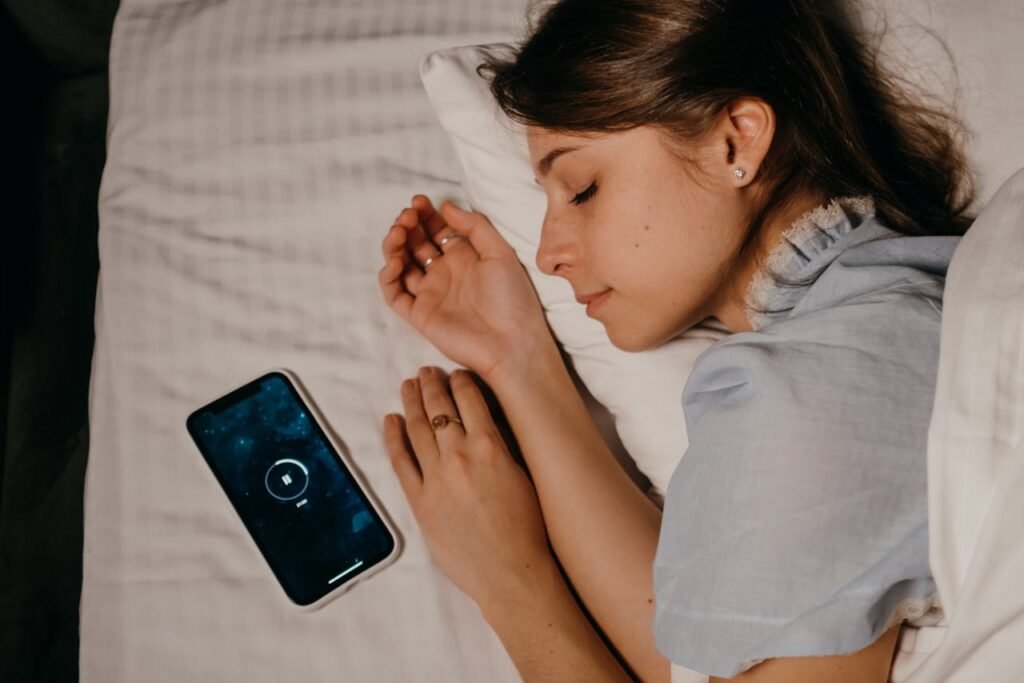
- Do you stop using electronic devices (mobiles, tablets, laptops) at least one hour before bed? The blue light emitted by screens tricks the brain into thinking it is still daytime.
- Do you have a consistent bedtime routine? (e.g., reading, a warm bath, or light stretching).
- Do you go to bed and wake up at the same time every day, even on weekends?
- Do you avoid checking the clock if you wake up in the middle of the night?
The impact of screens is profound. Research highlighted by Great Ormond Street Hospital emphasises that light exposure suppresses melatonin, the hormone that signals to your body that it is time to sleep. Learn more about blue light impact on our detailed page.
Part 3: Diet, Stimulants, and Lifestyle
What you consume during the day, and when you consume it, dictates your night-time physiology.
- Do you stop consuming caffeine (tea, coffee, cola, chocolate) after 2 pm? Caffeine has a half-life of several hours, meaning it stays in your system long after that afternoon cuppa.
- Do you avoid heavy, spicy, or sugary meals within three hours of bedtime?
- Do you limit alcohol intake before bed? While alcohol may help you fall asleep faster, it severely reduces the quality of REM sleep, leading to fragmented rest.
- Do you finish vigorous exercise at least three hours before bed?
- Do you get exposure to natural daylight, especially in the morning?
Many people underestimate the connection between caffeine and sleep. Even if you can fall asleep after a coffee, the depth of your sleep may be compromised.
Part 4: Mental State and Stress
A racing mind is the enemy of sleep. Psychological arousal prevents the nervous system from switching into “rest and digest” mode.
- Do you have a method for managing worry before bed? (e.g., writing a to-do list for the next day to offload your brain).
- Do you practice relaxation techniques such as deep breathing or meditation?
- Do you get out of bed if you haven’t fallen asleep after 20 minutes? Staying in bed while frustrated creates a negative association between your bed and stress.
If anxiety is a primary blocker for you, consider exploring meditation for sleep techniques recommended by mental health professionals.
Analysing Your Results
Take a moment to review your answers. If you identified multiple areas where your hygiene is lacking, do not panic. It is rarely possible to fix everything overnight. The goal is to make incremental changes.
0-2 Negative Habits: Your sleep hygiene is generally good. If you are still tired, you may need to consult a GP about potential sleep disorders.
3-5 Negative Habits: You have some room for improvement. Prioritise the “big wins” like caffeine reduction and screen time.
6+ Negative Habits: Your lifestyle is likely the primary cause of your sleep issues. A complete overhaul of your bedtime routine is recommended.
Actionable Steps to Improve Sleep Hygiene
Now that you have used the questionnaire to identify your weak spots, here is how to address them using evidence-based strategies.
The 10-3-2-1-0 Formula
A popular method for structuring your day for sleep success is the 10-3-2-1-0 formula:
- 10 hours before bed: No more caffeine.
- 3 hours before bed: No more food or alcohol.
- 2 hours before bed: No more work.
- 1 hour before bed: No more screen time.
- 0: The number of times you hit the snooze button in the morning.
Keeping a Sleep Diary
If you are struggling to pinpoint the exact cause of your fatigue, maintaining a sleep diary for two weeks can be revealing. Record when you go to bed, how long it takes to fall asleep, how often you wake, and what you ate or drank that day. The Sleep Charity offers excellent resources and templates for tracking your patterns.
Cognitive Behavioural Therapy for Insomnia (CBT-i)
For those with persistent issues, improving hygiene alone may not be enough. Cognitive Behavioural Therapy for Insomnia (CBT-i) is considered the gold standard treatment for chronic insomnia. It addresses the thoughts and behaviours that prevent sleep. Organisations like NICE (National Institute for Health and Care Excellence) recommend CBT-i as a first-line treatment before medication.
When to See a GP
While poor sleep hygiene is a common cause of tiredness, it is not the only one. If you have optimised your environment and habits but still struggle with excessive daytime sleepiness, loud snoring, or gasping for air during the night, you may have a medical condition such as Obstructive Sleep Apnoea (OSA).
Symptoms of OSA should never be ignored. Review our guide on sleep apnoea symptoms and consult your GP if you are concerned. Furthermore, persistent insomnia can sometimes be linked to underlying mental health conditions. Resources from Mind can help you understand the complex relationship between mental health and sleep.
The Impact of Age and Life Stage
It is worth noting that sleep needs change throughout our lives. Children, teenagers, and older adults all have different requirements. For example, teenagers have a biological shift in their circadian rhythms that makes them want to stay up later. The Royal College of Psychiatrists provides detailed breakdowns of sleep needs across different age groups.
Women going through menopause may also experience disrupted sleep due to hormonal fluctuations and hot flushes. Understanding these biological factors is crucial so that you do not blame yourself for physiological changes beyond your immediate control.
The Bottom Line
Improving your sleep hygiene is one of the most effective forms of self-care available. It requires discipline, patience, and a willingness to prioritise your health over late-night scrolling or that extra glass of wine. By using the questionnaire above, you have taken the first step toward better rest.
Remember, you cannot force sleep, but you can create the perfect conditions for it to occur. Start with small changes—perhaps buying blackout curtains or cutting out afternoon coffee—and build from there. If problems persist, do not hesitate to seek professional advice. Sleep is not a luxury; it is a fundamental pillar of a healthy, happy life.
For further reading on heart health and how it relates to rest, visit the British Heart Foundation. Additionally, for general public health advice, GOV.UK provides extensive reports on wellbeing and productivity.
Explore our full range of insomnia treatments to find the solution that works best for you.