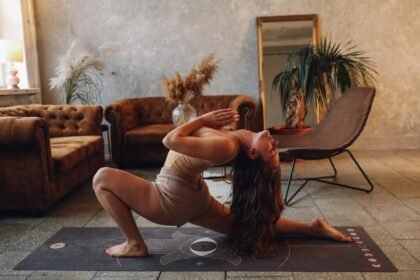
Somatic Stretching: The Mind-Body Practice to Release Tension and Find Calm
If you have ever woken up feeling like your muscles are “stuck” or noticed your shoulders inching toward your ears during a stressful workday, you are familiar with the physical toll of modern life. While traditional stretching often involves pushing through discomfort to lengthen a muscle, somatic stretching offers a radically different approach. It is not about how far you can reach; it is about how much you can feel.
By focusing on the mind-body connection, this practice helps you “unlearn” chronic patterns of tension held in the nervous system. Whether you are seeking chronic pain relief or simply want to move with more ease, understanding the nuances of somatic movement can be a game-changer for your physical and emotional well-being.
What is Somatic Stretching?
At its core, somatic stretching is a form of gentle movement that prioritises the internal experience of the person moving. The term “somatic” comes from the Greek word soma, meaning “the living body.” Unlike passive stretching, where you hold a position to elongate a muscle, somatics involves slow, conscious movements designed to re-educate the brain.
Most of us suffer from what experts call sensory-motor amnesia. This occurs when our muscles remain chronically contracted due to repetitive stress or injury, and our brain literally forgets how to relax them. Somatic exercises use a technique called pandiculation—the same natural yawning and stretching action you see a cat do after a nap—to “reset” these muscle fibres.
According to the NHS, engaging in mindful physical activity can significantly improve mental health by reducing the physiological symptoms of stress.
Somatic vs. Traditional Stretching
To understand why this practice is so effective for stress reduction, it is helpful to see how it differs from the static stretching you might have learned in PE class.
| Feature | Traditional Stretching | Somatic Stretching |
|---|---|---|
| Primary Goal | Increase muscle length/flexibility. | Improve body awareness and motor control. |
| Technique | Static holds or pulling. | Slow contraction and controlled release (pandiculation). |
| Nervous System | Can trigger the stretch reflex if pushed too hard. | Promotes nervous system regulation and calm. |
| Focus | External (touching toes, hitting a pose). | Internal (feeling the muscle engage and release). |
The Science of How It Works
The effectiveness of somatic stretching lies in neuroplasticity—the brain’s ability to reorganise itself by forming new neural connections. When we move slowly and mindfully, we give the brain the data it needs to identify where we are holding unnecessary muscle tension.
Research published in Nature highlights how mindful movement affects the brain’s motor cortex. By engaging in functional movement, we enhance our proprioception—the sense of where our body is in space. This heightened awareness allows us to correct postural alignment issues before they lead to injury.
Furthermore, because our bodies often store the physical remnants of stress, these movements can facilitate a trauma release. As noted by the American Psychological Association, chronic stress causes the muscles to stay in a state of guardedness. Somatics helps break this cycle.
How to Practise Somatic Stretching at Home
You don’t need a gym membership or special equipment to begin. You only need a quiet space and a willingness to listen to your body. Follow these steps for a basic somatic stretching session:
- Find a Comfortable Surface: Lie on a mat or a rug where you feel supported.
- Scan Your Body: Close your eyes and notice where you feel “heavy” or “tight.” Don’t try to change it yet; just observe.
- The Gentle Contraction: Slowly tighten a specific muscle group (like your lower back or shoulders) just a small amount.
- The Slow Release: This is the most important part. Release the tension as slowly as possible, feeling the muscle “melt” back into the floor.
- Rest and Integrate: Take a full breath between movements to let your nervous system process the change.
For more specific guidance on safe movement, the Mayo Clinic provides excellent resources on how mind-body practices can alleviate tension. Similarly, Harvard Health emphasises that consistency is key to maintaining mobility as we age.
The Key Benefits of Somatic Movement
While the immediate feeling of relaxation is wonderful, the long-term benefits of somatic stretching are profound. Regular practice can lead to:
- Improved Mobility: By addressing sensory-motor amnesia, you regain access to your full range of motion.
- Reduced Pain: It is highly effective for chronic pain relief, particularly in the back, neck, and hips.
- Better Posture: You naturally sit and stand taller as your postural alignment improves without force.
- Enhanced Mental Clarity: As you calm the nervous system, you may find it easier to focus and manage daily stressors.
According to Physiopedia, improving our internal sense of movement is essential for balance and injury prevention. Those dealing with specific conditions like arthritis may also find relief through these methods, as supported by the Arthritis Foundation.
Integrating Somatics into Your Routine
You do not need to dedicate hours to see results. Even ten minutes of gentle movement before bed can signal to your brain that it is safe to downregulate. If you are a regular gym-goer, consider using somatics as a cool-down. Unlike high-intensity training, which can sometimes keep the body in a “fight or flight” state, somatics encourages the “rest and digest” parasympathetic response.
If you are struggling with deeper psychological impacts of stress, Verywell Mind explains how somatic practices can be integrated into broader therapeutic contexts. For those with medically diagnosed chronic pain, it is always wise to consult the NICE guidelines for pain management or speak with a physiotherapist.
Remember that the goal is not perfection. You are not trying to “win” at stretching. You are simply becoming a better student of your own body. As Johns Hopkins Medicine suggests, listening to your body’s limits is the best way to ensure long-term physical health.
For more information on the link between movement and mental health, Mind UK offers comprehensive support and tips. You can also explore various techniques on WebMD to find what works best for your lifestyle. Understanding the stretch reflex, as detailed by PT Direct, can also help you understand why slow movement is superior to bouncing or forcing a stretch.
Frequently Asked Questions (FAQs)
Is somatic stretching the same as yoga?
While both emphasize the mind-body connection, they are different. Yoga often involves specific poses (asanas) and can be quite athletic. Somatic stretching is more focused on the internal sensation of muscle release and re-educating the nervous system through pandiculation rather than holding specific shapes.
Can somatic stretching help with anxiety?
Yes. Because it focuses on nervous system regulation, it can help lower cortisol levels and calm the “fight or flight” response. Many people find that by releasing physical muscle tension, they also experience a sense of emotional relief and improved emotional well-being.
How often should I do somatic exercises?
Because it is a gentle movement practice, you can do it every day. Even 5 to 10 minutes can be beneficial. Consistency is more important than duration, as you are essentially “reminding” your brain how to let go of tension on a regular basis.
Do I need any equipment?
No equipment is necessary. A comfortable floor, a yoga mat, or even a firm mattress is all you need to begin exploring your body awareness. The focus is entirely on your internal experience and functional movement.
For further reading on how the brain adapts to new patterns, see Medical News Today for a deep dive into neuroplasticity and its role in health.