Walk into any high-end health food store, and you will be greeted by a dazzling array of exotic powders, berries, and seeds. You’ll see bags of Maca powder from Peru, Acai berries from the Amazon, and Goji berries from the Himalayas. They often come with beautiful packaging and a price tag that makes your wallet weep.
We have been conditioned to believe that “healthy” equals “expensive.” We are told that to be truly well, we need to consume these rare, ancient ingredients that supposedly hold the secrets to longevity.
But here is the truth the wellness industry might not want you to know: “Superfood” is a marketing term, not a scientific one.
There is no medical definition for a superfood. Generally, it refers to food with a high nutrient density—meaning it packs a massive punch of vitamins, minerals, and antioxidants per calorie. While kale and chia seeds fit this description perfectly, so do dozens of humble, affordable ingredients that are likely sitting in your pantry right now.
If you are tired of spending half your paycheck on spirulina and organic hemp hearts, this guide is for you. Let’s decode the hype, analyze the nutrients, and reveal the affordable heroes that are just as “super” as the trends.
The Titans of Trend: Are They Actually Good for You?
Let’s start by looking at the poster children of the superfood movement: Kale and Chia Seeds. Are they actually good for you, or is it all just good PR?
1. The Case for Kale
Kale became the king of greens around 2012. It is undeniably nutritious.
- The Stats: One cup of raw kale contains over 200% of your daily Vitamin A, 134% of Vitamin C, and nearly 700% of Vitamin K. It is also rich in antioxidants like quercetin.
- The Verdict: Yes, it is worth eating. However, it contains goitrogens (which can affect thyroid function in large amounts) and is tough to digest raw. It is not “magical” compared to other greens; it just has a very good PR team.
2. The Case for Chia Seeds
These tiny seeds were prized by the Aztecs for energy.
- The Stats: They are loaded with fiber (11g per ounce), protein (4g), and Omega-3 fatty acids. They also absorb liquid to form a gel, which can keep you full for hours.
- The Verdict: Yes, they are excellent. The fiber content alone makes them a top-tier food for gut health. But at $10–$15 a bag, they can be pricey.
The Conclusion: These foods are healthy, but they are not the only way to be healthy. If you love them, eat them. If you hate the taste or the price, you have options.
The “Swap & Save”: 5 Budget Superfoods to Buy Instead
You don’t need to import berries from the rainforest to get antioxidants. You can get similar (or better) nutrient profiles from foods that cost a fraction of the price.
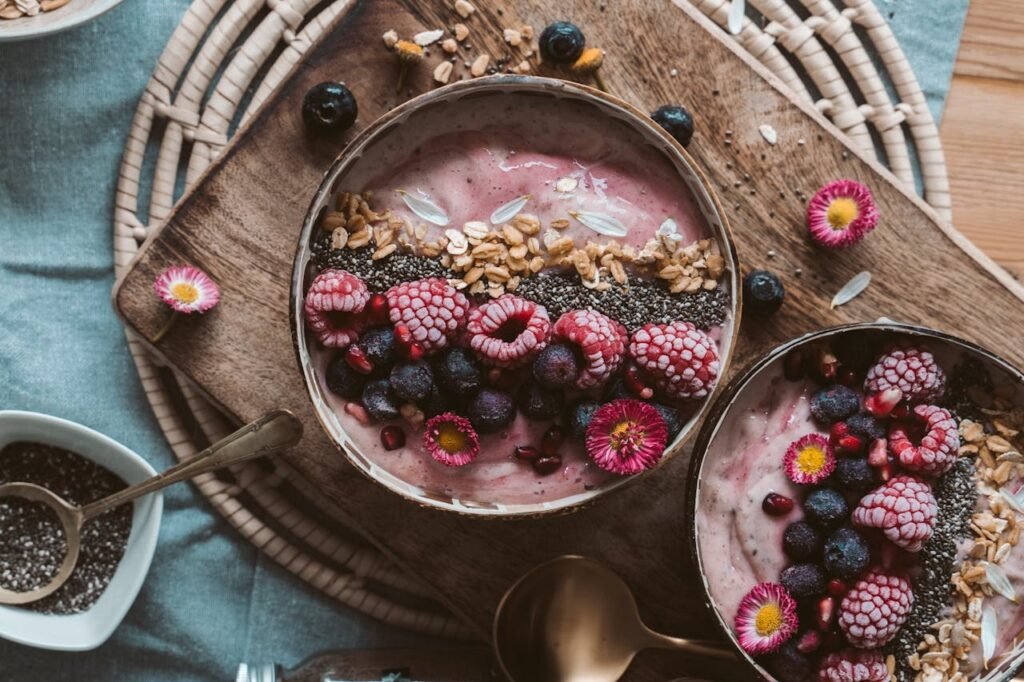
1. Swap Acai Bowls for Frozen Berries
- The Hype: Acai is marketed as the ultimate antioxidant fruit. While true, it is almost always sold as a frozen puree with added sugar or a processed powder.
- The Budget Hero: Frozen Blueberries or Blackberries.
- Why: Blueberries are comparable in antioxidant capacity (specifically anthocyanins, which protect the brain). Because they are frozen at peak ripeness, they retain almost all their nutrients.
- The Savings: A bag of frozen blueberries costs roughly $3, compared to $10+ for Acai packets.
2. Swap Fresh Salmon for Canned Sardines
- The Hype: We all know we need Omega-3s for heart and brain health, and fresh wild-caught salmon is the gold standard. It is also $25 a pound.
- The Budget Hero: Canned Sardines.
- Why: Sardines are one of the most nutrient-dense foods on the planet. They have more Omega-3s per ounce than salmon, plus they contain the bones, giving you a massive dose of calcium and Vitamin D. Because they are small fish, they also have the lowest mercury levels.
- The Savings: $2 per tin vs. $25 per fillet.
3. Swap Quinoa for Lentils
- The Hype: Quinoa is famous because it is a “complete protein” (containing all 9 essential amino acids) and is gluten-free.
- The Budget Hero: Lentils.
- Why: Lentils have nearly double the protein and triple the fiber of quinoa. While they aren’t a “complete” protein on their own, pairing them with rice (or any grain) makes them complete. They are also easier to cook and don’t require rinsing.
- The Savings: $1.50 per lb vs. $5+ per lb for Quinoa.
4. Swap Goji Berries for Red Cabbage
- The Hype: Goji berries are touted for their Vitamin C and immune-boosting properties.
- The Budget Hero: Red Cabbage.
- Why: Red cabbage is an antioxidant powerhouse. It contains 10 times more vitamins than green cabbage and is loaded with anthocyanins (the same compound in blueberries). It lasts for weeks in the fridge and costs pennies.
- The Savings: $0.80 per head vs. $15 per bag of Goji berries.
5. Swap Matcha for Green Tea Bags
- The Hype: Matcha is powdered whole tea leaves, giving you a concentrated dose of EGCG (a compound that fights cancer and boosts metabolism).
- The Budget Hero: Standard Green Tea.
- Why: While Matcha is more concentrated, standard green tea contains the exact same beneficial compounds. Drinking 2–3 cups of brewed green tea provides significant health benefits for a fraction of the cost.
- The Savings: $4 for 20 bags vs. $25 per tin of ceremonial Matcha.
3 Underrated “Superfoods” Hiding in Your Fridge
If you want to boost your health without navigating the health food aisle, look no further than these three common staples.
1. The Humble Egg
For years, eggs were demonized for cholesterol. Modern science has cleared their name.
- Why it’s a Superfood: Eggs are often called “nature’s multivitamin.” The yolk contains Choline (essential for brain health), Vitamin D, Vitamin A, and Lutein (for eye health).
- How to eat it: Eat the whole egg. The white is just protein; the yolk is where the nutrition lives.
2. Oats
Oats are boring, beige, and cheap. They are also incredibly powerful.
- Why it’s a Superfood: Oats contain a specific type of soluble fiber called Beta-Glucan. This fiber turns into a gel in your gut, binding to cholesterol and removing it from your body. It also feeds good gut bacteria.
- How to eat it: Choose “rolled” or “steel-cut” oats over sugary instant packets.
3. Frozen Spinach
Fresh spinach is great, but it wilts in two days and you have to eat a mountain of it to get nutrients.
- Why it’s a Superfood: One block of frozen spinach contains the equivalent of huge bags of fresh leaves. It is rich in Iron, Magnesium, and Folate. Because it is blanched before freezing, the nutrients are locked in.
- How to eat it: It’s easy to hide. Throw a cube into a smoothie, a soup, or a pasta sauce. You won’t taste it, but you’ll get the benefits.
How to Build a “Super” Diet on a Budget
The secret to health isn’t eating one magical berry once a month; it is consistently eating nutrient-dense foods every day. Here is a sample day of eating that includes “superfoods” but costs less than $10 total.
- Breakfast: Oatmeal made with water or milk, topped with frozen blueberries and sunflower seeds (a cheap alternative to pumpkin seeds).
- Lunch: A “big bowl” salad using red cabbage (for crunch and antioxidants), canned sardines or hard-boiled eggs, and a dressing made of olive oil and lemon.
- Snack: An apple with peanut butter. (Apples are rich in fiber and quercetin).
- Dinner: Lentil soup or stew made with carrots, onions, and frozen spinach.
The Verdict
Are Chia seeds and Kale worth the hype? Yes. They are fantastic foods that offer real health benefits.
But are they necessary? No.
You do not need to be rich to be healthy. The most powerful superfoods are often the ones your grandmother used to cook: eggs, beans, cabbage, and oats. Don’t let marketing trick you into thinking health is a luxury product. Real food, in its simplest form, is the ultimate superfood.