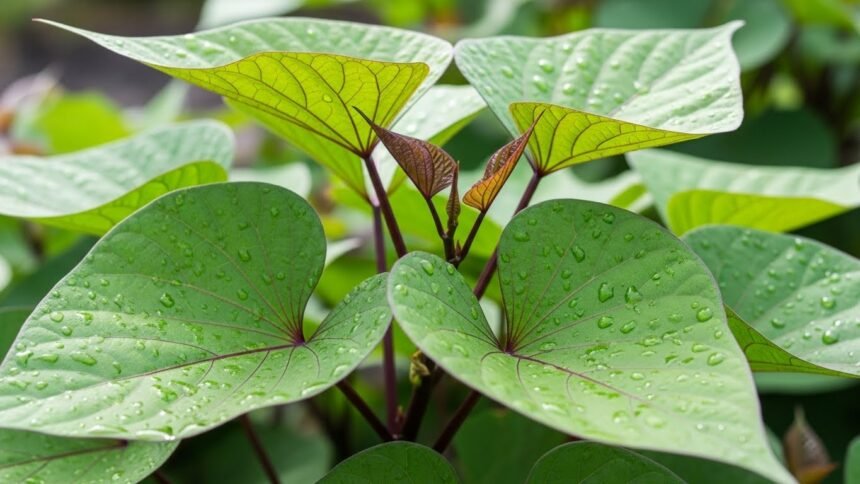
When most people think of sweet potatoes, they envision the vibrant orange, starchy tubers commonly roasted for Sunday dinners or baked into casseroles. However, the plant offers another edible component that is frequently overlooked in Western diets: the leaves.
Sweet potato leaves (Ipomoea batatas) are widely consumed in various cultures across Asia, Africa, and the Pacific Islands. Known as camote tops or sweet potato greens, these leafy vegetables are gaining traction globally as a functional food due to their impressive nutritional profile.
While the tubers are celebrated for their beta-carotene content, the leaves actually possess a higher concentration of certain vitamins, minerals, and antioxidants per calorie. Yet, many home gardeners discard the vines, unaware of their potential value.
This article reviews the nutritional benefits, potential health effects, and safety profile of sweet potato leaves, helping you decide if you should add them to your diet.
Nutritional Profile
Sweet potato leaves are a nutritional powerhouse. They are low in calories but dense in essential micronutrients. Unlike the tuber, which is high in carbohydrates, the leaves provide a significant amount of dietary fibre and protein relative to their weight.
According to data from the USDA FoodData Central, a 100-gram serving of cooked sweet potato leaves provides high levels of Vitamin K, Vitamin A, and Riboflavin. They are chemically distinct from the tuber, offering a nutrient profile more akin to spinach or kale than a root vegetable.
Key Nutrients per 100g (Raw)
| Nutrient | Amount | % Daily Value (approx) |
|---|---|---|
| Calories | 35 kcal | – |
| Protein | 4 g | 8% |
| Fibre | 3 g | 12% |
| Vitamin A | 1800 IU | >100% |
| Vitamin C | 11 mg | 18% |
| Vitamin K | 300 mcg | >250% |
| Iron | 1.2 mg | 7% |
| Potassium | 500 mg | 11% |
The leaves are particularly notable for their polyphenol content. These plant compounds act as antioxidants in the body, helping to combat oxidative stress. Research published in ScienceDirect highlights that the leaves contain anthocyanins and phenolic acids, which may contribute to reduced inflammation.
Potential Health Benefits
Integrating sweet potato leaves into your diet may offer several health advantages, ranging from improved heart health to better vision.
1. Rich in Antioxidants
Oxidative stress occurs when there is an imbalance between free radicals and antioxidants in your body. This imbalance can lead to chronic diseases, including cancer and heart disease. Sweet potato leaves are rich in antioxidants, specifically lutein and beta-carotene.
Studies suggest that the radical-scavenging activity of sweet potato leaf extract is potent. According to Harvard T.H. Chan School of Public Health, diets high in antioxidant-rich vegetables are consistently linked to a lower risk of chronic illness.
2. Promotes Heart Health
The high Vitamin K content in sweet potato leaves plays a vital role in cardiovascular health. Vitamin K is essential for blood clotting and helps prevent the calcification of arteries, which can lead to heart attacks. Furthermore, the leaves are a good source of potassium, a mineral that helps regulate blood pressure by counteracting the effects of sodium.
3. Supports Eye Health
Sweet potato leaves contain high levels of lutein and zeaxanthin. These carotenoids accumulate in the macula of the human eye and filter harmful blue light. The American Optometric Association notes that lutein intake is associated with a reduced risk of age-related macular degeneration (AMD) and cataracts.
4. May Assist in Blood Sugar Regulation
For those managing diabetes or insulin resistance, sweet potato leaves are an excellent dietary choice. They are low on the glycaemic index and contain flavonoids that may promote glucose absorption in peripheral tissues. High fibre intake is also universally recommended for blood sugar stability, as supported by the Mayo Clinic.
Are Sweet Potato Leaves Safe?
A common source of confusion arises from the similarity between sweet potatoes and regular potatoes. Regular potatoes belong to the nightshade family (Solanaceae), and their leaves contain solanine, a toxic compound that is unsafe for human consumption.
Sweet potatoes are different. They belong to the morning glory family (Convolvulaceae). Their leaves do not contain solanine and are safe to eat.
The Issue of Oxalates
While safe from toxins, sweet potato leaves do contain oxalates (oxalic acid). These are naturally occurring compounds found in many green leafy vegetables, such as spinach and chard. Oxalates can bind to calcium in the gut, forming calcium oxalate crystals.
For most people, this is not an issue. However, individuals prone to kidney stones should be cautious. The National Kidney Foundation advises that while you don’t always need to eliminate oxalate-rich foods, you should consume them with calcium-rich foods to prevent stone formation, or limit intake if you are high-risk.
Tip: Cooking the leaves (boiling or steaming) significantly reduces the oxalate content compared to eating them raw.
Culinary Uses and Preparation
Sweet potato leaves have a mild, slightly sweet flavour that is less bitter than kale and softer in texture than collard greens. They can be used interchangeably with spinach in almost any recipe.
Selection and Storage
When purchasing or harvesting, look for vibrant, deep green leaves without yellowing or wilting. Small holes from insects are common in organic varieties and generally do not affect quality, provided the leaves are washed thoroughly.
To store them:
- Do not wash until ready to use (moisture encourages rot).
- Wrap them in a paper towel.
- Place in a plastic bag in the refrigerator vegetable drawer.
- Use within 2 to 3 days, as they wilt quickly.
Preparation Methods
Because the stems can be tough, most cooks remove the leaves from the main vine. The tender stems near the leaves are edible and add a nice crunch.
- Sautéed: Heat olive oil and garlic in a pan. Toss in the leaves and cook for 2–3 minutes until wilted. Season with soy sauce and a splash of lemon juice.
- Boiled: In many African and Asian dishes, the leaves are boiled briefly and served with a peanut or coconut sauce.
- Smoothies: Due to their mild taste, a handful of raw leaves can be blended into fruit smoothies without overpowering the flavour.
- Salads: Young, tender leaves can be eaten raw in salads, though blanching is recommended to improve digestibility and lower oxalates.
Evidence from the World Health Organization suggests that diversifying the types of vegetables you consume ensures a broader intake of essential micronutrients. Adding sweet potato leaves is an easy way to diversify beyond standard salad greens.
For more information on the benefits of the tuber itself, you can read this comprehensive guide on Healthline.
Comparison: Sweet Potato Leaves vs. Spinach
Many people wonder how these greens stack up against the omnipresent spinach. Both are nutrient-dense, but sweet potato leaves often edge out spinach in fibre and Vitamin K content, while spinach may have slightly higher iron levels.
However, sweet potato leaves are often more heat-tolerant. In tropical climates or hot summers where spinach bolts (goes to seed and becomes bitter), sweet potato vines thrive, providing a reliable source of greens during the hottest months.
Practical Tips for Consumption
- Wash Thoroughly: Like all leafy greens, they can harbour soil and bacteria. Wash under cold running water.
- Pair with Fat: Vitamins A and K are fat-soluble. Always eat sweet potato leaves with a source of healthy fat (like olive oil, avocado, or nuts) to maximise nutrient absorption. The NHS highlights that fat is necessary for the body to metabolise these vitamins effectively.
- Harvesting: If you grow sweet potatoes, you can harvest the leaves throughout the season without harming the tuber harvest, provided you don’t strip the plant entirely.
The Bottom Line
Sweet potato leaves are not only safe to eat but are also a highly nutritious vegetable that deserves a place on your plate. They are rich in Vitamin K, Vitamin A, antioxidants, and fibre.
Unlike the toxic leaves of the regular potato, sweet potato greens are edible and offer a mild flavour profile that suits a variety of dishes. While they do contain oxalates, cooking them reduces these compounds, making them safe for the general population.
Whether you sauté them with garlic, blend them into a smoothie, or boil them in a stew, these greens offer a sustainable, inexpensive, and potent boost to your daily nutrient intake.
Further research into plant polyphenols, such as those found in these leaves, can be explored via PubMed, indicating a promising future for this vegetable in preventative nutrition.