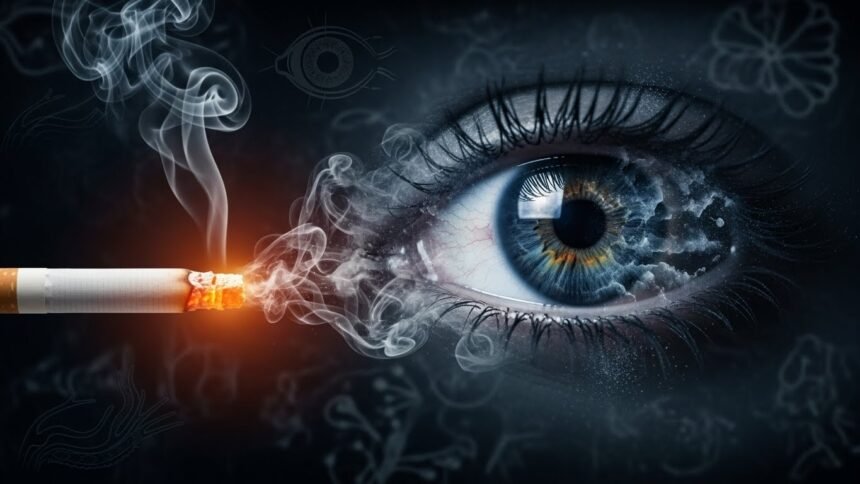
When we think about the health risks associated with smoking, our minds almost immediately turn to lung cancer, heart disease, or stroke. These are the warnings plastered across cigarette packets and highlighted in public health campaigns for decades. However, there is a significant, often overlooked danger that receives far less attention: the profound impact of tobacco smoke on your vision.
While many smokers realise that their habit harms their respiratory system, fewer are aware that smoking is one of the leading preventable causes of sight loss in the United Kingdom. The eyes are incredibly delicate organs, rich in blood vessels and highly sensitive to the toxic chemicals found in tobacco smoke. The damage is often silent and gradual, but the cumulative effect can be devastating, potentially leading to permanent blindness.
Understanding this hidden link is crucial, not just for smokers, but for anyone exposed to second-hand smoke. The good news is that unlike some other health consequences, the risk of eye disease can decrease significantly after quitting. This guide explores exactly how smoking impacts ocular health, the specific conditions involved, and actionable steps you can take to protect your vision.
How smoking damages the eyes
To understand the connection between cigarettes and sight loss, we must look at the biological mechanisms at play. Tobacco smoke contains over 7,000 chemicals, many of which are toxic and can pass from your lungs into your bloodstream, reaching every part of your body, including your eyes.
Oxidative stress and inflammation
The toxins in cigarette smoke induce oxidative stress. This occurs when there is an imbalance between free radicals—unstable atoms that damage cells—and antioxidants in the body. The retina is particularly susceptible to oxidative stress. Smoking reduces the levels of antioxidants in the bloodstream, leaving the delicate cells of the eye vulnerable to damage and accelerating the ageing process of ocular tissues.
Restricted blood flow
Nicotine acts as a vasoconstrictor, meaning it causes blood vessels to narrow. The eyes rely on a rich network of tiny blood vessels (capillaries) to supply oxygen and nutrients. When these vessels constrict, blood flow is reduced, effectively starving the eye tissues of the oxygen they need to function correctly. Over time, this ischaemia can lead to nerve damage and vision impairment.
Heavy metal accumulation
Research indicates that heavy metals found in tobacco, such as cadmium and lead, can accumulate in the lens of the eye. This accumulation is a direct contributor to the clouding of the lens, a condition known as cataracts.
Major eye conditions linked to smoking
Smoking does not just cause general irritation; it significantly increases the statistical risk of developing serious, sight-threatening conditions. The NHS warns that smokers are significantly more likely to develop age-related macular degeneration (AMD) and cataracts compared to non-smokers.
Age-related Macular Degeneration (AMD)
AMD is the leading cause of blindness in adults in the UK. It affects the macula, the small central part of the retina responsible for sharp, detailed vision. This is the vision you use for reading, driving, and recognising faces.
- The Risk: Smokers are up to four times more likely to develop AMD than those who have never smoked.
- The Mechanism: Smoking interferes with blood flow to the retina and reduces the effectiveness of antioxidants that protect the macula.
- The Symptoms: You may notice a blurred or distorted area in your central vision. Straight lines might appear wavy or crooked.
According to the Royal National Institute of Blind People (RNIB), stopping smoking is the single most effective step you can take to prevent the progression of AMD.
Cataracts
A cataract is a clouding of the eye’s natural lens, which lies behind the iris and the pupil. While cataracts are a common part of ageing, smoking accelerates their development.
- The Risk: Heavy smokers are twice as likely to develop cataracts as non-smokers.
- The Mechanism: As mentioned, heavy metals from smoke collect in the lens. Additionally, the reduction of antioxidants prevents the eye from repairing damaged proteins in the lens.
- The Outcome: Vision becomes misty or cloudy. You may find lights too bright or experience glare from oncoming headlights while driving at night.
Diabetic Retinopathy
For those living with diabetes, smoking is particularly dangerous. Diabetes already damages the blood vessels in the retina. Smoking exacerbates this damage, causing vessels to leak fluid or blood (haemorrhage) into the eye.
Detailed guidance from Diabetes UK highlights that smoking increases the risk of complications, including retinopathy, which can lead to total blindness if left unmanaged.
Thyroid Eye Disease (TED)
This is an autoimmune condition often associated with an overactive thyroid. The immune system attacks the muscles and fatty tissue behind the eye, causing inflammation.
- The Connection: Smokers are much more likely to develop TED and tend to have a more severe form of the disease that is resistant to treatment.
- The Symptoms: Bulging eyes, double vision, and gritty sensations are common features.
Actionable steps to protect your sight
Protecting your vision requires a proactive approach. While the risks are high, the body’s ability to heal is remarkable once the exposure to toxins ceases.
1. Prioritise quitting smoking
This is the most critical step. Even if you have smoked for decades, quitting halts the accumulation of damage. The Healthline guide to quitting smoking suggests that your blood pressure and heart rate drop just 20 minutes after your last cigarette, starting the repair process immediately.
2. Regular eye examinations
Many smoking-related eye conditions, like glaucoma and AMD, are symptomless in their early stages. An optometrist can detect early signs of vascular damage before you notice vision loss. The Association of Optometrists recommends checking your eyes at least every two years, or more frequently if you smoke.
3. Dietary adjustments
Counteract oxidative stress by increasing your intake of antioxidants. Focus on foods rich in:
- Lutein and Zeaxanthin: Found in leafy greens like kale and spinach.
- Vitamin C: Found in citrus fruits and peppers.
- Vitamin E: Found in nuts and seeds.
- Zinc: Found in meat, shellfish, and dairy.
4. Manage sunlight exposure
Since smoking reduces the eye’s natural defences against UV radiation, wearing sunglasses with UV400 protection is essential to prevent further damage to the lens and retina.
Comparison: Smoker vs. Non-Smoker Eye Health Risks
The following table illustrates the increased risk factors associated with tobacco use.
| Health Factor | Non-Smoker Status | Smoker Status | Potential Outcome |
|---|---|---|---|
| AMD Risk | Baseline Risk | 2x to 4x Higher | Central vision loss, inability to read or drive. |
| Cataract Onset | Age-related (usually 60+) | Accelerated (often 40-50+) | Early surgery required, cloudy vision. |
| Dry Eye Syndrome | Occasional | Chronic & Severe | Persistent irritation, redness, corneal scarring. |
| Uveitis Risk | Low | 2.2x Higher | Inflammation of the middle layer of the eye. |
| Treatment Response | Standard | Reduced Efficacy | Poorer healing after eye surgeries (e.g., laser). |
Frequently Asked Questions
Does vaping affect eye health?
While research is ongoing, early studies suggest e-cigarettes are not harmless. The vapour contains chemicals that can cause dry eye and oxidative stress. However, Action on Smoking and Health (ASH) notes that vaping is significantly less harmful than tobacco, though not risk-free.
Is damage to the eyes reversible?
Some damage, such as scarring from AMD, is permanent. However, conditions like dry eye often resolve after quitting. Furthermore, the risk of developing new conditions drops. For example, the risk of AMD begins to decline after quitting, though it may take years to reach the level of a non-smoker.
Does passive smoking harm my children’s eyes?
Yes. Children exposed to second-hand smoke are at a higher risk of developing allergic conjunctivitis and, later in life, cataracts. According to GOV.UK statistics on tobacco, protecting children from smoke is vital for their long-term development.
How does smoking affect contact lens wearers?
Smokers who wear contact lenses are at a much higher risk of corneal ulcers and infections. The combination of smoke particles and reduced tear production creates a breeding ground for bacteria.
Where can I get help to quit?
The UK offers robust support networks. Your GP can refer you to local stop smoking services, or you can utilise resources from Cancer Research UK, which provide free advice and support plans.
The bottom line
The link between smoking and sight loss is indisputable and severe. While the threat to your lungs is widely publicised, the threat to your vision is just as real. From damaging the macula to accelerating cataracts, the toxins in cigarette smoke attack the very structures that allow you to see the world.
However, it is never too late to make a change. Evidence from the Macular Society confirms that quitting smoking prevents further damage and preserves remaining vision. By combining a smoke-free lifestyle with a nutrient-rich diet and regular visits to your optician, you can significantly safeguard your sight. Prioritise your eyes today—they are the only pair you will ever have.
For more detailed clinical information on eye health, you can consult resources from Moorfields Eye Hospital, a world-leading centre for ophthalmic care.