Receiving a diagnosis of skin cancer can be an incredibly unsettling experience. It is perfectly natural to feel anxious about the road ahead, particularly when it involves surgery. However, knowing that you have access to the most effective treatment options available can provide a significant sense of relief and control.
When it comes to treating common types of skin cancer, particularly on delicate areas like the face, Mohs micrographic surgery is widely considered the “gold standard”. It is a precise, tissue-sparing technique designed to remove the cancer entirely while preserving as much healthy skin as possible.
If you have been referred for this procedure, you are likely looking for clear, reliable information on what to expect. You are not alone in this journey. Thousands of patients undergo this treatment successfully every year, often with excellent cosmetic results and high cure rates.
In this article, we will walk you through the entire Mohs surgery procedure, from preparation to recovery, helping you feel confident and prepared for your appointment.
What is Mohs micrographic surgery?
Mohs micrographic surgery is a specialised surgical technique used primarily to treat common skin cancers such as basal cell carcinoma (BCC) and squamous cell carcinoma (SCC). It is distinct from standard surgical excision because of its unique, step-by-step pathology process.
During standard excision, a surgeon removes the visible tumour along with a safety margin of healthy skin. The tissue is then sent to a laboratory, and results can take days or weeks. If the margins are not clear, you might need a second surgery.
In contrast, Mohs surgery is performed in stages, all in one visit. The surgeon removes a thin layer of tissue and examines it under a microscope while you wait. If cancer cells are detected, another layer is removed only from the specific area where cancer remains. This process continues until no cancer cells are found.
This method allows for the complete removal of the cancer while sparing the maximum amount of healthy tissue, which is crucial for cosmetic outcomes on the face, nose, ears, and hands.
According to the NHS, this precise method ensures that all cancerous cells are removed before the wound is closed, significantly reducing the need for repeat procedures.
The Mohs surgery procedure: A detailed breakdown
The thought of remaining at the clinic for several hours can be daunting. However, understanding the stages of the day can help lower your anxiety. The procedure is usually done as a day case under local anaesthetic.
Step 1: Preparation and anaesthesia
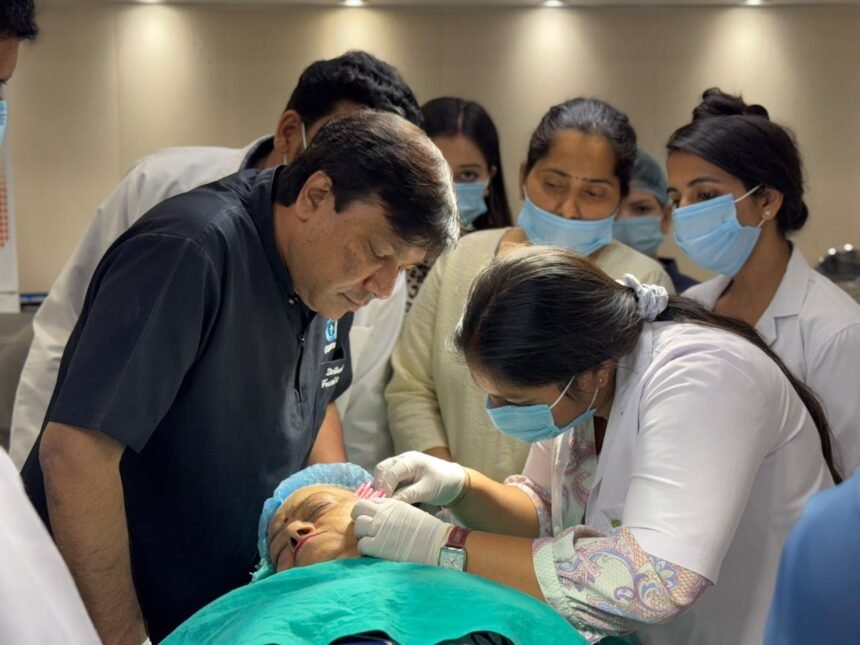
Upon arrival, the surgical team will cleanse the area to be treated. They will outline the visible tumour with a marker pen to guide the initial incision. You will then receive a local anaesthetic injection to numb the area completely. This is typically the only part of the procedure that involves any discomfort, similar to a dental injection.
You will remain awake throughout the process, but you will not feel any pain. Because you are awake, you can usually bring a book or tablet to keep yourself occupied during the waiting periods.
Step 2: The first stage of removal
Once the area is numb, the surgeon removes the visible portion of the tumour along with a very thin layer of surrounding tissue. This part of the surgery is often quite quick, taking only a few minutes.
After the tissue is removed, the surgeon will bandage your wound temporarily. You will then be asked to return to the waiting area. At this point, the real work begins behind the scenes in the on-site laboratory.
Step 3: Tissue processing and mapping
While you rest in the waiting room, the surgical team processes the removed tissue. They cut the tissue into sections and freeze it to create microscopic slides. This is a critical differentiator of Mohs surgery.
The surgeon creates a detailed map of the surgical site. They examine the slides under a microscope to identify exactly where any cancer cells remain. By mapping the tissue, they can pinpoint the precise location of any remaining roots of the tumour.
Understanding the different types of skin cancer is helpful here, as the growth patterns of BCCs and SCCs can vary, influencing how many stages are required. You can learn more about these variations at Healthline.
Step 4: Additional stages (if necessary)
If the microscope analysis shows that cancer cells remain at the edge of the removed tissue, the surgeon refers to their map. They will bring you back into the operating theatre to remove another thin layer of tissue only from the specific area where cancer was detected.
This preserves the healthy skin on the other sides of the wound. This cycle—removal, processing, and mapping—is repeated until the surgeon confirms that the margins are completely clear of cancer.
Step 5: Wound repair
Once the cancer is entirely removed, the surgeon will discuss the best option for repairing the wound. The goal is to achieve the best possible cosmetic result.
Options usually include:
- Natural healing: Letting the wound heal on its own (secondary intention).
- Stitches: Closing the wound side-to-side with sutures.
- Skin flap: Moving adjacent skin to cover the wound.
- Skin graft: Taking skin from another part of the body to cover the area.
Organisations like the British Association of Dermatologists provide excellent resources detailing these reconstruction methods.
Who is a candidate for Mohs?
Not every skin cancer requires Mohs surgery. It is a resource-intensive procedure usually reserved for high-risk cases. Your dermatologist may recommend Mohs if:
- The cancer is located on a cosmetically or functionally important area (eyes, nose, lips, ears, fingers, genitals).
- The tumour has returned after previous treatment (recurrence).
- The cancer is large or has aggressive features.
- The edges of the tumour are not clearly defined.
Data from Cancer Research UK suggests that the incidence of non-melanoma skin cancer is rising, making access to specialised treatments like Mohs increasingly important for effective long-term management.
Comparison: Mohs surgery vs. Standard excision
To help you understand why this procedure is chosen over others, we have compared the key factors below.
| Feature | Mohs Micrographic Surgery | Standard Surgical Excision |
|---|---|---|
| Tissue Analysis | 100% of margins examined immediately. | approx. 1% of margins examined (bread-loafing technique). |
| Lab Results | Available same-day (within hours). | Available in days or weeks. |
| Tissue Preservation | Maximises healthy tissue preservation. | Requires wider safety margins, removing more healthy skin. |
| Cure Rate (BCC) | Up to 99% for new cancers. | Approx. 90-95% for new cancers. |
| Duration | Several hours (unpredictable). | Short (typically 30-45 minutes). |
| Cost/Resources | Higher cost, requires specialised training. | Lower cost, widely available. |
Recovery and aftercare tips
Recovery from Mohs surgery is generally straightforward, but adhering to aftercare instructions is vital for minimising scarring.
- Rest is essential: Avoid strenuous exercise, bending, or heavy lifting for at least 48 hours, or as directed by your surgeon. This prevents bleeding and complications.
- Wound care: Keep the bandage dry and intact for the first 24–48 hours. You will likely be given specific instructions on how to clean the wound and change dressings thereafter.
- Manage discomfort: Mild pain is common once the anaesthetic wears off. Paracetamol is usually sufficient. Avoid aspirin or ibuprofen immediately after surgery as they can increase bleeding risk, unless prescribed by your doctor.
- Scar management: Once the stitches are removed, using silicone gels or sheets can help improve the appearance of the scar. Sun protection is absolute critical for the healing tissue.
For more in-depth advice on wound care, Macmillan Cancer Support offers comprehensive guides for patients recovering from skin cancer surgery.
Frequently Asked Questions
Does Mohs surgery leave a scar? Yes, all surgery leaves a scar. However, because Mohs preserves the maximum amount of healthy tissue, the scar is often smaller than it would be with standard excision. Your surgeon is trained in reconstructive techniques to ensure the best cosmetic outcome.
How long does the procedure take? It is impossible to predict exactly. While the surgery itself is quick, the lab work takes time. You should prepare to be at the clinic for at least 4 hours, though it can take the full day if multiple stages are required.
Is Mohs surgery painful? The injection of local anaesthetic stings briefly, but you should feel no pain during the tissue removal. Post-operative pain is typically mild and manageable with over-the-counter painkillers.
Will the cancer come back? Mohs has the highest success rate of all treatments for skin cancer. According to the Skin Cancer Foundation, cure rates for primary basal cell carcinomas are as high as 99%. However, regular follow-ups are essential.
Can I drive home afterwards? If the surgery is on your face, particularly near the eyes, swelling or bandages might obstruct your vision. It is strongly recommended to arrange for a friend or family member to drive you home.
The bottom line
Mohs surgery is a highly effective, tissue-sparing treatment that offers the highest potential for a cure for many skin cancers. While the prospect of surgery is never pleasant, the procedure is designed to prioritise your long-term health and cosmetic appearance.
By removing the cancer layer by layer and verifying it microscopically, your surgeon ensures that the tumour is gone before you even leave the clinic. This “one-stop” approach eliminates the anxiety of waiting for lab results.
Recovery is typically manageable, and with proper sun safety practices moving forward, the outlook is excellent. Always ensure you are checking your skin regularly and consulting your GP if you notice any changes.
For further reading on clinical guidelines and what to expect, the National Institute for Health and Care Excellence (NICE) provides detailed pathways for skin cancer care. Additionally, staying informed about sun safety via GOV.UK can help prevent future issues.
Lastly, the British Skin Foundation is a fantastic charity dedicated to funding research and providing support to anyone affected by skin disease. Staying informed is your best defence.