For many, the morning alarm is not a call to adventure, but the start of a battle against inertia. We hit snooze, scroll through social media, and drag ourselves to the coffee machine, hoping caffeine will artificially jumpstart our systems. However, relying solely on stimulants often leads to a mid-morning crash. There is a more sustainable, physiological way to wake up: movement. Specifically, a dedicated 10 minute morning yoga practice can revolutionize how you approach your day.
While high-intensity interval training (HIIT) or running are excellent forms of exercise, they can be jarring to a body that has been sedentary for eight hours. Yoga offers a unique bridge between the subconscious state of sleep and the alertness required for the day. It gently stimulates the circulatory system, awakens the fascia, and centers the mind.
This article outlines a scientifically grounded, 10-minute routine designed to maximize energy, mental clarity, and physical readiness, allowing you to thrive rather than just survive your morning.
The Physiology of Waking Up: Why Movement Matters
To understand why morning yoga is effective, we must look at the body’s Circadian Rhythm. Upon waking, your body experiences the Cortisol Awakening Response (CAR), a natural spike in cortisol intended to alert your system. However, grogginess often persists due to sleep inertia.
Engaging in low-impact movement accelerates the transition from sleep to wakefulness by increasing blood flow and oxygenation to the brain. According to the National Center for Complementary and Integrative Health (NCCIH), yoga actively modulates the autonomic nervous system, shifting the body from a state of lethargy to a state of balanced alertness. Unlike coffee, which blocks adenosine receptors to trick the brain into feeling awake, yoga generates genuine energy by metabolizing stress hormones and loosening tight muscles.
Setting the Stage for Success
Before diving into the 10 minute morning yoga flow, brief preparation ensures consistency. You do not need a studio-quality setup; you simply need intention.
- Environment: Try to practice in a room with natural light. Exposure to sunlight helps regulate the Sleep Foundation’s recommended circadian cues.
- Hydration: Drink a glass of water before hitting the mat. Rehydrating fascia is crucial for mobility.
- Attire: Pajamas are perfectly acceptable. The goal is low friction to entry.
The Routine: A Step-by-Step Guide
This sequence is designed to move the spine in all six directions (flexion, extension, lateral flexion left/right, and rotation left/right), which is the gold standard for spinal health.
Minutes 0-2: Grounding and Child’s Pose (Balasana)
Start by kneeling on your mat, touching your big toes together and sitting on your heels. Separate your knees as wide as your hips.
- Exhale and lay your torso down between your thighs.
- Lengthen your tailbone away from the back of your pelvis while lifting the base of your skull away from the back of your neck.
- Stretch your arms forward, palms down.
Why it works: This pose gently stretches the hips, thighs, and ankles while calming the brain. It is an excellent transition pose that signals to the body that the day has begun with intention rather than rush.
Minutes 2-4: Awakening the Spine (Cat-Cow)
Transition to a tabletop position (hands and knees). Ensure your wrists are directly under your shoulders and knees under your hips.
- Cow Pose (Inhale): Drop your belly towards the mat, lift your chin and chest, and gaze up toward the ceiling. Draw your shoulders away from your ears.
- Cat Pose (Exhale): Draw your belly to your spine and round your back toward the ceiling. The pose should look like a cat stretching its back. Release the crown of your head toward the floor.
Repeat this flow for 2 minutes. According to the Mayo Clinic, controlled movements combined with breath work are essential for reducing physical stress markers.
Minutes 4-6: Activation (Downward-Facing Dog)
From the tabletop position, tuck your toes and lift your hips high, straightening your legs to form an inverted V-shape.
- Spread your fingers wide and press firmly through your palms.
- Pedal out your feet (bend one knee, then the other) to stretch the hamstrings and calves.
- Draw your chest toward your thighs.
The Energy Boost: Inversions (where the heart is higher than the head) encourage venous return, helping blood flow back to the heart and brain. This is often cited by experts at Yoga Journal as a premier pose for fatigue reduction.
Minutes 6-8: Strength and Expansion (Warrior I & II)
Step your right foot forward between your hands.
- Warrior I: Spin your back heel down at a 45-degree angle. Inhale and lift your torso and arms up. Keep your hips squaring forward. Hold for 5 breaths.
- Warrior II: Open your hips and arms to the side. Gaze over your front middle finger. This builds heat in the quadriceps and opens the chest.
- Switch Sides: Step back to Down Dog and repeat on the left leg.
Standing poses engage large muscle groups, which increases heart rate and body temperature, acting as a natural metabolic booster.
Minutes 8-9: Balance and Focus (Tree Pose)
Stand tall in Mountain Pose. Shift your weight to your left foot.
- Place your right foot on your left ankle, calf, or inner thigh (avoid the knee joint).
- Bring your hands to your heart center or reach them overhead.
- Fix your gaze on a stationary object (Drishti).
- Hold for 30 seconds, then switch sides.
Balance poses require deep concentration, which clears the mind of morning fog. The American Council on Exercise (ACE) highlights balance training as crucial for neuromuscular coordination.
Minute 9-10: Intention Setting (Mountain Pose)
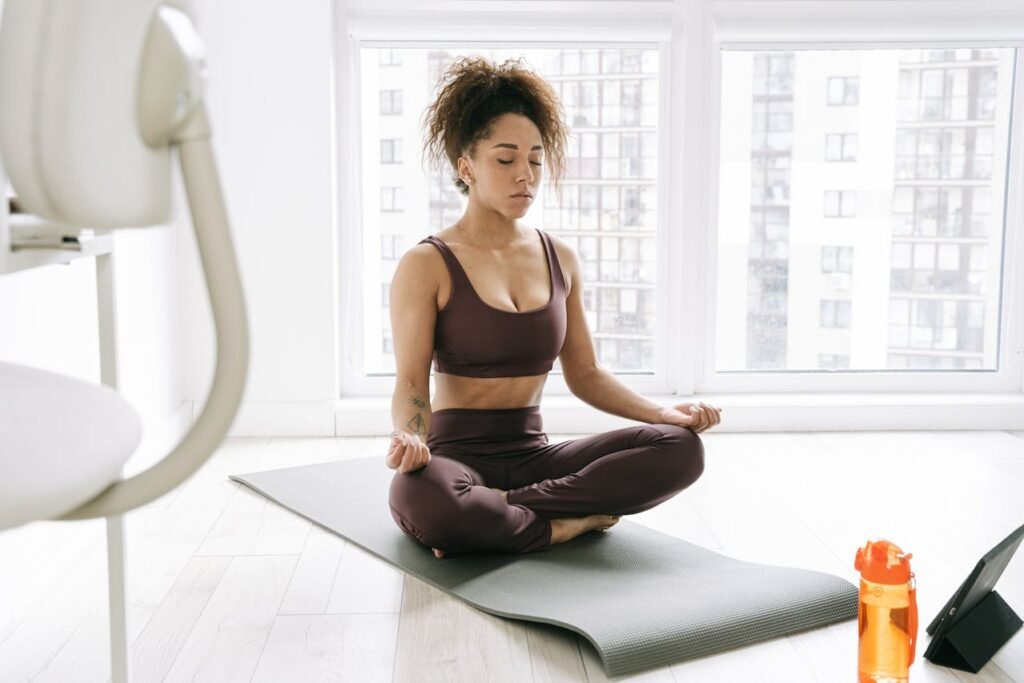
Return to standing on both feet. Close your eyes. Roll your shoulders back. Take five deep, diaphragm-filling breaths. Set an intention for the day—a word or phrase like “Focus,” “Patience,” or “Productivity.”
Comparison: Choosing Your Morning Fuel
Is a 10 minute morning yoga routine really better than just drinking coffee or doing intense cardio? Let’s look at the data.
| Feature | Morning Yoga | Coffee (Caffeine) | HIIT Workout |
|---|---|---|---|
| Energy Onset | Gradual (Immediate post-session) | Fast (15-30 mins) | Immediate |
| Duration of Energy | Sustained (3-5 hours) | Short-term (Crash likely) | Sustained (2-4 hours) |
| Cortisol Impact | Lowers/Balances | Increases | Increases significantly |
| Mental State | Calm, Focused | Alert, potentially jittery | High alert, potentially fatigued |
| Joint Impact | Therapeutic/Low | None | High Impact |
Table Data Source Context: Comparative analysis based on general physiological responses outlined by health authorities like the CDC regarding physical activity benefits.
Beyond Energy: Long-Term Health Benefits
Committing to this daily ritual does more than just wake you up. The cumulative effects of daily yoga are profound.
1. Improved Mental Health
Regular practice reduces the baseline for stress. The American Psychological Association (APA) notes that chronic stress creates muscle tension; yoga actively releases this tension, creating a feedback loop that calms the mind.
2. Enhanced Flexibility and Posture
Morning stiffness is common, especially as we age. Gentle stretching lubricates the joints with synovial fluid. Harvard Health Publishing emphasizes that regular stretching keeps muscles long, lean, and flexible, preventing the “desk hunch” posture many develop during the workday.
3. Better Respiratory Function
By focusing on the breath (Pranayama), you strengthen the diaphragm. Research from Johns Hopkins Medicine suggests that yoga improves respiratory efficiency, which ensures your brain gets the oxygen it needs to function at peak levels throughout the day.
Tips for Consistency
Knowing the benefits is one thing; doing the work is another. Here is how to stick to your 10 minute morning yoga habit:
- Habit Stacking: Attach yoga to a current habit. “After I brush my teeth, I will unroll my mat.” This technique is supported by behavioral psychology research found in publications like the British Journal of General Practice.
- Prepare the Night Before: Lay out your mat and clothes before you sleep. The visual cue serves as a reminder.
- Don’t Judge the Practice: Some days you will feel stiff; other days you will feel fluid. The goal is the movement, not the perfection of the pose.
Conclusion
The way you start your morning sets the trajectory for your entire day. You can choose to rush, react, and rely on caffeine, or you can choose to breathe, move, and cultivate natural energy. A 10 minute morning yoga routine is a low-investment, high-reward strategy that fits into even the busiest schedules.
By dedicating just 1% of your day to this practice, you aren’t just stretching your hamstrings; you are expanding your capacity to handle stress, improving your focus, and prioritizing your long-term health.
Challenge: Try this routine tomorrow morning. Set your alarm 10 minutes earlier, resist the snooze button, and see how your body responds. You might just find that you don’t need that second cup of coffee after all.
For more information on physical activity guidelines, visit the World Health Organization (WHO) or check resources at WebMD for specific pose modifications.