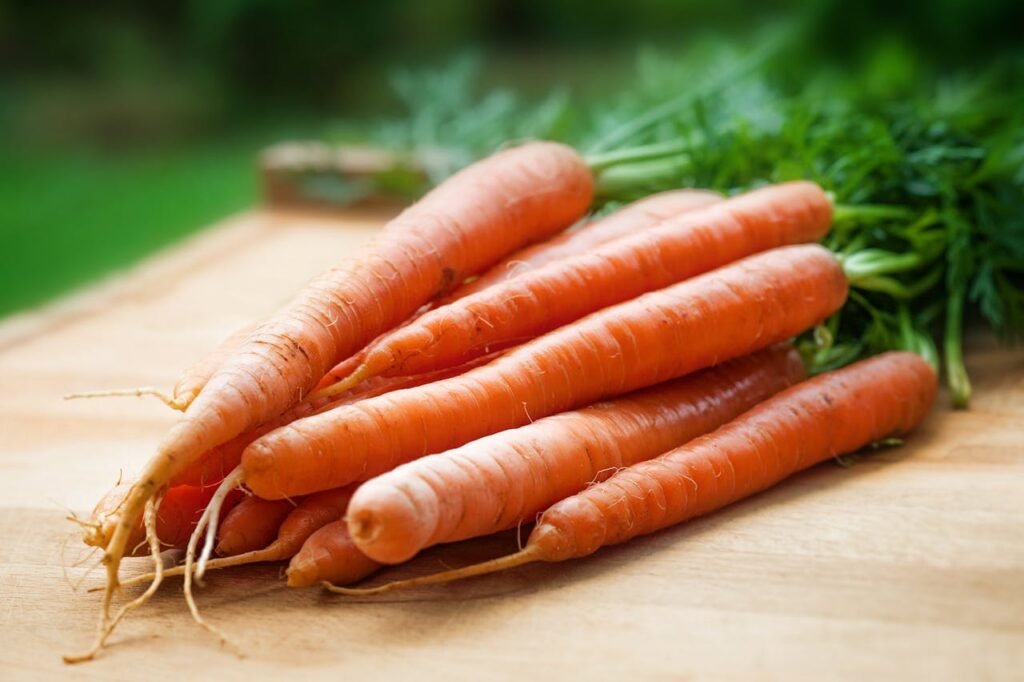
Most of us immediately picture a vibrant orange vegetable when we think of carrots. It is the classic image of a crunchy, healthy snack.
However, before the 17th century, carrots were predominantly purple, white, or yellow. The orange variety is actually a relatively modern cultivation.
Today, purple carrots are making a significant comeback in supermarkets and farmers’ markets across the UK. They are not just a quirky novelty to make your salad look interesting; they are nutritional powerhouses packed with unique antioxidants.
While they share many benefits with their orange counterparts, purple carrots contain high levels of anthocyanins. These are the same compounds that give blueberries and blackberries their deep colour and potent health properties.
Adding this colourful root vegetable to your meals can be a simple way to boost your intake of fibre, vitamins, and disease-fighting plant compounds.
This article reviews the benefits of purple carrots and why you should consider adding them to your diet.
What Are Purple Carrots?
Purple carrots are a specific variety of the root vegetable Daucus carota. While they may look genetically modified to the untrained eye, they are actually the original, ancient carrot.
Historical records suggest that cultivated carrots originated in the area now known as Afghanistan. These early varieties were purple on the outside and yellow on the inside.
It was not until Dutch growers in the 16th and 17th centuries began selectively breeding them that the sweeter, orange carrot became the standard in Europe and the UK.
The Nutritional Difference
All carrots are rich in nutrients, but the purple variety offers a distinct profile:
- Anthocyanins: The primary difference lies in their pigment. Purple carrots are loaded with these flavonoid antioxidants.
- Beta-carotene: Like orange carrots, they still contain beta-carotene (which the body converts to vitamin A), though often in slightly lower amounts than the deep orange varieties.
- Fibre and Vitamins: They remain an excellent source of dietary fibre, vitamin C, and potassium.
According to Healthline’s overview of carrots, carrots are a weight-loss-friendly food that has been linked to lower cholesterol levels and improved eye health.
5 Evidence-Based Health Benefits
Integrating purple carrots into your weekly meal planning can provide health advantages that go beyond basic nutrition. Here is what the science says regarding the benefits of purple carrots.
1. Rich Source of Potent Antioxidants
The deep purple hue is a visual indicator of high antioxidant content. Specifically, these carrots are rich in anthocyanins.
Antioxidants are crucial because they protect your body from oxidative stress. This stress is caused by an imbalance of free radicals, which are unstable molecules that can damage cells.
Research published by the National Center for Biotechnology Information (NCBI) highlights that anthocyanins exhibit strong free-radical scavenging capabilities. By neutralising these harmful molecules, purple carrots may help reduce the risk of chronic conditions.
2. Powerful Anti-Inflammatory Effects
Chronic inflammation is a root driver of many modern diseases, including heart disease, type 2 diabetes, and arthritis. Diet plays a massive role in managing inflammation.
The anthocyanins found in purple carrots function similarly to anti-inflammatory drugs but without the side effects. They work by inhibiting the production of certain inflammatory proteins in the body.
Including a variety of colourful vegetables is a cornerstone of the anti-inflammatory diet recommended by experts at Harvard Health.
3. Supports Heart Health
Cardiovascular disease remains a leading cause of health issues in the UK. The British Heart Foundation emphasises the importance of fruit and vegetable intake for heart maintenance.
Purple carrots contribute to heart health in two main ways:
- Cholesterol Management: The soluble fibre in carrots binds to cholesterol in the digestive tract, helping to excrete it rather than absorbing it into the bloodstream.
- Blood Pressure: They are a good source of potassium, a mineral that helps relax blood vessels and offset the effects of sodium.
Furthermore, studies suggest that anthocyanins specifically improve blood flow and blood vessel function.
4. May Aid in Weight Management
If you are looking to lose weight or maintain a healthy weight, purple carrots are an ideal food choice.
They are low in calories yet high in water and fibre. This combination promotes satiety, the feeling of fullness. When you feel full, you are less likely to snack on processed foods between meals.
The NHS Eatwell Guide suggests that starchy and root vegetables should make up a significant portion of your daily intake to provide sustained energy without excessive calories.
5. Supports Eye Health
While orange carrots are famous for helping you “see in the dark” due to beta-carotene, purple carrots offer a double defence for your eyes.
They contain:
- Lutein and Zeaxanthin: Two carotenoids that accumulate in the retina and protect against blue light and age-related macular degeneration.
- Anthocyanins: These compounds may help improve night vision and overall circulation to the capillaries in the eyes.
According to the Royal National Institute of Blind People (RNIB), a diet rich in antioxidants is vital for maintaining long-term vision health.
Nutritional Comparison: Purple vs. Orange Carrots
To understand why you might choose one over the other, it helps to look at the specific differences. While both are healthy, the purple variety offers a unique phytochemical profile.
| Nutrient / Feature | Purple Carrots | Orange Carrots | Benefit Focus |
|---|---|---|---|
| Primary Pigment | Anthocyanins | Beta-carotene | Antioxidant & Anti-inflammatory |
| Vitamin A | High (via beta-carotene core) | Very High | Vision & Immune Function |
| Antioxidant Capacity | Extremely High | Moderate | Cellular Protection |
| Flavour Profile | Sweet, slightly peppery/earthy | Sweet, mild | Culinary Variety |
| Texture | Crunchy, dense | Crunchy, watery | Mouthfeel |
| Fibre Content | ~2.8g per 100g | ~2.8g per 100g | Digestion & Satiety |
How to Add Purple Carrots to Your Diet
Purple carrots are incredibly versatile. You can generally use them in any recipe that calls for regular carrots, but their unique colour requires a few tactical considerations.
Here are some tips to get the most out of them:
- Eat Them Raw: To preserve the maximum amount of anthocyanins (which can degrade with heat), grate them into salads or eat them as crudités with hummus. This also maintains their satisfying crunch.
- Roast Them: Roasting brings out their natural sweetness. Toss them in olive oil, sea salt, and thyme, then roast at 200°C. Be aware that they may darken significantly.
- Pickle Them: The acid in vinegar reacts with the anthocyanins, turning the carrots a brilliant, bright pink or magenta. This makes for a stunning addition to tacos or sandwiches.
A Note on Colour Bleeding
Unlike orange carrots, the purple pigment is water-soluble. If you boil them in a soup or stew, they will likely turn the broth a dark purple or blueish colour.
While this does not affect the taste, it can look unappealing in chicken noodle soup. If you want to use them in stews, consider roasting them separately and adding them at the last minute, or embrace the colour change in darker beef stews.
For varied recipes and ideas, BBC Good Food offers excellent suggestions on how to prepare different root vegetables.
Frequently Asked Questions
Do purple carrots taste different from orange ones?
Yes, slightly. They are generally sweet, but they often have a subtle peppery or earthy note that orange carrots lack. The core is usually sweet and crunchy. Growing conditions affect the flavour significantly, as noted by the Royal Horticultural Society.
Is the skin of a purple carrot safe to eat?
Absolutely. In fact, much of the antioxidant content is concentrated in and just below the purple skin. Instead of peeling them, simply scrub them well under cold water. This maximises your nutrient intake and reduces food waste.
Are purple carrots genetically modified (GMO)?
No. Purple carrots are natural. They are an ancient variety that has been reintroduced. While modern agriculture uses selective breeding to improve yield and uniformity, they are not GMOs in the way consumers often fear.
Can they help manage diabetes?
Carrots have a low-to-moderate glycaemic index (GI). The fibre helps slow down the absorption of sugar into the bloodstream. Diabetes UK confirms that vegetables with a lower GI are beneficial for blood glucose management.
Why are they purple on the outside but orange inside?
Many commercial varieties of purple carrots have an orange or yellow core. This is a result of breeding to maintain the sweet flavour of orange carrots while keeping the purple exterior. Some heritage varieties, however, are purple all the way through.
The Bottom Line
Purple carrots are far more than just a decorative vegetable. They are a nutrient-dense, ancient superfood that has rightfully returned to the spotlight.
By providing a rich source of anthocyanins, fibre, and vitamin A, they offer unique benefits for heart health, weight management, and inflammation control.
While they may turn your tongue slightly blue or change the colour of your soup, the health trade-off is well worth it. Replacing or supplementing your standard orange carrots with the purple variety is a simple, delicious way to diversify your nutrient intake.
Ultimately, the best diet is a varied one. As Cancer Research UK advises, eating a “rainbow” of fruit and vegetables is one of the best ways to reduce health risks. Adding purple to your plate is a perfect way to start.
Read this article in Spanish.