Quick Facts
- Nutritional Value: Both wild and farmed salmon are excellent sources of protein and Omega-3 fatty acids, though farmed salmon generally contains higher fat content.
- Contaminants: Farmed salmon may contain higher concentrations of organic contaminants like PCBs, while wild salmon carries a lower risk.
- Sustainability: Wild salmon populations face threats from overfishing, whereas salmon farming has environmental impacts related to pollution and feed sourcing.
- Cost: Farmed salmon is typically more affordable and available year-round compared to seasonal wild varieties.
Salmon is widely recognized as one of the most nutritious foods on the planet. Rich in protein, vitamins, and essential fatty acids, it is a staple in many heart-healthy diets. However, when you stand at the seafood counter, you are often faced with a choice: wild-caught or farm-raised?
The debate between wild and farmed salmon is complex, involving nutritional differences, safety concerns regarding pollutants, and environmental sustainability. Understanding these nuances is crucial for making the best decision for your health and your budget.
The Fundamental Difference
The primary difference lies in how the fish are raised. Wild salmon are caught in natural environments such as oceans, rivers, and lakes. They eat a natural diet of other organisms found in their habitat, such as krill and smaller fish. Because they swim freely over long distances, they tend to be leaner.
Farmed salmon, on the other hand, are raised in aquaculture pens, which are submerged in lakes or oceans. These fish are fed a controlled high-fat, high-protein processed diet intended to make them grow larger and faster. You can learn more about general sustainable eating practices to understand the broader context of food production.
Nutritional Comparison: A Deep Dive
While both types of salmon are incredibly healthy, their nutrient profiles differ significantly due to their diets. According to the USDA FoodData Central, a half-fillet (approximately 198 grams) of wild Atlantic salmon has fewer calories and less fat than the same amount of farmed salmon.
1. Fat and Calories
Farmed salmon is much fattier. It contains more saturated fat and calories than wild salmon. However, because it is fattier, it also provides a higher total amount of Omega-3 fatty acids per serving, although the ratio of Omega-3 to Omega-6 is often better in wild salmon.
2. Vitamins and Minerals
Both varieties are rich in vitamins and minerals, specifically Selenium, Vitamin B12, and Vitamin D. However, wild salmon often edges out farmed salmon in mineral content because they feed on a diverse range of natural marine life. Ensuring you get enough of these nutrients is vital; for instance, you can read about the benefits of Vitamin D to understand why fish intake is so recommended.
Omega-3 Fatty Acids Status
The primary reason many health organizations, such as the American Heart Association, recommend eating fish twice a week is for the Omega-3 fatty acids. These essential fats, specifically EPA and DHA, are linked to reduced inflammation and improved heart health.
Surprisingly to some, farmed salmon often contains more Omega-3s per gram than wild salmon simply because the fish are fatter. However, the quality of that fat matters. Farmed salmon also contains significantly higher levels of Omega-6 fatty acids due to the vegetable oils used in their feed. While we need Omega-6s, the modern Western diet already contains far too many of them, which can contribute to inflammation. To balance this, reading our guide on Omega-3 fatty acids explained can help you calculate your needs.
Contaminants: Mercury, PCBs, and Antibiotics
One of the most significant concerns regarding fish consumption is the presence of toxins. This is where the gap between wild and farmed widens.
Persistent Organic Pollutants (POPs)
Studies have historically shown that farmed salmon have higher concentrations of contaminants like polychlorinated biphenyls (PCBs) and dioxins compared to wild salmon. These chemicals accumulate in fat, and since farmed salmon is fattier, it holds onto more toxins. The World Health Organization notes that long-term exposure to dioxins can cause reproductive and developmental problems.
While aquaculture standards have improved significantly in recent years, reducing these levels, wild salmon remains the cleaner option if you are looking into detoxifying your diet naturally.
Antibiotics
Because farmed fish live in crowded conditions, they are more susceptible to infections. Consequently, antibiotics are frequently usually added to their feed. The overuse of antibiotics in agriculture and aquaculture is a major driver of antibiotic resistance, a global health crisis highlighted by the Centers for Disease Control and Prevention (CDC).
If you are concerned about how these compounds affect your microbiome, our article on gut health and antibiotics explores the connection between food sources and digestive wellness.
Mercury Levels
Fortunately, both wild and farmed salmon are relatively low in mercury compared to predatory fish like shark or swordfish. This makes salmon a safer choice for pregnant women and children, according to FDA guidelines. However, for those strictly monitoring heavy metal intake, checking our list of foods high in mercury is a good precautionary step.
The Color Difference: Astaxanthin
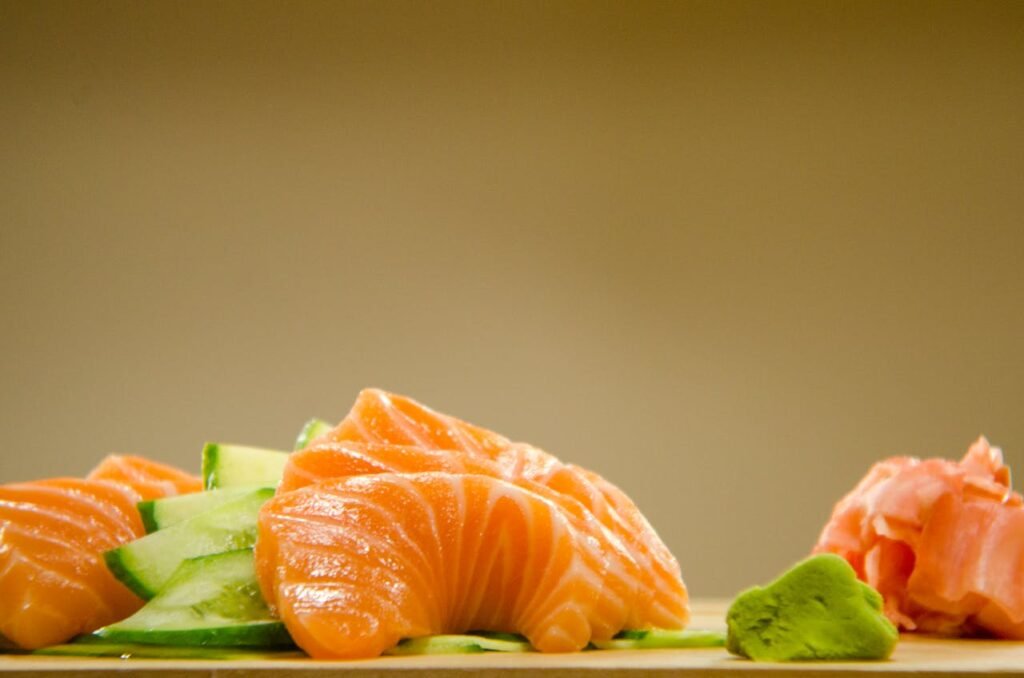
Have you noticed that wild salmon is a vibrant, deep red, while farmed salmon is naturally greyish-white? The pink color in wild salmon comes from astaxanthin, a potent antioxidant molecule found in the krill and shrimp they eat. You can learn more about this in our post on top antioxidant foods.
Farmed salmon is naturally white because they eat processed pellets. To make the flesh pink and marketable, farmers add astaxanthin to the feed. While this additive is generally considered safe and is essentially a synthetic version of the natural compound, it highlights the artificial nature of the farmed fish’s diet. Research published in PubMed suggests astaxanthin has neuroprotective properties, so the presence of it is beneficial, regardless of the source, but the natural density in wild fish is often superior.
Sustainability and Environmental Impact
The environmental argument is not one-sided. Wild salmon stocks are dwindling due to overfishing and habitat destruction. Alternatively, salmon farming (aquaculture) can relieve pressure on wild populations.
However, aquaculture has its own issues:
- Pollution: Excess waste and chemicals from farms can leach into surrounding waters.
- Escapees: Farmed salmon can escape and compete with native species for resources or spread disease.
- Feed Sourcing: Using wild fish to create feed for farmed salmon can be unsustainable.
Organizations like the Monterey Bay Aquarium Seafood Watch provide excellent guides on which specific salmon sources are “Best Choices” versus “Avoid.” Being an environmentally conscious consumer often overlaps with being a health-conscious one, as detailed in our heart-healthy foods guide.
Taste, Texture, and Culinary Uses
From a culinary perspective, the two fish behave differently in the pan. Farmed salmon has a milder flavor and a softer, more buttery texture that holds up well to baking and poaching. It is harder to overcook due to the high fat content.
Wild salmon has a stronger, more “fishy” flavor and a firmer, leaner texture. It cooks much faster than farmed salmon and can become dry if not watched carefully. For specific meal ideas, browse our collection of healthy dinner recipes that cater to both varieties.
Cost and Accessibility
This is often the deciding factor for many families. Wild salmon can cost three to four times as much as farmed salmon. It is also seasonal, meaning fresh wild salmon is only available during certain months (usually summer), whereas farmed salmon is available fresh year-round.
However, canned wild salmon is a fantastic, budget-friendly alternative. It is almost always wild-caught (usually Pink or Sockeye) and provides the same nutritional benefits. For more tips on managing food costs, see our guide to eating healthy on a budget. Furthermore, state health departments, such as the Washington State Department of Health, often provide resources on how to choose affordable, low-contaminant fish.
The Bottom Line
Is wild salmon better than farmed? Yes, nutritionally and environmentally, wild salmon is generally the superior choice. It contains fewer contaminants, lower saturated fat, and a more natural ratio of nutrients.
However, farmed salmon is still a healthy choice and is far better than eating no fish at all. It provides essential Omega-3s and high-quality protein that are difficult to find in other foods. If you choose farmed salmon, try to look for fish raised in countries with stricter regulations, or look for sustainability certifications.
To summarize your strategy:
- Aim to eat fatty fish twice a week.
- If your budget allows, choose fresh wild-caught salmon (look for “Alaskan” or “Sockeye”).
- If budget is tight, opt for canned wild salmon or reputable farmed salmon.
- Check Environmental Defense Fund seafood alerts for local advisories.
Ultimately, the inclusion of salmon in your diet—regardless of its origin—is a positive step toward better health. Balancing quality, budget, and sustainability will ensure you can enjoy this superfood for years to come.