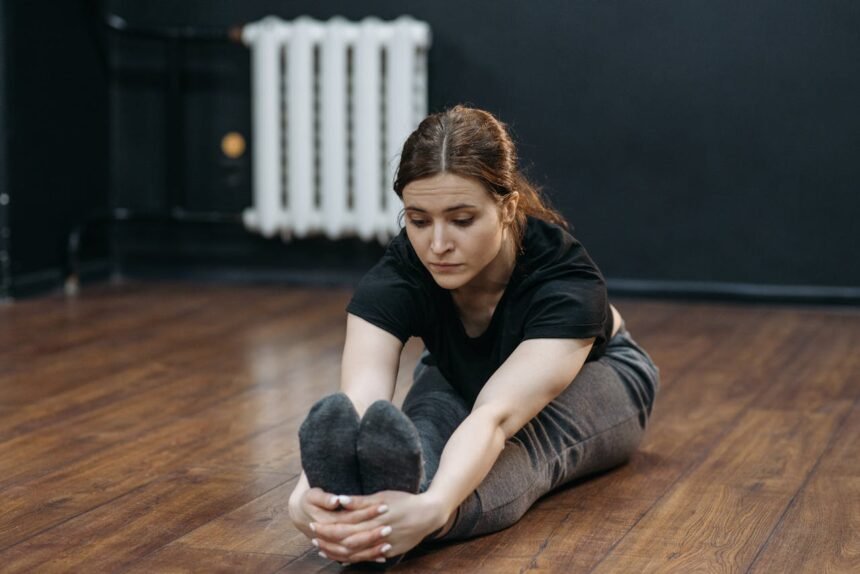
We often take our mobility for granted—until the morning we wake up with a stiff knee or a shoulder that refuses to rotate without a dull ache. Joint discomfort is not merely a symptom of aging; it is a signal from the body that our connective tissues and skeletal structure require attention. While high-impact exercises can sometimes exacerbate wear and tear, yoga for joint health has emerged as one of the most effective, science-backed modalities for preserving mobility and reducing pain.
According to the Centers for Disease Control and Prevention (CDC), joint pain and arthritis affect millions of adults, limiting their ability to perform daily tasks. However, a sedentary lifestyle is often the enemy of joint longevity. The adage “motion is lotion” is physiologically accurate. This article delves into how yoga acts as a therapeutic tool to lubricate joints, increase range of motion, and build the muscular stability necessary for a pain-free life.
The Anatomy of Stiffness: Why Joints Hurt
To understand why yoga is effective, we must first understand the mechanics of the joint. Joints are where two bones meet, cushioned by cartilage and encased in a capsule containing synovial fluid. This fluid acts as a lubricant, reducing friction and allowing for smooth movement.
When we are inactive, cartilage can dry out and stiffen, much like a sponge left on a counter. Furthermore, without movement, the synovial fluid becomes viscous and circulates poorly. As noted by Johns Hopkins Medicine, gentle movement is essential to force nutrients into the cartilage, which does not have its own blood supply. Yoga provides the mechanical pumping action required to nourish these tissues.
The “Sponge Effect”
Yoga practitioners often refer to the “squeeze and soak” or sponge effect. When you compress a joint during a pose (like the knee in Child’s Pose) and then release it, you are flushing out stale fluid and allowing fresh, nutrient-rich oxygenated fluid to rush back in. This cycle is vital for maintaining the health of the avascular cartilage.
Yoga vs. Other Forms of Exercise
Not all movement is created equal when it comes to joint preservation. While running and weightlifting are excellent for cardiovascular health and bone density, they place significant compressive force on the joints. Yoga offers a unique balance of strength and flexibility with minimal impact.
The following table illustrates how yoga compares to other popular exercises regarding joint impact and mobility benefits:
| Feature | Yoga | Running/Jogging | Weightlifting | Swimming |
|---|---|---|---|---|
| Impact Level | Low | High | Moderate to High | Low |
| Range of Motion | Excellent (Takes joints through full ROM) | Low (Repetitive, linear movement) | Moderate (Depends on technique) | High |
| Synovial Circulation | High (Due to compression/release cycles) | Moderate | Moderate | High |
| Injury Risk | Low (With proper alignment) | Moderate (Repetitive stress injuries) | Moderate (Strain/overloading) | Low |
| Muscular Support | Stabilizes small accessory muscles | Builds primary muscle groups | Builds primary muscle groups | builds endurance muscles |
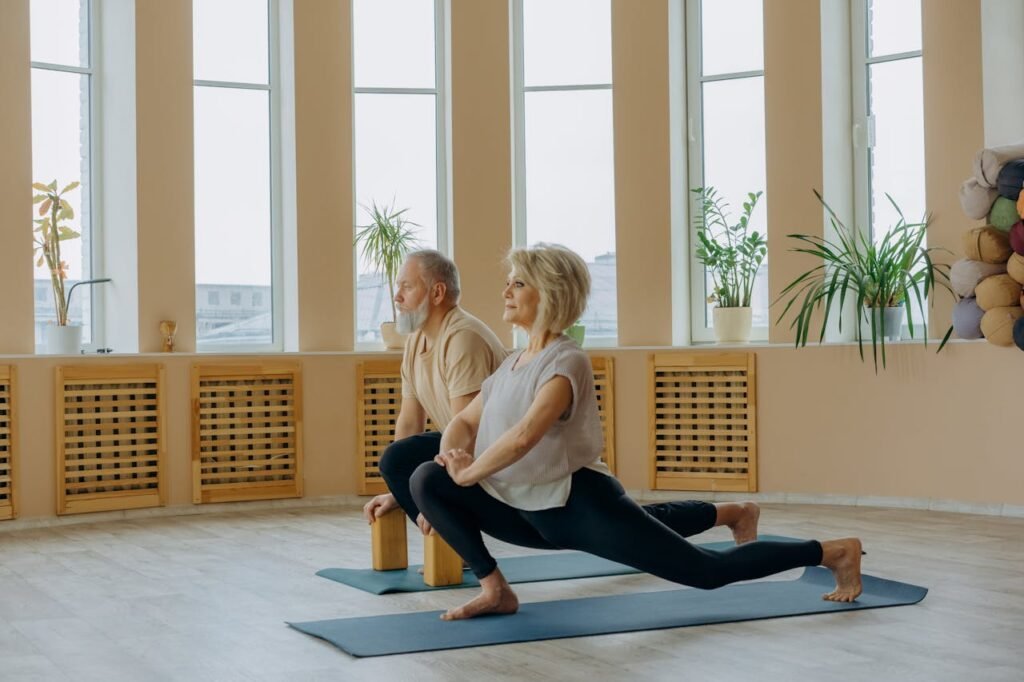
Key Benefits of Yoga for Joint Health
Incorporating a consistent practice of yoga for joint health yields multidimensional benefits that go beyond simple flexibility.
1. Improved Range of Motion (ROM)
Stiffness limits how far a joint can move in any given direction. Over time, limited ROM can lead to altered movement patterns and compensatory injuries. Research published by the National Center for Complementary and Integrative Health suggests that yoga is effective in relieving chronic pain and improving function in people with osteoarthritis. By moving joints through their full capacity—rotation, flexion, and extension—yoga maintains the elasticity of the surrounding connective tissues.
2. Strengthening Stabilizer Muscles
Joints do not support themselves; they rely on muscles and tendons. If the muscles surrounding a joint are weak, the burden of weight-bearing falls directly on the bone and cartilage. Yoga poses, particularly isometric holds (like Warrior II or Plank), strengthen the stabilizer muscles that support the knees, hips, and spine. This creates a protective brace around the joint, reducing the load on the skeletal structure.
3. Fascial Release
Fascia is the connective tissue that encases muscles and joints. When fascia becomes tight or adhered, it restricts movement and causes pain. The stretching inherent in yoga helps release fascial tension. According to Harvard Health Publishing, yoga helps lengthen these tissues safely, reducing the sensation of stiffness.
Top Yoga Poses for Specific Joints
To maximize yoga for joint health, focus on poses that target the areas most susceptible to degeneration: the knees, hips, and spine. Always consult with a healthcare provider before starting, as recommended by the American Academy of Orthopaedic Surgeons.
For the Knees: Supported Bridge Pose
While high-impact activities can wear down the knees, bridging strengthens the hamstrings and glutes, which pull tension away from the knee joint.
- How to do it: Lie on your back, knees bent, feet flat on the floor. Lift your hips toward the ceiling. Slide a yoga block under your sacrum for support if needed.
For the Hips: Pigeon Pose (or Figure-4)
The hips carry the weight of the upper body and are prone to tightness from sitting. Hip openers are essential for synovial fluid circulation in the hip socket.
- How to do it: From a tabletop position, bring your right knee forward towards your right wrist. Extend the left leg back. For a gentler version, lie on your back and cross your right ankle over your left knee (Figure-4).
For the Spine: Cat-Cow
Spinal health relies on the hydration of intervertebral discs. Cat-Cow offers gentle flexion and extension to keep the spine supple.
- How to do it: Start on hands and knees. Inhale, drop the belly, and look up (Cow). Exhale, round the spine, and tuck the chin (Cat).
For the Shoulders: Thread the Needle
Shoulders are ball-and-socket joints with a high range of motion but low stability. This pose gently stretches the rotator cuff.
- How to do it: From tabletop, slide your right arm underneath your left arm, resting your right shoulder and cheek on the mat.
Important Considerations and Safety
While yoga is low-impact, it is not risk-free. Hyper-mobility (being “double-jointed”) can actually be a disadvantage in yoga if one collapses into the joints rather than engaging muscles to support them. The Arthritis Foundation advises that individuals with active inflammation or flared arthritis should modify poses to avoid exacerbating the condition.
Listen to Your Body
There is a difference between the discomfort of a stretch and the sharp pain of injury. The Mayo Clinic emphasizes that yoga should be non-competitive. If a pose hurts a joint, back off or use props like blocks and straps to bring the floor closer to you.
The Role of Inflammation
Chronic inflammation destroys joint tissue. Interestingly, studies found in PubMed Central indicate that regular yoga practice can lower markers of inflammation in the body, such as cytokines. This suggests yoga works on a systemic level, not just a mechanical one.
Integrating Yoga into Your Routine
You do not need to attend a 90-minute class daily to see results. Consistency beats intensity. A 15-minute morning flow focusing on joint rotation can significantly impact how your body feels for the rest of the day.
- Warm-up: Start with gentle joint rotations (wrists, ankles, neck).
- Flow: Move through Sun Salutations to generate heat.
- Hold: Spend time in static poses to allow muscles to relax and fascia to release.
- Cool down: End with restorative poses to lower cortisol levels.
For those managing severe joint issues, water yoga or chair yoga are fantastic alternatives endorsed by the Cleveland Clinic to reduce load while maintaining mobility.
Conclusion: Move It or Lose It
Joint health is a lifelong journey. As we age, the natural production of lubricating fluids slows down, and cartilage thins. However, we are not helpless in this process. By prioritizing yoga for joint health, we actively participate in the maintenance of our body’s machinery.
Yoga provides a sanctuary where movement heals rather than harms. It teaches us to respect our range of motion while gently expanding it. Whether you are an athlete looking to prevent injury or a senior seeking to maintain independence, the mat is ready for you.
Don’t wait for stiffness to become immobility. Start with just five minutes of gentle stretching today, and give your joints the care they deserve.