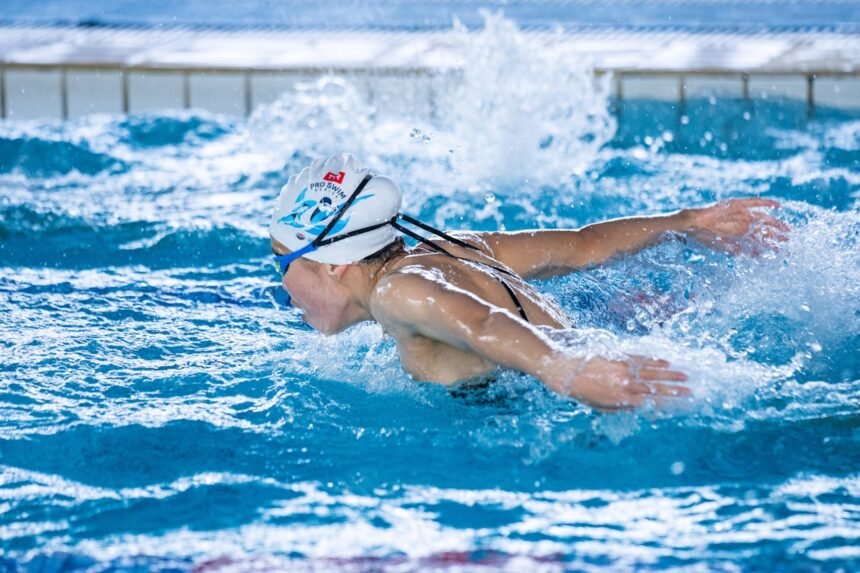
When most people imagine building muscle, they visualize clanking iron plates, dumbbells, and sweaty bench presses. Swimming is often categorized strictly as a cardiovascular activity—great for the heart and lungs, but negligible for gains. However, one look at the broad shoulders and defined V-taper of an elite swimmer suggests otherwise. The reality is that building muscle swimming is not only possible but offers a unique, low-impact route to a powerful physique.
Water provides a dynamic training environment that air cannot replicate. By understanding the physics of hydrodynamics and structuring your workouts correctly, you can turn your local pool into a highly effective underwater gym. This guide explores the science behind aquatic hypertrophy and how to optimize your strokes for strength.
The Physics of Water: Why It Works
To understand how swimming builds muscle, you must understand the medium itself. Water is approximately 800 times denser than air. This means that every movement you make in the pool requires you to push against a heavy substance, creating constant resistance. unlike weightlifting, where gravity only provides resistance in one direction (downward), water provides resistance in all directions.
This phenomenon is similar to isokinetic exercise, where the resistance accommodates the force applied. The harder you push, the more the water pushes back. According to the Centers for Disease Control and Prevention (CDC), water-based exercise can improve mental health and joint function, but its capacity for strengthening muscles is often undervalued.
The Lack of Eccentric Load
One distinction to note is that swimming primarily utilizes concentric muscle contractions (shortening the muscle) and lacks the eccentric phase (lengthening under load) found in lifting. While eccentric loading is famous for causing micro-tears that lead to growth, the sheer volume and constant tension of swimming stimulate muscle fibers differently, leading to the lean, functional strength known as the “swimmer’s body.”
Anatomical Breakdown: Which Muscles Are Working?
Swimming is a compound exercise that engages nearly every muscle group in the body. However, different strokes target specific areas more intensely.
1. The Lats and Back (Latissimus Dorsi)
The hallmark of a swimmer’s physique is a wide back. The pull phase of Freestyle, Butterfly, and Backstroke heavily relies on the lats. As noted by Harvard Health, swimming is a rigorous full-body workout that engages the core and back significantly more than stationary cardio exercises.
2. Shoulders (Deltoids)
The repeated rotation and catch phases in the water build capped, durable shoulders. The anterior and medial deltoids are under constant tension during the recovery and entry phases of the stroke.
3. Chest (Pectorals)
While the back pulls, the chest stabilizes. However, the Breaststroke acts as a modified fly movement, placing a high load on the pectorals during the insweep.
4. Legs and Glutes
Kicking is a massive calorie burner and muscle builder. The constant resistance against the legs works the quads, hamstrings, and glutes. Short-distance sprinters, in particular, develop powerful legs to propel themselves through the water.
Strategies for Building Muscle Swimming
Leisurely swimming laps at a steady pace (LISS – Low-Intensity Steady State) will improve endurance but will do little for hypertrophy. To trigger muscle growth, you must apply the principles of progressive overload.
Crank Up the Intensity
To build muscle, you need to recruit Type II (fast-twitch) muscle fibers. This requires high-intensity, anaerobic efforts. Instead of swimming for 30 minutes straight, break your workout into high-intensity interval training (HIIT) sets. Research published in PubMed highlights the efficacy of HIIT for muscle adaptation, which applies to aquatic environments as well.
Sample Hypertrophy Set:
- 8 x 50 meters Freestyle Sprint (90% effort)
- Rest: 45 seconds between laps
- Focus: Explosive power and maintaining perfect form.
Utilize Resistance Equipment
Just as you add weight to a bar, you can add drag in the water.
- Hand Paddles: Increase the surface area of your hand, forcing your back and shoulders to work harder to pull the water.
- Fins: Require more force from your quads and hamstrings to kick.
- Drag Suits: Baggy swimsuits that catch water, increasing overall drag.
According to USA Swimming, utilizing equipment like paddles can help swimmers feel the catch better and increase strength, provided the technique is sound.
Nutrition: Feeding the Aquatic Machine
Swimming burns a tremendous amount of calories—often more than weightlifting for the same duration—due to the thermogenic effect of water (the body using energy to stay warm). If you are looking to build mass, you must eat in a caloric surplus.
- Protein: Essential for repair. Aim for lean sources like chicken, fish, or plant-based alternatives.
- Carbohydrates: Swimmers rely heavily on glycogen. Complex carbs are vital for fueling high-intensity intervals.
- Hydration: You sweat in the pool, even if you don’t feel it. Dehydration can hinder performance and recovery.
For specific dietary guidelines, the Academy of Nutrition and Dietetics offers resources on performance nutrition tailored for endurance and strength athletes.
Comparison: Swimming vs. Traditional Weightlifting
While both methods build strength, they produce different results and have different risk profiles. The table below outlines the key differences between utilizing the pool and the gym for muscle growth.
| Feature | Swimming (Aquatic Resistance) | Weightlifting (Gravitational Resistance) |
|---|---|---|
| Primary Resistance | Fluid Dynamics (Isokinetic) | Gravity & Mass (Isotonic) |
| Joint Impact | Very Low (Buoyancy supports weight) | Moderate to High (Compressive forces) |
| Muscle Balance | Promotes symmetry; works opposing muscles simultaneously | Can create imbalances if not programmed correctly |
| Hypertrophy Potential | Moderate (Lean, functional muscle) | High (Maximal bulk and size) |
| Caloric Burn | High (500-800 cal/hour) | Moderate (200-400 cal/hour) |
| Injury Risk | Low (mostly overuse injuries) | Moderate (risk of trauma/strain) |
Common Mistakes That Kill Gains
1. Poor Technique
Water is unforgiving. If your form is poor, you will create drag that slows you down without working the right muscles. Resources like SwimSwam offer excellent drills and technique guides to ensure you are engaging the correct muscle groups.
2. Overtraining the Shoulders
“Swimmer’s Shoulder” is a common ailment caused by overuse and weak rotator cuffs. Ensure you are balancing your swimming with dryland exercises to stabilize the joint. The Mayo Clinic suggests incorporating rotator cuff exercises to prevent injury.
3. Ignoring Rest
Muscles grow during rest, not during the workout. Because swimming is low impact, athletes often feel they can train every day. However, the nervous system and muscle tissues still need sleep and recovery time, as emphasized by the Sleep Foundation.
Integrating Dryland Training
To maximize your ability to build muscle swimming, you should ideally combine it with “dryland” training. Bodyweight exercises like push-ups, pull-ups, and planks complement swimming movements perfectly. The American Council on Exercise (ACE) recommends functional training to improve overall athletic performance, bridging the gap between land and water strength.
Conclusion
Can you build muscle swimming? Absolutely. While you may not achieve the bulk of a competitive bodybuilder solely through laps, you can develop a ripped, powerful, and highly functional physique. The combination of high-intensity intervals, resistance equipment, and the natural density of water creates a unique stimulus that sculpts the body in ways lifting cannot.
By treating the pool as a gym—focusing on intensity, form, and progressive overload—you unlock a training method that preserves your joints while expanding your chest and back. So, trade the dumbbells for a pair of goggles, jump in, and start building your underwater strength today.
Ready to transform your fitness routine? Consult a coach to refine your stroke and dive into the deep end of muscle growth.