The conversation around building muscle has historically centered on chicken breast, steak, and eggs. The outdated assumption is that animal products are the only source of “complete protein” necessary for serious gains.
But here is the truth: that concept is outdated. Whether you are a dedicated vegetarian, a flexitarian reducing meat intake, or just looking for healthier, more sustainable meal options, you can absolutely build lean muscle mass. You simply need to be strategic.
This guide provides the framework and 10 high-protein vegetarian meals for muscle gain that prove you don’t need a single ounce of meat to crush your fitness goals.
The Plant-Based Muscle Math: Understanding Your Needs
The key to vegetarian muscle building is understanding two main concepts: protein quantity and protein quality (completeness).
1. Protein Quantity: How Much Do You Need?
For those actively lifting weights or resistance training, the recommended daily protein intake is typically higher than for sedentary individuals.
- Target: Aim for $1.6$ to $2.2$ grams of protein per kilogram of body weight ($g/kg$).
- Example: A person weighing 70kg (approx. 154 lbs) should aim for $112$ to $154$ grams of protein per day.
This may seem high, but by strategically including the sources listed below, it is easily achievable.
2. Protein Quality: The Completeness Myth
Protein is made up of 20 amino acids, 9 of which are “essential” because the body cannot produce them. A “complete protein” contains all 9 essential amino acids.
While meat, dairy, and eggs are naturally complete, many plant sources are only incomplete (i.e., they are missing one or two essential aminos).
The Solution: The good news is that your body stockpiles amino acids throughout the day. You don’t need all 9 in one meal. Simply by eating a variety of plant proteins—like combining legumes (lentils, beans) with grains (rice, quinoa) over the course of a day—you naturally consume all 9 essential amino acids. This is called protein combining.
Your Plant Protein Powerhouse Sources
These three sources should be the foundational blocks of your vegetarian muscle-building diet:
A. Tofu & Tempeh (Soy)
- Tofu (Firm): Roughly 10-12g of protein per 100g. It absorbs flavor incredibly well and is highly versatile.
- Tempeh: About 18-20g of protein per 100g. It is fermented, making it great for gut health, and has a firmer, nuttier texture. Tempeh is a complete protein.
B. Seitan (Wheat Gluten)
- Protein Content: The champion. Seitan delivers a massive $25$ grams of protein per 100g.
- Bioavailability: It has a texture remarkably similar to meat, making it a powerful substitute for roasts, skewers, and stir-fries. (Note: Avoid if you have Celiac disease or gluten sensitivity.)
C. Legumes and Whole Grains
- Lentils: $9g$ protein per $1/2$ cup (cooked).
- Black Beans: $8g$ protein per $1/2$ cup (cooked).
- Quinoa: $8g$ protein per cup (cooked). Quinoa is a complete protein.
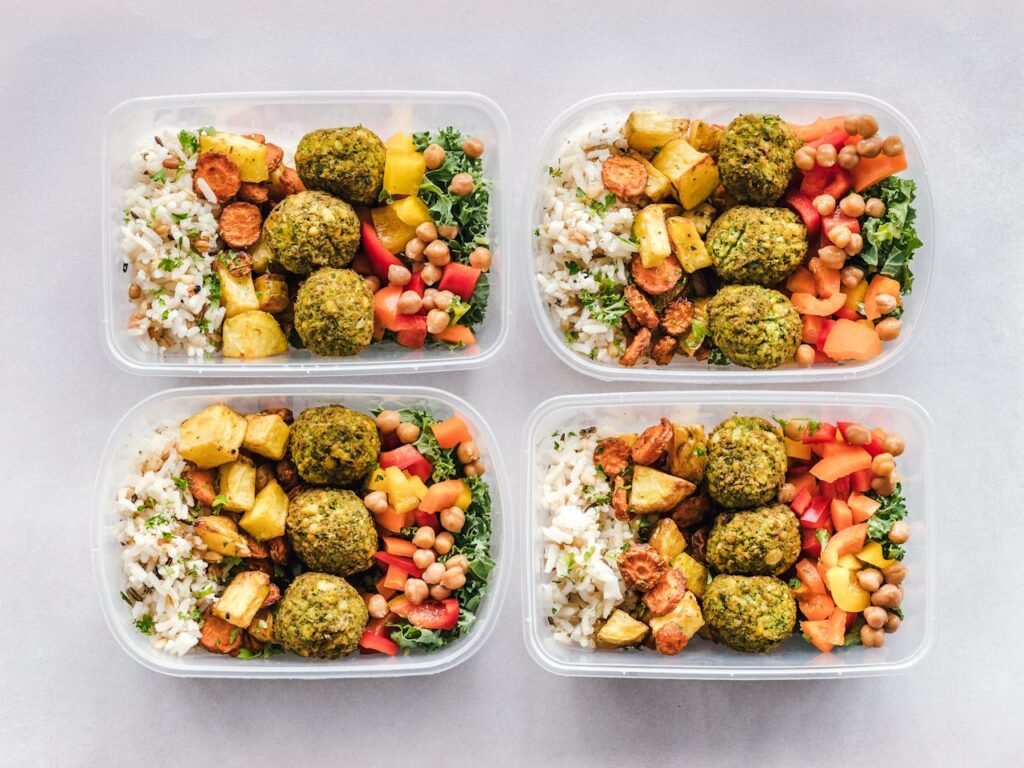
10 High-Protein, Meatless Meals for Muscle Gain
Here are 10 recipe ideas structured for maximizing protein and ensuring satiety for active individuals.
The First Five: Breakfasts & Lunches (Aim for 20-30g Protein)
1. The Super-Charged Scramble
- Protein Source: Tofu (firm/extra-firm) + Black Salt (Kala Namak)
- Protein Count: $\approx 25g$
- Why it Works: Tofu scrambles are nutrient-dense and high-volume. Use $1/2$ block of firm tofu for the base, seasoning it with turmeric and black salt (for an eggy flavor). Serve with $1/2$ cup of black beans on the side for fiber and completeness.
2. Peanut Butter Protein Oats
- Protein Source: Rolled Oats + Protein Powder + Peanut Butter
- Protein Count: $\approx 30-35g$
- Why it Works: Mix $1/2$ cup of dry rolled oats with water or soy milk and cook. After cooking, stir in one scoop of unflavored or vanilla vegan protein powder (pea/rice blend) and top with 2 tablespoons of natural peanut butter and chia seeds.
3. High-Protein Cottage Cheese Bowl (Lacto-Ovo Option)
- Protein Source: Cottage Cheese + Seeds
- Protein Count: $\approx 28g$
- Why it Works: One cup of low-fat cottage cheese provides approximately 28 grams of casein protein (slow-digesting). Top with $1/4$ cup of sunflower seeds and chopped cherry tomatoes for flavor and crunch.
4. The Savory Lentil Soup
- Protein Source: Red Lentils
- Protein Count: $\approx 20g$ per large bowl.
- Why it Works: Lentils are easy to cook in bulk and are packed with protein and iron. Make a thick soup using $1.5$ cups of cooked lentils, carrots, and celery. Serve with a slice of whole-grain toast dipped in olive oil to complete the amino acid profile.
5. Tempeh “Bacon” BLT Sandwich
- Protein Source: Tempeh
- Protein Count: $\approx 30g$
- Why it Works: Marinate $1/2$ block of thinly sliced tempeh in soy sauce, liquid smoke, and maple syrup, then pan-fry until crispy. Serve on a high-protein whole-grain English muffin with avocado, tomato, and lettuce.
The Next Five: Dinners (Aim for 35-45g Protein)
6. Seitan Stir-Fry with Cashews
- Protein Source: Seitan + Cashew Nuts
- Protein Count: $\approx 40g$
- Why it Works: Seitan is the muscle-building star here. Cubes of seitan are sautéed with broccoli, bell peppers, and a soy-ginger sauce. The addition of cashews not only provides healthy fats but also essential amino acids that complement the grain-based seitan.
7. The Power Pasta Bowl
- Protein Source: Chickpea Pasta + Nutritional Yeast
- Protein Count: $\approx 38g$
- Why it Works: Pasta made from chickpeas, red lentils, or black beans (like the Banza brand) contains double the protein of traditional wheat pasta. Toss $2$ ounces (dry) of chickpea pasta with pesto, sundried tomatoes, and 2 tablespoons of Nutritional Yeast (a cheesy, vitamin B-rich protein source).
8. Spiced Quinoa & Chickpea Bowl
- Protein Source: Quinoa + Chickpeas
- Protein Count: $\approx 35g$
- Why it Works: This is the ultimate protein-combining meal. Mix $1$ cup of cooked quinoa (complete) with $1$ cup of roasted chickpeas, spinach, and a tangy lemon dressing. The high fiber content keeps you satiated long after dinner.
9. Loaded Black Bean Veggie Burger
- Protein Source: Black Beans + Walnut Crumbles
- Protein Count: $\approx 30g$
- Why it Works: Make a dense patty using mashed black beans, oats, and chopped walnuts for texture and fat. Serve it on a whole-wheat bun with a scoop of Greek yogurt-based garlic sauce (for added protein).
10. High-Protein Pizza Night
- Protein Source: High-Protein Tortilla/Crust + Mozzarella/Feta (or Vegan Cheese)
- Protein Count: $\approx 32g$
- Why it Works: Use a high-protein, low-carb tortilla as a base. Top with sauce, plenty of low-moisture mozzarella or vegan feta, and scatter crumbled tempeh or walnuts on top before baking. This satisfies cravings while hitting your macro goals.
Don’t Forget Supplements: Your Vegan Insurance
While diet should always come first, specific supplements can make hitting your $\approx 150g$ protein goal much easier and ensure your muscle recovery is optimal:
- Vegan Protein Powder: A blend of pea and rice protein is ideal, as they combine to form a complete protein profile. Use this for quick post-workout shakes or to boost your morning oatmeal.
- Creatine: This is one of the most studied and effective muscle-building supplements, and it is entirely vegan. Taking 3-5g daily will enhance strength and muscle volume regardless of your diet.
- B12: Vitamin B12 is essential for nerve function and energy. It is not naturally found in most plant foods and should be supplemented consistently on any meat-free diet.
Building muscle on a vegetarian diet is not about what you exclude, but how you combine the powerful ingredients you include. By prioritizing whole foods, focusing on the combination of grains and legumes, and being diligent with your protein quantity, you can achieve any physique goal.
How would you like to proceed with the next article?
- Next Article: Generate the full 1200-word article for Article #4: “Keto vs. Paleo: Which is Better for Fast Weight Loss?”
- Content Brief: Provide the detailed SEO Content Brief for Article #4 instead of the full text.
- Fitness Batch: Start the “Fitness & Exercise” batch instead.