


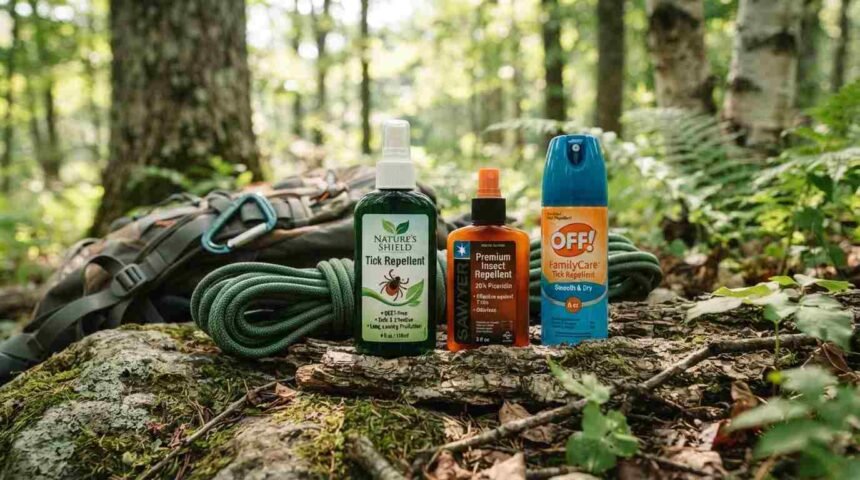
Ticks are tiny, but the illnesses they carry can be serious. A smart tick repellent plan lowers your risk before you ever step outside. This guide shows you exactly how to build one.
You will learn how chemical options like DEET work and where they shine. You will also see which natural tick repellent choices have real support and which ones are mostly hype. We cover tick repellent for humans, tick repellent for dogs, and tick repellent for yard care in one place.
Every tip follows guidance from the EPA and the CDC. You also get simple steps to apply products safely, four quick tables, and clear advice on what to do after a bite. Read it once, then keep it handy before your next trip outdoors.
Whether you hike, garden, camp, or play fetch in the backyard, a few smart habits go a long way. Small choices, like where you spray and when you check your skin, make a big difference. Let’s get started.
Why Tick Repellent Matters More Than You Think
Ticks do not jump or fly. They climb onto your shoes or legs and crawl upward. Then they search for a warm, hidden spot to bite.
According to the CDC’s tick prevention advice, reducing your exposure to ticks is the best defense against tickborne disease. Ticks can be found all year, but they are most active from April through September. Many people pick them up right in their own yard or neighborhood.
A good tick repellent is your first line of defense. It works best when you pair it with smart clothing, quick tick checks, and a tidy yard. No single step is perfect, but layers of protection add up fast.
This topic is about your health, so accuracy matters. Tick bites can lead to illnesses such as Lyme disease, anaplasmosis, babesiosis, and Rocky Mountain spotted fever. Some bites can also trigger alpha-gal syndrome, a meat allergy linked to the lone star tick.
That is why the best tick repellent plan is simple, consistent, and based on trusted sources. In this guide, we lean on the EPA, the CDC, and independent product reviews. When a claim lacks strong evidence, we say so plainly.
Quick Picks: Which Tick Repellent Should You Choose?
Not every situation calls for the same product. A short walk in a mowed park is very different from a weekend in tall grass. Use the table below as a fast starting point.
| Option | Best For | Type | Quick Note |
|---|---|---|---|
| DEET spray or lotion | Long hikes, heavy tick areas | Chemical | Well studied, long protection |
| Picaridin | Daily use, gear-friendly | Chemical | Light feel, little odor |
| IR3535 | Short outdoor time | Chemical | Gentle feel, check label for ticks |
| Oil of lemon eucalyptus or PMD | Plant-based preference | Plant-derived | Not for children under 3 |
| 2-undecanone | Plant-derived option for ticks | Plant-derived | Look for the EPA number |
| Permethrin-treated clothing | Hunters, campers, hikers | Chemical (clothing only) | Never apply to skin |
| Cedarwood oil sprays | Light, low-risk outings | Natural | Limited proof, short protection |
| Vet-guided dog protection | Dogs that go outdoors | Mixed | Ask your vet first |
| Landscaping barriers | Yards near woods | Habitat control | Low cost, lasting results |
| Yard treatments | Heavy tick yards | Chemical or biological | Follow label and local rules |
| Daily checks and a quick shower | Everyone | Habit | Shower within two hours |
These 11 options fall into three groups: products for your skin, protection for clothing and pets, and care for your yard. We will walk through each one in order. Start with the best tick repellent for your own skin, then build outward from there.
Know Your Enemy: Where Ticks Hide
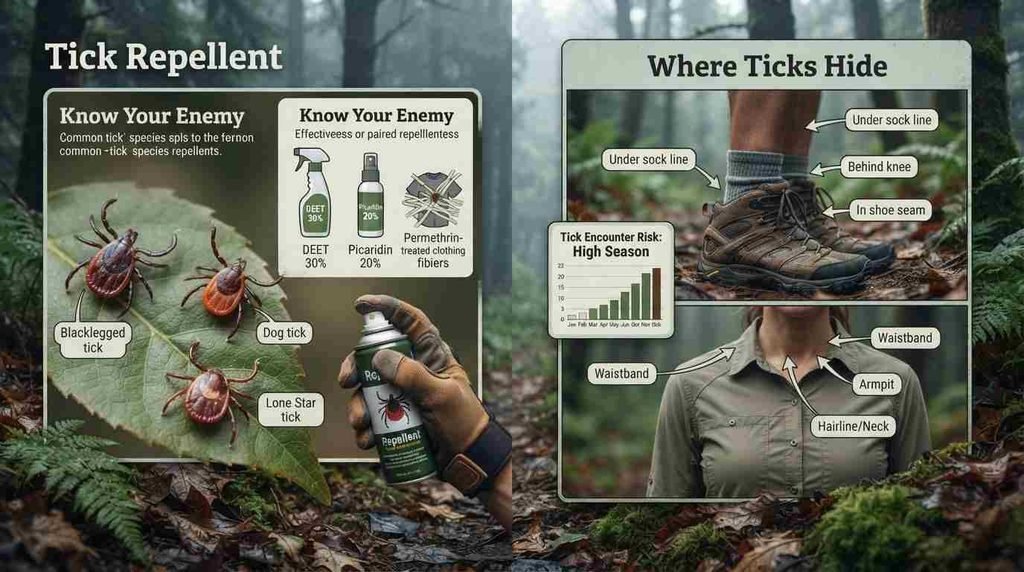
Ticks love tall grass, brush, leaf litter, and wooded edges. They also hitch rides on pets and clothing. Walking in the center of a trail helps you avoid brushing against plants.
The blacklegged tick, often called the deer tick, spreads Lyme disease in much of the United States. Other species, like the American dog tick and the lone star tick, spread different germs. Your risk depends on where you live and where you travel.
Young ticks, called nymphs, can be as small as a poppy seed. Because they are so tiny, many people never notice a bite. That is one more reason a dependable tick repellent matters.
Your local health department can tell you which ticks live near you. Many share maps and seasonal alerts online. A quick search before a trip can shape your whole plan.
Who Needs Extra Protection?
Anyone can get a tick bite, but some groups need extra care. Outdoor workers, hunters, campers, and gardeners spend long hours in tick habitat. Kids also play close to the ground, which raises their chances.
Pets that roam in tall grass or woods are at risk too. People who live near wooded lots or deer trails face more ticks at home. If that sounds like you, use more than one layer of protection.
Pregnant people, older adults, and anyone with a weak immune system should talk with a doctor about their risks. A doctor can explain which signs need fast attention. They can also advise on the safest tick repellent for your situation.
How We Built This Guide
Trust matters when health is involved, so here is how this guide came together. We relied on government guidance first, then independent testing, then common-sense safety rules. Nothing here replaces advice from your own doctor.
Our main sources are the EPA repellent guidelines and the CDC. For product comparisons, we also point readers to Wirecutter’s review of the best tick repellent products. Independent reviews like that help you compare brands once you know which active ingredient you want.
We never claim a product prevents disease with certainty. We separate what is proven from what is only promised. If you are pregnant, have a health condition, or are choosing for a small child, talk with a doctor first.
Reading the Label Like a Pro
Labels hold the facts you need, but most people skip them. Start with the active ingredient and its percentage. Then look for the EPA registration number, which shows the product went through review.
Next, check whether the label names ticks. Some products protect against mosquitoes only, and that will not help in tall grass. A good tick repellent lists ticks clearly and tells you how often to reapply.
The EPA also lets some makers add a graphic that shows how long a product repels mosquitoes and ticks. This is voluntary, so you may not see it on every bottle. When you do, use it to compare products fairly.
Last, read the warnings. They tell you where not to spray, what to avoid, and what to do if the product gets in your eyes. Take 30 seconds to read them before your first use.
Chemical Tick Repellents: What the Science Supports
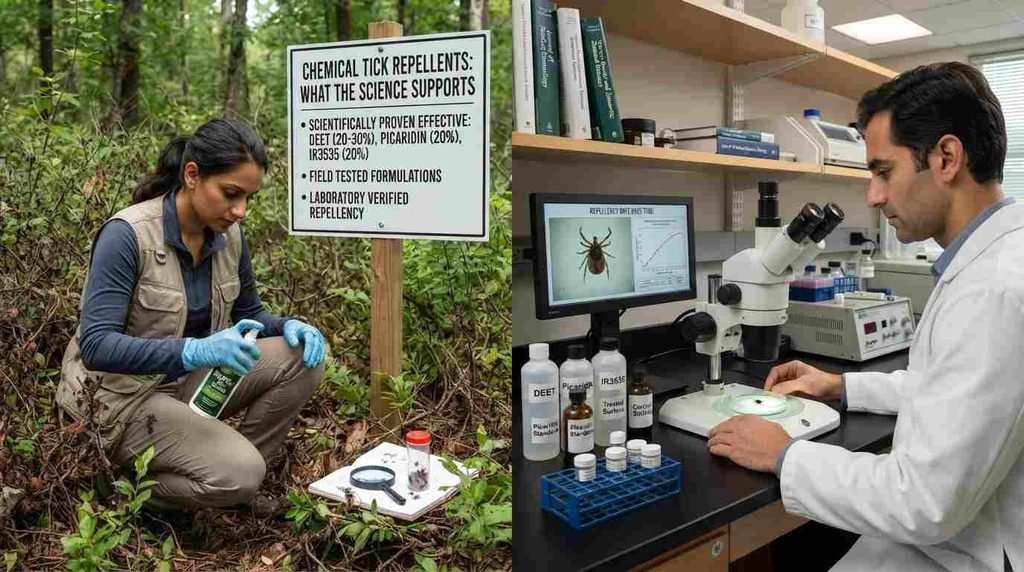
Chemical does not mean scary. It simply means the active ingredient was developed and tested in a lab. The CDC lists several EPA-registered ingredients for ticks: DEET, picaridin, IR3535, oil of lemon eucalyptus, para-menthane-diol (PMD), and 2-undecanone.
Look for an EPA registration number on the label. That number means the company gave the EPA data on safety and effectiveness. The EPA also notes that protection times can vary because of differences in testing conditions.
DEET: The Most Studied Tick Repellent
DEET has been used for decades, and it is the most studied active ingredient in this group. It works against ticks and mosquitoes. That track record is why many doctors still mention it first.
Here is a common point of confusion. A higher DEET percentage does not make the product stronger. It mostly makes the protection last longer. Many people find a 20 to 30 percent product is a good balance for a day outside.
DEET can damage some plastics, spandex, and finishes. Keep it away from eyeglasses, watch crystals, and gear with special coatings. Apply it to skin, let it dry, then handle your equipment.
The CDC says EPA-registered repellents are proven safe and effective when used as directed, even for pregnant and breastfeeding women. Still, read the label every time. For children, ask a pediatrician about the right strength, and do not use DEET on infants under two months old.
Picaridin: A Comfortable Alternative
Picaridin is a synthetic ingredient modeled on a compound found in pepper plants. Many people like it because it feels light on the skin and has little smell. It generally does not damage plastics or fabrics the way DEET can.
Products with around 20 percent picaridin are popular for outdoor trips. They are often sold as sprays, wipes, and lotions. Pick the format that makes you most likely to use it correctly.
If you dislike the greasy feel of DEET, picaridin is a strong place to start. It is a smart tick repellent for humans who wear technical fabrics or carry cameras and phones everywhere. Always confirm that the label lists ticks, not just mosquitoes.
IR3535: A Gentle Option for Short Outings
IR3535 is another EPA-registered ingredient on the CDC’s list. It has a soft feel and shows up in many family-friendly lotions. Protection against ticks can differ from product to product.
Because of that, treat IR3535 as a solid choice for short outings. For long hikes in heavy tick country, many people step up to DEET or picaridin. The right product is the one that matches your activity.
Oil of Lemon Eucalyptus and PMD
PMD is the active ingredient in refined oil of lemon eucalyptus, often called OLE. It is plant-derived, EPA-registered, and listed by the CDC. For many people, it is the most trusted natural tick repellent for humans.
Pure lemon eucalyptus essential oil is not the same thing. It has not gone through the same testing, so do not swap it in. Always choose a product that shows an EPA registration number.
There is one firm rule. The CDC says not to use products containing OLE or PMD on children under 3 years old. For young kids, ask a pediatrician about safer choices.
2-Undecanone: A Newer Plant-Derived Choice
2-undecanone occurs naturally in certain plants and can also be made in a lab. It is on the CDC’s list of repellents that work against ticks. Products with it carry an EPA registration number just like the others.
Some users like it because it has a different smell than DEET. Others find it harder to locate in stores. If you want a plant-derived tick repellent, it is worth a look.
Permethrin-Treated Clothing and Gear
Permethrin is different from the sprays above. You use it on boots, clothing, and camping gear, never on your skin. The CDC recommends products with 0.5 percent permethrin, which stay protective through several washes.
You can treat items yourself or buy pre-treated clothing. Do the work outdoors and let everything dry fully before wearing it. Keep cats away while the product is wet, since permethrin is highly toxic to them until it dries.
Pairing permethrin-treated clothing with a skin-applied tick repellent gives you two layers of defense. That combo is popular with hunters, campers, and trail workers. It is also a smart move if you spend long hours in tall grass.
DEET vs. Picaridin vs. Plant-Based: How to Choose
Choosing between products can feel confusing. Here is a simple way to think about it. Match the product to your time outside, your skin, and your gear.
Pick DEET if you will be out for many hours in tick-heavy areas. Pick picaridin if you want a lighter feel and care about plastics and fabrics. Pick OLE, PMD, or 2-undecanone if you prefer a plant-derived option and the person using it is over 3.
Your age, health, and skin matter too. If you have sensitive skin, test a small patch first. If you are pregnant, nursing, or choosing for a baby, ask your doctor which product fits best.
Cost can play a role, but avoid choosing on price alone. A cheaper tick repellent you use correctly beats a pricey one you skip. Once you find a product you like, buy a size you will actually finish.
Remember that you can combine layers. A skin product, treated clothing, and a quick check make a strong team. That is the heart of any good tick repellent routine.
Natural Tick Repellent Options: What Works and What Doesn’t
Many people want a natural tick repellent because they worry about chemicals on their skin. That worry makes sense, especially when kids are involved. Still, natural does not always mean safe, and it does not always mean effective.
The honest picture is mixed. A few plant-based ingredients, like PMD and 2-undecanone, have EPA registration and real testing behind them. Many essential oil sprays have little testing for ticks at all.
| Ingredient | Source | Evidence for Ticks | Caution |
|---|---|---|---|
| Oil of lemon eucalyptus (PMD) | Eucalyptus | Strong, EPA-registered | Not for children under 3 |
| 2-undecanone | Plants or lab-made | Strong, EPA-registered | Check the label |
| Cedarwood oil | Cedar trees | Limited | Can irritate skin |
| Geraniol | Geranium and rose oils | Limited | Skin sensitivity |
| Citronella | Lemongrass family | Weak for ticks | Wears off quickly |
| Peppermint oil | Mint plants | Limited | Strong irritant if undiluted |
| Tea tree oil | Tea tree leaves | Weak | Toxic to pets if misused |
| Garlic (eaten or supplements) | Garlic bulbs | No reliable proof | Do not rely on it |
Cedarwood Oil Sprays
Cedarwood oil shows up in many yard and body sprays. Products that qualify as minimum-risk pesticides do not need EPA registration. That means their effectiveness claims have not been checked in the same way.
Some people like cedarwood for light, low-risk outings. If you try it, reapply often and never skip tick checks. Treat it as a bonus layer, not your only shield.
Natural Tick Repellent for Humans: Skip the DIY Risk
Homemade sprays are everywhere online. They often mix essential oils with water or witch hazel. The problem is that nobody has tested them for safety or strength.
Undiluted oils can burn skin and trigger allergic reactions. Protection can also fade fast, which leaves you feeling safe when you are not. If you want a natural tick repellent for humans, pick a registered plant-derived product like OLE or 2-undecanone.
If you still want to try an essential oil blend, do a small patch test first. Keep it away from your eyes and mouth. Do not use it on babies or toddlers.
Natural Flea and Tick Repellent for Dogs
Dogs pick up ticks on walks, hikes, and even in the backyard. Many owners search for a natural flea and tick repellent for dogs because they want gentler choices. The challenge is that proof for natural sprays is thin.
Veterinarians often recommend prescription chews, collars, and spot-on products with strong testing behind them. Your vet can match a product to your dog’s weight, age, and health. They also know which tick-borne diseases are common in your area.
Be careful with what you reach for at home. Never put human DEET products on your dog. Some essential oils, like tea tree oil, can be dangerous for pets.
Households with both dogs and cats need extra care. Some tick repellent for dogs products with permethrin can seriously harm cats. Always read the label and ask your vet before mixing products.
After every walk, check your dog’s ears, armpits, belly, groin, and between the toes. Run your hands slowly over the whole body and feel for small bumps. The CDC also reminds us that ticks can ride into your home on pets, then move to people later.
If you want a gentler tick repellent for dogs, talk with your vet about options that fit your dog. Pair any product with regular checks and a mowed yard. Your dog will thank you.

Tick Repellent for Yard Care: Make Your Space Less Tick-Friendly
Your own backyard can be a tick hotspot. Tall grass, leaf piles, and shady edges give ticks a perfect home. Small changes in your landscape can lower the odds of a bite.
The CDC suggests simple landscaping steps that reduce blacklegged ticks near homes. These steps cost little and work all year. Here are the most useful ones in a quick table.
| Task | Why It Helps | Quick Tip |
|---|---|---|
| Remove leaf litter | Takes away damp hiding spots | Rake in fall and spring |
| Mow the lawn often | Keeps grass short and dry | Mow before play time |
| Clear tall grass and brush | Cuts down edge habitat | Focus on lawn borders |
| Add a 3-foot wood chip or gravel barrier | Slows ticks moving from woods to lawn | Place between lawn and trees |
| Move play sets and patios from yard edges | Keeps kids away from tick zones | Choose sunny, open spots |
The CDC also suggests stacking wood neatly in a dry place, since that discourages rodents. Fences can keep deer, raccoons, and stray dogs out of your yard. Old furniture, mattresses, and trash can give ticks a place to hide, so clear them away.
Some people also use pesticide treatments. These can reduce ticks in treated areas, but the CDC says not to rely on spraying alone. Before you spray, check with local health or agricultural officials about timing, product type, and rules for home use.
Hiring a licensed pest professional is often the safest route. They know the label rules and local laws. Ask about options with lower risk to pets, bees, and waterways.
A tick repellent for yard plan works best when you mix habitat changes with careful treatment. Start with the free steps first, because they help no matter what. Then add products only if your tick numbers stay high.
Biological options also exist, including products that use natural fungi to target ticks. Evidence varies by product, so read the label and ask a local expert. Keep pets and children out of treated areas for as long as the label says.
Daily Checks and a Quick Shower: The Free Layer
No tick repellent is perfect. That is why a quick check after being outdoors is so important. It costs nothing and can catch a tick before it attaches.
The CDC says showering within two hours of coming indoors can lower your risk of Lyme disease. It may also wash off ticks that have not attached yet. It is also a great time to do a full body check.
Use a mirror to look over your body, and check your child’s body too. Focus on these spots:
- Under the arms
- In and around the ears
- Inside the belly button
- Back of the knees
- In and around the hair
- Between the legs
- Around the waist
Do not forget your clothes. The CDC says to tumble dry clothes on high heat for 10 minutes to kill ticks, and longer if the clothes are damp. If you must wash first, use hot water, because cold and medium water will not kill ticks.
Also check coats, daypacks, and gear. Ticks can ride in on these items and bite later. A quick shake outdoors and a look inside pockets can save you trouble.
What to Wear Outdoors
Clothing is a physical barrier, and it works with every product above. Long sleeves and long pants make it harder for ticks to reach your skin. Closed shoes beat sandals every time.
Tuck your pants into your socks, and tuck your shirt into your pants. It looks odd, but it blocks the easy path up your legs. Light-colored clothes help you spot ticks before they crawl away.
A hat keeps ticks out of your hair and makes scalp checks easier. Gaiters are handy on trails with tall grass. If you hunt, garden, or work outdoors, treated clothing adds another layer.
Pair your outfit with a skin-applied tick repellent for the best coverage. Apply it only where the label allows, and never under your clothes.
Special Situations: Hiking, Camping, Gardening, and Travel
Different activities carry different risks. A little planning goes a long way. Here is how to adjust your approach.
On hikes, stay in the center of the trail and avoid brushing against tall grass. Stop for a quick check at breaks. Take off your pack and look at the straps and pockets.
When camping, keep your tent zipped and shake out sleeping bags. Treat your gear with permethrin ahead of time. Check kids and pets before bed.
In the garden, wear long pants and tuck them in. Use gloves and avoid leaning on leafy edges. Shower soon after you finish.
When you travel, remember that tick risk changes by region. Look up local health advice before you go. A trip plan that includes a tick repellent and a check routine is worth the small effort.
Build a Simple Tick Kit
A small kit makes tick safety easy. Keep it in your car, backpack, or by the back door. Here is what to include:
- An EPA-registered repellent that lists ticks
- Fine-tipped tweezers
- Rubbing alcohol or soap
- A small mirror for body checks
- A sealed bag or container for saving a tick
- A card with your doctor’s and vet’s phone numbers
Check the kit at the start of every season. Replace anything that has run out or gone bad. A ready kit means you can act fast when it counts.
Storing Your Repellent the Right Way
Repellents last longer when you store them well. Keep bottles in a cool, dry place away from direct sunlight. Heat can break down some products and ruin the spray.
If the label lists an expiration date, follow it. If the smell, color, or texture has changed, replace the product. Dispose of old bottles as the label and your local waste rules direct, and never pour them down a storm drain.
How to Apply Tick Repellent Safely
Even the best tick repellent can cause problems if you use it the wrong way. These steps keep you safe and make the product work better. Follow them every time.
- Read the label first. Make sure it lists ticks and shows an EPA registration number.
- Apply sunscreen first, then repellent. The CDC recommends this order.
- Use it on exposed skin and clothing only. Do not apply it under clothes.
- Spray outdoors or in a well-ventilated space. Avoid breathing in the mist.
- Do not spray your face directly. Spray your hands, then wipe it on, and keep it away from eyes and mouth.
- Skip cuts, scrapes, and irritated skin.
- Apply it for young children, and keep it off their hands. Kids often rub their eyes and mouths.
- Use only as much as you need. More product does not mean more protection.
- Reapply when the label says to, especially after heavy sweating or swimming.
- Wash treated skin with soap and water once you are indoors. Wash treated clothing before wearing it again.
Store every repellent away from food, heat, and children. Never mix different repellents in one bottle. If you get a rash or feel unwell, stop using the product and call a doctor.
| Group | Safe-Use Guidance |
|---|---|
| Adults | Use an EPA-registered product, follow the label, and apply sunscreen first |
| Children over 3 | Adult applies it; ask a pediatrician about the right strength |
| Children under 3 | Do not use OLE or PMD; ask a pediatrician about other choices |
| Pregnant or breastfeeding | The CDC says EPA-registered products are safe when used as directed; confirm with your doctor |
Remember that the best tick repellent for humans is the one you will use correctly every time. A strong product that stays in your bag does nothing. Keep it near the door so you grab it before you head out.
What to Do After a Tick Bite
Even careful people get bitten sometimes. If you find a tick, stay calm and remove it quickly. Speed matters because the longer a tick stays attached, the higher the chance of passing germs.
Use fine-tipped tweezers and grasp the tick as close to your skin as you can. Pull straight up with steady pressure and do not twist. Then clean the bite area and your hands with soap and water or rubbing alcohol.
Do not use nail polish, petroleum jelly, or heat to remove a tick. Those old tricks can make things worse. Place the tick in a sealed bag if you want it identified later.
Watch the area and your health for the next few weeks. Call a doctor if you notice a rash, fever, chills, headache, body aches, or joint pain. Tell them about the bite and when it happened.
Myths About Tick Protection
Myths spread fast, and some can put you at risk. Let’s clear up a few. Each one comes up often in outdoor forums.
Myth one: ticks die off in winter. Ticks can be a problem all year, so do not drop your guard on mild winter days. Myth two: garlic or vitamin supplements keep ticks away. There is no reliable proof that eating them works.
Myth three: you will feel a tick bite. Most tick bites are painless, which is why checks matter. Myth four: one spray lasts all day. Protection fades, so follow the label for reapplying.
Myth five: spraying your yard once solves the problem. Ticks return from wooded edges and wildlife. A steady habit beats a single treatment.
Be cautious with wristbands, ultrasonic gadgets, and scented bracelets. The evidence for them is weak, and they can leave you unprotected. Stick with a registered tick repellent and proven habits.
Seasonal Planning: When to Start
Tick season is not the same everywhere. The CDC says ticks are most active from April through September. That is a good window to plan around.
Start early in spring by cleaning up your yard and stocking your repellent. Keep up your routine through summer, since more time outdoors raises your risk. In fall, keep raking leaves and keep checking.
On mild days in winter, stay alert, especially near leaf piles and wooded areas. Keep checking pets year-round. A simple calendar reminder makes the habit stick.
If you live in an area with heavy tick activity, ask your local health office about peak weeks. A tick repellent for humans only works when you wear it. So make it part of your outdoor routine, just like sunscreen.
Spotting Trustworthy Tick Advice Online
The internet is full of tick tips, and not all of them are safe. Look for advice that cites government health agencies, universities, or licensed medical experts. Be wary of any page that promises a cure or guarantees zero bites.
Check the date on every article. Guidance can change, and old advice may be out of date. Always compare what you read with the EPA and CDC pages linked in this guide.
If a product claims to be natural, ask what that means. Natural does not prove it is tested, and it does not prove it is safe. When in doubt, ask a doctor, pharmacist, or vet before you buy any natural tick repellent.
Common Mistakes to Avoid
Many tick bites happen even when people use a tick repellent. Most of the time, the cause is a small mistake. Here are the ones we see most often.
First, people use too little product and miss spots like ankles, socks, and the back of the neck. Second, they forget to reapply after sweating or swimming. Third, they trust essential oil sprays that have never been tested for ticks.
Other common slips include skipping tick checks, using dog products on cats, and relying only on yard spraying. Another is putting repellent on before sunscreen. Fix these and your protection improves a lot.
FAQs About Tick Repellent
Is DEET safe to use? When used as directed, EPA-registered repellents are considered safe and effective, including for pregnant and breastfeeding women. Follow the label and ask a pediatrician before using it on children.
What is the best tick repellent for humans? The best tick repellent for humans depends on your needs. DEET and picaridin are well studied, while OLE and 2-undecanone are plant-derived choices. Pick an EPA-registered product that lists ticks on the label.
Do natural tick repellents really work? Some do, and some do not. Plant-derived products with EPA registration have real testing behind them, while many essential oil sprays do not. A natural tick repellent is fine as long as you understand its limits.
Can I use human tick repellent on my dog? No. Many human products, especially DEET, are not made for dogs. Ask your vet about a safe natural tick repellent for dogs or a prescription option.
How do I protect my yard from ticks? Start with raking leaves, mowing, and adding a wood chip barrier. A tick repellent for yard plan can also include pro treatments. Check local rules before you spray.
How long does a tick repellent last? It depends on the active ingredient, the percentage, and the activity. Sweat and water shorten protection, so follow the label. The EPA also notes that protection times vary because of testing conditions.
Can I use sunscreen and repellent together? Yes. The CDC says to apply sunscreen first and insect repellent second. Never use a combined product unless the label says it is safe for both jobs.
Is permethrin safe on skin? No. Permethrin is only for clothing and gear. Let treated items dry fully before you wear them.
Quick Recap
Here is the plan in plain words. First, choose an EPA-registered product that lists ticks, and apply it as the label says. Second, treat clothing and gear with permethrin, and keep it off your skin.
Third, shower within two hours and check your body, your kids, and your pets. Fourth, trim your yard and add a wood chip or gravel barrier. Fifth, learn the steps for removing a tick so you are never caught off guard.
Do these five things and you will lower your risk. You do not need to be perfect, only consistent. Small habits, repeated often, protect your family better than any single product.
Final Thoughts
Ticks are small, but protecting yourself from them does not have to be hard. Pick one proven skin product, treat your clothing, check your body, and tidy your yard. Those four moves cover most of your risk.
The best tick repellent is the one that is registered, right for your activity, and used the right way every time. Use the EPA’s tools to compare products, and follow the CDC’s steps for checks and removal. When in doubt, ask your doctor or vet.
Share this guide with family and friends who love the outdoors. A little knowledge now can save a lot of worry later. Stay safe and enjoy your time outside.
Medical Disclaimer
This article is for education only and does not replace professional medical or veterinary advice. Always read product labels and follow local rules. If you think you have a tickborne illness, contact a healthcare provider right away.