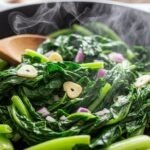
Mustard greens, the peppery, leafy vegetables from the Brassica juncea plant, have long been a staple in Asian, African, and Southern American cuisines. While they are often celebrated for their distinct, pungent flavour, their nutritional profile suggests they are far more than just a tasty side dish. In recent years, the scientific community has turned its attention to the mustard greens antioxidants profile, revealing a powerhouse of compounds capable of combating oxidative stress and supporting long-term health.
Leafy greens are generally recognised as essential components of a healthy diet, but mustard greens stand out due to their impressive concentration of specific phytochemicals. These greens belong to the cruciferous vegetable family, sharing a lineage with kale, broccoli, and Brussels sprouts. However, mustard greens often contain higher levels of certain vitamins and bio-active compounds compared to their milder cousins.
Understanding how these vegetables interact with the body requires a deep dive into cellular biology. When we discuss nutrition, we often focus on macronutrients like carbohydrates and proteins. Yet, it is the micronutrients—specifically antioxidants—that play the critical role of cellular defence. This article provides an exhaustive look at the science behind mustard greens, analysing their antioxidant mechanisms, health benefits, and practical applications for your daily diet.
The Nutritional Profile of Mustard Greens
Before analysing the specific antioxidant mechanisms, it is vital to understand the baseline nutritional density of these greens. Mustard greens are low in calories but exceptionally high in fibre and micronutrients. They provide a robust foundation for health by supplying the co-factors necessary for enzymatic reactions in the body.
One cup (approximately 56 grams) of chopped, raw mustard greens provides a significant portion of your daily recommended intake for several key nutrients. Below is a breakdown of the primary nutrients found in raw mustard greens:
| Nutrient | Amount per 56g | % of Daily Value (approx.) |
|---|---|---|
| Vitamin K | 278 mcg | 348% |
| Vitamin A | 3020 IU | 60% |
| Vitamin C | 39 mg | 65% |
| Folate (B9) | 105 mcg | 26% |
| Manganese | 0.25 mg | 13% |
| Calcium | 58 mg | 6% |
| Potassium | 195 mg | 6% |
Note: Values may vary slightly depending on soil quality and harvest time.
Beyond these standard vitamins and minerals, the true power of mustard greens antioxidants lies in their secondary plant metabolites. These include glucosinolates, polyphenols, and carotenoids, which we will explore in detail below. The synergy between these vitamins and plant compounds creates a bioavailability that supplements alone often struggle to replicate.
For a broader look at how leafy greens contribute to health, you can read more on Healthline’s overview of healthy vegetables.
Understanding Oxidative Stress and Antioxidants
To appreciate the value of mustard greens, one must first understand the enemy they fight: oxidative stress. This is a physiological condition characterised by an imbalance between the production of reactive oxygen species (ROS)—commonly known as free radicals—and the body’s ability to detoxify these reactive intermediates.
Free radicals are unstable atoms that can damage cells, causing illness and ageing. They are produced naturally through metabolism but are exacerbated by external factors such as pollution, cigarette smoke, and radiation. When free radicals outnumber antioxidants, they can damage DNA, lipids, and proteins, leading to chronic diseases.
Antioxidants act as electron donors. They can donate an electron to a free radical without becoming unstable themselves, effectively neutralising the threat. A diet rich in vegetables like mustard greens increases plasma antioxidant levels, providing a primary line of defence against cellular damage. According to research from the National Institutes of Health (NIH), maintaining an antioxidant-rich diet is linked to a reduced risk of cardiovascular disease and certain cancers.
Key Antioxidant Compounds in Mustard Greens
Mustard greens are not reliant on a single compound for their health benefits. Instead, they offer a diverse spectrum of antioxidants that function via different biological pathways.
1. Glucosinolates and Isothiocyanates
Perhaps the most significant group of compounds in mustard greens are glucosinolates. These are sulphur-containing compounds responsible for the vegetable’s bitter, spicy kick. While they are not antioxidants in the direct sense, their metabolites are potent indirect antioxidants.
When you chew or chop mustard greens, an enzyme called myrosinase is released, breaking down glucosinolates into bioactive compounds called isothiocyanates. These compounds have been shown to induce the body’s own antioxidant defence systems. Specifically, they activate the Nrf2 signalling pathway, which triggers the production of intracellular antioxidant enzymes. Research published in Molecular Nutrition & Food Research highlights how isothiocyanates can inhibit carcinogen activation.
2. Beta-Carotene and Vitamin A
Mustard greens are an exceptional source of beta-carotene, a plant pigment that the body converts into Vitamin A (retinol). Beta-carotene acts as a powerful antioxidant that specifically targets singlet oxygen—a highly reactive type of oxygen molecule. By neutralising singlet oxygen, beta-carotene helps prevent oxidative damage to lipids in cell membranes.
Adequate Vitamin A is crucial for immune function and vision. The high concentration in mustard greens makes them a superior choice for supporting ocular health. For more on the importance of Vitamin A, consult the National Institutes of Health Fact Sheet.
3. Flavonoids: Quercetin and Kaempferol
Flavonoids are a class of polyphenolic secondary metabolites. Mustard greens are particularly rich in quercetin and kaempferol. These antioxidants are known for their anti-inflammatory properties.
Quercetin has been studied for its ability to stabilise the cells that release histamine in the body, potentially having an anti-allergic effect. Kaempferol, on the other hand, has demonstrated an ability to reduce the risk of chronic diseases, including cancer, by inhibiting oxidative stress at the cellular level. A review in The Journal of Nutritional Biochemistry details how kaempferol modulates cell signalling pathways to promote cell survival.
4. Lutein and Zeaxanthin
These two carotenoids are concentrated in the retina of the human eye. Unlike beta-carotene, they do not convert to Vitamin A. Instead, they act as direct antioxidants in the eye, filtering harmful high-energy blue wavelengths of light and protecting and maintaining healthy cells in the eyes.
Regular consumption of foods rich in lutein and zeaxanthin, such as mustard greens, may reduce the risk of chronic eye diseases, including age-related macular degeneration (AMD) and cataracts. The American Optometric Association cites these nutrients as essential for long-term vision protection.
5. Vitamin C (Ascorbic Acid)
Often associated with citrus fruits, mustard greens are surprisingly rich in Vitamin C. This water-soluble vitamin is a primary scavenger of free radicals in an aqueous environment (like the inside of cells or blood). It also regenerates other antioxidants within the body, such as Vitamin E (alpha-tocopherol), allowing them to continue their protective work.
Vitamin C is also vital for collagen synthesis, linking mustard greens antioxidants intake to skin health and wound healing. Further data on Vitamin C functions can be found via the Harvard T.H. Chan School of Public Health.

Health Benefits Associated with Intake
The complex matrix of antioxidants in mustard greens translates into tangible health benefits when consumed regularly.
Heart Health and Cholesterol Management
Oxidative stress is a major driver of heart disease. It causes the oxidation of LDL (bad) cholesterol, which leads to plaque buildup in arteries. The flavonoids and beta-carotene in mustard greens prevent this oxidation. Furthermore, steam-cooked mustard greens have a unique ability to bind bile acids in the digestive system. This forces the liver to use existing cholesterol to produce more bile acids, thereby lowering overall cholesterol levels in the blood. The British Heart Foundation recommends leafy greens as a staple for maintaining cardiovascular health.
Cancer Prevention Potential
The interaction between glucosinolates and isothiocyanates is a primary focus of cancer research. These compounds help detoxify carcinogens and may induce apoptosis (programmed cell death) in tumour cells. While no single food can cure cancer, the protective effect of a diet high in cruciferous vegetables is well-documented in epidemiological studies.
Cognitive Function
The brain is highly susceptible to oxidative stress due to its high oxygen consumption. The antioxidant profile of mustard greens, particularly Vitamin K, lutein, and beta-carotene, may help slow cognitive decline. Research indicates that phylloquinone (Vitamin K1) is involved in sphingolipid metabolism, a class of lipids crucial for brain cell structure. A study available via PubMed links leafy green consumption to slower cognitive decline in ageing populations.
Practical Tips: Maximising Absorption
To get the most out of mustard greens antioxidants, how you prepare them matters significantly.
- Pair with Fat: Vitamins A and K, along with carotenoids like lutein, are fat-soluble. This means they require dietary fat to be absorbed by the body. Always consume mustard greens with a source of healthy fat, such as olive oil, avocado, or nuts.
- Mind the Heat: Vitamin C and myrosinase (the enzyme that creates isothiocyanates) are heat-sensitive. Boiling mustard greens for long periods can destroy these compounds and leach water-soluble vitamins into the cooking liquid.
- Steaming is Best: Studies suggest that steaming mustard greens retains the most glucosinolates while significantly improving their bile acid-binding capacity.
For general dietary guidelines and vegetable intake recommendations, the NHS Live Well guide provides excellent benchmarks for UK residents.
Simple Ways to Add Them to Your Diet
- The Raw Salad Mix: Harvest young, tender mustard greens and mix them with sweeter lettuces to balance the peppery bite.
- Asian Stir-fry: Sauté garlic and ginger, then toss in roughly chopped mustard greens for just 2–3 minutes until wilted. Finish with sesame oil.
- Smoothie Booster: Add a small handful to a fruit smoothie. The strong flavour is easily masked by pineapple or banana, but the antioxidant boost remains.
- Traditional Saag: In Indian cuisine, mustard greens (sarson) are slow-cooked with spices to create a creamy, nutrient-dense dish known as Sarson ka Saag.
The Bottom Line
Mustard greens are a nutritional heavyweight in the world of vegetables. Their distinct, peppery taste is a marker of the potent chemical compounds within—specifically glucosinolates—that offer profound protective effects.
The mustard greens antioxidants profile is diverse, containing high levels of Vitamins A, C, and K, along with flavonoids and carotenoids. Together, these compounds work to neutralise free radicals, support heart and eye health, and potentially reduce the risk of chronic diseases.
Incorporating these greens into your diet does not require drastic changes. Whether steamed, sautéed, or eaten raw in salads, ensuring you pair them with a healthy fat will maximise their benefits. By adding mustard greens to your weekly rotation, you are providing your body with a powerful tool for cellular defence and long-term vitality.
For further reading on phytochemicals, the Linus Pauling Institute offers an in-depth analysis of cruciferous vegetables.