In recent years, coconut husk chips have emerged as a top-tier solution for both amateur and professional growers alike. These small, fibrous chunks are derived from the thick outer layer of coconuts.
They offer a unique combination of moisture retention and superior aeration. This makes them a versatile choice for a wide variety of plant species and even animal enclosures.
In this comprehensive guide, we will explore everything you need to know about this renewable gardening substrate. We will cover how they are made, why they benefit your plants, and the best ways to prepare them for use.
Improving your soil health is a vital part of long-term plant care, and choosing the right materials is the first step. You can learn more about the mental health benefits of gardening to see why this hobby is so rewarding.
| Feature | Coconut Husk Chips Benefit |
|---|---|
| Water Retention | Holds up to 10 times its weight in water. |
| Aeration | Prevents soil compaction and allows roots to breathe. |
| Durability | Lasts up to 3 to 5 years without breaking down. |
| Sustainability | An eco-friendly byproduct of the coconut industry. |
| pH Level | Naturally neutral (typically 5.5 to 6.5). |
What are Coconut Husk Chips?
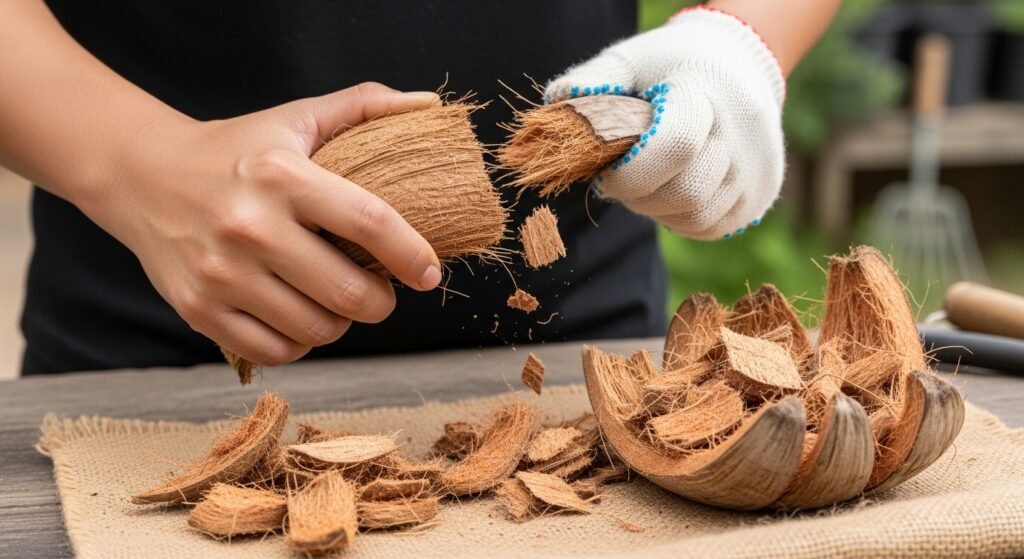
Coconut husk chips are essentially the chopped-up pieces of the fibrous husk that surrounds a coconut. This part of the fruit was once considered waste by the food industry.
Today, these husks are processed into various forms, including fine coco peat, long fibres, and these chunky chips. The chips are cut into uniform sizes to ensure consistency in your potting mix.
Unlike traditional soil, these coco coir chunks do not compact easily. This structural integrity is vital for plants that require significant airflow around their roots.
Research published by the Food and Agriculture Organization of the United Nations (FAO) highlights the importance of using coconut byproducts in modern agriculture. This shift helps reduce our reliance on non-renewable resources.
Many growers prefer using compressed coconut husk blocks because they are easy to transport and store. Once you add water, these blocks expand significantly, providing a large volume of usable media.
The Top Benefits of Coconut Shell Chips
There are several coconut shell chips benefits that set them apart from traditional mulch or peat-based products. One of the most significant is their ability to balance hydration.
They act like a sponge, absorbing water and releasing it slowly to the plant roots. This helps maintain consistent moisture levels, which is crucial for plant survival.
Maintaining proper hydration is just as important for plants as it is for humans. Without consistent water, plants experience stress and stunted growth.
1. Superior Drainage and Aeration
Using coco husk for drainage is a game-changer for plants prone to root rot. The irregular shapes of the chips create natural air pockets in the potting mix.
These pockets allow excess water to flow through freely while keeping the roots oxygenated. Oxygen is essential for the metabolic processes of plant roots.
According to the Royal Horticultural Society (RHS), good drainage is the most critical factor for many exotic plants. Poor drainage often leads to fungal infections and plant death.
2. A Sustainable Peat Alternative
For decades, peat moss was the standard for potting mixes. However, harvesting peat moss destroys fragile wetland ecosystems and releases stored carbon into the atmosphere.
Choosing a sustainable peat alternative like coconut husks helps protect these vital habitats. Coconuts are a renewable resource, as trees produce new crops year after year.
Adopting sustainable living practices in your garden reduces your overall carbon footprint. It is a simple way to contribute to environmental preservation.
Gardening with Coconut Husk: Common Uses
When you begin gardening with coconut husk, you will find it is incredibly versatile. It can be used as a standalone medium or mixed with other ingredients.
Many people use organic coconut husk mulch to cover the surface of their garden beds. This layer helps suppress weeds and prevents soil erosion during heavy rains.
Furthermore, it helps regulate soil temperature. This protects sensitive roots from the harsh midday sun in the summer and frost in the winter.
Orchid Potting Media with Coco Chips
Orchids are notorious for being picky about their substrate. Most orchids are epiphytes, meaning they grow on trees in nature rather than in soil.
Using orchid potting media with coco chips mimics this natural environment. The chips provide the grip the roots need while ensuring they never stay waterlogged.
Experts at the Royal Botanic Gardens, Kew often recommend coarse materials for epiphytic species. This ensures that the delicate roots are not smothered by fine particles.
Many enthusiasts specifically look for coco coir husk for orchids because it resists decomposition. Unlike bark, which can rot and become acidic, coco chips remain stable for years.
Coco Chips for Hydroponics
In soilless growing systems, coco chips for hydroponics are a popular choice. They provide a stable anchor for the plants while allowing nutrient solutions to circulate easily.
Since they are relatively inert, they do not significantly alter the nutrient balance of your system. This gives you total control over what your plants are consuming.
When using hydroponics, it is important to monitor water quality regularly. Contaminants in the water can affect both plant health and your own wellbeing if you are growing food.
Using Coconut Husk Chips for Plants in the Home
Indoor plants often suffer from poor air circulation in traditional potting soil. Switching to coconut husk chips for plants can revitalise your indoor greenery.
The chips create a lighter, fluffier mix that allows indoor plants to thrive. This is especially helpful for Aroids like Monstera and Philodendron.
Indoor plants can even improve your indoor air quality by filtering out common household toxins. Keeping your plants healthy ensures they can perform this function effectively.
If you have environmental allergies, you might worry about mould in your plant soil. Coco chips are naturally resistant to mould growth compared to traditional potting compost.
Check out more about managing environmental allergies if you find yourself sneezing around your houseplants. Using cleaner substrates can often help reduce these triggers.
Reptile Substrate Coconut Husks: A Safe Bedding Choice
It is not just plants that benefit from this material. Many pet owners use reptile substrate coconut husks for their snakes, lizards, and tortoises.
The chips are excellent at holding humidity, which is vital for tropical reptile species. They are also soft enough that they do not harm the animal’s skin.
Using natural materials in a pet enclosure is generally safer than using synthetic carpets or chemically treated wood. It provides a more enrichment-focused environment for the animal.
Ensure you are using pre-washed coconut chips for pets to remove any excess salt. High salt content can be irritating to a reptile’s sensitive skin and respiratory system.
Understanding respiratory health is important when choosing substrates. Dusty materials can cause lung issues for both pets and their owners.
How to Prepare Your Coconut Husk Chips
If you purchase coconut husk chips bulk, they often arrive in a dry, compressed state. Proper preparation is key to ensuring they are safe for your plants or pets.
First, you need to hydrate the chips. Place the block in a large container and add plenty of fresh water.
Wait for about 30 to 60 minutes for the chips to fully expand. Once they are soft and saturated, you should rinse them thoroughly.
Rinsing and Buffering
Coconuts often grow near coastal areas. This means the husks can contain high levels of sodium and potassium salts.
Rinsing the chips helps wash away these excess minerals. Some gardeners go a step further and “buffer” the chips with calcium and magnesium.
This process prevents the coco coir from “locking out” these essential nutrients from your plants later on. You can find buffering instructions from the Oklahoma State University Extension or similar agricultural resources.
Handling wet soil or substrate can sometimes lead to dry skin. It is a good idea to practice proper skin care after a long day of gardening to keep your hands healthy.
Environmental Impact and Sustainability
The use of organic coconut husk mulch is a win for the planet. It redirects a waste product away from landfills and into productive use.
Unlike wood chips, which may involve cutting down trees, coco chips are harvested without harming the plant. This makes them a truly renewable resource.
The Environmental Protection Agency (EPA) encourages the use of recycled and organic materials in landscaping. This reduces the need for synthetic fertilisers and chemical interventions.
By choosing eco-friendly products, you are supporting a more circular economy. This is a key pillar of a plant-based lifestyle that respects the earth’s limits.
For more information on the science behind these materials, you can explore studies on ScienceDirect. Many papers detail the physical properties of coco coir in various climates.
Frequently Asked Questions (FAQ)
Can I reuse coconut husk chips?
Yes, you can! One of the best things about these chips is their durability. Unlike peat moss, which breaks down quickly, coco chips can be washed and reused for several growing seasons.
Are coconut husk chips the same as coco coir?
They are made from the same material, but the texture is different. Coco coir usually refers to the finely ground “pith,” while chips are larger, chunky pieces of the husk.
Do I need to add fertiliser when using coco chips?
Yes. Coconut husk chips are relatively nutrient-poor on their own. You will need to provide a liquid fertiliser to ensure your plants get the minerals they need for growth.
Learning about sustainable eating often leads people to grow their own food. Using coco chips for home-grown vegetables is a great way to ensure your food is free from harmful chemicals.
How long do coconut husk chips last?
In most conditions, they will last between 3 and 5 years. This longevity makes them very cost-effective over time compared to other organic substrates.
Where can I buy them?
You can find them at most garden centres or online. Buying coconut husk chips bulk is often the most economical way to purchase them for large projects.
Safety Considerations
While generally safe, always work in a well-ventilated area when handling dry coconut products. Fine dust particles can be inhaled, which may cause irritation.
If you have pre-existing lung conditions, wearing a simple mask is a good precaution. Protecting your home safety and personal health should always come first.
The United States Department of Agriculture (USDA) provides guidelines on safe handling of agricultural imports. Always ensure your chips are sourced from reputable suppliers to avoid pests.
Additionally, keep an eye out for any signs of mold toxicity if you live in an extremely humid environment. While coco chips are resistant, no material is completely immune to poor conditions.
The Bottom Line
Coconut husk chips are a versatile, sustainable, and highly effective choice for modern gardening. They offer the perfect balance of aeration and moisture retention that many plants crave.
Whether you are using them for orchid potting media with coco chips or as a reptile substrate coconut husks, they provide a natural, clean environment. Their long lifespan and eco-friendly nature make them an investment in both your hobby and the planet.
By understanding how to rinse and buffer your pre-washed coconut chips, you can ensure the best possible start for your plants. Gardening is a journey toward better mental well-being (see more at Healthline), and using the right tools makes that journey much smoother.
For further reading on sustainable agriculture, visit Nature or check with your local agricultural extension office. Happy growing!