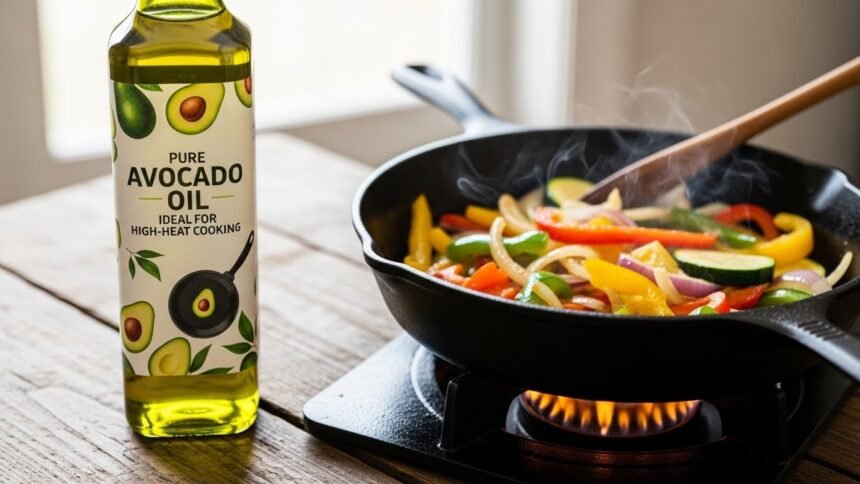
Walking down the cooking oil aisle in a modern supermarket can feel overwhelming. With options ranging from rapeseed and coconut to olive and avocado, making the right choice for your health and your culinary needs is no small feat. For years, olive oil held the crown as the healthy fat of choice, but recently, avocado oil has surged in popularity.
While largely praised for its mild flavour and heart-healthy fats, the primary reason for this shift is thermal stability. When it comes to searing, roasting, or stir-frying, the best avocado oil for high heat cooking offers a distinct advantage over many of its competitors.
However, not all avocado oils are created equal. The market is saturated with varying grades, from extra virgin to highly refined, and choosing the wrong one can negate the health benefits you are seeking. Furthermore, reports on oil purity have raised concerns about what is actually inside the bottle.
This article provides an exhaustive look at why avocado oil is a superior choice for high temperatures, the science behind smoke points, and how to identify the highest quality products for your kitchen.
Symptoms & Causes: Understanding Oil Degradation
To understand why we need a specific oil for high heat, we must first look at the “symptoms” of using the wrong oil. You may have experienced this before: you place a pan on the stove, add some oil, and turn your back for a moment. When you return, the pan is billowing grey smoke, and an acrid, burnt smell fills the kitchen.
The Symptom: Reaching the Smoke Point
Every cooking fat has a specific temperature at which it stops shimmering and starts burning. This is known as the smoke point. When oil hits this threshold, it begins to break down visibly.
For unrefined oils, such as extra virgin olive oil or unrefined flaxseed oil, this point is relatively low. If you use these oils for searing a steak or frying vegetables at high temperatures, you will notice the smoke almost immediately. This is not just a culinary error that ruins the flavour of your food; it is a chemical signal that the oil is degrading.
The Cause: Oxidation and Free Radicals
The underlying cause of this degradation is a process called oxidation. When oils are exposed to heat, light, or air, their chemical structure changes. Heat acts as a catalyst, accelerating this breakdown.
At the molecular level, the fatty acids in the oil begin to break apart. This process releases free radicals—unstable molecules that can damage cells in the body and contribute to inflammation and chronic disease. Furthermore, when an oil surpasses its smoke point, it releases a substance called acrolein. Acrolein is a volatile compound that gives burnt oil its foul smell and has been linked to respiratory irritation.
Why Fatty Acid Profiles Matter
The stability of an oil under heat is largely determined by its fatty acid profile. Oils high in polyunsaturated fats (like sunflower or corn oil) contain multiple double bonds in their chemical structure. These bonds are unstable and react easily with oxygen when heated.
Conversely, avocado oil is primarily composed of monounsaturated fats (oleic acid). Monounsaturated fats have only one double bond, making them significantly more resistant to heat-induced oxidation. This chemical stability is the primary reason why finding the best avocado oil for high heat cooking is essential for maintaining a non-toxic kitchen environment.
Treatment & Management: Selecting the Right Oil
If the “condition” is the risk of oxidative stress from burnt oils, the “treatment” is selecting a high-quality, refined avocado oil. Unlike managing a health condition, managing your pantry is entirely within your control. However, it requires navigating marketing terms and understanding the manufacturing process.
Refined vs. Unrefined: The Crucial Distinction
When shopping for the best avocado oil for high heat cooking, you will encounter two main varieties: unrefined (often labelled as “virgin” or “extra virgin”) and refined.
- Unrefined Avocado Oil: This oil is cold-pressed from the fruit’s flesh and retains its emerald green colour and buttery flavour. While nutritious, it contains particulates and volatile compounds that burn at lower temperatures (around 190°C–204°C). It is excellent for salad dressings but poor for high heat.
- Refined Avocado Oil: To create an oil capable of withstanding high temperatures, the oil undergoes a refining process to remove impurities, free fatty acids, and pigments. This results in a pale yellow or clear oil with a neutral scent. Crucially, this process raises the smoke point to an impressive 271°C (520°F)—one of the highest of any cooking oil.
Management of Purity Risks
A significant issue in the avocado oil industry is adulteration. A landmark study by researchers at the University of California, Davis, analysed various avocado oils on the market. The results were concerning: a significant percentage of oils tested were either oxidised before the bottle was opened or adulterated with cheaper oils like soybean or sunflower oil.
To “manage” this risk, you should look for specific indicators of quality:
- Transparency: Look for brands that explicitly state their sourcing and refining processes. Some premium brands offer “chemically refined” vs “naturally refined” options. Naturally refined oils use clays and heat rather than harsh chemicals to filter the oil.
- Packaging: Light accelerates oxidation. The best oils are packaged in dark glass bottles or opaque metal tins to protect the contents from UV damage.
- Taste Test: If your avocado oil tastes rancid, stale, or like “play-doh” upon opening, it has likely oxidised. A high-quality refined avocado oil should taste clean and mild, while virgin oil should taste grassy and buttery.
Nutritional Comparison
When managing your dietary fat intake, it is helpful to compare avocado oil against other common staples to understand why it is the superior choice for high heat.
- Avocado Oil vs. Olive Oil: Both are high in oleic acid and Vitamin E. However, refined olive oil (often labelled as “light” or “pure”) has a smoke point of around 240°C, which is lower than refined avocado oil’s 271°C. For sautéing, they are comparable, but for high-heat searing, avocado oil wins.
- Avocado Oil vs. Coconut Oil: Coconut oil is 90% saturated fat, which makes it very stable. However, it has a distinct flavour that clashes with many dishes and a lower smoke point (177°C for virgin, 204°C for refined) compared to avocado oil.
- Avocado Oil vs. Vegetable Oils (Rapeseed/Canola): While rapeseed oil has a high smoke point (204°C–230°C), it is often highly processed using hexane solvents and is higher in inflammatory omega-6 fatty acids compared to avocado oil.
Tips
Incorporating the best avocado oil for high heat cooking into your daily routine is straightforward, but a few tips can ensure you get the most out of your purchase.
Storage is Key
Even the most stable oils can go bad if mistreated. Store your avocado oil in a cool, dark cupboard, away from the heat of the oven or stove. Heat fluctuations can cause condensation inside the bottle or accelerate spoilage. If you buy in bulk, consider decanting a smaller amount for daily use and keeping the large container in the coolest part of your pantry.
Cooking Techniques
- Searing Meat: Because of the 271°C smoke point, you can get a pan smoking hot before adding the steak or tofu. This ensures a perfect Maillard reaction (browning) without the oil breaking down.
- Roasting Vegetables: Toss broccoli, carrots, or potatoes in avocado oil before roasting at 220°C. Unlike olive oil, which might smoke at this temperature, avocado oil remains stable, keeping the flavour clean.
- Seasoning Cast Iron: Due to its high smoke point and neutral flavour, refined avocado oil is an excellent choice for seasoning cast iron skillets. It polymerises well, creating a tough, non-stick surface.
Don’t Waste It
Refined avocado oil is generally more expensive than vegetable oils. Use it specifically for heat applications. For cold applications like dressings or drizzling over soup, stick to extra virgin olive oil or unrefined avocado oil to save money and enjoy more robust flavours.
The Bottom Line
Choosing the best avocado oil for high heat cooking is about more than just avoiding a smoky kitchen; it is a proactive step toward better health. By selecting a high-quality, refined avocado oil, you ensure that your food is cooked in a fat that remains stable under thermal stress, minimising your exposure to harmful free radicals and acrolein.
While the market is fraught with purity issues, sticking to reputable brands packed in dark glass or metal can mitigate these risks. Its high monounsaturated fat content, neutral flavour, and exceptional smoke point of 271°C make refined avocado oil a versatile and heart-healthy tool in any modern kitchen.
Whether you are searing a steak or stir-frying vegetables, swapping your standard vegetable oil for avocado oil is a simple upgrade with significant benefits.