Choosing the right fruit for your daily snack can feel like a small decision, but it plays a significant role in your overall dietary health. We have all heard the age-old adage that “an apple a day keeps the doctor away,” but does this common fruit truly hold the crown when compared to tropical powerhouses?
In recent years, the guava has emerged as a nutrient-dense competitor, challenging the apple’s dominance in the wellness world. While apples offer convenience and familiarity, guavas bring an exotic profile bursting with vitamins that many people in the UK struggle to consume enough of.
Understanding the nutritional nuances between these two fruits can help you tailor your diet to your specific health goals, whether you are looking to boost immunity or manage blood sugar levels. Both fruits contribute to the NHS recommendation of eating at least 5 A Day, yet they offer distinctly different benefits.
In this article, we will compare the nutritional content, health benefits, and potential downsides of guava versus apple to help you decide which one deserves a prime spot in your fruit bowl.
Nutritional Profiles: The Basics
To truly understand which fruit is healthier, we must first look at what is happening beneath the skin. Both fruits are low in calories and high in water content, making them excellent choices for weight management.
However, their micronutrient profiles vary significantly.
Apples are renowned for their high pectin content and a specific flavonoid called quercetin. They provide a steady source of energy and are exceptionally hydrating. A medium-sized apple is generally lower in protein and fats but provides a consistent amount of carbohydrates.
Guavas, on the other hand, are often categorised as a “superfood”. They are significantly higher in protein compared to most fruits and are packed with an incredible amount of Vitamin C. In fact, a single guava contains four times the amount of Vitamin C found in an orange.
When analysing fibre, guavas generally take the lead. Dietary fibre is essential for maintaining a healthy digestive system and lowering the risk of heart disease, according to the British Heart Foundation. While apples are a good source of fibre—especially with the skin on—guavas provide even more roughage, largely due to their edible seeds.
Health Benefits Breakdown
When we pit these two fruits against each other, specific health benefits begin to emerge. Depending on your personal health needs, one may be superior to the other.
1. Immunity and Vitamin C
If your primary goal is warding off colds and flu, the guava is the undisputed winner. Vitamin C is a potent antioxidant that protects cells from damage and supports the immune system.
While apples do contain Vitamin C, the levels are modest. Guavas provide a massive dose, often exceeding 200% of your daily reference intake in a single serving. This makes guava an essential addition to your diet during the colder winter months.
Read more about the benefits of Vitamin C to understand why this nutrient is vital for collagen production and iron absorption.
2. Blood Sugar Control
For those managing diabetes or insulin resistance, selecting fruit with a lower impact on blood sugar is crucial. This is measured by the Glycaemic Index (GI).
Apples have a low GI range (typically 36–42), meaning they digest slowly and cause a gradual rise in blood sugar rather than a spike. This makes them a safe, reliable snack.
However, guavas are also incredibly friendly to blood sugar levels. They have a remarkably low GI and a high fibre load, which helps regulate the absorption of sugar into the bloodstream. Diabetes UK suggests that choosing low-GI foods can help manage glucose levels effectively over time.
3. Digestion and Gut Health
Apples contain pectin, a prebiotic fibre that feeds the good bacteria in your gut. This can improve digestion and may help prevent constipation.
Guavas, with their high fibre content and seeds, act as excellent natural laxatives. If you struggle with irregularity, the roughage in guava can stimulate bowel movements more aggressively than the gentler apple.
4. Heart Health and Antioxidants
Both fruits contribute to heart health, but in different ways. Apples are rich in quercetin, which has been linked to lower risks of stroke and heart disease.
A study highlighted by PubMed suggests that regular apple consumption is associated with reduced thrombotic stroke risk due to these specific flavonoids.
Guavas contribute to heart health through high levels of potassium and soluble fibre. Potassium helps to lower blood pressure by balancing out the negative effects of salt. According to Harvard T.H. Chan School of Public Health, increasing potassium intake is a key dietary strategy for hypertension management.
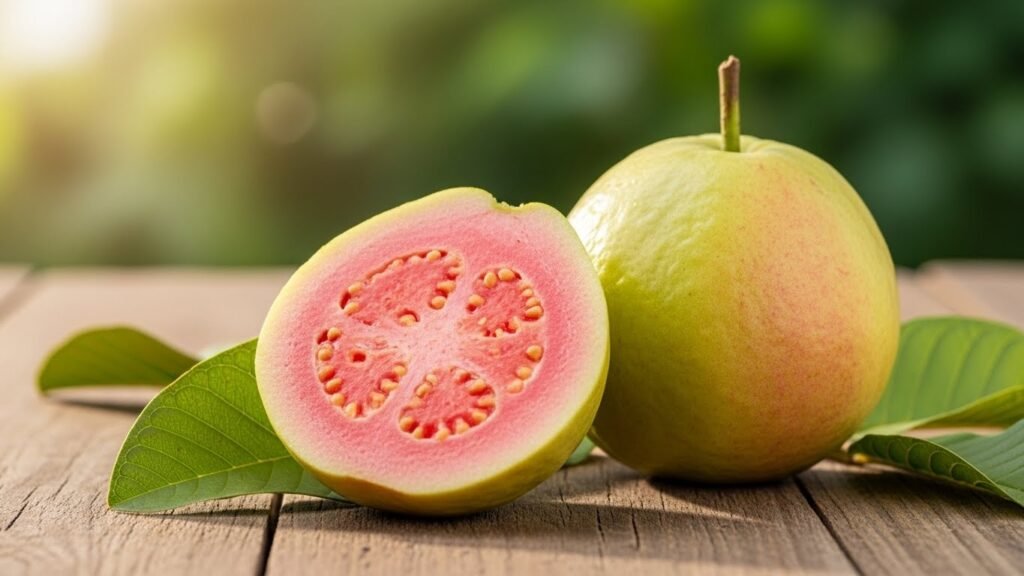
Comparison: Guava vs. Apple
The following table compares a standard 100g serving of raw common guava against a raw apple with skin. Note how the vitamin content differs drastically.
| Nutrient (per 100g) | Guava (Raw) | Apple (Raw, with skin) |
|---|---|---|
| Calories | 68 kcal | 52 kcal |
| Fibre | 5.4 g | 2.4 g |
| Sugar | 8.9 g | 10.4 g |
| Vitamin C | 228 mg | 4.6 mg |
| Vitamin A | 624 IU | 54 IU |
| Potassium | 417 mg | 107 mg |
| Protein | 2.6 g | 0.3 g |
Tips for Incorporating Them Into Your Diet
Eating healthy requires variety. Relying solely on one type of fruit can lead to nutritional gaps. The GOV.UK Eatwell Guide recommends consuming a variety of fruit and vegetables to maximise the intake of different nutrients.
How to Eat More Guava
- Smoothies: The seeds can be gritty, so blend guava flesh into smoothies and strain if necessary for a tropical vitamin kick.
- Salads: Slice firm, slightly under-ripe guava into cubes and toss them into a savoury salad with feta cheese.
- Jams: Guava is naturally high in pectin, making it excellent for homemade jams and jellies, as noted by BBC Good Food.
How to Maximise Apple Intake
- Keep the Skin: Most of the fibre and antioxidants are in the peel. Peeling an apple reduces its nutritional value significantly.
- Pair with Fat: Eat apple slices with peanut butter or a handful of walnuts. The healthy fats help sustain energy levels longer.
- Cooked: Stewed apples are easier to digest for those with sensitive stomachs, though some Vitamin C is lost in the heating process.
Potential Downsides
While both fruits are healthy, there are considerations to keep in mind.
Pesticides on Apples:
Apples frequently appear on lists of produce with higher pesticide residues. It is advisable to wash them thoroughly or buy organic where possible. Medical News Today highlights that while apples are nutritious, hygiene and preparation are key to avoiding contaminants.
Digestive Issues with Guava:
Guavas are very high in fibre and fructose. For individuals with Irritable Bowel Syndrome (IBS), eating too much guava—especially the seeds—can cause bloating and gas. It is important to increase fibre intake gradually.
Obesity and Sugar:
While fruit sugar is natural, it still counts towards your energy intake. Cancer Research UK notes that maintaining a healthy weight is vital for reducing cancer risk, so portion control remains important even with healthy fruits.
Frequently Asked Questions
Is guava better than apple for weight loss?
Guava is slightly higher in calories but contains double the fibre and more protein than apples. This protein-fibre combination keeps you fuller for longer, potentially reducing overall snacking. However, apples are lower in calorie density. Both are excellent for weight loss when eaten in moderation.
Can I eat the seeds of a guava?
Yes, the seeds of a guava are edible. They provide excellent roughage for digestion. However, they are quite hard. If you have dental issues or sensitive teeth, you may prefer to scoop them out or blend the fruit.
Which fruit is better for skin health?
Guava is superior for skin health due to its massive Vitamin C content. Vitamin C is essential for collagen synthesis, which keeps skin firm and youthful. It also protects skin cells from oxidative stress.
Do apples really wake you up better than coffee?
This is a myth, but with a grain of truth. Apples contain natural sugars (fructose) that provide a steady energy release, and the act of chewing can wake up facial muscles. However, they do not contain caffeine or stimulants.
Is it safe for diabetics to eat guavas?
Yes. Guavas have a low glycaemic index and are rich in fibre, which prevents blood sugar spikes. However, portion size is still important. Always consult your GP or dietitian regarding your specific dietary requirements.
The Bottom Line
When declaring a winner in the battle of “guava vs. apple,” the answer depends on your specific nutritional needs.
If you are looking for a massive boost in immunity, skin health, and digestion, the guava is the clear nutritional powerhouse. Its Vitamin C and protein content far outstrip that of the apple.
However, the apple remains a champion of convenience, accessibility, and heart health. Its availability in the UK makes it a sustainable staple that is easy to include in a daily routine.
Ultimately, the healthiest diet is one that includes variety. Rather than choosing one over the other, try alternating them. Have an apple for your morning snack and a guava in your smoothie to reap the full spectrum of benefits these nature-made treats have to offer.