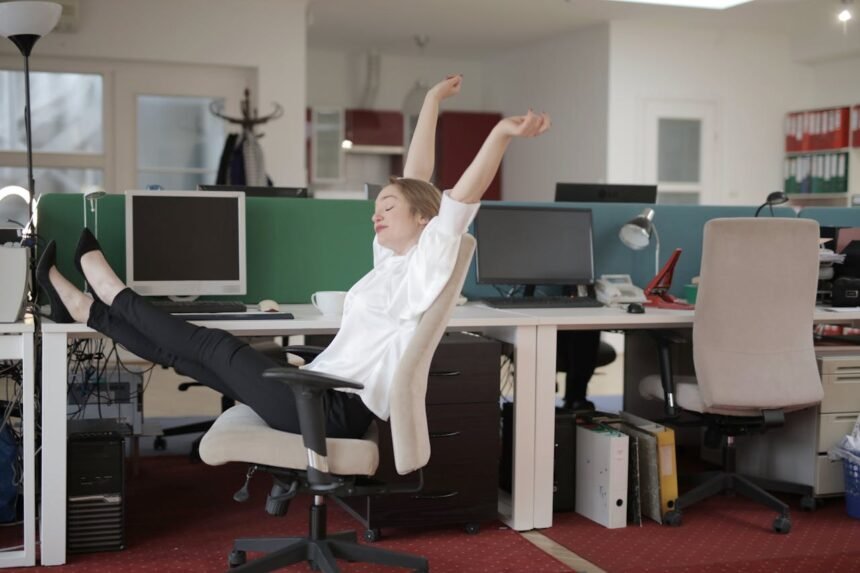
If you spend your day hunched over a laptop or glued to a swivel chair, you are likely all too familiar with the “office slump.” While modern work often requires us to stay stationary, our bodies are designed for movement. Adopting a regular routine of office stretching can be the difference between finishing your day feeling invigorated or feeling like a human pretzel.
Research published in Nature suggests that a sedentary lifestyle is linked to various health concerns. However, integrating flexibility exercises into your daily schedule can significantly mitigate these risks. This guide explores how to utilise office stretching to improve your physical wellbeing and reclaim your comfort at work.
The Science of Moving at Your Desk
Why does sitting for eight hours feel so exhausting? When we remain static, our blood circulation slows down, and muscle tension begins to accumulate in the neck, shoulders, and hips. According to the NHS, poor sitting habits are a leading cause of musculoskeletal discomfort.
Incorporating microbreaks—short bursts of activity lasting 1 to 2 minutes—can help reset your nervous system. Beyond the physical benefits, moving your body promotes mental clarity by increasing oxygen flow to the brain, helping you tackle that afternoon slump with renewed energy.
| The Problem | The Office Stretching Solution | Expected Benefit |
|---|---|---|
| Tight hip flexors from sitting | Seated figure-four stretch | Reduced lower back pain |
| Rounded shoulders | Chest expansion stretch | Posture improvement |
| Typing-related strain | Wrist and finger extensions | Carpal tunnel prevention |
| Eye strain and headaches | Neck rotations and 20-20-20 rule | Reduced neck stiffness |
Essential Office Stretching Routine
You don’t need a yoga mat or a change of clothes to start. These stretches are designed to be performed discreetly at your workstation setup.
1. The Neck Release
To combat neck stiffness, sit up tall and slowly drop your right ear toward your right shoulder. Hold for 15 seconds and repeat on the other side. This simple move targets the upper trapezius muscles which often tighten when we stare at screens. The Mayo Clinic highlights that regular movement can prevent the chronic aches associated with prolonged sitting.
2. The Seated Spinal Twist
Sit sideways in your chair. Place your feet flat on the floor and twist your torso toward the back of the chair, using the armrests for leverage. This aids in spinal mobility and can relieve lower back pain. Be sure to breathe deeply into the stretch.
3. Shoulder Shrugs and Rolls
Inhale deeply and lift your shoulders up to your ears, then roll them back and down as you exhale. This helps release the weight of the world—or at least the weight of your inbox—from your upper back.
4. Wrist and Forearm Stretch
To avoid a repetitive strain injury, extend one arm in front of you with the palm facing up. Use your other hand to gently pull your fingers back toward your body. This is a crucial step for carpal tunnel prevention, especially for those who type for several hours a day. The NHS provides excellent resources on managing RSI symptoms through movement.
Optimising Your Desk Ergonomics
While office stretching is vital, it is only half the battle. Your desk ergonomics play a massive role in how your body feels at the end of the day. A poorly configured workstation setup forces your muscles to work harder than they need to.
- Monitor Height: The top of your screen should be at eye level to prevent slouching.
- Chair Support: Use a chair that supports the natural curve of your spine. If yours doesn’t, a rolled-up towel at the small of your back can help.
- Feet Placement: Keep your feet flat on the floor. Avoid crossing your legs, as this can impede blood circulation.
For more on proper alignment, Harvard Health offers a comprehensive guide on maintaining a healthy spine at work.
The Power of Microbreaks
It is easy to get “lost in the zone” and forget to move. According to the British Heart Foundation, excessive sitting is a risk factor for heart health. Set a timer for every 45 minutes to perform at least one office stretching move. Even standing up during a phone call counts as a microbreak.
During these breaks, focus on deep breathing. Deep, diaphragmatic breaths help lower cortisol levels and reduce the physiological impact of workplace stress. Mayo Clinic experts suggest that combining stretching with mindful breathing creates a powerful relaxation response.
How to Stay Consistent
- Anchor the habit: Stretch every time you finish a specific task, like sending an email or ending a Zoom call.
- Use technology: Download a browser extension or app that reminds you to move.
- Organise a team stretch: Normalise office stretching by encouraging colleagues to join in. Social support increases the likelihood of sticking to a physical wellbeing routine.
The Long-term Benefits
Consistency is key. You may not feel like a world-class athlete after one seated leg extension, but over time, these small movements add up. Consistent posture improvement reduces the risk of chronic degenerative issues. Healthline notes that regular stretching increases blood flow to the muscles, which can speed up recovery and reduce soreness.
Beyond the physical, the mental health benefits are significant. Taking a moment to step away from the digital world and check in with your body can reduce anxiety. The Mental Health Foundation emphasises the strong link between physical activity and emotional resilience.
Frequently Asked Questions (FAQs)
Does office stretching really work if I still sit most of the day?
Yes. While it doesn’t replace a full workout, office stretching breaks up sedentary patterns, improves blood circulation, and prevents muscles from “locking” into poor positions. It is a vital tool for harm reduction in a desk-based role.
How long should I hold each stretch?
For most flexibility exercises, holding the position for 15 to 30 seconds is ideal. This gives the muscle tissue enough time to lengthen without causing strain. Avoid bouncing, as this can lead to small tears in the muscle.
Can stretching help with tension headaches?
Absolutely. Many tension headaches originate from neck stiffness and tight shoulder muscles. By regularly releasing the upper body, you can reduce the frequency and intensity of these headaches. Ensure your workstation setup is also optimised to avoid eye strain.
Conclusion
Taking control of your physical wellbeing doesn’t require a gym membership or an hour of your time. By integrating office stretching into your daily workflow, you can combat the negative effects of a sedentary lifestyle and improve your mental clarity. Stand up, reach for the ceiling, and give your body the movement it craves. Your spine will thank you.
For further reading on maintaining a healthy workplace environment, check out the resources at The Chartered Institute of Ergonomics and Human Factors or consult the NHS guide to back stretches.