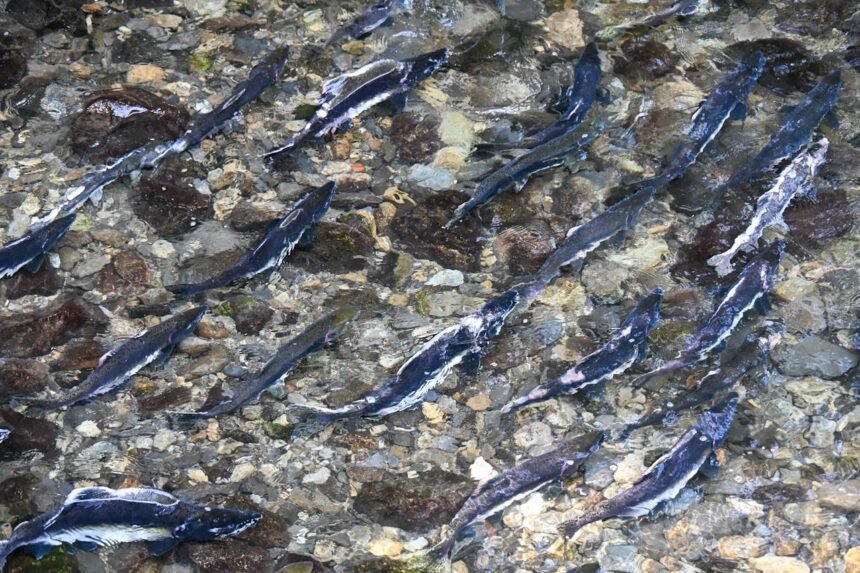
Wild salmon are often described as the “canary in the coal mine” for our waterways. Their presence, or lack thereof, tells a vivid story about the state of our environment. To understand these stories, scientists and environmentalists rely heavily on salmon counter data. This information provides a window into the underwater world, offering precise insights into how these iconic fish are faring in the face of climate change and habitat loss.
In this guide, we will explore why salmon counter data is the backbone of modern river management, the technology behind the numbers, and what the latest trends suggest for the future of our aquatic ecosystems.
What Exactly Is Salmon Counter Data?
At its core, salmon counter data refers to the quantified records of salmon moving through a specific point in a river, typically during their spawning migration. Unlike manual observations, which can be prone to human error, modern data is collected using sophisticated electronic counters. These systems record the time, date, size, and sometimes even the direction of the fish movement.
This information is vital for organizations like the Environment Agency to determine if populations are reaching sustainable levels. By analysing these numbers, experts can assess the ecological impact of human activities, such as dam construction or agricultural runoff, on Atlantic salmon populations.
The Technology Behind the Count
Gone are the days of simply standing on a bridge with a clipboard. Today’s fish counters utilise cutting-edge technology to ensure accuracy. Here are the primary methods used to gather high-quality environmental data:
- Hydro-acoustic sensors: These devices use sound waves to detect fish swimming past. They are particularly useful in large, murky rivers where visibility is poor.
- Infrared Resistivity Counters: These detect the change in electrical resistance when a fish passes over an electrode array. This is a common method for monitoring fish passage in the UK.
- Optical Scanners: Using cameras and AI, these systems can provide high-resolution images, helping researchers distinguish between different species and assess the physical health of the fish.
Research published in Nature suggests that the integration of AI with hydro-acoustic sensors is significantly reducing the margin of error in seasonal counts.
Why Tracking Population Trends Matters
Understanding population trends is not just about counting fish; it is about protecting biodiversity monitoring efforts across the globe. When we see a sharp decline in salmon counter data, it serves as an early warning signal for broader issues in river health.
For instance, a drop in numbers might correlate with declining water quality or changes in migratory patterns caused by rising water temperatures. Organizations like the Atlantic Salmon Trust use this data to advocate for policy changes and habitat restoration.
Comparing Counter Technologies
To better understand which methods are most effective for gathering salmon counter data, consider the following comparison table:
| Technology Type | Primary Benefit | Main Limitation | Best Use Case |
|---|---|---|---|
| Infrared Resistivity | Highly accurate for size data | Requires narrow passage | Fish ladders and weirs |
| Hydro-acoustic | Works in deep, wide rivers | Expensive equipment | Large river mouths |
| Optical/Video | Species identification | Poor performance in turbid water | Clear, shallow streams |
The Role of Data in Conservation Efforts
Conservation efforts are only as good as the data that informs them. Without accurate salmon counter data, it would be impossible to measure the success of multi-million-pound restoration projects. By tracking fish before and after a project—such as removing a redundant weir—scientists can prove the efficacy of their work.
According to the WWF, migratory freshwater fish populations have seen a staggering decline globally. In the UK, Natural Resources Wales and SEPA utilise these counts to set catch limits for both commercial and recreational fishing, ensuring that enough fish reach their spawning grounds to sustain the next generation.
How You Can Interpret Local Salmon Data
If you are interested in your local river management, you can often find public records of these counts. When looking at the data, pay attention to:
- Peak Timing: Is the spawning migration happening earlier or later than usual? (This often indicates temperature shifts).
- Fish Size: Are the returning salmon smaller? (This may suggest poor feeding conditions at sea).
- Consistency: Are the numbers stable over a five-year average, or is there a downward trajectory?
Authoritative reports from ScienceDirect often highlight how these local data points contribute to a global understanding of marine and freshwater interconnectedness.
Challenges in Collecting Accurate Data
While the technology is improving, gathering salmon counter data is not without its hurdles. High flow events or floods can damage equipment or cause “noise” in the data, making it difficult to distinguish a fish from debris. Furthermore, the ecological impact of the counters themselves must be kept to a minimum to ensure they do not hinder the fish’s natural progress.
Experts at the University of Cambridge are currently researching non-invasive ways to improve biodiversity monitoring through environmental DNA (eDNA), which could eventually supplement traditional fish counters.
The Global Picture: Salmon Migration and Climate Change
The migratory patterns of salmon are being reshaped by the climate crisis. As oceans warm, salmon must travel further north to find cold water, which can deplete their energy reserves before they even reach their home rivers. National agencies like NOAA Fisheries in the United States and Marine Scotland share data internationally to track these trans-Atlantic shifts.
This international collaboration is vital. As highlighted in The Guardian Environment, the survival of the Atlantic salmon depends on a unified approach to water quality and habitat protection across all borders.
Effective river management relies on this shared knowledge. For example, data shared with DEFRA helps the UK government align its environmental policies with the latest scientific findings from the British Ecological Society.
Frequently Asked Questions (FAQs)
What is the most accurate way to count salmon?
While various methods exist, infrared resistivity counters are often considered the most accurate for specific sites like fish ladders. However, for large-scale river health assessments, a combination of hydro-acoustic sensors and optical video provides the most comprehensive environmental data.
Can I access salmon counter data for my local river?
Yes, many environmental agencies, such as the Environment Agency in England or Marine Scotland, publish annual or even real-time salmon counter data on their official websites. This transparency helps local angling clubs and conservationists monitor population trends.
How does salmon counter data help the environment?
By providing evidence of how many fish are successfully navigating our rivers, the data helps identify barriers to fish passage. This leads to better river management, such as the removal of dams or the improvement of water quality, which benefits the entire ecosystem, not just the salmon.
Does counting the fish harm them?
Modern electronic counters are designed to be non-invasive. Most systems, like acoustic or infrared sensors, do not require the fish to be handled or even slowed down, ensuring that their spawning migration remains as natural as possible. Peer-reviewed studies in the Journal of Applied Ecology consistently evaluate and refine these methods to ensure minimal disruption.
In conclusion, salmon counter data is more than just a set of numbers. It is a vital diagnostic tool for the health of our planet. By supporting the technology and policies that make this data collection possible, we are taking a significant step toward a more sustainable and biodiverse future.