

Prebiotic drinks are everywhere, from fizzy sodas to fiber-boosted juices. Their labels promise a happier gut, but do the claims hold up? This guide explains what prebiotics are and how they differ from probiotics. You will see what the research shows for specific fibers like inulin, FOS, and GOS.
We also look at the benefits of prebiotic drinks, who should be careful, and why some people get gas or bloating. You will learn do prebiotic drinks make you poop, are prebiotic drinks good for you, and how to spot the best prebiotic drinks using fiber grams, sugar, and ingredients.
A closer look at real product labels and a recent legal settlement shows where marketing and science part ways. The guide is written for everyday readers, uses plain language, and sticks to conservative claims. It is general education only and does not replace advice from your doctor or dietitian.
What Are Prebiotics?
Let’s start with the basics. A prebiotic is food for the good microbes in your gut.
The International Scientific Association for Probiotics and Prebiotics (ISAPP) gives the standard definition. A prebiotic is a substrate that is selectively used by host microorganisms and gives a health benefit.
That definition has two key parts. The ingredient must feed certain microbes. And that feeding must lead to a proven benefit for you.
Not all fiber is a prebiotic. Some fiber just adds bulk. Some feeds many microbes in a general way. Only certain fibers meet the stricter prebiotic test.
Where Prebiotics Occur Naturally
Many whole foods contain prebiotic fibers. Natural sources include onions, peas, bananas, and barley. Others include garlic, leeks, asparagus, oats, beans, and chicory root.
Food gives you fiber plus vitamins, minerals, and other plant compounds. A drink usually gives you an isolated fiber.
Prebiotic vs Probiotic vs Synbiotic
These terms get mixed up a lot.
- Prebiotic: a fiber that feeds helpful microbes
- Probiotic: live microbes that may give a health benefit
- Synbiotic: a product with both
Kefir, yogurt with live cultures, and kombucha are linked to probiotics, not prebiotics. A drink can be both only if it truly contains both parts.
What Are Prebiotic Drinks?
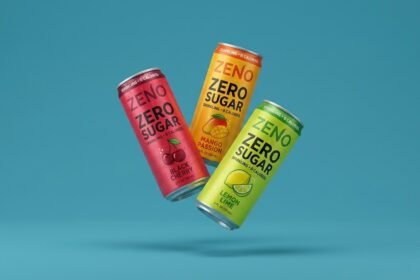
Prebiotic drinks are beverages with added prebiotic fiber. They come in a few forms:
- Prebiotic sodas
- Fiber-boosted juices and waters
- Powdered fiber drink mixes
- Functional tonics and shots
Most are low in sugar compared with regular soda. Many use stevia or fruit juice to sweeten.
They are sold as a better swap for sugary drinks. That part has some merit. But “better than soda” is not the same as “good for your gut.”
How Prebiotics Work in the Gut
When you eat a prebiotic fiber, your small intestine cannot digest it. It travels to the colon intact. There, gut microbes ferment it.
Fermentation makes short-chain fatty acids (SCFAs), such as butyrate. These compounds feed the cells that line your colon. They also play roles in inflammation and metabolism.
Fermentation also makes gas. That is why fiber can cause bloating. It is a normal side effect, not always a sign of harm.
What “Selective” Means
Selective means the fiber favors certain microbes, such as Bifidobacterium. It does not feed everything equally. This is the main reason prebiotics get attention.
Evidence by Fiber Type
Not every fiber has the same research behind it. This section covers the most common ones in prebiotic drinks.
| Fiber | Where it comes from | Best-supported effects | Evidence strength |
|---|---|---|---|
| Inulin | Chicory root, agave, Jerusalem artichoke | Raises Bifidobacterium; may soften stool and raise stool frequency | Stronger |
| FOS (fructooligosaccharides) | Chicory, onion, banana; made from sugar | Raises Bifidobacterium; may help stool consistency | Moderate to strong |
| GOS (galactooligosaccharides) | Made from lactose | Dose-linked rise in Bifidobacterium; possible comfort gains | Moderate |
| Resistant starch | Cooked and cooled potatoes, green bananas, legumes | SCFA production; mixed human results | Moderate, varies |
| Pectin | Apples, citrus peel | Fermented in colon; modest data on microbes | Limited to moderate |
| Acacia (gum arabic) | Acacia tree | Often gentler on digestion; fewer prebiotic trials | Limited |
| Guar (partially hydrolyzed) | Guar bean | Used for stool regularity; some prebiotic data | Limited to moderate |
| Cassava root fiber | Cassava | Common in drinks; little drink-specific research | Limited |
Use this table as a general guide. Study quality and doses vary a lot.
Inulin and FOS
These are the most studied. Inulin and FOS are both inulin-type fructans.
A meta-analysis of 50 human trials with 2,495 participants found that chicory-derived inulin, oligofructose, and blends of the two promote the growth of Bifidobacteria. A related summary noted that the bifidogenic effects were probably accompanied by more frequent and softer stools in specific groups of healthy people.
Here is a useful caution. That coverage came largely through industry press from a chicory fiber maker. The underlying meta-analysis is peer-reviewed, but it helps to know who is promoting the findings. You can see the details in this report on the chicory fiber meta-analysis.
A fiber maker’s brochure also states that daily doses of 10 to 20 grams of FOS appear to be linked with benefits, though the details depend on the study. Other trials used much smaller amounts. In general, studies often use several grams per day, and the number matters.
GOS
GOS has good data in dose-response studies. One ISAPP conference slide described a double-blind, placebo-controlled crossover study of 30 healthy people, where the prebiotic effect of GOS followed a dose-response pattern. The same slide listed improvements in stool consistency, flatulence, bloating, and anxiety scores. That was a small study, so treat it as a signal rather than proof.
Resistant Starch, Pectin, and Others
Resistant starch can raise SCFA production. But results vary by person and type. Pectin and acacia are used in some drinks. They have fewer large human trials than inulin.
ISAPP’s own materials describe resistant starch evidence as inconsistent in some analyses. That is why labels that lump all fibers together can be misleading.
The Bigger Picture
A recent review of 22 randomized trials using ISAPP-recognized prebiotics found consistent increases in beneficial bacteria like Bifidobacterium and Lactobacillus, along with higher SCFA production, linked to better stool frequency and consistency. Readers can find the paper through this review of prebiotics and gut health.
The same field also admits gaps. Researchers call for standard protocols and clearer dose-response data.
Prebiotic Drinks Benefits: What Is Supported
When people ask about prebiotic drinks benefits, they often mean big things like immunity or weight loss. Let’s separate what has evidence from what does not.
Better Supported
- Stool regularity: Some prebiotics raise stool frequency and soften stool in certain groups.
- More Bifidobacterium: Inulin-type fibers reliably do this in trials.
- More fiber overall: Many adults eat well under the recommended fiber amount.
- Less added sugar than soda: Swapping a 39-gram sugar soda for a 2- to 5-gram sugar drink cuts sugar intake.
Possible, but Less Certain
- Feeling full for longer
- Smoother blood sugar after meals
- Gut barrier support
- Immune effects
These come from mixed or small studies. They are plausible, not settled.
Not Proven by Drink-Level Evidence
- “Detox” or “reset” claims
- Weight loss from drinking prebiotic soda
- Curing bloating, IBS, or other conditions
- Boosting immunity in any measurable way
Most research uses specific fibers at specific doses. Few studies test a branded soda itself. So a trial on pure inulin does not prove a particular can works the same way.
Do Prebiotic Drinks Make You Poop?
Many people ask, do prebiotic drinks make you poop? Often, yes, especially at first. But it depends on the dose, the fiber, and your gut.
Why It Happens
Fiber adds bulk and draws water into stool. Fermentation also adds gas, which can stimulate movement. For some people, that means softer, more frequent stools.
One dietitian review noted that a drink with 9 grams of fiber per can may help regularity, but inulin may also cause excess gas, bloating, or diarrhea in some people.
When It Can Go the Other Way
Not everyone gets looser stools. Some people with low fluid intake can feel more constipated when they add fiber. One review noted that increasing fiber might initially cause constipation, so drinking extra water is a good idea.
Who Is More Likely to Have Trouble
- People with irritable bowel syndrome (IBS)
- People sensitive to FODMAPs (fermentable carbs, which include inulin, FOS, and GOS)
- People with small intestinal bacterial overgrowth (SIBO)
- Anyone who goes from low fiber to high fiber quickly
How to Start Smart
- Begin with a half serving, not a full can.
- Give your gut a few days to adjust.
- Drink water through the day.
- Add more only if you feel fine.
- Stop and talk to a clinician if pain or diarrhea persists.
One product guide suggested starting with half to one can per day to see whether the drink causes digestive discomfort. That is a sensible approach for any high-fiber drink.

Are Prebiotic Drinks Good for You?
Now the big question. Are prebiotic drinks good for you? The honest answer is: it depends on what you compare them to, and who you are.
Compared With Regular Soda
They usually win. A can of one popular prebiotic soda has 2 to 5 grams of sugar, while traditional soda can have upwards of 40 grams. Cutting sugary drinks is linked to better health in many studies.
Compared With Whole Foods
They usually lose. A pear, a bowl of oats, or a serving of lentils gives you fiber, vitamins, minerals, and plant compounds. A drink gives you isolated fiber and flavor.
Who May Benefit
- People who drink a lot of soda and want a lower-sugar swap
- People who struggle to reach fiber goals
- People who tolerate inulin and similar fibers well
Who Should Be Careful
- People with IBS or a low-FODMAP diet plan
- People with SIBO
- People with active inflammatory bowel disease flares
- People with a history of bowel blockage or surgery
- Children, unless a pediatrician says it is fine
- Pregnant or breastfeeding people with questions, who should ask their clinician
Other Things to Check
- Sweeteners: Some people react to sugar alcohols or stevia blends.
- Acidity: Fizzy, acidic drinks can wear on tooth enamel over time.
- Calories: Most are low, but juice-based ones can add up.
- Price: Cans can cost several times more than a fiber-rich snack.
A fair summary: prebiotic drinks can be a decent habit swap. They are not a health product on their own.
Prebiotic Drinks for Gut Health: Realistic Expectations
If you want prebiotic drinks for gut health, set the right goal. A drink can add fiber. It cannot fix a poor diet or treat a gut condition.
What a Drink Can Reasonably Do
- Add a few grams of fiber to your day
- Feed certain microbes like Bifidobacterium
- Possibly help stool regularity
- Replace a sugary beverage
What It Cannot Do
- Replace vegetables, fruit, whole grains, beans, and nuts
- Heal a “leaky gut”
- Treat IBS, Crohn’s disease, or ulcerative colitis
- Guarantee a certain microbiome
How Much Fiber Do You Need?
General guidance for adults is about 25 grams per day for women and 38 grams for men. Many people in the US eat closer to 15 grams. Check with your clinician for your own target.
A drink with 9 grams covers a big chunk of that. A drink with 2 grams covers very little.
Food First Ideas
Try these for a gut-friendly fiber boost:
- Oats with banana
- Lentil or bean soup
- Cooked and cooled potatoes or rice
- Onions, garlic, and leeks in meals
- Apples with the peel
- Chia or ground flax in yogurt
Add changes slowly. A steady, varied diet usually beats a single product.
Product Claims vs Science
This is where the market gets slippery. Labels use friendly words that sound medical but are not.
| Label claim | What it often means | What evidence supports |
|---|---|---|
| “Supports gut health” | Contains some fiber | Depends on fiber type and dose; one can may not be enough |
| “Prebiotic” | Contains an ingredient the brand calls prebiotic | Not all fibers meet the ISAPP definition or have drink-level studies |
| “Microbiome-friendly” | Marketing phrase | Not a regulated or measured outcome |
| “Better than soda” | Lower sugar and calories | Often true, but not a health claim by itself |
| “Digestive reset” or “detox” | Marketing language | No scientific basis |
| “Good for immunity” | Gut–immune link, loosely applied | Not shown for these drinks |
Dose Matters
The biggest gap is amount. A fiber can be prebiotic at 5 or 10 grams but do little at 1 or 2 grams.
A Real-World Example: The Poppi Settlement
This is a clear case of claims meeting scrutiny. The former owner of Poppi agreed to an $8.9 million class action settlement over claims that its gut-health messaging misled buyers. The filings argued that the agave inulin used as the main prebiotic fiber was too low to have a meaningful impact on the gut.
According to the complaint, a consumer would need to drink more than four cans a day to get any meaningful benefit from the prebiotic fiber.
It is important to be fair. The company has maintained a denial of any wrongdoing or liability. The settlement is not an admission, and a court did not rule on the science. You can read one summary in this BevNET report on the Poppi settlement.
The lesson applies to the whole category. Check the fiber grams, not just the front-of-can slogans.
How to Read a Label Like a Pro
- Find the fiber grams on the Nutrition Facts panel.
- Check the fiber source in the ingredients (inulin, chicory root, cassava, acacia, and so on).
- Look at added sugar, not just “sugar.”
- Scan the sweeteners if you are sensitive.
- Ignore vague claims like “gut-loving.”
- Compare serving size to the can size.
Best Prebiotic Drinks: How to Choose
There is no single best prebiotic drinks pick for everyone. The best choice fits your tolerance, goals, and budget. Here is a simple checklist.
Selection Criteria
- Fiber per serving: More fiber means more potential effect and more risk of gas.
- Fiber type: Inulin and chicory fiber have the strongest evidence base.
- Added sugar: Lower is better for most people.
- Sweeteners: Pick what you tolerate.
- Ingredient list: Shorter is easier to judge, though length alone is not a quality sign.
- Price per serving: Daily habits add up.
- Taste you enjoy: You will not stick with a drink you dislike.
Two Widely Sold Examples (Based on Current Labels)
These numbers come from retailer and dietitian reviews. Formulas and flavors change, so always read your can.
| Olipop | Poppi | |
|---|---|---|
| Fiber per 12 oz can | About 9 g | About 2 g |
| Added sugar | Roughly 2 to 5 g | Roughly 3 to 5 g |
| Fiber sources | Inulin from chicory root, cassava root, and Jerusalem artichoke | Agave inulin |
| Other notes | Plant extracts and botanicals | Apple cider vinegar and fruit juice |
| Higher-fiber? | Yes | No |
An overview from a dietitian review put it plainly. Olipop has 9 grams of fiber per can, about 32 percent of daily needs, while Poppi has 2 grams, about 7 percent. You can read more in this dietitian comparison of Olipop and Poppi.
What This Comparison Suggests
- If fiber is your goal, the 9-gram drink gives more.
- If you are sensitive to FODMAPs, the higher-fiber drink may cause more gas.
- If you just want a lower-sugar soda swap, either can work.
- Neither is proven to improve gut health beyond the effects of its fiber content.
Other Options Worth Considering
- Plain fiber supplements mixed with water (often cheaper per gram)
- Fiber-fortified juices (check sugar)
- Whole-food smoothies with oats, banana, and chia
- Probiotic drinks like kefir, if you want live cultures (a different goal)
A Note on “Best”
Ranking lists online often reflect taste tests, affiliate links, or brand deals. Treat them as opinions. A drink that works well for one person may cause cramps in another.

Do You Need Prebiotic Drinks at All?
Maybe not. Many people reach their fiber needs through food. If you do well on a varied diet, a drink adds little.
A drink may make sense if:
- You currently drink soda and want a lower-sugar swap
- You find fiber-rich foods hard to eat
- You like the taste and tolerate it well
Skip it if:
- It upsets your stomach
- It strains your budget
- You are using it to avoid vegetables, fruit, or beans
Homemade and Food-Based Alternatives
You can make prebiotic-rich drinks at home. They cost less and let you control the sugar.
Simple Ideas
- Oat and banana smoothie: Oats and slightly green banana give fiber and resistant starch.
- Chicory “coffee”: Roasted chicory root is a coffee-like drink, but amounts of inulin vary.
- Fruit and chia water: Chia gives fiber and thickens as it soaks.
- Apple-cinnamon infusion with peels: Light on fiber, but gentle.
- Yogurt or kefir smoothie with fiber-rich fruit: Combines probiotics and prebiotic fiber.
Keep a few things in mind. Kefir is a probiotic food, not a prebiotic one. Homemade drinks also vary in fiber, so do not assume a number.
Quick Tip on Powdered Fiber
Plain inulin or acacia powder is cheap and easy to dose. Start with a small scoop, mix well, and drink water. Increase slowly.
Side Effects and Safety
Most healthy adults tolerate prebiotic fibers. But side effects are common at higher doses.
Common Effects
- Gas and flatulence
- Bloating
- Stomach cramps
- Loose stools or diarrhea
- Temporary constipation if you drink too little fluid
One news summary of the Poppi case noted that prebiotics at the concentrations in such beverages have mild risks, such as bloating and diarrhea, according to some studies.
Less Common but Important
- Severe or worsening pain
- Blood in stool
- Black, tarry stool
- Persistent vomiting
- Unexplained weight loss
These are not normal fiber side effects. See a clinician.
Drug and Condition Notes
Fiber can affect how some medicines are absorbed. Ask your pharmacist if you take regular prescriptions. Talk to your doctor before adding concentrated fiber if you have kidney disease, bowel obstruction history, or a swallowing disorder.
When to See a Doctor
Prebiotic drinks are not a treatment. See a healthcare provider if you have:
- Ongoing belly pain or bloating
- Blood in your stool
- Unexplained weight loss
- Changes in bowel habits lasting more than a few weeks
- Persistent diarrhea or constipation
- Anemia or fatigue without a clear cause
- A family history of colon cancer or inflammatory bowel disease
A registered dietitian can help you build a personal fiber plan. A gastroenterologist can test for conditions that mimic simple gut upset.
Myths About Prebiotic Drinks
“Prebiotic and probiotic mean the same thing.”
No. Prebiotics feed microbes. Probiotics are live microbes.
“More fiber is always better.”
No. Too much too fast can cause real discomfort.
“If it says prebiotic, it works.”
Not necessarily. Amount and type matter.
“These drinks heal your gut.”
No evidence supports this.
“They are the same as eating vegetables.”
No. Food offers far more nutrients.
“They help you lose weight.”
Not proven. Fiber may help fullness, but drinks alone are not a weight-loss tool.
Frequently Asked Questions
What are the best prebiotic drinks?
There is no single winner. Look for enough fiber per serving, a fiber type with research behind it (such as chicory inulin), low added sugar, and sweeteners you tolerate. Check the current label for any brand.
Are prebiotic drinks good for you?
They can be a better choice than sugary soda, and they may add helpful fiber. But they are not a substitute for whole foods. People with IBS, SIBO, or FODMAP sensitivity may feel worse.
Do prebiotic drinks make you poop?
Often they do, especially drinks with several grams of inulin-type fiber. Effects vary. Some people get softer stools and more frequent trips. Others get gas or bloating, and a few feel more constipated if they drink too little water.
What are the main prebiotic drinks benefits?
The best-supported benefits are more Bifidobacterium and, for some people, better stool regularity. Other claims, like immunity or weight loss, lack strong drink-specific evidence.
Are prebiotic drinks good for gut health?
They may support certain helpful microbes, but they are one small piece. Overall diet, sleep, activity, and medical care matter much more.
Is prebiotic soda healthier than regular soda?
Usually, in terms of sugar. Many have 2 to 5 grams of sugar compared with about 39 grams in a classic cola. That does not make them a health food.
How much fiber should a prebiotic drink have?
There is no official rule. Trials of prebiotic effects often use several grams per day, so a drink with only 1 to 2 grams is unlikely to do much on its own. Start low and build up.
Can children drink prebiotic drinks?
Ask your pediatrician first. Children have different fiber needs, and digestive upset can be tougher on them.
Key Takeaways
- Prebiotic drinks add isolated fiber, often inulin or chicory root fiber
- Inulin-type fibers have the strongest evidence for raising Bifidobacterium
- Dose matters, and many cans have only a few grams
- They can make you poop, but may also cause gas and bloating
- They beat regular soda on sugar, but not whole foods on nutrition
- Label claims like “supports gut health” are not the same as proven outcomes
- Start slow, drink water, and stop if you feel unwell
Conclusion
Prebiotic drinks sit in a gray zone between soda and supplement. They can help some people cut sugar and add fiber. But the science behind your specific can may be thinner than the label suggests.
Read the fiber grams. Know your own gut. And lean on real food for most of your fiber.