


An apple feels like the simplest snack on earth. But if you count macros, manage blood sugar, or follow a low-carb plan, the numbers matter. This guide breaks down the carbs in an apple in plain language.
You will learn how many carbs in an apple you get by size, and how the skin changes the math. We cover total carbs versus net carbs in an apple, plus the sugar and fiber content per apple. You will also see whether apples are keto friendly.
Then we look at smart low-carb alternatives to apples. Every figure comes from USDA-style nutrition data, and the advice is written for everyday readers. Use it to plan your portions with confidence, and talk to your doctor or dietitian before making big diet changes.
Why Carbs in an Apple Matter
Apples are one of the most popular fruits in the world. People grab them for lunchboxes, desk drawers, and post-workout snacks. Yet many readers still ask how much carbs in an apple they are really eating.
The answer matters for several groups. People with diabetes track carbs to keep blood sugar steady. Keto dieters watch every gram to stay in ketosis.
Even casual eaters benefit from knowing the numbers. Once you understand the carbs in an apple, you can fit this fruit into almost any eating plan. Let’s start with the quick answer.
Quick Answer: How Many Carbs in an Apple?
A medium apple (about 182 grams) holds roughly 25 grams of carbohydrate. That is the short answer to how many carbs in an apple. The exact number shifts with size and variety.
Of those 25 grams, around 4.4 grams are fiber. Around 19 grams are natural sugars. The rest is starch and other small carbohydrates.
So when someone asks how many grams of carbs in an apple, say “about 25 for a medium one.” Small apples land near 21 grams. Large apples can reach 31 grams.
Fast Facts at a Glance
- Total carbs in an apple (medium): about 25g
- Fiber: about 4.4g
- Sugar: about 19g
- Net carbs in an apple (medium): about 21g
- Calories: about 95
These values are for a raw apple eaten with the skin on. Peeling changes them slightly, and we cover that below. For now, keep the 25-gram figure in mind.
Carbs in an Apple by Size
Size is the biggest factor in your carb count. A tiny apple and a giant one are not the same snack. Weighing your fruit is the most accurate method.
Here is a simple size chart based on typical USDA values for raw apples with skin.
| Apple Size | Weight | Total Carbs | Fiber | Sugar | Net Carbs |
|---|---|---|---|---|---|
| Small | 149 g | 20.6 g | 3.6 g | 15.5 g | 17.0 g |
| Medium | 182 g | 25.1 g | 4.4 g | 18.9 g | 20.7 g |
| Large | 223 g | 30.8 g | 5.4 g | 23.2 g | 25.4 g |
| Per 100 g | 100 g | 13.8 g | 2.4 g | 10.4 g | 11.4 g |
The last row is the most useful for tracking. If you know the weight, you can scale the numbers yourself. Multiply the weight by 0.138 to estimate total carbs.
Many grocery store apples are now larger than the old “medium” reference. A big supermarket apple can weigh over 250 grams. That means how many carbs in an apple you eat may be higher than the label suggests.
Total Carbs vs Net Carbs Breakdown
Total carbs are all the carbohydrates in a food. That includes sugar, starch, and fiber. It is the number you see on most nutrition labels.
Net carbs are what is left after you subtract fiber. The idea is that fiber passes through you largely undigested. So it has a smaller effect on blood sugar.
The formula is simple: total carbs minus fiber equals net carbs. Let’s apply it to a medium apple.
The Math for a Medium Apple
Total carbs are 25.1 grams. Fiber is 4.4 grams. Subtract one from the other, and you get 20.7 grams.
So the net carbs in an apple of medium size is about 21 grams. That is the number most keto and low-carb trackers use. It is also the figure behind the common question, how many net carbs in an apple.
A small apple has about 17 net carbs. A large one has about 25. Always match your math to the size you actually eat.
Why the Difference Matters
Total carbs tell you the full carbohydrate load. Net carbs tell you the likely digestible load. Both are useful, but for different goals.
People with diabetes often start with total carbs, since that is what many meal plans use. Keto followers usually count net carbs. If you are unsure which method fits you, ask your care team.
Keep one more point in mind. Net carb counting is a tool, not a law of nature. The carbs in an apple still raise blood sugar to some degree, even after you subtract fiber.
Sugar and Fiber Content per Apple
Sugar is the main carb in an apple. A medium fruit contains about 19 grams of natural sugar. Most of it is fructose, with smaller amounts of glucose and sucrose.
This sugar is not “added sugar.” It comes packaged with water, fiber, and plant compounds. That package slows how fast the sugar reaches your blood.
Still, 19 grams is not nothing. It equals about 4.5 teaspoons of sugar. That is why the carbs in an apple deserve a spot in your daily count.
Fiber: The Helpful Part
A medium apple gives you about 4.4 grams of fiber. That covers roughly 15 percent of the daily fiber target for many adults. It is a solid contribution from one piece of fruit.
Much of the fiber is pectin, a soluble type. Pectin forms a gel in your gut and slows digestion. It also feeds friendly gut bacteria.
The skin holds extra insoluble fiber too. This type adds bulk and supports regular digestion. Together, both types make apples more filling than juice or candy.
Sugar vs Fiber Per Apple Size
| Size | Sugar | Fiber | Sugar-to-Fiber Ratio |
|---|---|---|---|
| Small | 15.5 g | 3.6 g | 4.3 : 1 |
| Medium | 18.9 g | 4.4 g | 4.3 : 1 |
| Large | 23.2 g | 5.4 g | 4.3 : 1 |
The ratio stays steady across sizes. For every gram of fiber, you get about four grams of sugar. That is a reasonable balance for a whole fruit.
Compare that with apple juice. Juice has almost no fiber, so sugar hits the bloodstream faster. A whole apple is the smarter way to enjoy those carbs in an apple.
Carbs in an Apple With Skin vs Without
Many people peel apples out of habit. Parents do it for kids. Bakers do it for pies. But peeling changes the nutrition.
The carbs in an apple with skin are slightly higher in fiber and slightly lower in net impact. Per 100 grams, a raw apple with skin has about 13.8 grams of carbs and 2.4 grams of fiber. Without skin, it has about 13.6 grams of carbs and 1.3 grams of fiber.
So when you ask how many carbs in an apple with skin, the answer is a touch more total carbs and much more fiber. The skin carries nearly half the fiber. Peeling it removes that benefit.
Comparison Per 100 Grams
| Type | Total Carbs | Fiber | Net Carbs |
|---|---|---|---|
| With skin | 13.8 g | 2.4 g | 11.4 g |
| Without skin | 13.6 g | 1.3 g | 12.3 g |
The gap looks small on paper. But over a full apple, it adds up. A peeled medium apple loses about 2 grams of fiber, so net carbs rise by about the same amount.
The skin also holds most of the polyphenols, including quercetin. These plant compounds are linked to antioxidant activity. If you can, wash the apple well and eat it whole.
Should You Peel an Apple?
For most people, no. Keep the skin on for more fiber, more nutrients, and a lower net carb count. The net carbs in an apple go down when the skin stays.
There are exceptions. Some people on low-fiber diets for medical reasons need to peel. Young children may find skin hard to chew.
If pesticide residue worries you, wash under running water and rub gently. You can also choose organic apples. Peeling should be a last resort, not a default.
Carbs in Apple Varieties
Not all apples are equal. Sweet types such as Fuji and Honeycrisp carry more sugar. Tart types such as Granny Smith carry a bit less.
The difference is real but modest. Most varieties fall within a few grams of each other for the same weight. Size usually matters more than variety.
Here is a rough guide for a medium apple of about 180 grams. Values vary by growing conditions and ripeness, so treat them as estimates.
| Variety | Approx. Total Carbs | Taste |
|---|---|---|
| Granny Smith | 22–24 g | Tart, firm |
| Gala | 24–26 g | Mild, sweet |
| Fuji | 26–29 g | Very sweet |
| Honeycrisp | 25–28 g | Sweet, juicy |
| Red Delicious | 24–26 g | Mild, soft |
If you want the lowest count, pick a tart green apple. It also pairs well with nut butter or cheese. Those fats and proteins slow digestion further.
But do not stress over small differences. Whether you eat a Gala or a Fuji, the carbs in an apple stay in the same general range. Portion size is the lever that moves your numbers the most.
Glycemic Index and Blood Sugar Impact
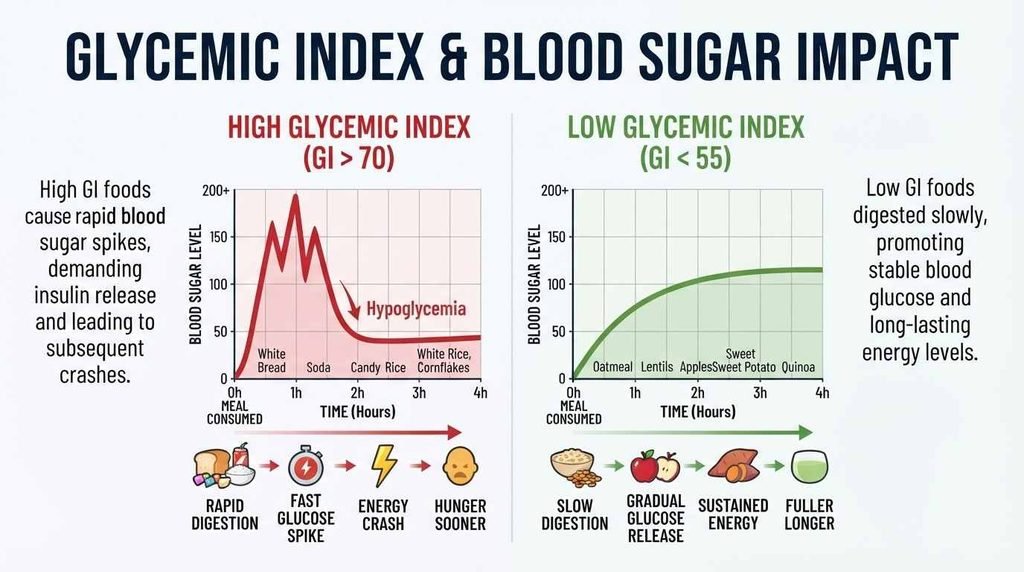
The glycemic index (GI) ranks foods by how fast they raise blood sugar. Apples usually score in the low range, around 36 on a 100-point scale. That is lower than many other fruits and most refined snacks.
Glycemic load (GL) adds portion size to the picture. A typical apple serving has a GL of roughly 5 to 6, which is low. This helps explain why apples are often called blood-sugar friendly.
Fiber and pectin do much of the work here. They slow how quickly sugar leaves your gut. That is also why a whole apple beats apple juice for steady energy.
What This Means in Real Life
For most healthy adults, an apple causes a gentle rise in blood sugar. Eating it with protein or fat smooths the curve even more. Think apple slices with almond butter.
People with diabetes respond differently from person to person. A glucose meter or continuous monitor can show your own reaction. That personal data beats any general chart.
So while the GI is low, you still need to count the carbs in an apple in your meal plan. Low GI does not mean zero impact. Work with your doctor or a certified diabetes educator on the right portions.
Are Apples Keto Friendly?
This is one of the most common questions online. The honest answer is: usually not, at least not in full-size portions. Standard keto plans limit net carbs to roughly 20 to 50 grams per day.
A medium apple has about 21 net carbs. That could use up your entire daily limit in one snack. So most strict keto dieters skip apples.
For a deeper look, this guide to apples and keto explains how fruit fits into a ketogenic plan. It reaches a similar conclusion: apples are hard to fit in without blowing your budget.
Can You Ever Fit an Apple Into Keto?
Yes, in small amounts. A few thin slices can add crunch to a salad or cheese plate. Half a small apple has around 8 to 9 net carbs.
Some people follow a more flexible low-carb plan, closer to 50 to 100 grams of carbs per day. On that plan, a whole apple can fit. It depends on your goals and your other meals.
A targeted keto approach is another option. Here you eat carbs around workouts. An apple before exercise may be burned off quickly, though results vary.
Keto Verdict
| Plan Type | Daily Net Carb Limit | Apple Fit? |
|---|---|---|
| Strict keto | 20 g | No, or a few slices |
| Standard keto | 30–50 g | Small portions only |
| Moderate low-carb | 50–100 g | Yes, one small to medium apple |
| Liberal low-carb | 100–150 g | Yes, easily |
If you want to compare more fruits side by side, this chart of low-carb fruit carb counts is a handy reference. It ranks fruit by carb load so you can choose smarter.
You can also read what real dieters say. The keto community discussions show how people handle fruit cravings. Remember that personal stories are not medical advice.
Apples and Diabetes
This section covers health topics, so please read it with care. Apples are generally considered a good fruit choice for people with diabetes. Their fiber and low glycemic load help limit blood sugar spikes.
Still, the total carbs in an apple count toward your meal carb target. Many meal plans use about 15 grams as one “carb choice.” A small apple is roughly 1.5 carb choices, and a medium one is about 1.5 to 2.
Portion control is the key skill. Pick a small apple, pair it with protein, and check your glucose to learn your own response. Your doctor or dietitian can set a target that fits your medication and goals.
How to Fit an Apple Into Your Day
A few simple habits make apples easier to manage. First, weigh the fruit when you can. A kitchen scale takes the guesswork out of how much carbs in an apple you eat.
Second, pair the apple with protein or healthy fat. Try cheese, plain Greek yogurt, peanut butter, or a handful of nuts. This slows digestion and keeps you full longer.
Third, choose a small apple when carbs are tight. You still get the crunch, fiber, and vitamin C. You just trim about 4 to 8 grams from your total.
Smart Portion Ideas
- Half a small apple with almond butter (about 8 net carbs)
- Thin slices on a cheese board (about 5 net carbs)
- A diced quarter apple in a chicken salad (about 5 net carbs)
- One small apple after a workout (about 17 net carbs)
These ideas help you enjoy flavor without a big carb hit. Adjust them to your own daily target. The goal is balance, not fear of fruit.
Low-Carb Alternatives to Apples
Sometimes you want crunch and sweetness but cannot spare 21 net carbs. That is where swaps help. Plenty of foods deliver a similar feel for far fewer carbs.
Berries are the classic fruit choice. They are naturally lower in sugar and higher in fiber. Raspberries and blackberries lead the pack.
Below is a comparison per 100 grams, using typical USDA values. Notice how much lower the net carbs are than the 11.4 grams in an apple.
| Food | Total Carbs | Fiber | Net Carbs |
|---|---|---|---|
| Apple (with skin) | 13.8 g | 2.4 g | 11.4 g |
| Strawberries | 7.7 g | 2.0 g | 5.7 g |
| Raspberries | 11.9 g | 6.5 g | 5.4 g |
| Blackberries | 9.6 g | 5.3 g | 4.3 g |
| Jicama | 8.8 g | 4.9 g | 3.9 g |
| Kohlrabi | 6.2 g | 3.6 g | 2.6 g |
| Avocado | 8.5 g | 6.7 g | 1.8 g |
| Cucumber | 3.6 g | 0.5 g | 3.1 g |
Best Swaps by Craving
For crunch: jicama, kohlrabi, and radishes are the closest match. Jicama sticks taste mildly sweet and juicy, much like a pale apple. Add a squeeze of lime and a pinch of cinnamon for a fun twist.
For sweetness: reach for strawberries, blackberries, or raspberries. A cup of raspberries has only about 7 net carbs. Top them with whipped cream for a keto dessert.
For baking: try chayote squash or sliced zucchini in place of apples in crisps. With cinnamon and a low-carb sweetener, the texture is surprisingly close. Many keto bakers swear by this trick.
What About Pears?
Pears are not a low-carb swap. A medium pear has about 27 grams of carbs and 5.5 grams of fiber. That puts its net carbs close to those of an apple.
The same goes for bananas, grapes, and mangoes. They carry more sugar per bite. If you are cutting carbs, berries and crunchy vegetables are the better pick.
The lesson is simple. Compare the net carbs in an apple with your swap before you commit. A little label reading goes a long way.
Other Nutrients in an Apple
Carbs are only part of the story. A medium apple also gives you about 8 milligrams of vitamin C. That is around 9 percent of the daily value for many adults.
Apples also supply potassium, vitamin K, and small amounts of B vitamins. They contain antioxidants such as quercetin and catechin. These compounds are found mostly in the skin.
An apple is also about 85 percent water. That helps with hydration and fullness. So the carbs in an apple come bundled with real nutritional value.
Common Mistakes When Counting Apple Carbs
The first mistake is using the wrong size. Many trackers default to a medium apple, even if you ate a large one. Weigh it, or choose the closest size in your app.
The second mistake is forgetting the skin rule. If you peel, the carbs in an apple with skin no longer match your entry. Log peeled apples separately.
The third mistake is mixing up total and net carbs. Always check which method your plan uses. And remember that dried apples and applesauce pack far more carbs per bite than a fresh fruit.
Frequently Asked Questions
How many carbs in an apple?
A medium raw apple has about 25 grams of total carbs. Small ones have about 21 grams, and large ones about 31 grams. Size is the main driver.
How many net carbs in an apple?
A medium apple has about 21 net carbs after you subtract 4.4 grams of fiber. A small apple has about 17, and a large one about 25. These are estimates.
How many grams of carbs in an apple with skin?
Per 100 grams, an apple with skin has about 13.8 grams of carbs. A 182-gram apple therefore has about 25 grams. The skin adds extra fiber.
Are apples keto friendly?
Full apples are usually too high in carbs for strict keto. A few slices may fit. Looser low-carb plans can include a small apple.
Is an apple good for diabetes?
Apples have a low glycemic index and plenty of fiber. Still, you must count their carbs. Ask your doctor or dietitian for a personal plan.
Final Thoughts on Carbs in an Apple
Now you know the key numbers. The carbs in an apple average about 25 grams in a medium fruit, with around 21 net carbs. Fiber and low glycemic load make it a smarter pick than most sweet snacks.
If you follow keto, plan for small portions or choose berries and crunchy vegetables instead. If you manage blood sugar, pair the fruit with protein and track your response. Either way, keep the skin on and weigh your fruit for accuracy.
Use these facts to build a plan that fits your life. Knowing the carbs in an apple puts you in control of your plate. Share this guide with a friend who counts carbs too.
Medical Disclaimer
This article is for general information only. It is not medical advice, diagnosis, or treatment. Nutrition values are approximate and based on typical USDA data. Always talk with a qualified doctor or registered dietitian before changing your diet, especially if you have diabetes or another health condition.