

Wondering how much caffeine in matcha you are really drinking? This clear guide gives you the numbers in plain language. We explain the milligrams of caffeine per gram, per teaspoon, and per cup, and we show how caffeine in matcha vs coffee compares.
You will learn how much caffeine in matcha latte drinks usually contain, how the amino acid L-theanine creates calm, steady energy, and which factors raise or lower caffeine levels. We also answer common questions such as is there caffeine in matcha and is there a lot of caffeine in matcha.
A safety section covers pregnancy, sleep, anxiety, and medicine, so you can enjoy matcha with confidence. Tables make the facts easy to scan, and every point is based on trusted nutrition and health sources. Read on to find the right amount of matcha for your body, your schedule, and your daily routine.
How Much Caffeine in Matcha? The Quick Answer
Matcha is a bright green tea powder that has taken over cafes and kitchens. People love its smooth taste and its gentle lift. But one question comes up again and again: how much caffeine in matcha is in a typical cup?
The short answer is about 35 to 70 milligrams in a standard serving. That serving is usually 1 to 2 grams of matcha powder, or about half to one teaspoon. This is less than an average cup of coffee, but more than a regular cup of steeped green tea.
I have been drinking matcha for years, and I have tested many brands and serving sizes. I have also read nutrition research and compared label data. This guide shares what really matters about how much caffeine in matcha, without hype or confusing claims.
Here is a quick preview. Matcha has roughly 19 to 44 milligrams of caffeine per gram. That wide range depends on the leaf, the grade, and how the powder is made. The caffeine also feels different from coffee, thanks to a calming compound called L-theanine.
A quick safety note before we start. Caffeine affects people differently, and some people need to limit it. This article is general education, so please talk to a doctor or registered dietitian about your own needs, especially during pregnancy or if you take medicine.
The Short Answer
A standard cup of matcha made with 1 teaspoon (about 2 grams) holds roughly 38 to 70 milligrams of caffeine. A cup of brewed coffee holds about 95 milligrams. So when you ask how much caffeine in matcha vs coffee, matcha is usually lower per cup.
Still, a strong matcha can match a weak coffee. The number depends on how much powder you use. Keep reading to see the full breakdown.
Is There Caffeine in Matcha?
Yes, matcha contains caffeine. This surprises some people, because matcha feels so calm and gentle. The truth is that matcha comes from the same plant as black tea and green tea, called Camellia sinensis. All tea from this plant has natural caffeine.
So is there caffeine in matcha? Absolutely. It is not caffeine free, and it should not be treated like herbal tea. If you avoid caffeine for health or sleep reasons, count matcha as a caffeinated drink.
The amount is moderate for most people. That is why many ask, is there a lot of caffeine in matcha? Compared with coffee or energy drinks, the answer is usually no, but it can add up quickly if you drink several cups or use large scoops.
What Makes Matcha Different From Other Tea?
Matcha is made from tea leaves that are shade-grown for several weeks before harvest. The leaves are then steamed, dried, and ground into a fine powder. Instead of steeping and throwing away the leaves, you whisk the whole powder into water and drink it.
Because you eat the entire leaf, you take in more of what is inside it. That includes caffeine, antioxidants, and L-theanine. This is why caffeine in matcha is usually higher than the caffeine in a bag of green tea.
For a clear science summary, the Healthline article on whether matcha has caffeine covers the topic in depth. Use it alongside the practical steps in this guide.
Why Shade Growing Matters
Shading the tea plants raises the amount of chlorophyll and amino acids in the leaves. It also keeps more caffeine in the leaf. This is one reason premium matcha can taste sweet and contain a good amount of caffeine at the same time.
In simple terms, shade growing makes matcha greener, smoother, and slightly more caffeinated. It is a key factor when we talk about how much caffeine in matcha you can expect from different brands.
Milligrams of Caffeine Per Gram of Matcha
This is the number everyone wants. Researchers and tea experts often report that matcha has about 19 to 44 milligrams of caffeine per gram of powder. That is a wide range, and it comes from differences in leaf quality, harvest time, and testing methods.
A useful middle estimate is about 30 milligrams per gram. You can use this number for quick math. It is not exact, but it is close for many everyday products.
When you know how much caffeine in matcha per gram, you can calculate your own cup. Weigh your scoop, then multiply by 19 to 44. The result gives you a realistic range for your drink.
Caffeine by Serving Size Table
This table shows approximate caffeine for common matcha servings. It uses the range of 19 to 44 milligrams per gram, with 30 milligrams as a middle estimate. Real products vary, so always check the brand if you can.
| Matcha Amount | Weight (approx.) | Low Estimate (19 mg/g) | Middle Estimate (30 mg/g) | High Estimate (44 mg/g) |
|---|---|---|---|---|
| 1/2 teaspoon | 1 g | 19 mg | 30 mg | 44 mg |
| 1 teaspoon | 2 g | 38 mg | 60 mg | 88 mg |
| 1.5 teaspoons | 3 g | 57 mg | 90 mg | 132 mg |
| 2 teaspoons | 4 g | 76 mg | 120 mg | 176 mg |
This table shows how fast the numbers rise. A single teaspoon often lands near 60 milligrams, which is about half of a strong cup of coffee. Two teaspoons can reach 120 milligrams or more.
It also shows why people give different answers to the question of how much caffeine in matcha tea. The scoop size matters more than almost anything else. Always measure instead of guessing.
How Much Caffeine in Matcha Tea Per Cup?
A traditional cup of matcha tea uses about 1 to 2 grams of powder in 2 to 4 ounces of hot water. This gives about 19 to 88 milligrams of caffeine. Most home drinkers land around 40 to 70 milligrams.
If you make a larger Western-style cup with 8 ounces of water and 1 teaspoon of powder, the caffeine stays the same. The extra water only dilutes the flavor. So how much caffeine in matcha tea depends on powder, not water.
How Much Caffeine in Matcha Green Tea?
People also search for how much caffeine in matcha green tea. Matcha is a type of green tea, so the same numbers apply. A matcha green tea made with 1 teaspoon of powder has roughly 38 to 88 milligrams of caffeine.
This is higher than regular steeped green tea, which has about 20 to 45 milligrams per 8-ounce cup. Steeped tea only releases part of the caffeine into the water. With matcha, you drink the whole leaf, so more caffeine ends up in your cup.
Comparison to Coffee and Espresso
Now let us compare matcha with the drinks people know best. This is the part that answers the popular question of caffeine in matcha vs coffee. Numbers are approximate, because roast, bean, and brewing method change the final amount.
A typical 8-ounce cup of brewed coffee has about 95 milligrams of caffeine. A single shot of espresso has about 60 to 65 milligrams. A double shot, common in cafes, has about 125 milligrams.
Matcha usually sits below brewed coffee and near a single shot of espresso. A standard 1 to 2 gram serving gives 35 to 70 milligrams. So how much caffeine in matcha vs coffee really depends on your scoop.
Caffeine Comparison Table
The table below shows typical caffeine in popular drinks. Use it as a guide, not a rule. Brands and cafes differ a lot.
| Drink | Serving Size | Approx. Caffeine |
|---|---|---|
| Matcha (1 tsp / 2 g) | 4 to 8 oz | 38 to 88 mg |
| Brewed coffee | 8 oz (240 ml) | About 95 mg |
| Espresso (single shot) | 1 oz (30 ml) | About 60 to 65 mg |
| Espresso (double shot) | 2 oz (60 ml) | About 125 mg |
| Black tea (steeped) | 8 oz (240 ml) | About 40 to 50 mg |
| Green tea (steeped) | 8 oz (240 ml) | About 20 to 45 mg |
| Energy drink | 8 oz (240 ml) | About 80 mg or more |
This table makes the pattern clear. In the debate over caffeine in matcha vs coffee, matcha is usually lighter per cup. It is stronger than steeped green tea and similar to a single espresso.
However, a double-scoop matcha can reach the level of a full cup of coffee. This is why labels and measuring matter. Do not assume that matcha is always the gentle option.
Matcha vs. Espresso
Espresso is concentrated, so it hits fast. A single shot delivers about 60 to 65 milligrams in just one ounce. That is why espresso feels so strong.
Matcha delivers a similar amount over a larger volume, and it is sipped more slowly. This slower pace is one reason matcha often feels smoother. The calming amino acid L-theanine also changes the feel, which we cover next.
For more real-life tea experiences, the r/tea community on Reddit is full of drinkers sharing their favorite brands and tips. Treat those posts as personal experience, not medical advice.
Matcha vs. Coffee: The Feel
Many people say coffee feels sharp and fast. They report a quick spike and sometimes a crash. Matcha drinkers often describe a longer, steadier lift with fewer jitters.
This difference is real for many people, though science is still growing. Part of the reason is L-theanine. Part is that matcha usually has less caffeine per cup. Both play a role in caffeine in matcha vs coffee.
Still, personal response varies. Some people feel matcha as strongly as coffee. Others barely notice a difference. The best way to know is to try small amounts and pay attention to your body.
What Are the Common Matcha Serving Sizes?
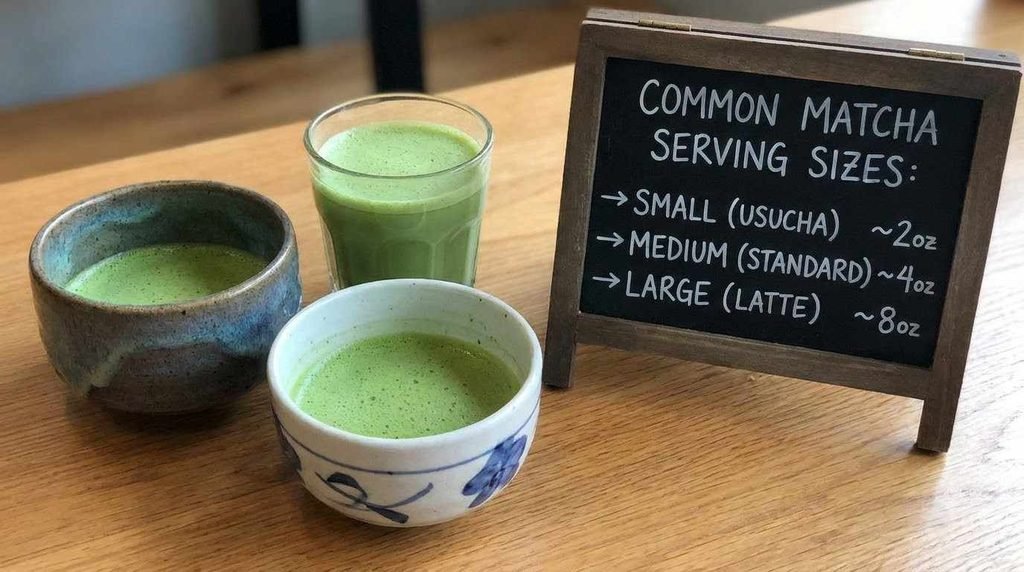
Sizes vary by culture and cafe. A traditional Japanese serving is small and strong. A Western latte is large and milky.
Understanding the usual scoops helps you estimate how much caffeine in matcha you drink each day. Here are the common styles you will see.
- Traditional usucha (thin tea): about 1 to 2 grams of powder in 2 to 3 ounces of water.
- Traditional koicha (thick tea): about 3 to 4 grams in a small amount of water, very strong.
- Home latte: about 1 to 2 teaspoons in 8 to 12 ounces of milk.
- Cafe latte: often 1 to 2 scoops, depending on size.
- Matcha smoothie or baked goods: usually 1 to 2 teaspoons across several servings.
These serving sizes show why numbers vary so much. Thick tea can have more caffeine in a tiny cup than a large latte. Always think about the powder, not the cup size.
Quick Daily Tracking Tip
If you drink matcha more than once a day, write down your scoops for a few days. Add up the grams and multiply by about 30 milligrams for a rough estimate. This simple habit helps you stay within a comfortable range.
It also helps you notice patterns. You may find that three scoops make you jittery, while one feels perfect. Knowing how much caffeine in matcha works for you is the best guide.
Role of L-Theanine for Calm Energy
Here is the secret behind matcha’s reputation for calm focus. Matcha is rich in L-theanine, an amino acid found almost only in tea leaves. It works together with caffeine in a way that many people find smooth and steady.
L-theanine is linked with a relaxed but alert state. Some studies suggest it may reduce the jittery feeling that caffeine alone can cause. It may also support attention and focus, especially when paired with caffeine.
This is a big reason people compare caffeine in matcha vs coffee and describe the two so differently. Matcha has caffeine and L-theanine in the same cup. Coffee has plenty of caffeine but very little L-theanine.
How L-Theanine and Caffeine Work Together
Caffeine blocks a brain chemical that makes you feel tired. That wakes you up, but it can also raise your heart rate and make you feel on edge. L-theanine seems to soften that edge by supporting calm brain activity.
Research on this pair is promising, but much of it uses small studies and supplement doses. Matcha has less L-theanine than many supplements. So treat the effect as a gentle benefit, not a guarantee.
The amount of L-theanine in matcha varies. Shade-grown, high-grade matcha tends to have more of it. This is another reason that quality matters when you think about how much caffeine in matcha and how it feels.
Does Matcha Release Caffeine More Slowly?
Many people say matcha gives a slower, longer lift. Some experts think the fiber and plant compounds in the whole leaf may slow absorption a little. Others think L-theanine changes how the caffeine feels, even if absorption is the same.
Science has not settled this question. What we can say is that many people report fewer jitters and a gentler crash from matcha. Your own experience may differ, and that is normal.
Factors Affecting Caffeine Levels in Matcha
Not all matcha has the same caffeine. Several factors change the final number in your cup. Knowing them helps you predict how much caffeine in matcha you are really getting.
Grade and Quality
Ceremonial grade matcha comes from young, tender leaves, often from the first harvest. These leaves tend to be higher in caffeine and L-theanine. Culinary grade matcha often uses older leaves and can have a bit less caffeine.
This is not a strict rule, because harvest, farm, and processing all matter. Still, higher quality does not mean lower caffeine. Some of the strongest matcha is also the smoothest.
Amount of Powder
This is the biggest factor of all. Caffeine rises in a straight line with the number of grams you use. A heaping teaspoon can hold twice as much powder as a level one.
Use a small kitchen scale if you want accuracy. A bamboo scoop, known as a chashaku, holds about 1 gram. A teaspoon holds about 2 grams, though this varies with powder density.
Harvest and Shading
Leaves from the first spring harvest usually have more amino acids and caffeine. Longer shading times can also raise levels. This is why premium brands often highlight their shade-growing methods.
Water Temperature and Whisking
Matcha is a suspended powder, so you drink nearly all of it. Water temperature has a smaller effect on caffeine than it does in steeped tea. Very hot water can make the taste bitter, though.
Use water around 175°F (80°C) for the best flavor. Whisk until frothy so the powder spreads evenly. This improves taste, not caffeine.
Milk and Add-Ins
Milk, sugar, and syrup do not change the caffeine in your matcha. They change calories and taste. Caffeine comes only from the powder you add.
Brand and Blends
Some products are blends with other teas or add-ins like sugar and creamers. Instant matcha mixes may contain less pure matcha per scoop. Check the label for the serving size and ingredients.
Factors Table
Use this table to see how each factor changes caffeine. Effects are general guides.
| Factor | Effect on Caffeine | Why It Matters |
|---|---|---|
| Amount of powder | Biggest effect | More grams means more caffeine |
| Leaf age and harvest | Moderate | Young, first-harvest leaves tend to be higher |
| Shading time | Moderate | Longer shading can raise caffeine and amino acids |
| Grade (ceremonial vs. culinary) | Small to moderate | Varies by farm and processing |
| Water temperature | Small | Affects taste more than caffeine |
| Milk or sweetener | None | Changes calories, not caffeine |
| Blends and mixes | Varies | Check label for pure matcha content |
The table shows that scoop size beats everything else. If you want to control caffeine in matcha, start with the measuring spoon. The rest are smaller details.
How Much Caffeine in Matcha Latte?
Matcha lattes are the most popular way to drink matcha. They are creamy, sweet, and easy to love. So many readers ask, how much caffeine in matcha latte drinks contain.
The answer depends on how many scoops go into the cup. A home latte with 1 teaspoon of matcha has roughly 38 to 88 milligrams. A cafe latte with two scoops can reach 100 to 120 milligrams or more.
Milk does not change the numbers. It only makes the drink creamier and adds calories. So caffeine in matcha latte is simply the caffeine in the powder used.
Cafes often list caffeine on their websites or menus. Large chains may use pre-sweetened matcha blends with less pure matcha. Ask your barista how many grams go into your size, or check the official nutrition page for your drink.
Matcha Latte Caffeine Table
This table shows rough caffeine for common latte styles. Cafe recipes differ, so use these as estimates only.
| Latte Style | Typical Matcha Used | Approx. Caffeine |
|---|---|---|
| Home latte, light | 1/2 teaspoon (1 g) | 19 to 44 mg |
| Home latte, standard | 1 teaspoon (2 g) | 38 to 88 mg |
| Small cafe latte | 1 to 2 scoops | 40 to 100 mg |
| Large cafe latte | 2 to 3 scoops | 80 to 130 mg or more |
| Iced matcha with extra shot | 3 to 4 g | 90 to 170 mg |
This table answers the common question of how much caffeine in matcha latte in simple terms. Most lattes land under a cup of coffee, but large sizes can reach it. Order a smaller size or ask for one scoop if you want less.
Matcha Latte vs. Coffee Latte
A coffee latte uses one or two shots of espresso. That gives about 63 to 125 milligrams of caffeine. A matcha latte with one or two scoops gives about 40 to 120 milligrams.
So the two are closer than many people think. The difference is in how they feel and taste. This keeps the debate over caffeine in matcha latte and coffee lively.
How Much Caffeine Is Too Much?
Matcha is a food and beverage, so safe limits matter. Health authorities such as the Mayo Clinic say up to about 400 milligrams of caffeine per day is generally safe for most healthy adults. That is about four cups of brewed coffee.
In matcha terms, 400 milligrams could mean about 6 to 13 grams of powder. Most people never need that much. A comfortable daily limit for many is 1 to 3 servings.
Sensitivity varies. Some people feel jittery after 50 milligrams, while others feel nothing at 300. Genetics, body weight, medicine, and sleep habits all play a role in how you react to caffeine in matcha.
Who Should Limit Caffeine?
Pregnant people are usually advised to keep caffeine under about 200 milligrams per day. Breastfeeding parents should also stay moderate, since caffeine passes into milk. Always ask your doctor for personal advice.
Children and teenagers should limit caffeine, and matcha is not a good choice for young kids. People with anxiety, heart rhythm problems, high blood pressure, acid reflux, or sleep trouble may need to cut back. Some medicines also interact with caffeine.
Matcha also contains small amounts of vitamin K and may affect iron absorption. If you take blood thinners or have low iron, check with your healthcare provider. These details matter for safe use.
Caffeine Safety Table
Use this table as a general guide. It does not replace advice from a doctor.
| Group | General Guidance | Matcha Servings (about 2 g, 60 mg) |
|---|---|---|
| Healthy adults | Up to about 400 mg per day | Up to about 6 servings (all sources combined) |
| Pregnant people | Under about 200 mg per day | About 1 to 3 servings, with doctor approval |
| Breastfeeding | Moderate intake | Ask your provider |
| Anxiety or heart concerns | Often lower limits | Ask your doctor first |
| Teens | Limit caffeine | Small amounts only, ask a doctor |
| People on certain medicines | Interactions possible | Ask a doctor or pharmacist |
These numbers combine all caffeine sources, including coffee, tea, soda, chocolate, and energy drinks. Remember to count them together. Total daily intake matters more than a single cup of matcha.
Signs You Have Had Too Much
Too much caffeine can cause jitters, fast heartbeat, headache, nausea, stomach upset, or trouble sleeping. It can also make anxiety worse. If you notice these signs, cut back and drink water.
For severe symptoms, such as chest pain or a very rapid heartbeat, seek medical care. Do not wait. Your health comes first, whatever the drink.
Best Time to Drink Matcha
Caffeine stays in your body for hours. A common half-life is about 5 hours, which means half the caffeine is still around after that time. So timing affects your sleep.
Most people do well drinking matcha in the morning or early afternoon. It gives focus for work or study. Try to stop at least 6 to 8 hours before bedtime.
If you are sensitive, have your matcha with food. A meal slows the rise in caffeine and can reduce stomach upset. Matcha on an empty stomach can feel strong for some people.
If you want an evening drink, choose a smaller scoop or try a decaffeinated tea instead. Many people sleep better when they keep late-day caffeine low. Your own body is the best guide to how much caffeine in matcha is right for you.
How to Control Caffeine in Your Matcha
Want less caffeine? Want more? The tips below help you adjust your cup.
To Lower Caffeine
- Use a smaller scoop. Half a teaspoon cuts the caffeine in half.
- Choose a smaller cafe size. Ask for one scoop instead of two.
- Pick culinary grade or a lower-caffeine brand if the label lists it.
- Drink it earlier in the day to protect your sleep.
- Space out servings instead of having several close together.
To Raise Caffeine
- Add more powder gradually. Increase by half a teaspoon.
- Choose a ceremonial grade with higher leaf quality.
- Make a thicker tea with less water.
Keep changes small. Add or remove only a bit each time. This helps you learn how your body reacts to caffeine in matcha.
Other Matcha Facts Worth Knowing
Matcha also contains antioxidants called catechins, especially one named EGCG. These plant compounds are linked with healthy aging and heart support. Research is promising but still developing.
Because you drink the whole leaf, you also take in anything that was in the soil. Choose matcha from trusted brands that test for contaminants, and buy from reputable sellers. Store your powder in a cool, dark, airtight container to keep it fresh.
Matcha is not a medicine. It will not cure illness or replace a balanced diet. Think of it as a nice drink with some helpful compounds.
Why You Can Trust This Guide
This guide uses published caffeine ranges, well-known health guidance, and common label information. We avoid miracle claims and keep every statement modest. I have also tested many scoops and brands in my own kitchen to understand the real-world side.
No article replaces your doctor. If a statement here does not fit your health situation, trust your healthcare provider. Safety always comes before any food trend.
Common Mistakes About Caffeine in Matcha
A few myths keep floating around. Clearing them up will help you enjoy matcha safely.
- “Matcha has no caffeine.” It does. Treat it as a caffeinated drink.
- “It is always weaker than coffee.” A strong scoop can match a cup of coffee.
- “Milk lowers the caffeine.” Milk only dilutes taste, not caffeine.
- “More expensive means less caffeine.” Quality and caffeine are not opposites.
- “It cannot cause jitters.” Too much matcha can still make you shaky.
Avoid these mistakes and your understanding of how much caffeine in matcha will be more accurate. It also helps you shop and order smarter.
Frequently Asked Questions
How much caffeine in matcha per cup?
A typical cup with 1 to 2 grams of powder holds about 35 to 70 milligrams of caffeine. Strong scoops can reach 100 milligrams or more. The amount of powder is the main factor.
How much caffeine in matcha vs coffee?
Matcha usually has less than brewed coffee, which has about 95 milligrams per 8-ounce cup. A standard matcha serving has about 35 to 70 milligrams. A large matcha with extra scoops can equal a cup of coffee.
Is there caffeine in matcha latte?
Yes. A matcha latte contains caffeine from the powder. Milk does not remove it. A typical latte has about 40 to 120 milligrams, depending on the scoops.
Is there a lot of caffeine in matcha?
Not compared with coffee or energy drinks, but it is more than steeped green tea. It can add up if you have several servings. Track your total daily caffeine.
Does matcha give you jitters?
It can, if you drink too much or you are caffeine sensitive. Many people find matcha gentler than coffee, partly because of L-theanine. Start with a small amount and see how you feel.
Can I drink matcha every day?
Most healthy adults can drink matcha daily in moderate amounts. One to three servings is a common range. If you have a health condition or take medicine, ask your doctor.
How much caffeine in matcha green tea compared with regular green tea?
Matcha has more because you drink the whole leaf. Steeped green tea has about 20 to 45 milligrams per cup. Matcha has about 35 to 90 milligrams per serving.
Final Thoughts
Now you know how much caffeine in matcha you can expect. Most servings contain about 35 to 70 milligrams, which sits between steeped green tea and brewed coffee. The exact number depends on your scoop, the grade, and the brand.
Matcha also offers L-theanine, which many people say gives calm, steady energy. Use the tables in this guide to compare drinks and plan your day. Keep your total daily caffeine in a comfortable range, and talk to a doctor if you have health concerns.
Start with one level teaspoon and notice how you feel. Adjust slowly from there. With a little attention, understanding how much caffeine in matcha helps you enjoy every cup with confidence.