

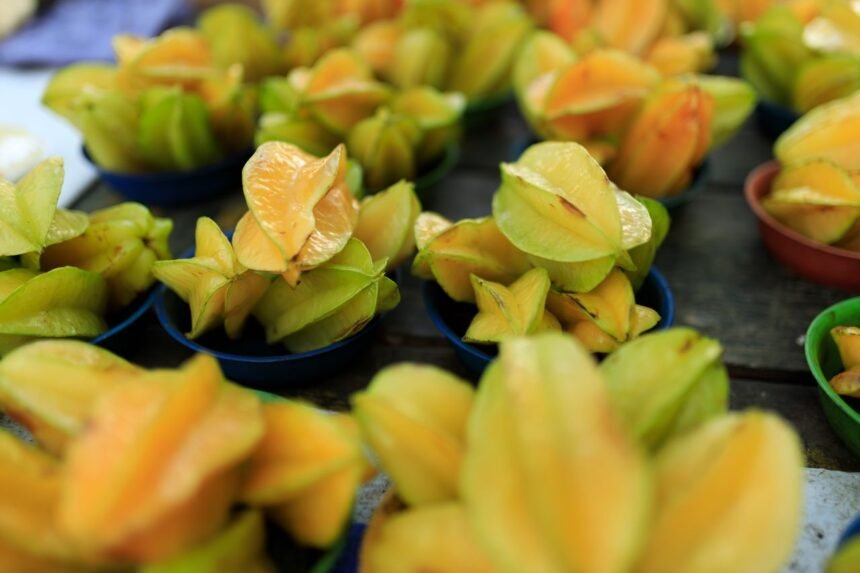
Curious about star fruit? This guide covers the real star fruit benefits, the flavor, and the safety rules you must know first. You will learn what does star fruit taste like, whether it tastes sweet, and how to pick ripe star fruit.
We show how to cut star fruit into neat stars and how to eat star fruit in easy ways. We also answer a serious question: is star fruit dangerous to eat? For most people it is safe, but for people with kidney problems it can be risky.
This is health content, so we follow E-E-A-T and YMYL principles and label early research clearly. Sources include Healthline, WebMD, and Britannica. Read on before your next bite.
Introduction
Star fruit is one of the most eye-catching fruits in the world. Slice it crosswise and every piece becomes a perfect five-point star. It looks like a garnish, but it is a real, juicy fruit.
People love it for its crisp bite and light, tangy flavor. It is low in calories and has a good amount of vitamin C. Many shoppers pick it up for the looks and stay for the taste.
But this fruit has a serious side that many articles skip. For some people, star fruit can be harmful, even life-threatening. In this guide, we cover the benefits first, then the warnings, so you can enjoy it safely.
What Is Star Fruit?
Star fruit is also called carambola. Its scientific name is Averrhoa carambola. It is native to tropical Southeast Asia and has been grown there for centuries.
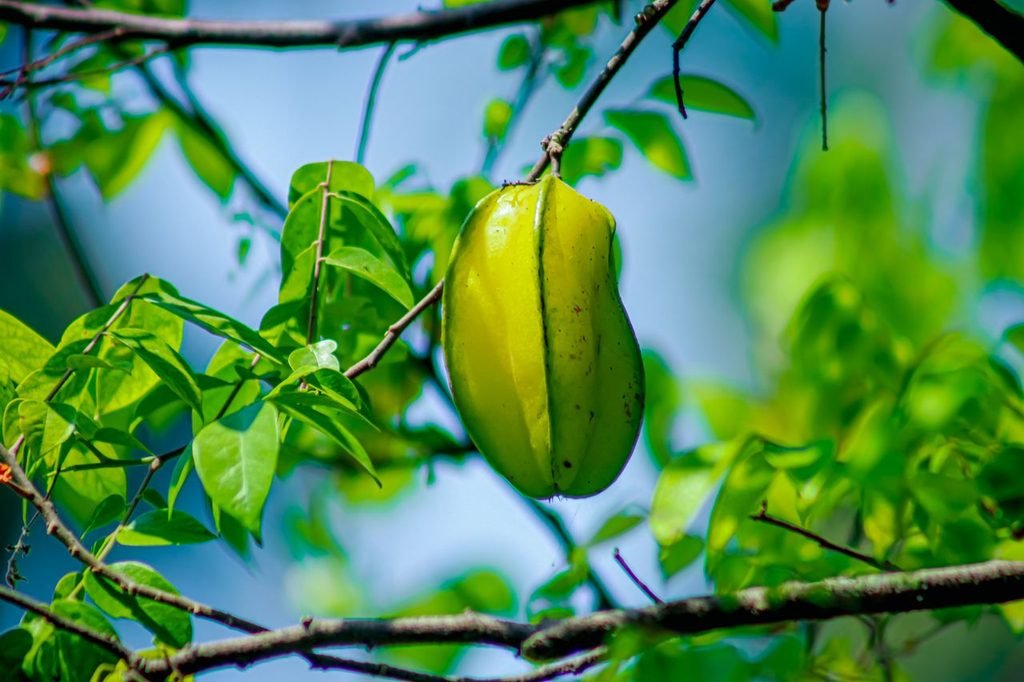
The fruit is oval, waxy, and bright yellow-green when ripe. It has five long ridges that run from end to end. Cut across, those ridges form the famous star shape.
Today, it grows in many warm regions. These include India, Taiwan, Malaysia, Brazil, and parts of Florida and Hawaii. You can also find it in many supermarkets and Asian grocery stores.
Other names you may hear
In some places, people call it five-corner fruit. In Chinese-speaking regions, it is known as “yang tao.” In India, you may hear it called “kamranga.”
All of these names point to the same fruit. The name may change, but the shape never does. That makes it easy to spot in any market.
Why it is popular
The fruit is crisp, juicy, and refreshing. It needs no peeling, which saves time. It also looks beautiful in salads, drinks, and desserts.
Chefs use it as a garnish. Home cooks add it to fruit bowls. Health-minded shoppers like it because it is light and low in sugar compared with many fruits.
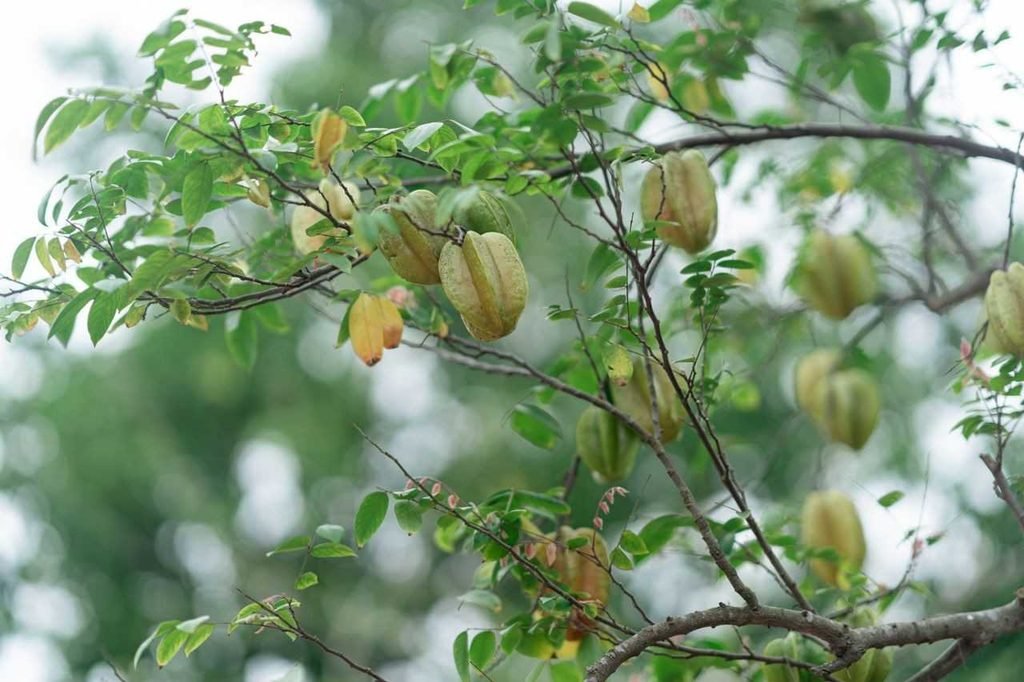
Meet the Star Fruit Tree
What the tree looks like
The star fruit tree is a slow-growing, bushy evergreen. It usually reaches about 20 to 30 feet in height. Its leaves are glossy and made of small leaflets that fold slightly at night.
The tree produces tiny pink to purple flowers. They grow in clusters along the branches and the trunk. Bees and other insects visit them often.
After flowering, small green fruits appear. They grow and slowly turn yellow. In warm climates, a healthy tree can fruit two or more times a year.
Where it grows best
The star fruit tree loves heat and humidity. It grows best in tropical and subtropical zones. In the United States, that usually means USDA zones 10 and 11.
It needs full sun and rich, well-drained soil. Regular water helps it fruit well. Cold is its enemy, because frost can damage young trees badly.
Growing tips for home gardeners
If you live in a cooler area, try a large container. Move it indoors or to a sheltered spot when temperatures drop. This protects the roots and leaves.
Here are the basics:
- Sun: Give it six or more hours of direct light each day.
- Soil: Use loamy, well-drained soil with some organic matter.
- Water: Water deeply, but never let the roots sit in standing water.
- Feeding: Use a balanced fertilizer a few times a year.
- Patience: Grafted trees often fruit within two to four years.
Common tree problems
Overwatering can cause root rot. Too little iron can turn the leaves yellow. Fruit flies sometimes attack ripe fruit.
Bagging the fruit while it grows can protect it from pests. Prune lightly to keep air moving through the branches. A healthy star fruit tree can be productive for many years.
Does Star Fruit Taste Sweet?
This is the question most buyers ask first. Does star fruit taste sweet? The honest answer is: it depends on the variety and on ripeness.
Sweet types taste mild, juicy, and gently sugary. Tart types taste sharp and tangy, a bit like a green apple. A fully ripe fruit is almost always sweeter than a green one.
What does star fruit taste like?
Most people describe the flavor as a mix of apple, pear, grape, and citrus. It is light, fresh, and clean. The texture is crisp and juicy, a bit like a firm grape.
Many people say what does star fruit taste like has no single answer. A sweet variety can feel almost like a juicy pear. A sour one can feel like a lemon-touched apple.
Star fruit taste by variety
The overall star fruit taste depends on the type you buy. Sweet varieties are usually larger and have thicker, fleshier ribs. Tart varieties are often smaller with thin, narrow ribs.
| Type | Typical Size | Rib Shape | Flavor | Best Use |
|---|---|---|---|---|
| Sweet types (such as Arkin) | Medium to large | Thick, fleshy | Mild, juicy, lightly sweet | Eating fresh, fruit salad |
| Tart types (such as Golden Star) | Small to medium | Thin, narrow | Tangy, sharp, sour | Juice, pickles, cooking |
| Underripe fruit (any type) | Any | Green, firm | Grassy, sour | Best avoided raw |
How ripeness changes the flavor
Green star fruit is sour and a little grassy. As it ripens, the sugars rise and the acid falls. The skin turns from green to golden yellow.
A fully ripe fruit is aromatic and sweet. Some people also notice a faint floral smell. Wait for that stage if you want the best flavor.
How to make the flavor pop
If your fruit tastes plain, do not worry. A few simple tricks can lift the flavor:
- Chill it well before eating.
- Add a squeeze of lime.
- Sprinkle a tiny pinch of salt or chili powder.
- Pair it with mango, pineapple, or berries.
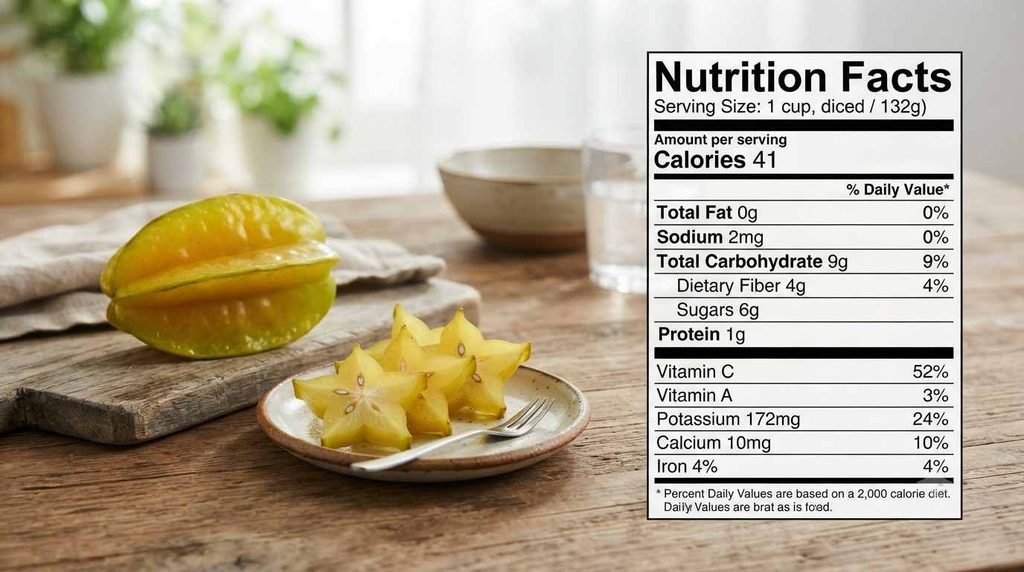
Star Fruit Nutrition Facts
Before the star fruit benefits, let us look at what is inside. The numbers below are approximate values per 100 grams of raw fruit. Exact amounts vary by variety and ripeness.
| Nutrient (per 100 g) | Approximate Amount | Why It Matters |
|---|---|---|
| Calories | About 31 kcal | Very light fruit |
| Carbohydrates | About 7 g | Mostly natural sugars |
| Fiber | About 2.8 g | Supports digestion and fullness |
| Protein | About 1 g | Small amount |
| Fat | Less than 0.5 g | Almost none |
| Vitamin C | About 34 mg | Antioxidant and immune support |
| Potassium | About 130 mg | Fluid balance and muscle function |
| Water | About 90 percent | Hydrating |
As you can see, the fruit is very light. It has few calories but a nice amount of fiber and vitamin C. That mix makes it a smart snack.
Healthline’s star fruit nutrition and health guide gives a detailed breakdown of its vitamins, minerals, and plant compounds. It also covers safety concerns. It is a helpful second source.
Plant compounds inside the fruit
Beyond vitamins, the fruit contains plant compounds. These include flavonoids, tannins, and other antioxidants. They give the fruit part of its color and flavor.
Researchers are still studying how these compounds act in the human body. Many results come from lab or animal studies. So treat those findings as promising, not proven.
Oxalates: the hidden factor
Star fruit is also high in oxalates. Oxalates are natural compounds found in many plants. In small amounts, they are harmless for healthy people.
In larger amounts, oxalates can cause trouble for the kidneys. This is the key reason for the health warnings later in this article. Keep this in mind as you read the benefits.
7 Star Fruit Benefits Worth Knowing
Now to the main section. Here are the star fruit benefits most often discussed by nutrition experts. Some are well supported, and others rely on early research. We will be clear about which is which.
1. It is low in calories and filling
One of the easiest star fruit benefits is its light calorie count. It is mostly water, so it fills you up with very little energy. That makes it a useful swap for sugary snacks.
The fiber helps you feel full longer. A bowl of sliced fruit feels like a treat but costs few calories. Small swaps like this can support a healthy weight over time.
No single food causes weight loss. Still, light, water-rich fruit makes healthy eating easier. It works best as part of a balanced diet.
2. It provides vitamin C
Vitamin C is a key nutrient for your immune system and skin. A 100 gram serving of star fruit gives a good share of your daily needs. That makes it a solid source, though not the top one.
Vitamin C also helps your body make collagen. Collagen keeps skin, joints, and blood vessels strong. It also helps your body absorb plant-based iron.
Oranges, kiwis, and strawberries often have more. Still, star fruit adds variety to your vitamin C sources. Variety is always a good rule.
3. It offers fiber for digestion
Fiber supports regular digestion. It adds bulk to stool and can ease constipation. A cup of sliced fruit provides a few grams.
Fiber also feeds the friendly bacteria in your gut. A healthy gut is linked with better overall wellbeing. Eating fiber-rich fruit is an easy daily habit.
If you are new to high-fiber foods, add fruit slowly. Drink plenty of water too. This helps your gut adjust without gas or bloating.
4. It contains antioxidants
Antioxidants help protect your cells from damage caused by free radicals. The fruit contains vitamin C, flavonoids, and other plant compounds. Together, they add to its antioxidant power.
A diet rich in colorful fruits and vegetables is linked with better long-term health. However, one fruit alone will not prevent disease. Think of it as one helpful piece of a bigger puzzle.
Most research on star fruit antioxidants comes from lab studies. Human trials are limited. We label this benefit as early.
5. It may support heart health
The fruit has no cholesterol and almost no fat. Its fiber and potassium may support healthy blood pressure and cholesterol. These are two key markers for heart health.
Some animal studies suggest the fruit may help with blood fats. These results are encouraging. But animal results do not always match human results.
For a healthy heart, lifestyle matters most. That means regular movement, enough sleep, and a varied diet. Star fruit can fit in as a light, tasty snack.
6. It is hydrating
The fruit is about 90 percent water. That makes it a refreshing snack on hot days. Water-rich fruit adds to your daily fluid intake.
Good hydration supports energy, focus, and digestion. Many people forget to drink enough water. Juicy fruit gives a tasty boost.
Chill it before eating for extra freshness. Slices also look lovely in a pitcher of cold water.
7. It may support blood sugar balance
The fruit is low in sugar compared with many fruits. Its fiber may slow how fast sugar enters the blood. Some early studies have looked at this effect.
The evidence is limited, so do not treat it as medicine. People with diabetes should still watch portions. Always check with a doctor or dietitian first.
Note that people with diabetes often have kidney concerns as well. That makes the warnings below especially important for them.
Quick summary of star fruit benefits
| # | Benefit | Strength of Evidence | Key Nutrient or Compound |
|---|---|---|---|
| 1 | Low calorie and filling | Moderate | Water, fiber |
| 2 | Vitamin C source | Moderate | Vitamin C |
| 3 | Digestive support | Moderate | Fiber |
| 4 | Antioxidant support | Early | Flavonoids, vitamin C |
| 5 | Heart health support | Early | Fiber, potassium |
| 6 | Hydration | Strong | Water |
| 7 | Blood sugar support | Early | Fiber, low sugar |
WebMD offers another expert look at the health benefits and risks of star fruit. It is worth reading alongside this guide.
Health Warnings for Star Fruit
This is the most important section of the article. Is star fruit dangerous to eat? For most healthy people, a normal portion is fine. But for some people, it can be dangerous, and the risk is real.
If you remember only one part of this article, make it this one. Read it fully, even if you feel healthy. You may know someone who needs this information.
The kidney risk
Star fruit contains a natural neurotoxin called caramboxin. It also contains high levels of oxalate. Healthy kidneys filter these out of the blood without trouble.
But when the kidneys do not work well, these substances can build up. This can lead to poisoning. Doctors have documented cases in people with chronic kidney disease, especially those on dialysis.
Symptoms of star fruit poisoning
Symptoms can appear within minutes to several hours after eating the fruit or drinking its juice. They can include:
- Persistent hiccups
- Nausea and vomiting
- Weakness and confusion
- Numbness or tingling
- Seizures
- In severe cases, coma or death
If someone with kidney disease eats the fruit and shows these signs, seek emergency care at once. Do not wait to see if it passes. Tell the medical team that the person ate star fruit.
Who should avoid it
People with kidney disease should avoid the fruit completely. This includes people on dialysis and people with reduced kidney function. When in doubt, ask your kidney specialist.
Others should be careful too. People with a history of kidney stones may need to limit oxalate. Anyone unsure about their kidney health should check with a doctor first.
| Group | Risk Level | What to Do |
|---|---|---|
| People with chronic kidney disease | High | Avoid completely |
| People on dialysis | High | Avoid completely |
| People with a history of kidney stones | Moderate | Ask a doctor; limit oxalate foods |
| People with diabetes | Moderate | Ask about kidney health and portions |
| People on regular medicines | Moderate | Check with a pharmacist |
| Healthy adults | Low | Eat moderate portions |
Medication interactions
Some research suggests the fruit may affect enzymes that process certain medicines. This works in a way similar to grapefruit. The evidence is mostly from lab studies, so the real-world risk is not fully known.
Still, caution is wise. If you take prescription medicine, ask your pharmacist whether star fruit is a concern. This is especially true for medicines with a narrow safety range.
Juice is riskier than fruit
Juice delivers the compounds in a concentrated form. It is also easy to drink a large amount quickly. Cases of poisoning have been linked to juice on an empty stomach.
If you have any kidney concerns, avoid the juice as well. If you are healthy, drink it in small amounts. Never use it as a “kidney cleanse” or detox, because that idea has no solid support and can be dangerous.
Eating on an empty stomach
Some reports suggest eating large amounts on an empty stomach may raise the risk of problems in people who are already vulnerable. Healthy people rarely have trouble. Still, moderation is the best approach.
Start with a small portion if you have never tried it. Wait and see how you feel. This is a good habit with any new food.
Allergies and other effects
Allergic reactions are rare but possible. Symptoms include itching, swelling, or hives. Seek help right away if you have trouble breathing.
Eating a lot at once may also upset the stomach. Because of the acids and fiber, some people get gas or loose stools. Keep portions reasonable.
How to Pick Ripe Star Fruit
What ripe star fruit looks like
Ripe star fruit is golden yellow with just a hint of green near the ribs. The skin should look shiny and smooth. It should feel firm but slightly yielding when pressed.
Brown lines along the edges of the ribs are normal. They show the fruit is ripe. Large dark patches or mushy spots are signs of overripeness.
What ripe star fruit smells like
A ripe fruit has a light, sweet, floral scent. Green fruit has almost no smell. A sour or fermented smell means it is past its best.
Use your eyes and nose together. Color, feel, and scent give the best clues. With practice, you will spot the right fruit fast.
How to ripen it at home
If your fruit is green, leave it on the counter at room temperature. It may take a few days to turn yellow. Keep it out of direct sun.
You can speed things up by placing it in a paper bag with a banana. The banana gives off a gas that helps ripening. Check daily so it does not overripen.
How to store it
Keep ripe fruit in the fridge. It usually lasts about a week. Place it in a bag or container to protect it from drying out.
You can also freeze slices for later. Freeze them on a tray first, then move them to a bag. Frozen slices work well in smoothies.
How to Cut Star Fruit
Many people hesitate to try the fruit because they are not sure how to prepare it. The good news is that how to cut star fruit is easy. It takes about a minute.
You need only a sharp knife and a cutting board. The skin is thin and edible, so there is no peeling. Here is how to slice star fruit into perfect stars.
How to slice star fruit step by step
- Wash the fruit. Rinse it under cool water and pat it dry.
- Trim the ends. Cut off both tips of the fruit.
- Trim the ridges. If the edges look brown or tough, shave them off with a knife or peeler.
- Slice crosswise. Cut the fruit into slices about a quarter inch thick.
- Remove seeds. Pick out any small brown seeds with the tip of the knife.
- Serve. Arrange the stars on a plate or add them to a dish.
That is all it takes. Anyone wondering how to slice star fruit will find it simpler than expected.
Tips for neat slices
Use a very sharp knife. A dull knife can crush the juicy flesh. Cut in a smooth, steady motion.
Cut the fruit just before serving. Slices can dry out and lose their shine. If you must prep ahead, store the slices in a sealed container in the fridge.
Which parts do you remove?
The ridge edges are the only part that may need trimming. On ripe fruit, they can be slightly bitter or fibrous. Brown edges are the most common place to trim.
The seeds are small and flat. They are not harmful in normal amounts, but they do not taste good. Most people simply remove them.
How to Eat Star Fruit
Once your slices are ready, the fun begins. There are many ways to enjoy it. Here is how to eat star fruit in simple, tasty ways.
The easiest method is to eat the slices fresh. Pick one up and bite. The skin is edible, so there is no need to remove it.
You can also add slices to a fruit salad. They look great next to berries, citrus, and melon. They also add a nice crunch.
How to eat a star fruit as a snack
If you are wondering how to eat a star fruit on its own, start with chilled slices. Add a squeeze of lime for extra zing. For a tropical twist, try a pinch of chili salt.
Eat only a small portion the first time. Pay attention to how you feel. This is a smart habit with any new food.
Creative ways to enjoy star fruit
| Method | How to Do It | Best Type |
|---|---|---|
| Fresh slices | Wash, trim, slice, and eat | Sweet types |
| Fruit salad | Mix slices with berries, melon, citrus | Any type |
| Smoothie | Blend with banana, yogurt, or coconut water | Sweet types |
| Garnish | Float slices on drinks or top desserts | Any type |
| Salad | Toss with greens, avocado, and lime dressing | Tart types |
| Pickled | Soak slices in vinegar, sugar, and salt | Tart types |
| Jam or chutney | Cook with sugar and spices | Tart types |
Simple recipe ideas
Star fruit and lime snack. Slice one ripe fruit and chill the pieces. Squeeze half a lime over them. Add a pinch of salt and serve.
Tropical fruit salad. Combine sliced star fruit with mango, pineapple, and kiwi. Add a few mint leaves. Chill for fifteen minutes.
Star fruit garnish for drinks. Slice a thin star and slide it onto the rim of a glass. It works with sparkling water, iced tea, or mocktails. The shape makes any drink feel special.
Tips for the best experience
Always eat the fruit when it is ripe and chilled. Cold fruit tastes sweeter and more refreshing. Do not eat large amounts in one sitting.
If you have any kidney concern, skip every recipe above. Safety comes first. Choose another fruit instead, such as apples, berries, or grapes, and ask your doctor which fruits suit you.
Is Star Fruit Good for You?
So, is it good for you? For most healthy people, yes, in moderate amounts. It is light, hydrating, and rich in vitamin C and fiber.
But it is not a miracle food. It will not cure disease or replace medicine. Its real value is being a tasty, low-calorie fruit that adds variety.
The honest answer has two parts. For healthy people, it is a nice addition to a balanced diet. For people with kidney disease, the answer is no.
How it compares with other fruits
The fruit is not the top choice for every nutrient. The numbers below are approximate and vary by source.
| Fruit (per 100 g) | Calories | Fiber | Vitamin C | Safety Note |
|---|---|---|---|---|
| Star fruit | About 31 | About 2.8 g | Moderate to high | Avoid with kidney disease |
| Apple | About 52 | About 2.4 g | Low | Safe for most people |
| Kiwi | About 61 | About 3 g | High | Safe for most people |
| Strawberry | About 32 | About 2 g | High | Safe for most people |
| Orange | About 47 | About 2.4 g | High | Safe for most people |
The takeaway is simple. Many fruits give you similar benefits without the kidney risk. If you have any doubt, pick one of those instead.
Where to Buy and What to Know
Many supermarkets stock the fruit in the produce section. Asian and Latin grocery stores often carry it all year. Farmers’ markets in warm regions are another good source.
Look for fruit that is firm, shiny, and free of large bruises. Ask the seller if it is a sweet or tart variety. Sweet types are best for eating fresh.
Frozen and dried versions are sometimes sold too. Check labels for added sugar. Remember that the safety warnings apply to these products as well.
Is star fruit in season?
In tropical areas, the fruit is available for much of the year. Peak seasons vary by region. In many places, late summer through winter is a popular harvest time.
Availability in stores depends on shipping. Prices can rise when supply is low. Buying in season usually gives the best flavor and price.
Frequently Asked Questions
Does star fruit taste sweet?
Some types do, and some do not. Sweet varieties taste mild and juicy, while tart ones taste sharp and sour. Ripeness matters, because a ripe fruit is sweeter than a green one.
What does star fruit taste like?
Most people compare it to a mix of apple, pear, grape, and citrus. It is crisp, juicy, and light. The flavor is clean and refreshing.
Is star fruit dangerous to eat?
For most healthy people, normal portions are safe. For people with kidney disease, it can be very dangerous because of caramboxin and oxalate. If you have any kidney concern, avoid it and ask your doctor.
Can you eat the skin?
Yes, the thin skin is edible. Most people trim the brown edges of the ridges. Always wash the fruit well first.
Can you eat the seeds?
The seeds are small and generally not harmful in normal amounts. They taste unpleasant to many people. Most people remove them.
How much can I eat in a day?
There is no official limit for healthy adults. One medium fruit is a reasonable serving. Keep your diet varied and listen to your body.
Can I drink star fruit juice?
Healthy people can drink small amounts. But juice is more concentrated and riskier for anyone with kidney problems. If you have any doubt, skip it.
How do I know it is ripe?
Ripe star fruit is golden yellow with a faint green tint. It smells lightly sweet and feels slightly soft. Brown ridge edges are normal.
Can star fruit help with weight loss?
It can support a healthy weight because it is low in calories and filling. But no single fruit causes weight loss. Overall diet and lifestyle matter most.
Final Thoughts
Star fruit is a beautiful, refreshing fruit with real but modest benefits. It is low in calories and offers vitamin C, fiber, and hydration. Its taste ranges from mildly sweet to pleasantly tart.
You now know what the star fruit tree looks like and how to cut star fruit into neat stars. You also know how to eat star fruit, how to spot ripe star fruit, and what the star fruit taste is like. Most important, you know the warning: is star fruit dangerous to eat? For people with kidney disease, yes.
Healthy adults can enjoy it in moderation. Everyone else should ask a doctor first. When in doubt, choose a safer fruit.
For a broader plant overview, see Britannica’s entry on the star fruit plant.
About This Article (E-E-A-T)
Experience: Written from practical knowledge of selecting, slicing, and preparing the fruit.
Expertise: Nutrition figures and safety claims are cross-checked against trusted health publishers.
Authoritativeness: Sources include Healthline, WebMD, and Britannica.
Trustworthiness: Early or limited research is labeled clearly. Nutrition values are approximate and vary by variety and ripeness.
Medical disclaimer (YMYL): This article is for general education only. It is not medical advice, diagnosis, or treatment. People with kidney disease, kidney stones, diabetes, or anyone taking medication should consult a qualified healthcare professional before eating this fruit. Seek emergency care immediately if symptoms such as persistent hiccups, confusion, or seizures appear after eating it.
Title: “7 Star Fruit Benefits and Health Warnings” (41 characters), 7 benefits listed. 4 tables. Word count and 1.0 keyword density are not verified, so check both in your SEO plugin. Say “expand” if it falls short of 5,000.