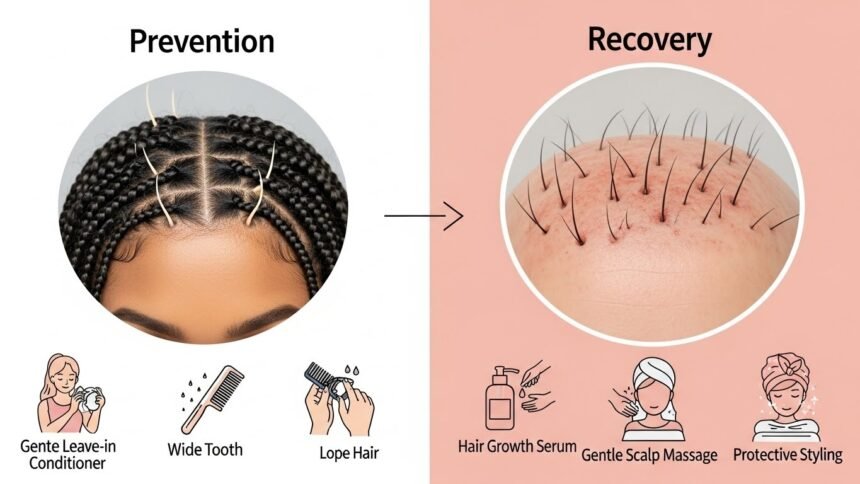
Hair is often considered a significant part of our identity and personal expression. From intricate braids and tight ponytails to extensions and weaves, the ways we style our hair are endless. However, some of these styling habits can exert excessive force on the scalp, leading to a specific type of hair loss known as traction alopecia.
Unlike genetic hair loss or autoimmune conditions, traction alopecia is entirely mechanical. It is caused by repeated or prolonged tension on the hair follicles. While this condition can be distressing, the good news is that it is preventable and, in its early stages, fully reversible.
Here is an exhaustive guide to understanding, managing, and recovering from traction alopecia, backed by scientific understanding and dermatological advice.
Overview: What is Traction Alopecia?
Traction alopecia is a form of hair loss caused by constant pulling on the hair roots. Over time, this continuous tension damages the hair follicle, leading to inflammation and, eventually, scarring. Once scarring occurs, the hair follicle may be permanently destroyed, rendering regrowth impossible.
This condition does not happen overnight. It is a gradual process that often begins with scalp sensitivity or tiny bumps and progresses to visible thinning, particularly around the hairline, temples, and behind the ears.
While anyone can develop this condition, it is particularly prevalent among women of African descent due to the cultural popularity of tight protective styles like braids and cornrows. However, gymnasts, ballerinas, and anyone who frequently wears tight buns or heavy extensions are also at significant risk.
It is crucial to distinguish this from other forms of hair loss, such as alopecia areata (an autoimmune disorder) or androgenetic alopecia (pattern baldness). Understanding the types of alopecia is the first step toward effective treatment.
The Stages of Damage
Traction alopecia generally presents in stages:
- Early Stage: The scalp may feel tender or sore after styling. You might see small pimples (folliculitis) or scaling around the hair follicles.
- Mid Stage: Visible thinning occurs. The hairline may recede, often sparing the very fine “baby hairs” at the front, known as the “fringe sign.”
- Late Stage: The hair follicles become scarred (cicatricial alopecia). The skin looks shiny and smooth, indicating permanent hair loss.
Causes and Risk Factors
The primary cause of traction alopecia is mechanical stress. However, several factors determine how quickly the condition develops and how severe it becomes.
High-Risk Hairstyles
Certain hairstyles are statistically more likely to cause traction alopecia due to the angle and force of the pull. According to the American Academy of Dermatology (AAD), the following styles pose the highest risk:
- Tight Bun or Ponytails: Wearing hair pulled back tightly every day can cause recession at the temples.
- Cornrows and Braids: While culturally significant and protective, if braided too tightly against the scalp, they create immense tension.
- Dreadlocks: As locs grow longer, their weight increases, pulling heavily on the root.
- Weaves and Extensions: Both the method of attachment (glue, sewing) and the added weight can traumatise the follicle.
Chemical Processing
Chemically treated hair is weaker and more susceptible to breakage. The use of relaxers, straighteners, or dyes alters the protein structure of the hair shaft. When chemical damage is combined with mechanical tension, the risk of hair loss increases exponentially. A study published in PubMed highlights the correlation between relaxer usage and increased severity of traction alopecia.
Duration of Tension
It is not just the tightness but the duration that matters. Leaving tight braids in for months without a break, or wearing extensions continuously, denies the scalp the necessary recovery time. The British Association of Dermatologists notes that frequent rest periods are essential for maintaining follicular health.
Warning Signs Checklist
| Symptom | Description | Urgency |
|---|---|---|
| Scalp Tenderness | Pain or stinging when moving facial muscles or touching the hair. | High |
| Tension Bumps | Red bumps or pustules at the base of the braid or ponytail. | High |
| Widening Parting | The gap between hair sections becomes visibly wider. | Moderate |
| Broken Hairs | Short, snapped hairs visible near the scalp. | Moderate |
Treatment and Management
If you suspect you are suffering from traction alopecia, immediate action is required. The treatment protocol depends heavily on whether the hair loss is temporary or if scarring has begun.
1. Cessation of Tension (Immediate)
The most critical treatment is removing the source of the trauma. No medical intervention will work if the hair continues to be pulled. This means taking out braids, removing extensions, and wearing hair loose or in very loose styles.
2. Medical Treatments
For early to mid-stage traction alopecia, dermatologists may prescribe treatments to reduce inflammation and stimulate regrowth.
- Topical Minoxidil: Often known by brand names like Regaine, this over-the-counter solution is the gold standard for stimulating hair follicles. Applying 2% or 5% minoxidil to the affected areas can jumpstart the growth phase (anagen) of the hair cycle. Research from the National Center for Biotechnology Information (NCBI) supports its efficacy in non-scarring alopecia.
- Corticosteroids: If there is visible inflammation (redness, scaling, or bumps), a doctor may prescribe topical steroid creams or perform intralesional steroid injections to calm the scalp and prevent scarring.
- Antibiotics: In cases where traction has caused folliculitis (infection of the hair follicle), oral or topical antibiotics may be necessary to clear the infection before regrowth can occur. See guidelines from DermNet NZ for clinical management.
3. Surgical Options
In late-stage traction alopecia where the follicles are scarred and dead, topical treatments will not work. In these instances, a hair transplant may be the only option. This involves moving healthy follicles from the back of the head to the hairline. This is a significant procedure and requires a consultation with a specialist surgeon, as outlined by the Cleveland Clinic.
Practical Tips for Prevention and Recovery
Recovering from traction alopecia requires a holistic approach to hair care. It involves changing habits, using the right products, and having patience.
The “Loosen Up” Rule
If your hairstyle is painful, it is damaging your hair. Pain is your body’s signal that tissue damage is occurring. Ask your stylist to loosen braids, even if it means the style won’t last as long. If you get a headache from a ponytail, take it down immediately.
Adopt Low-Tension Styles
Switch to hairstyles that do not pull on the hairline. Good alternatives include:
- Wearing hair down (afros, twist-outs, loose waves).
- Low, loose buns secured with scrunchies rather than elastic bands.
- Thicker braids that put less tension on individual follicles.
Scalp Care Regimen
A healthy scalp promotes healthy growth. Incorporating scalp massages can increase blood flow to the follicles, delivering oxygen and nutrients.
- Essential Oils: Some evidence suggests that oils like peppermint or rosemary oil can stimulate circulation. Always dilute these in a carrier oil (like jojoba or almond oil) to avoid irritation. The Skin of Color Society recommends gentle moisturising to maintain elasticity.
- Protein Treatments: Since traction often causes breakage along the shaft, protein treatments can help strengthen the remaining hair, preventing further snapping.
The 2-Week Rule
Implement a mandatory rest period. For every 6 to 8 weeks you wear a protective style (like braids or a weave), allow your hair to rest completely loose for at least 2 weeks. This gives the scalp time to recover from the weight and tension.
Diet and Supplements
While traction alopecia is external, internal health supports recovery. Ensure your diet is rich in:
- Iron: Anaemia is a common cause of diffuse hair shedding, which can exacerbate traction loss.
- Protein: Hair is made of keratin (protein). Low protein intake leads to weak hair.
- Biotin and Zinc: These micronutrients are vital for follicle health. The NHS provides comprehensive advice on how diet impacts general hair health.
Dealing with the Emotional Toll
Hair loss can be psychologically difficult. It is important to remember that traction alopecia is very common and, in most cases, highly treatable. If you feel overwhelmed, speaking to a trichologist (hair specialist) can provide reassurance and a tailored roadmap for recovery. Resources from Johns Hopkins Medicine emphasise the importance of early diagnosis to alleviate anxiety regarding permanent loss.
The Bottom Line
Traction alopecia is a sign that your hair is under too much stress, but it is not a life sentence for your hairline. The key to dealing with traction alopecia lies in early recognition and the willingness to change styling habits.
If you catch the signs early—tenderness, bumps, and slight recession—and remove the source of tension, your hair has a high probability of making a full recovery. Using treatments like minoxidil can accelerate this process.
However, if you ignore the pain and continue with high-tension styles, the damage can become permanent. Listen to your scalp. Prioritise the health of your follicles over the longevity of a hairstyle. By adopting a gentler approach to hair care, you can maintain both your style and your hairline for years to come.