If you are one of the millions of people who dread the arrival of spring and summer, you understand the misery of seasonal allergies. The itchy eyes, the constant sneezing, and that relentless runny nose can make even the sunniest days feel exhausting.
While we often focus on outdoor triggers like grassy meadows or tree-lined streets, we frequently overlook the air quality inside our own homes. For allergy sufferers, the home should be a sanctuary, yet it often traps the very particles causing your symptoms.
This is where high-efficiency air filtration becomes vital. Specifically, HEPA filters have become the gold standard for indoor allergen reduction. But are they worth the investment, and how do they actually work to alleviate your hay fever?
Understanding the mechanics behind these filters can help you realise why they are a crucial tool in your allergy management toolkit. Here is everything you need to know about using HEPA filters for seasonal allergy relief.
What is a HEPA filter?
HEPA stands for High Efficiency Particulate Air. It is not just a marketing term; it is a strict standard of efficiency.
To carry the HEPA label, a filter must satisfy stringent regulations. In Europe, this is often determined by the EN 1822 standard. A true HEPA filter must remove at least 99.97% of dust, pollen, mould, bacteria, and any airborne particles with a size of 0.3 microns.
To put that size into perspective, a single strand of human hair is approximately 50 to 70 microns in diameter. The pollen grains that trigger hay fever are generally between 10 and 100 microns.
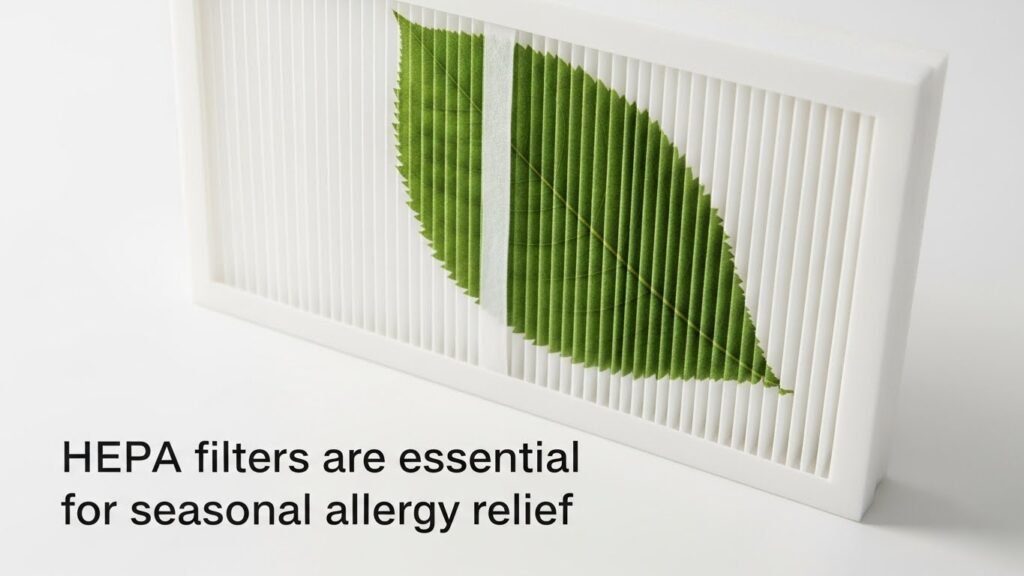
Because HEPA filters are designed to trap particles significantly smaller than pollen, they are exceptionally effective at capturing the allergens that cause seasonal distress.
How filtration works
It is a common misconception that HEPA filters work like a simple sieve. In reality, they use a complex mat of randomly arranged fibres, usually made from fibreglass. They trap particles via three distinct mechanisms:
- Impact: Large particles (like pollen) crash directly into the fibres and stick to them.
- Interception: Medium particles brush against a fibre and adhere to it.
- Diffusion: The tiniest particles (ultra-fine dust) move erratically and eventually hit a fibre, where they become trapped.
Why HEPA filters are essential for seasonal allergies
Seasonal allergic rhinitis, commonly known as hay fever, occurs when your immune system overreacts to an allergen, such as pollen. According to the NHS, symptoms include sneezing, coughing, and itchy eyes, which can significantly disrupt your sleep and daily life.
While you cannot control the pollen count outside, you can control the air inside. Here is why HEPA technology is essential for relief:
1. Trapping microscopic pollen
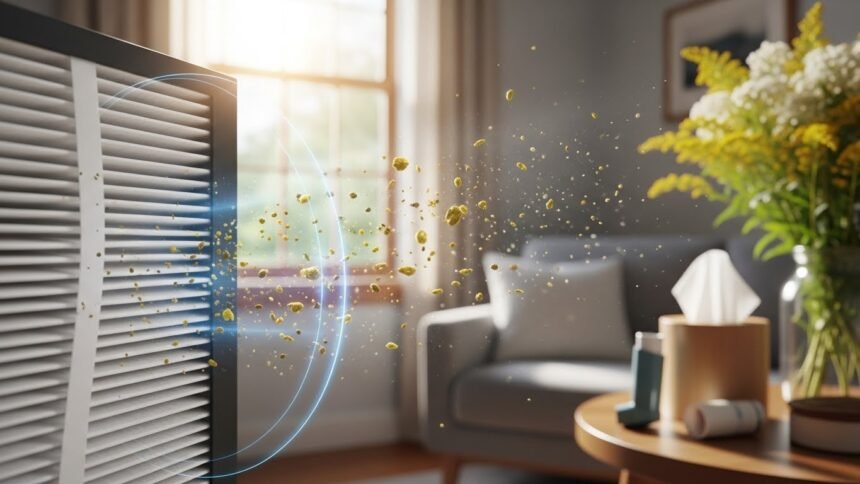
Pollen is lightweight and can drift indoors through open windows, on your clothes, or even on your pets. Once inside, it settles on surfaces or remains suspended in the air.
A HEPA air purifier continuously cycles the air in the room, pulling these suspended particles into the filter mesh before they have a chance to enter your nasal passages. This reduces the overall “allergen load” your immune system has to fight.
2. Reducing secondary triggers
During allergy season, your immune system is already on high alert. This makes you more sensitive to other indoor triggers that might not bother you in winter.
Common indoor pollutants include:
- Dust mites: Microscopic creatures that thrive in soft furnishings.
- Pet dander: Tiny flecks of skin shed by cats, dogs, and other animals.
- Mould spores: Fungi that grow in damp areas.
By removing these secondary irritants, a HEPA filter reduces the cumulative stress on your respiratory system. For more on managing these triggers, you can read about managing allergy triggers on Healthline.
3. Improving sleep quality
Allergy symptoms often worsen at night, leading to poor sleep quality. This can create a cycle of fatigue and increased immune sensitivity.
Running a HEPA purifier in the bedroom creates a “clean air zone” where you spend roughly eight hours a day. Research suggests that reducing allergen exposure during sleep can lead to significantly reduced daytime symptoms.
Choosing the right air purifier
Not all air purifiers are created equal. To ensure you are getting genuine allergy relief, you must prioritise specific features.
Look for “True HEPA”
Be wary of terms like “HEPA-type” or “HEPA-style.” These marketing phrases often indicate inferior filters that capture only 85% to 90% of particles. For clinical allergy relief, you strictly need a True HEPA filter.
Check the CADR rating
The Clean Air Delivery Rate (CADR) measures how fast the unit cleans the air. The higher the number, the faster it filters particles.
If you suffer from severe allergies, look for a CADR of at least 300 for a standard-sized living room or bedroom. The Association of Home Appliance Manufacturers (AHAM) verifies these ratings, ensuring consumer confidence.
Verify the room size capacity
An air purifier is only effective if it is powerful enough for the room it is placed in. Manufacturers will state the maximum square footage coverage.
However, for allergy sufferers, it is wise to buy a unit rated for a slightly larger room than you have. This allows the machine to clean the air more frequently on a lower, quieter setting.
Avoid ozone generators
Some air cleaners release ozone, a gas that is harmful to the lungs. While they are sometimes marketed as “ionisers” that freshen the air, ozone can actually irritate the airways and worsen asthma symptoms.
Guidance from Asthma + Lung UK highlights the importance of avoiding indoor air pollution triggers, including ozone, to protect your respiratory health.
Comparison: HEPA vs. Other Filter Types
To help you make an informed decision, here is a comparison of common filtration technologies found in the UK market.
| Filter Type | Primary Function | Efficiency on Pollen | Best For | Notes |
|---|---|---|---|---|
| True HEPA | Particle capture (99.97%) | Excellent | Allergies, Asthma, Dust | The medical standard for relief. |
| HEPA-Type | Particle capture (<99%) | Moderate | General dust | Cheaper but less effective for severe allergies. |
| Activated Carbon | Gas & Odour removal | None | Smoke, Cooking smells | Often combined with HEPA for dual action. |
| Ioniser | Particle clumping | Low to Moderate | Removing fine dust | Can produce harmful ozone byproducts. |
| UV-C Light | Germicidal irradiation | None | Bacteria, Viruses | Does not remove particles; kills germs only. |
Other tips for seasonal allergy relief
While a HEPA filter is a powerful tool, it works best as part of a broader strategy.
Keep windows closed
It is tempting to let fresh air in, especially on warm spring days. However, this invites millions of pollen grains into your home. You can check the pollen forecast on the Met Office website to decide when it is safe to venture out, but keep windows shut on high-count days.
Clean regularly with a HEPA vacuum
Standard vacuum cleaners often suck up dust and blow fine particles back out into the air. Ensure your vacuum cleaner also utilises a HEPA filter to trap allergens permanently.
Organisations like Allergy UK provide listings of approved products that have been scientifically tested to reduce allergen exposure.
Wash fabrics frequently
Pollen sticks to clothes, bedding, and curtains. Wash your bedding weekly in hot water (at least 60°C) to kill dust mites and remove pollen.
The National Eczema Society notes that house dust mites are a major trigger for skin conditions as well, reinforcing the need for hot washing.
Manage indoor humidity
Mould thrives in damp environments. Using a dehumidifier can keep humidity levels between 30% and 50%, which inhibits mould growth and dust mite reproduction.
The UK government provides resources via GOV.UK on maintaining healthy indoor environments to prevent damp and mould.
Frequently Asked Questions
Do HEPA filters remove viruses?
Yes, to an extent. While viruses are smaller than 0.3 microns, they often travel on larger droplets (like saliva) or dust particles. HEPA filters can capture these carriers. However, for allergies, their primary function is trapping pollen and dander.
How often should I change the filter?
Most manufacturers recommend changing the HEPA filter every 6 to 12 months. However, if you live in a high-pollen area or have pets, you may need to change it more frequently. Some units have a “check filter” light to remind you.
Can I wash a HEPA filter?
Generally, no. Most True HEPA filters are made of dense paper-like fibres that degrade if wet. Washing them ruins their structure and efficiency. Always check the manual, but expect to buy replacements.
Are air purifiers expensive to run?
Modern air purifiers are relatively energy-efficient. Running one on a medium setting uses about as much electricity as a standard lightbulb. For detailed reviews on energy consumption, you can consult consumer advocacy groups like Which?.
Will a HEPA filter cure my allergies?
No device can “cure” an allergy. However, by significantly reducing the number of allergens you inhale while at home, a HEPA filter can drastically reduce the severity of your symptoms and your reliance on medication.
The Bottom Line
Seasonal allergies can make life miserable, but you do not have to suffer inside your own home.
High-quality HEPA filters are essential for relief because they provide the only scientifically proven method to physically remove the vast majority of airborne pollen, dust, and dander from your living space.
When choosing a unit, remember to prioritise a True HEPA certification and a sufficient CADR rating for your room size. Avoid ionisers that produce ozone, and remember to replace your filters regularly.
By combining HEPA filtration with good cleaning habits—such as keeping windows closed during high pollen counts and washing bedding frequently—you can create a safe haven from hay fever.
Investing in cleaner air is an investment in your health, ensuring that when the seasons change, the only thing you notice is the beautiful weather, not the symptoms.