As a parent, you naturally want the absolute best for your child’s development. We meticulously track their height, monitor their first steps, and celebrate their first words. However, one crucial aspect of their growth is often quieter and easier to overlook: their vision.
It is estimated that roughly 80% of a child’s learning occurs visually. From recognising faces to decoding the alphabet, their eyes are their primary window to the world. Yet, because children often assume that how they see is how everyone sees, they rarely complain about vision problems. They simply adapt, sometimes struggling in silence.
This makes proactive eye care essential. You might be wondering when to book that first appointment or how to spot the subtle signs of a hidden issue. We understand that navigating medical appointments can be daunting, but ensuring your little one sees clearly is one of the most impactful gifts you can give them.
In this guide, we will explore the recommended timelines for testing, the signs to watch for, and exactly what happens during a paediatric eye exam.
Why Early Detection Is Critical
Visual development is a rapid and complex process that begins the moment your baby opens their eyes. The neural pathways connecting the eyes to the brain are still being forged during the first few years of life.
If the brain receives a blurry image from one or both eyes due to an uncorrected prescription or a muscle imbalance, it may learn to ignore visual input from that eye. This can lead to amblyopia, commonly known as a “lazy eye”.
Crucially, vision problems are much easier to treat while the brain is still developing. According to experts at Healthline, catching these issues early is vital for long-term ocular health. Once a child reaches the age of seven or eight, the visual system becomes less plastic, making conditions like lazy eye significantly harder to correct.
Furthermore, undiagnosed vision problems are frequently misidentified as behavioural issues. A child who cannot see the board at school may become disengaged, disruptive, or fatigued, leading to incorrect assessments of their academic potential.
The Recommended Timeline for Testing
In the UK, there is a structured pathway for eye health, but gaps can occur. It is important to know when to rely on the standard screening programme and when to book a private (usually NHS-funded) appointment.
1. The Newborn Check (0–72 Hours)
Shortly after birth, a doctor or midwife will check your baby’s eyes. They are looking for physical abnormalities, such as cataracts, ensuring the eyes look healthy and move correctly.
2. The 6-to-8 Week Review
Your GP or health visitor will perform a follow-up check during your baby’s routine physical examination. They will check for the “red reflex” (similar to red-eye in photos) and ensure the baby can fix their gaze on a target.
3. The Toddler Years (1–3 Years)
This is a “grey area” for many parents. While there is no mandatory screening between the post-natal checks and school entry, you do not need to wait for school to have your child’s eyes tested.
If you have a family history of squints or strong glasses (high prescriptions), optometrists recommend booking a comprehensive test around the age of two or three. Modern tests do not require the child to read; optometrists use pictures and lights to assess vision accurately.
4. Pre-School and School Entry (4–5 Years)
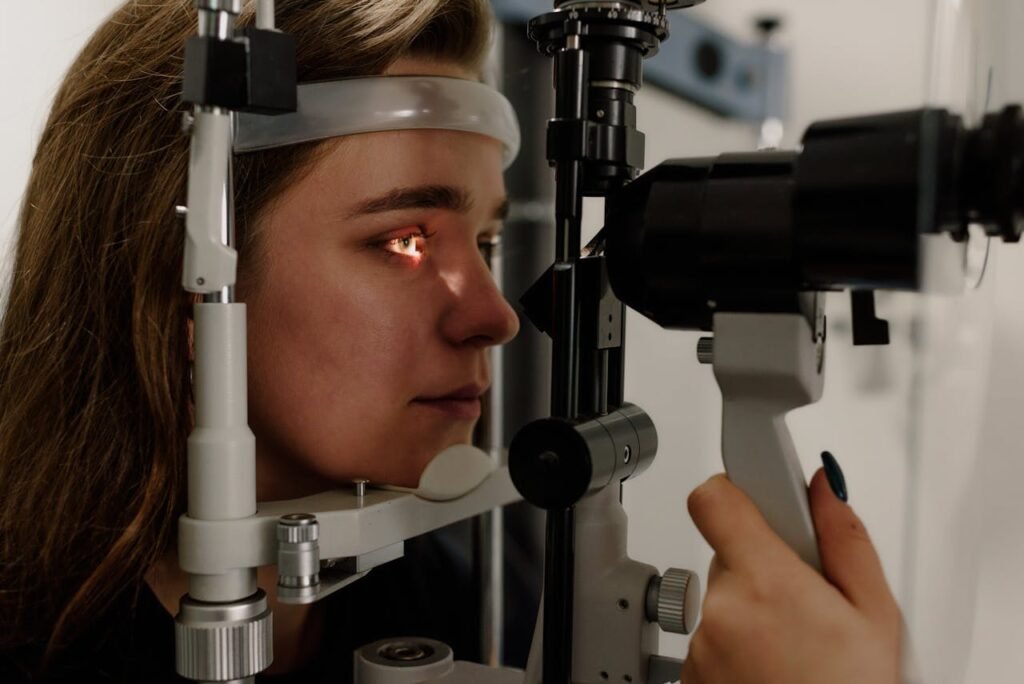
Most children will undergo a vision screening when they start primary school. This is typically arranged by the local authority. While valuable, this is a screening, not a full eye health examination. For a deeper understanding, the NHS recommends routine visits to a high-street optician.
Signs Your Child Needs an Eye Test
Since children rarely articulate that their vision is blurry, you must play detective. Watch for these physical and behavioural cues that suggest a visit to the optician is overdue.
Physical Symptoms:
- Rubbing eyes frequently: This often indicates eye strain or fatigue.
- Excessive tearing: Watery eyes can be a sign of blocked ducts or strain.
- Squinting or screwing up eyes: They may do this to temporarily improve focus.
- Head tilting: A child may tilt their head to use their “good” eye or to align their vision if they have a muscle imbalance.
- Redness: Chronic redness could indicate infection or allergy, but also strain.
Behavioural Indicators:
- Sitting too close: Watching TV from inches away or holding books against their nose.
- Clumsiness: Frequently bumping into furniture or knocking things over could indicate poor depth perception.
- Avoidance of close work: Disliking reading, drawing, or colouring could signal hypermetropia (long-sightedness).
- Headaches: Complaints of a sore head, particularly after school or screen time, are a classic sign.
For a comprehensive list of symptoms, the Association of Optometrists provides excellent resources for parents.
School Screening vs. Comprehensive Exams
It is vital to understand the difference between the check done at school and a full exam at an optometry practice. A “pass” at school does not guarantee perfect eye health.
| Feature | School Vision Screening | Comprehensive Optician Eye Test |
|---|---|---|
| Location | School classroom or hall | Dedicated clinical practice |
| Conducted By | Orthoptist or School Nurse | Qualified Optometrist |
| Primary Goal | Detect reduced vision (distance) | Check vision, eye health, & focusing |
| Health Check | Limited (rarely checks inside eye) | Full internal & external health check |
| Colour Vision | Not always checked | routinely checked |
| Muscle Balance | Basic check | Detailed binocular vision assessment |
| Cost | Free (Local Authority) | Free (NHS funded for under 16s) |
For more details on the limitations and scope of public screenings, you can consult GOV.UK guidelines.
Common Childhood Eye Conditions
Understanding what an optometrist is looking for can help alleviate anxiety. Here are the most common conditions identified in children.
Amblyopia (Lazy Eye)
This occurs when the vision in one eye does not develop properly. The eye looks normal, but the brain favours the other eye. Treatment usually involves patching the “good” eye to force the weaker one to work. According to Moorfields Eye Hospital, outcomes are significantly better if treatment starts before age seven.
Strabismus (Squint)
This is a misalignment of the eyes where they point in different directions (inwards, outwards, upwards, or downwards). It can cause double vision or lead to a lazy eye. Specialists at Great Ormond Street Hospital note that squints can sometimes be corrected with glasses alone, though surgery is sometimes required.
Myopia (Short-sightedness)
Myopia is becoming an epidemic globally, largely attributed to increased screen time and reduced time outdoors. A child with myopia sees near objects clearly but distant objects are blurred. Research highlighted by the BBC suggests that spending more time playing outside can help delay the onset of short-sightedness.
How to Prepare for the First Test
Making the experience positive is key to ensuring your child is happy to return in the future. Modern paediatric eye exams are designed to be fun and engaging.
- Talk about it: Explain that they are going to play some picture games. Avoid words like “test” or “exam” which might imply a pass/fail scenario.
- Roleplay: Practice at home. Cover one eye with a wooden spoon and ask them to spot toys across the room.
- Book wisely: Schedule the appointment for a time when your child is usually alert and happy, avoiding nap times or late afternoons.
Professional bodies like The College of Optometrists emphasize that optometrists are trained to adapt their testing methods to the child’s age and ability, using shapes and matching games rather than letters if necessary.
Frequently Asked Questions
Do I have to pay for my child’s eye test?
No. In the UK, the NHS covers the full cost of sight tests for all children under the age of 16, and for those under 19 in full-time education. If glasses are needed, you will receive an NHS voucher to help towards the cost. You can verify eligibility via the NHS Business Services Authority.
Will they put drops in my child’s eyes?
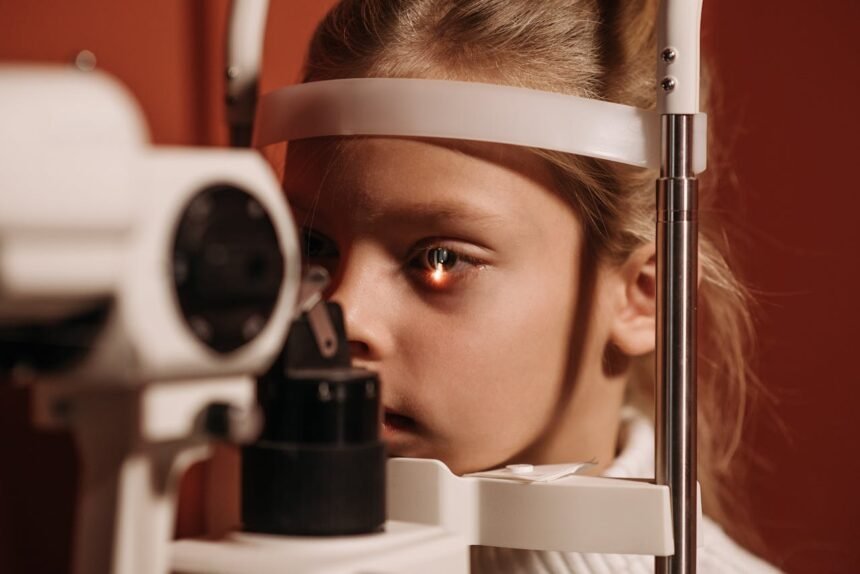
Sometimes. If the optometrist needs a very accurate measurement of the focusing power, or needs to examine the back of the eye more clearly, they may use cycloplegic drops. These temporarily dilate the pupil and relax the focusing muscle. They can sting for a few seconds and will make near vision blurry for a few hours.
How often should my child be tested?
Unless advised otherwise by your optometrist, a routine check every two years is standard. However, if your child wears glasses or has specific conditions, this may be annually or even every six months. The RNIB provides further advice on managing ongoing eye conditions.
The Bottom Line
Your child’s vision is a fundamental pillar of their development, impacting everything from their coordination on the playground to their confidence in the classroom. While the UK provides some safety nets through newborn checks and school screenings, these should not replace a comprehensive examination by a qualified optometrist.
Eye tests are free for children under the NHS, painless, and crucially important. You do not need to wait for your child to learn to read—or for them to complain of blurry vision—to book an appointment.
If you have any doubts or if there is a family history of eye issues, book a test today. It is a simple step that safeguards their future view of the world.