
Whether you are a seasoned powerlifter or a gym novice, hitting a plateau is a frustrating reality of strength training. Often, your legs and back have plenty of fuel left in the tank, but your hands simply cannot hold onto the bar any longer. This is where lifting straps come into play.
Lifting straps are a simple yet controversial accessory in the fitness world. Some purists argue they are a crutch that weakens your grip, while others view them as essential tools for hypertrophy and strength development. The truth, as usual, lies somewhere in the middle.
Used correctly, straps allow you to bypass grip strength limitation to fully fatigue your prime movers—the large muscle groups like the latissimus dorsi, trapezius, and hamstrings. This guide explores the science behind lifting straps, when to implement them, and how to use them safely for maximum gains.
Overview: What Are Lifting Straps?
Lifting straps are lengths of fabric—usually cotton, nylon, or leather—that wrap around your wrist and the barbell or dumbbell. By tethering your hand to the weight, they transfer the load from your finger flexors directly to your wrist and forearm structure.
This mechanism reduces the active squeezing force required to maintain a hold on the weight. Consequently, this prevents neurological grip failure, a phenomenon where the nervous system shuts down force production in the hands to prevent injury, often long before the target muscles are exhausted.
While they are fantastic for pulling movements, they are generally not used for pushing exercises. For example, whilst you might use them for deadlifts, you would not require them for the Floor Press: Benefits, Proper Form, and Muscle Groups Targeted, where the mechanics rely on pushing force rather than grip retention.
Signs You Need Lifting Straps
Identifying when to introduce straps is crucial. You do not want to become reliant on them for warm-up sets, but you also do not want your back workout to suffer because your forearms are burning.
1. Your Grip Fails Before Your Target Muscle
This is the most common indication. If you are performing heavy rows back development suffers significantly if you have to drop the weight because your hands are slipping. If your lats feel fresh but your forearms are screaming, straps are a valid intervention.
2. You Are Performing High-Volume Sets
Even if your one-rep max grip is strong, wrist fatigue during deadlifts or shrugs can set in during high-repetition sets. This is particularly relevant when utilizing techniques like Understanding Tempo Lifting for Maximised Muscle Hypertrophy, where time under tension is significantly increased.
3. Anatomical Disadvantages
Some individuals have smaller hands or shorter fingers, making a secure grip on a standard Olympic bar difficult. In these cases, a hook grip alternative is often necessary to lift loads proportionate to the athlete’s posterior chain strength.
4. Skin Preservation
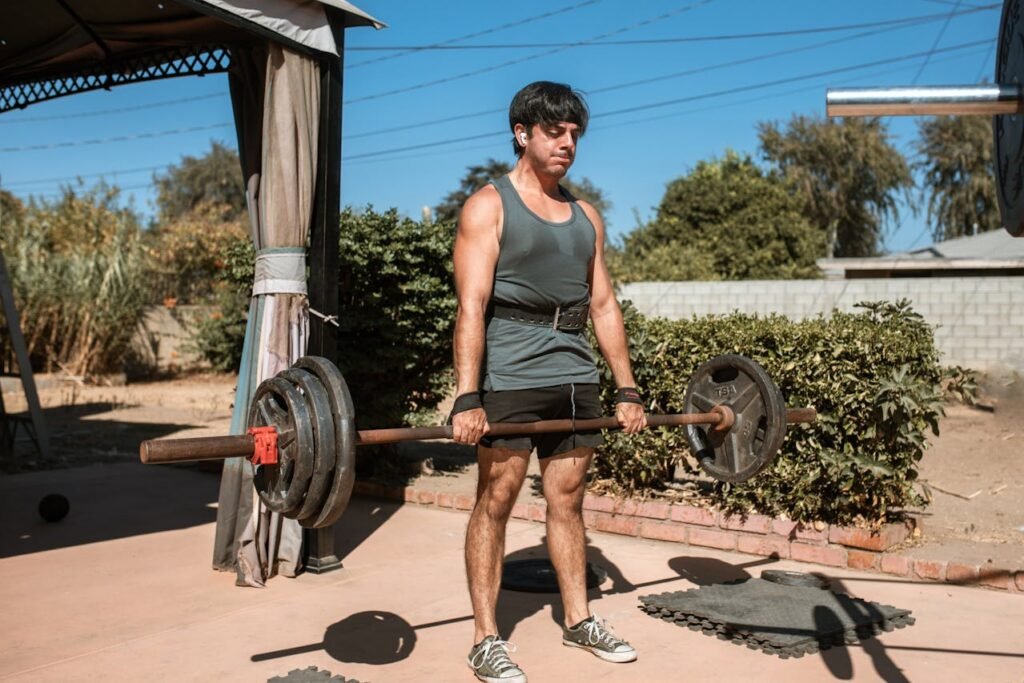
tearing your hands can put you out of training for days. Using straps for your heaviest sets is an effective strategy for preventing torn calluses, allowing you to train consistently without skin damage.
Types of Lifting Straps
Not all straps are created equal. Choosing the right type depends on your specific training style, whether that is bodybuilding, Strongman, or Olympic lifting.
Lasso Style Straps
These are the most common straps found in gyms. They feature a loop at one end, creating a lasso that tightens around the wrist. The remaining tail wraps around the bar. Lasso style straps are versatile and great for general bodybuilding.
Figure 8 Lifting Straps
Common in Strongman and heavy powerlifting, figure 8 lifting straps form a double loop around the wrist and bar. They lock you onto the bar completely. These are ideal for maximum load deadlifts or Rack Pulls vs Deadlifts: Which is Better for Back Development? where grip failure is not an option. However, they cannot be ditched quickly, making them dangerous for Olympic lifts.
Closed Loop (Olympic) Straps
A simple sewn loop. These are designed to release instantly if the lifter drops the bar (e.g., during a snatch). They provide less support than figure 8s but are safer for dynamic movements.
Material Matters: Cotton vs Nylon
The debate of cotton vs nylon lifting straps comes down to comfort versus durability. Cotton is softer on the skin and absorbs sweat but can stretch over time. Nylon is incredibly durable and does not stretch, but it can dig into the skin during heavy loads. Leather offers a middle ground, contouring to the wrist over time.
How to Use Lifting Straps Properly
Using straps requires a bit of practice. Improper application can lead to the weight rolling out of your hand or uneven loading.
Step 1: Slide the tail of the strap through the loop to create a circle. Put your hand through the circle so the tail aligns with your thumb.
Step 2: Approach the bar. Wrap the tail of the strap under the bar and pull it back over towards you. This is crucial; wrapping the wrong way will cause the strap to unwind.
Step 3: Tighten the strap by rotating the bar like a motorcycle throttle. Your hand should feel securely locked against the metal.
Step 4: Ensure symmetry. Before lifting, check that both hands are wrapped equally tight to avoid muscle imbalances or injury.
This technique helps maintaining a double overhand grip vs mixed grip. The mixed grip (one hand over, one under) can lead to bicep tears or spinal imbalances over time. Straps allow you to pull with a symmetrical double overhand grip safely.
Training Strategies for Maximum Strength
To maximise gains, you must integrate straps strategically rather than relying on them for every set.
Focus on Isolating Target Muscles
When performing exercises like the Romanian deadlift form is paramount. Straps remove the distraction of grip fatigue, allowing you to focus entirely on the hamstring stretch and glute engagement. This mind-muscle connection is vital for hypertrophy.
For those engaging in How Eccentric Loading Can Accelerate Muscle Growth and Repair, straps are essential. Eccentric loading often involves weights greater than your concentric 1RM, loads that your grip simply cannot sustain for the required duration.
Overcoming Plateaus
Using straps allows for progressive overload safety. You can increase the weight on the bar without worrying about the bar slipping. This is particularly useful when utilizing Using Pin Squats to Overcome Training Plateaus and Build Power, or their pulling equivalent, pin pulls, where loads can be supramaximal.
Don’t Neglect Grip Health
While straps are useful, you must maintain raw grip strength. A weak grip is correlated with higher mortality rates in older adults. To counter the use of straps, incorporate specific grip work. Training with tools like Exploring the History and Benefits of Indian Clubs for Active Recovery or performing A Complete Guide to Steel Club Training for Grip and Joint Health can keep your forearms robust.
Furthermore, engaging in functional carries, such as those detailed in Why Sandbag Carries are the Ultimate Functional Strength Exercise, ensures your grip remains functional for real-world tasks.
Practical Tips for Implementation
- Use Straps for Dumbbells: Many people forget that dumbbell shrugs grip support is just as important as barbell work. High-rep shrugs or heavy dumbbell rows are prime candidates for strap usage.
- Warm Up Raw: Perform all your warm-up sets without straps. Only apply them when you reach your working sets or when your grip begins to falter. This maintains a baseline of hand strength.
- Avoid on Core Lifts: Avoid using straps for exercises like the How to Master the Zercher Squat for Superior Core Strength, where the bar rests in the crooks of your elbows, or the How to Perform the Jefferson Squat Safely and Effectively, where managing the awkward mechanics is part of the lift’s benefit.
- Pause Reps: When performing Why You Should Include Pause Squats in Your Leg Day Routine, grip is rarely the limiting factor. However, for pause deadlifts, straps are highly recommended to maintain tension without hand cramping.
The Bottom Line
Lifting straps are a powerful tool in a strength athlete’s arsenal. They allow you to train around powerlifting accessories limitations and ensure that your large muscle groups receive the stimulus they need to grow.
However, balance is key. Over-reliance can lead to weak forearms and potential injury if you ever lift without them. Balance your heavy, strapped lifts with raw grip work and functional movements like The Benefits of Macebell Training for Shoulder Mobility and Power to ensure holistic strength.
Ultimately, understanding Why Relative Strength Matters for Athletes and Daily Function helps put strap usage into perspective: it is about making your body stronger as a unit, not just improving your ability to hold a bar.